English
Contact
Configure
Catalog
Gujarat has one of the most diverse and high-output industrial bases in India. Ahmedabad sits at the centre of that base, surrounded by pharmaceutical clusters in Naroda and Vatva, chemical processing zones in Odhav, textile machinery manufacturers across Narol, and automotive component plants spread through the Sanand corridor. Each of these sectors places specific and demanding requirements on overhead material handling equipment. A crane that is adequate for a textile unit is nowhere near appropriate for a chemical plant or a heavy fabrication shop.
Finding the right crane manufacturer in Ahmedabad means finding someone who understands that distinction and engineers accordingly.
Ahmedabad is not a single-industry city. That is what makes crane procurement here more nuanced than it might appear at first.
The pharmaceutical sector around Naroda and Vatva requires cranes with spark-free electrical configurations, clean-room compatible hoisting equipment, and surface treatments that resist chemical vapour exposure. Contamination control is not optional in these environments. A standard industrial crane with exposed carbon brushes and basic paint finish does not belong in a pharmaceutical production area.
The chemical processing belt in Odhav and GIDC Vatva presents a different set of challenges. Corrosive atmospheres, high ambient temperatures, and the risk of flammable vapour accumulation mean that crane electrical panels and motor enclosures must meet hazardous area classification requirements. Explosion-proof or flame-proof motor and panel configurations are a genuine necessity in parts of this sector, not a premium add-on.
The Sanand automotive corridor, home to major vehicle and component manufacturers, needs cranes rated for high-duty cycles. Press shops here run three shifts consistently. A crane specified at M3 or M4 duty class will not survive long in that environment. M5 or M6 is the appropriate starting point for automotive press and assembly applications.
In my experience, procurement teams that treat these distinctions seriously during the selection process end up with cranes that perform well for fifteen to twenty years. Teams that buy on price without specifying duty class, enclosure ratings, and surface treatment end up with maintenance headaches within two or three years.
The market in Gujarat has a mix of genuine manufacturers, assemblers, and traders, all presenting themselves similarly. Knowing how to tell them apart saves you from a decision you will regret after the crane is installed and the supplier becomes difficult to reach.
A genuine crane manufacturer controls the fabrication of structural components. They cut and weld their own box girders, fabricate their own end carriages, build their own electrical panels, and conduct load testing on their own floor before dispatch. They have a fabrication facility you can visit, welding procedure specifications you can ask to see, and load test records they can share without hesitation.
An assembler sources pre-built components from multiple vendors, bolts them together, and presents the result as a manufactured crane. There is nothing inherently wrong with a well-managed assembly process, but the accountability for overall design, structural integrity, and performance sits with nobody in particular when things go wrong.
A trader is simply reselling someone else's product with a margin added. If the crane has a problem, the trader's options are limited to whatever the actual manufacturer is willing to do for them.
When I tried verifying the manufacturing credentials of suppliers during a project evaluation in Gujarat, the simplest test was asking for a factory visit and a load test demonstration. Genuine manufacturers welcomed both. Others found reasons to delay or redirect.
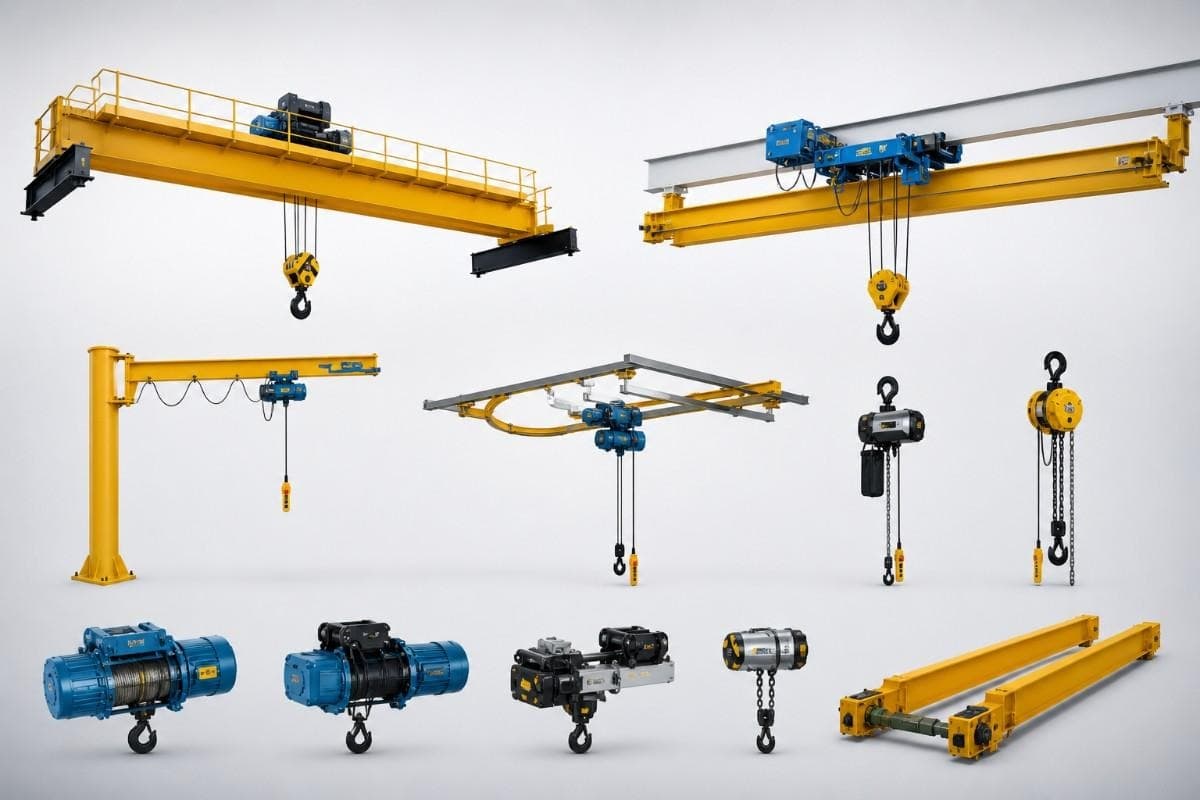
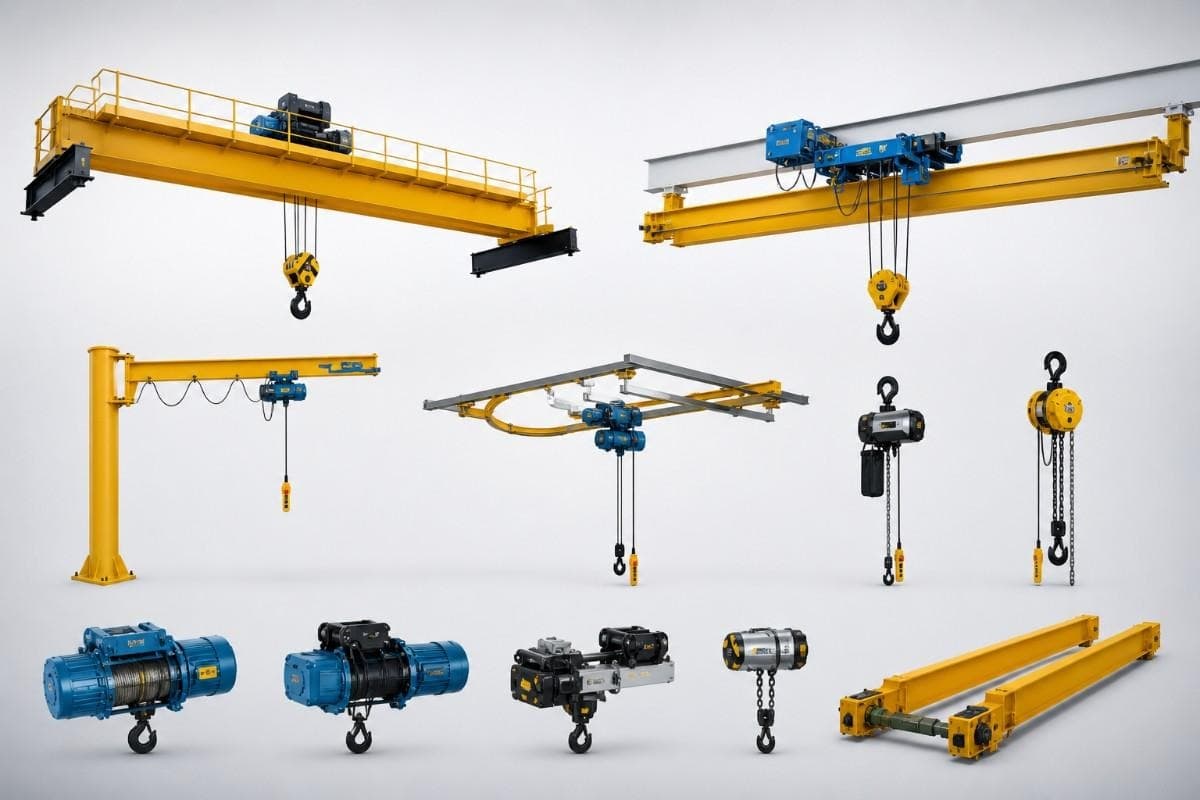
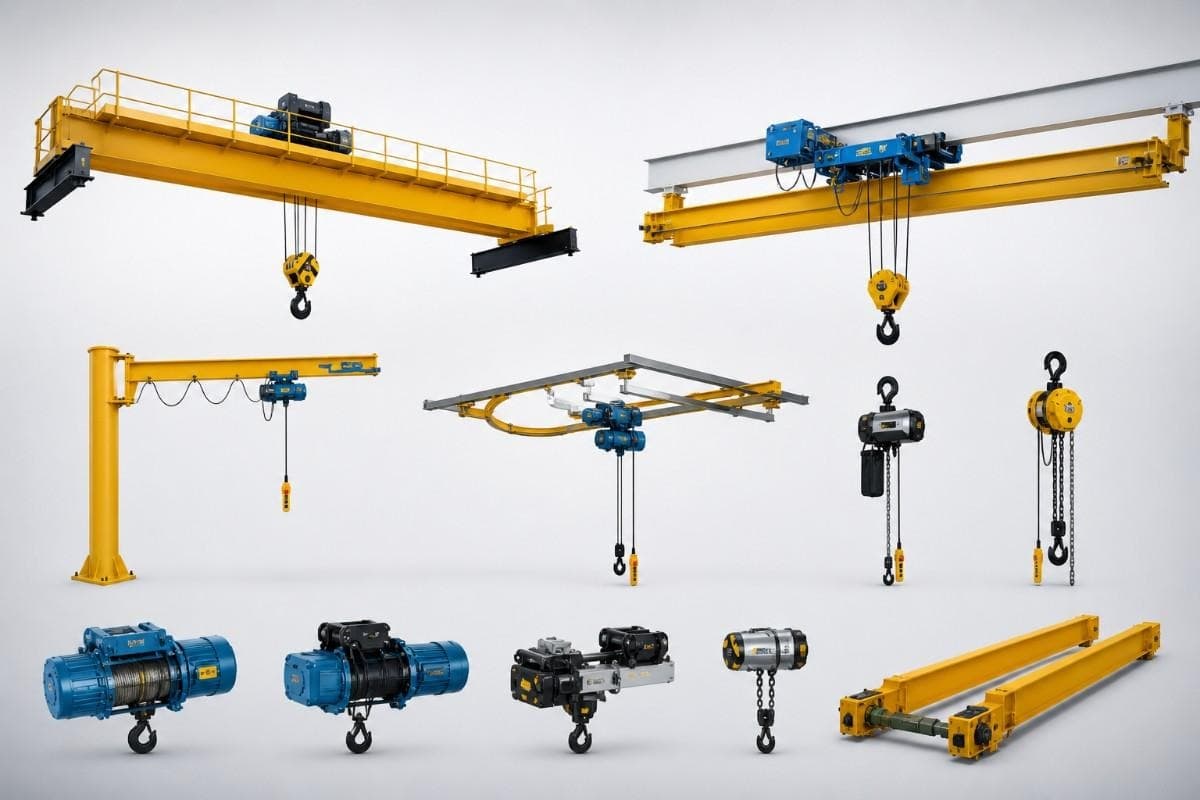
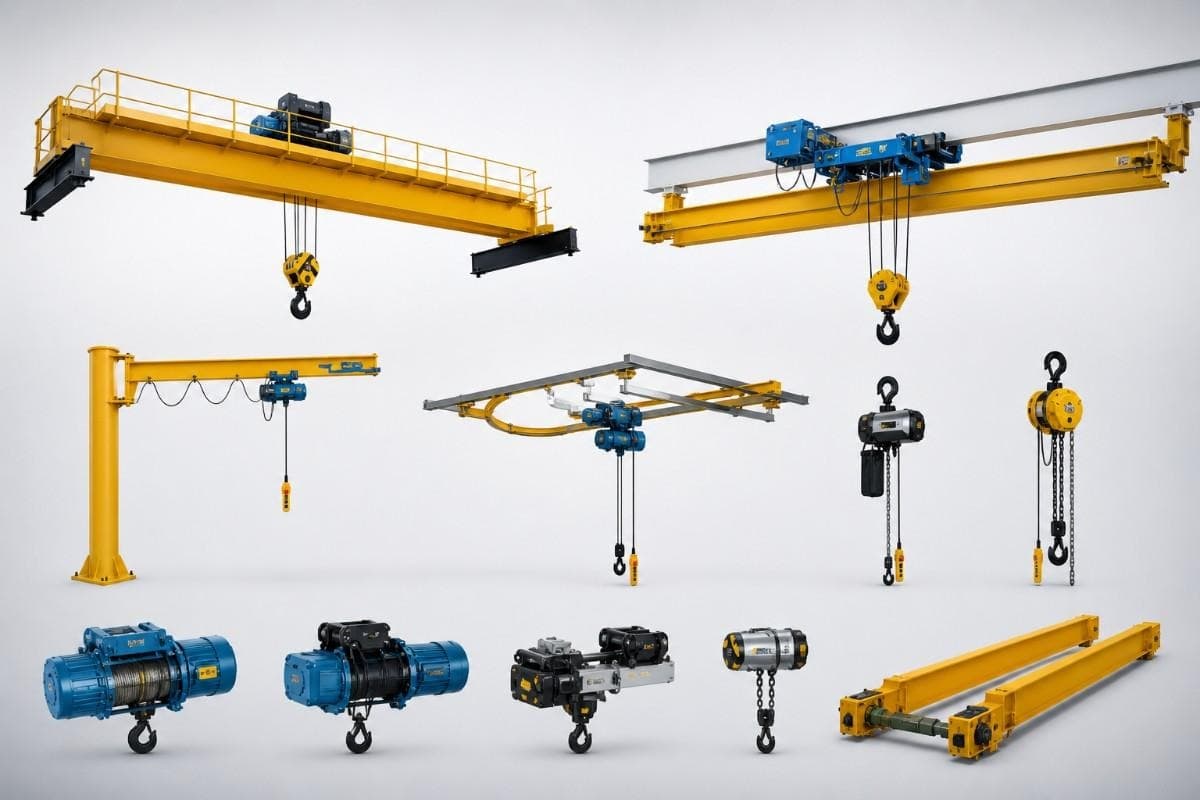
The single girder configuration is the right choice for light to medium duty applications with capacities typically up to 20 tonnes and standard bay spans. Ahmedabad's MSME sector, which includes thousands of small and mid-size engineering, fabrication, and processing units across GIDC estates in Naroda, Odhav, and Bavla, relies on single girder EOT cranes as the primary overhead lifting solution.
These cranes are straightforward to install, economical in terms of runway beam loading on the building structure, and easy to maintain. For a unit running one or two shifts with moderate lift frequency, a well-built single girder crane will serve reliably for decades.
When your lifts are heavier, your span is longer, or you need the hook to travel closer to the roof structure to maximise usable lift height, the double girder configuration is the answer. Two parallel box girders form the bridge, with the hoist trolley running on top rails between them.
Automotive plants in Sanand, heavy fabrication shops in Kathwada, and steel processing units across Ahmedabad's larger industrial estates use double girder EOT cranes as their primary overhead material handling system. Capacities from 10 tonnes to well beyond 100 tonnes are achievable with appropriate engineering.
Self-supporting on ground-level legs rather than building runway beams, gantry cranes are the correct choice for open yards, storage areas adjacent to factory buildings, railway siding areas, and any space without a suitable roof structure. Ahmedabad's logistics and warehousing sector, as well as steel stockyards and fabrication yards in the industrial belt, use gantry cranes extensively. Semi gantry configurations, where one leg runs on a ground rail and the other connects to a wall runway beam, are common in older factory layouts where only one side of the building has adequate structural capacity.
A wall-mounted or pillar-mounted jib crane serves individual workstations with an arc of lifting coverage from 180 to 360 degrees depending on the configuration. Machine shops, maintenance bays, and assembly cells across Ahmedabad's industrial estates pair jib cranes with their main overhead EOT systems to give individual operators independent lifting capability without waiting for the main crane.
The KBK system uses profiled steel suspension sections hung from the roof structure to create a modular light crane track layout. It is particularly well suited to assembly line environments, engine and component build stations, and production cells where the track layout needs to be reconfigured as production processes change. Pharmaceutical and electronics assembly units in Ahmedabad have adopted KBK systems specifically for this flexibility.
The underslung crane hangs from the bottom flange of the roof structure beams rather than sitting on top of runway rails. It preserves the maximum usable floor-to-ceiling height and eliminates the visual and structural bulk of top-mounted runway beams. Ahmedabad's newer industrial facilities, particularly in the food processing and light manufacturing sectors, increasingly specify underslung cranes for space efficiency and clean aesthetics.
This is the part most buyers skip, and it is the part that determines whether you are satisfied with your crane purchase five years after installation.
Here is a practical checklist worth working through with any crane manufacturer in Ahmedabad you are seriously considering:
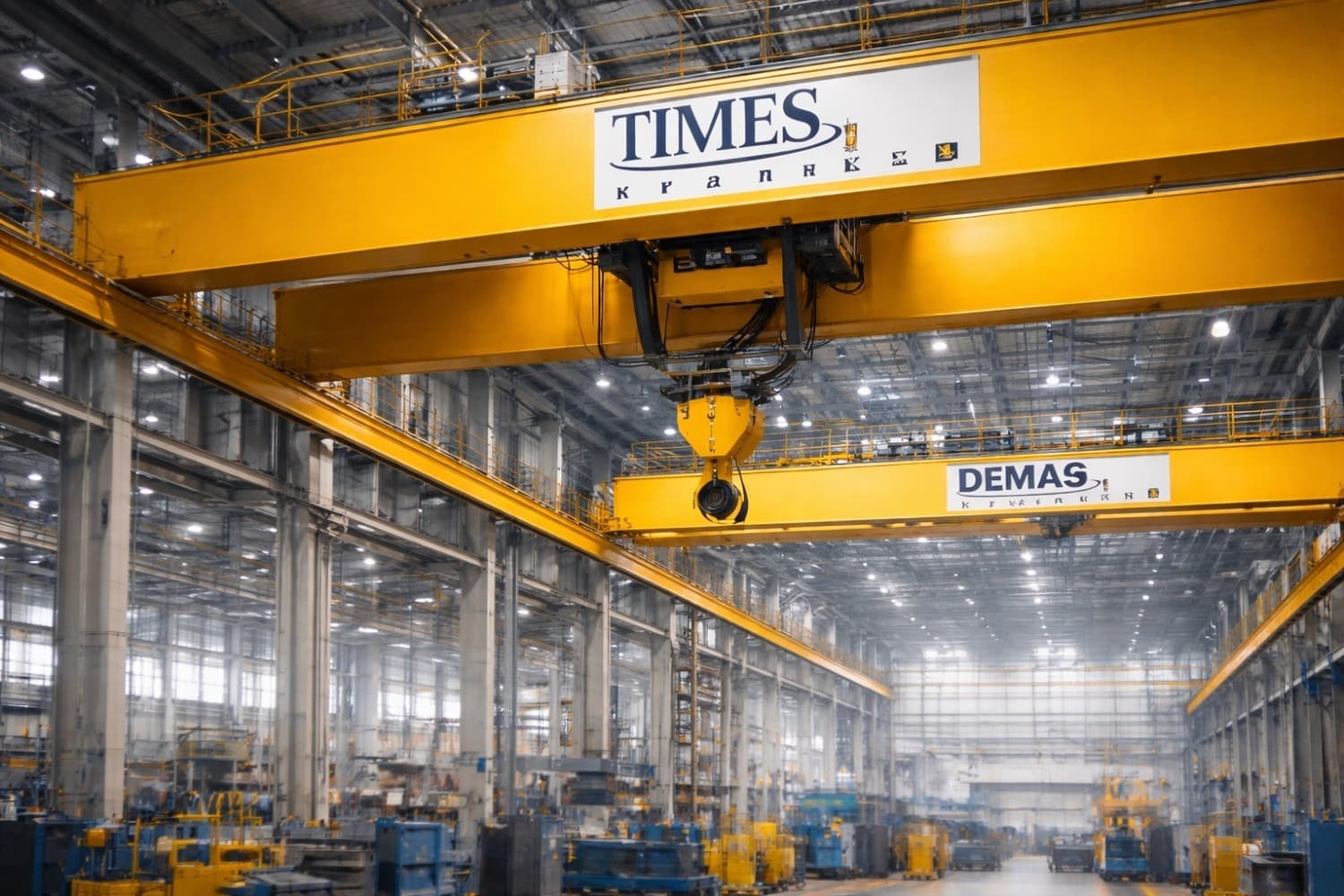
Times Krane, based in Faridabad with a pan-India engineering and supply capability, has a long track record of delivering cranes to industries across Gujarat including Ahmedabad, Vadodara, Surat, and Rajkot. The company brings over 35 years of industrial crane engineering experience to every project and approaches each order as a custom engineering exercise rather than a catalogue selection.
For Ahmedabad's chemical and pharmaceutical sectors in particular, Times Krane's engineering team works through the specific environmental requirements of the installation before any design is finalised. Explosion-proof motor specifications, chemical-resistant paint systems, and clean-room compatible hoist configurations are handled as engineering decisions, not afterthoughts bolted onto a standard product.
According to data published by the Gujarat Industrial Development Corporation in its annual review of GIDC estate occupancy and expansion, the number of active manufacturing units in Ahmedabad's GIDC estates has grown by over 18 percent in the past five years. That growth translates directly into demand for overhead lifting equipment from manufacturers who can engineer to specification rather than supply off the shelf.
I have noticed that Ahmedabad's more technically demanding buyers, particularly in pharmaceuticals and automotive, consistently shortlist manufacturers who demonstrate clear engineering process rather than manufacturers who lead with price and availability. The reasoning is straightforward: a crane that fails to meet your process requirements or breaks down in a critical shift costs far more than any premium paid upfront for better engineering.
A crane is a long-term capital asset. Its performance over ten, fifteen, or twenty years depends almost entirely on how well it is maintained after installation. This is where the choice of manufacturer continues to matter long after the crane goes live.
A structured annual maintenance contract should cover the following at a minimum:
For cranes operating in Ahmedabad's chemical and pharmaceutical environments, the AMC scope should additionally include inspection of electrical enclosure seals, motor terminal box gaskets, and any corrosion-protective coating integrity.
A manufacturer who offers a well-documented AMC and can demonstrate service response capability in Ahmedabad is a manufacturer worth working with for the long term.
A no-fluff guide to picking crane manufacturers in Vatva, Ahmedabad, covering FLP cranes for chemical units, real cost factors, and buyer mistakes to avoid.
If you're looking for a dependable EOT crane manufacturer in Delhi NCR, you've probably already realized the region has no shortage of options. The problem is filtering out the ones who actually manufacture from the ones who just package and resell.
Finding dependable EOT crane manufacturers in Ludhiana can make a huge difference to the efficiency and safety of your industrial operations. Whether you run a manufacturing facility, fabrication unit, warehouse, steel plant, engineering workshop, or logistics center, the right crane system helps move heavy loads faster, safer, and with less effort.
Delhi and the surrounding NCR belt are home to thousands of manufacturing units, fabrication shops, and industrial facilities. And almost every one of them, at some point, needs a crane. The problem is that finding a trustworthy EOT crane manufacturer in Delhi is harder than it should be.
Most plants in Chennai have an overhead crane for the bay and nothing else for individual workstations. That gap costs operators time on every single shift. If you are looking for jib crane manufacturers in Chennai who can actually close that gap with a well-engineered, workstation-level lifting solution, this page will walk you through everything you need to know before making a decision.
Choosing the wrong EOT crane manufacturer in Hyderabad can set your entire project back by months. The stakes are high, the options are many, and most buyers do not know what to look for until something goes wrong.
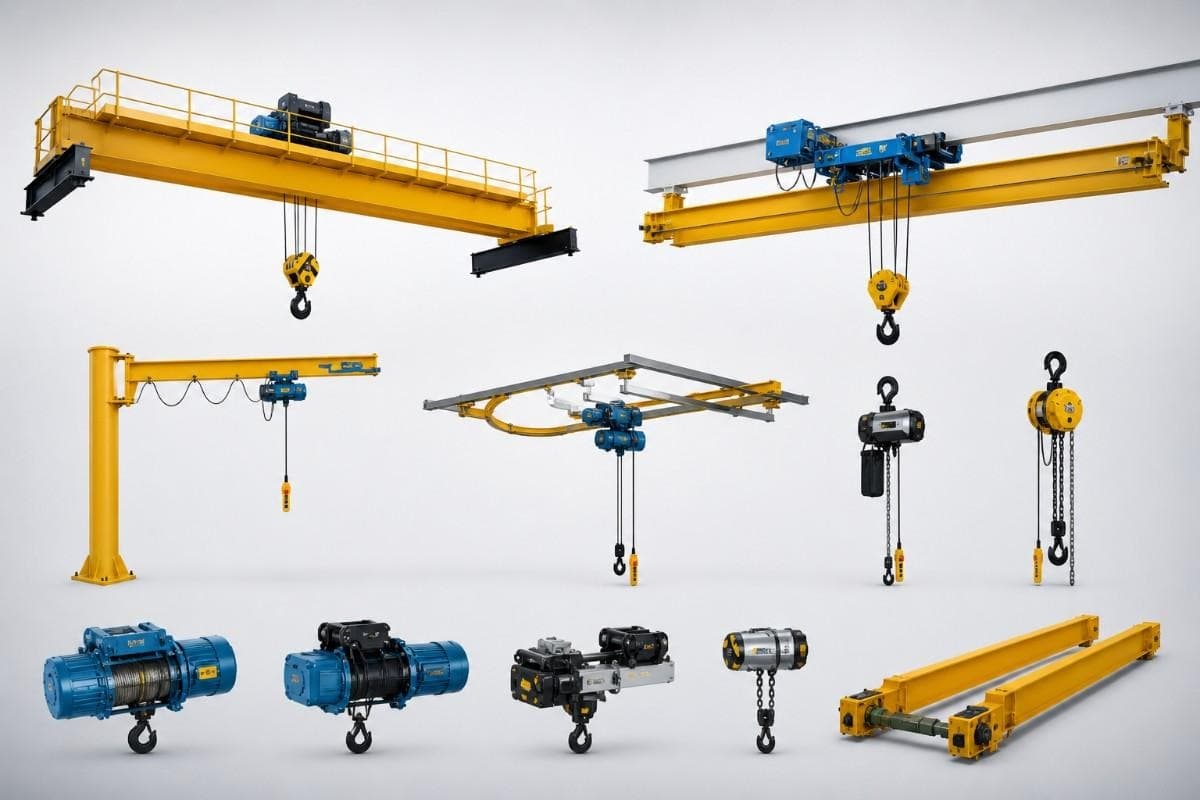
Choosing the wrong crane supplier in Chennai can set your entire plant setup back by months. You end up with a machine that does not match your bay dimensions, cannot handle your actual load cycles, or breaks down within the first year because the duty class was wrong from the start. If you are sourcing lifting equipment for any industrial application in Chennai, this page is worth reading before you sign anything.
Looking for a reliable partner for your next industrial project?