English
Contact
Configure
Catalog
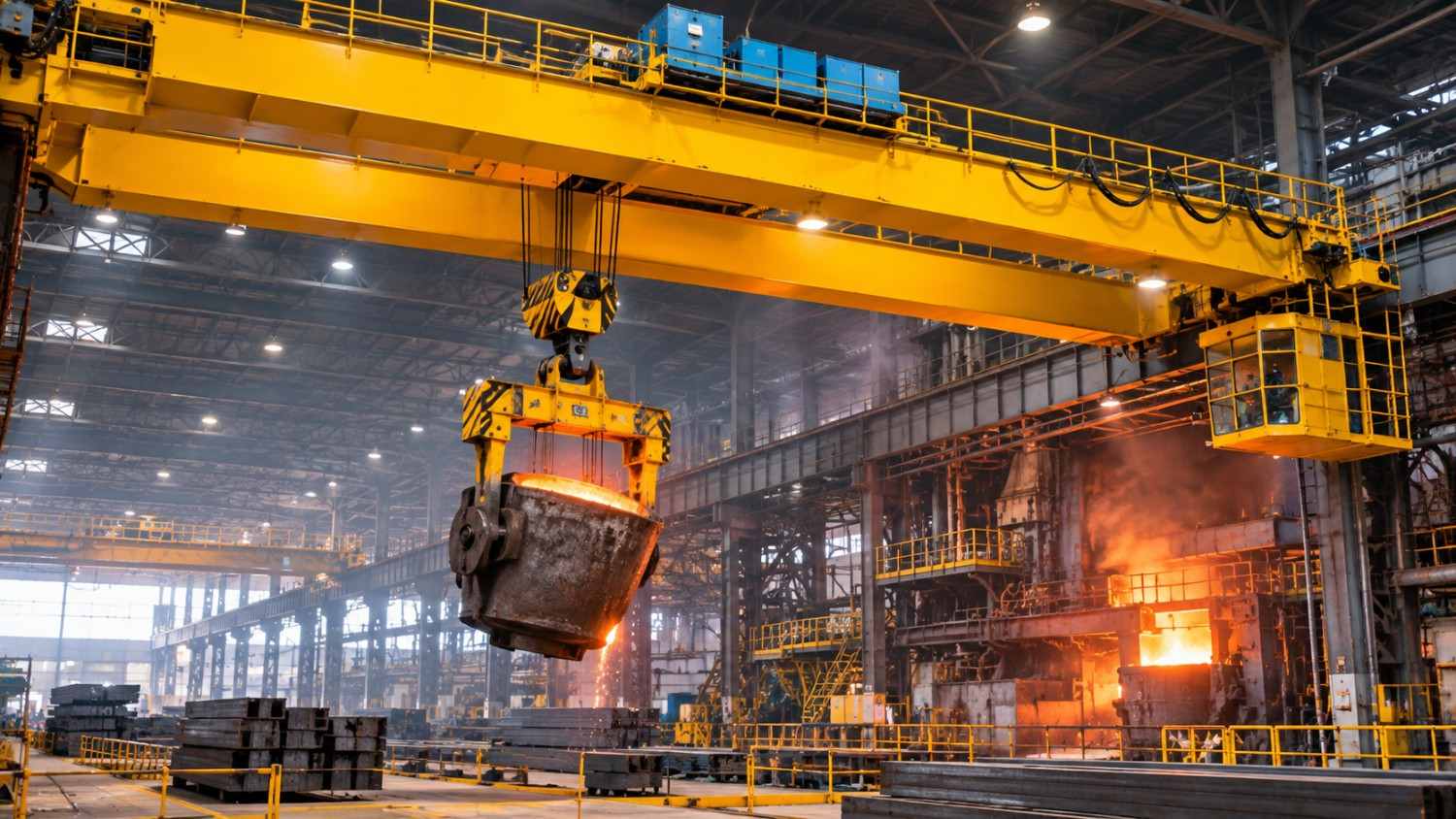
Spend an hour inside a working steel plant and you will understand why the crane overhead gets more respect than almost any other machine on the floor. It is lifting glowing hot billets one minute and swinging a ladle of molten metal the next, and it does this shift after shift, year after year, without ever really stopping. Choosing the right EOT crane for steel plant use is not a small decision buried in a procurement checklist. Get it wrong and you are looking at breakdowns, safety risks, and a maintenance bill that keeps climbing.
We have gone through what is actually working well in current guides on this topic, added real pricing data, and filled in the gaps that most articles skip entirely. If you would rather just talk to someone about your specific plant, get in touch with our team here and we will help you figure out the right fit.
A crane sitting in a general warehouse leads a fairly relaxed life. It lifts predictable loads, works maybe one or two shifts, and sits in a clean, temperature-controlled space. None of that describes a steel plant. Furnace areas throw off serious radiant heat, the air carries fine dust and metal particles, and the crane is often working close to continuous, near-maximum loads across multiple shifts. Add molten metal into the mix and the margin for error basically disappears.
This is exactly why a plain, off-the-shelf EOT crane for steel industry use tends to fail early. It is not that the crane is poorly made, it is that it was never designed for this kind of punishment in the first place. If you have ever seen a standard-duty gearbox get replaced twice in one year in a melt shop, you already know what we mean.
A steel plant rarely runs on just one kind of crane. Different areas of the plant need genuinely different machines, and this is where a lot of buyers underprepare.
These handle the most dangerous job in the plant, moving molten metal from the furnace to the casting area. Ladle cranes are almost always double girder, fitted with two rope drums often driven through a single helical gearbox and a lifting beam, so the load stays balanced even at extreme temperatures. Heat shields on the cabin and cables are not optional here, they are what keeps the operator and the electricals functional shift after shift. This is also the crane where redundancy matters most, since a dropped ladle is not a production issue, it is a life-safety event.
Raw material yards run on cranes fitted with either hydraulic grabs or lifting magnets to move scrap metal from the yard into the melt shop. These take a beating from constant impact loading and abrasive dust, so structural robustness matters more here than fine precision.
Near the casting bay, cranes fitted with specialized tongs or grabs move billets, blooms, and slabs that are often still hot. These run at a slightly lower duty intensity than ladle cranes but still need serious structural strength given the weight and heat involved.
Rolling mills typically use cranes fitted with C-hooks, shaped specifically to lift coiled steel without damaging the wound edge or unbalancing the load mid-lift. Get the hook geometry wrong and you risk coil slippage, which is both a safety hazard and a quality problem.
Not every corner of a steel plant deals with molten metal. Finished goods storage, dispatch areas, and general workshop sections often run standard single or double girder EOT cranes, which is where a lot of the cost savings in a plant's crane budget genuinely can happen without cutting corners on safety.
If you want a broader look at how a general overhead crane for steel plant setup typically combines these different crane types across one facility, it is worth reading alongside this guide.
This question comes up constantly, and the honest answer is that most steel plants need both, just in different areas.
Single girder EOT cranes are lighter, cost less, and work well for lower capacity, less frequent lifting, think general workshop areas or finished goods handling up to roughly 10 to 15 tons. Double girder EOT cranes handle heavier loads, wider spans, and far more frequent duty cycles, which is why nearly every ladle crane, billet crane, and heavy scrap handling crane in a steel plant is a double girder design. The two rails on a double girder crane also allow the trolley to sit lower, which matters when you are trying to maximize hook height in a tall furnace bay.
A rough way to think about it: if the crane is anywhere near molten metal, continuous heavy cycling, or loads above 15 to 20 tons, double girder is almost always the right call. Anything lighter and more occasional can usually be handled by a well-built single girder crane at a lower cost.
Pricing is where a lot of guides get vague, so let's actually put numbers on it. Based on current market data, a small single girder EOT crane around 1 ton starts near 3.5 lakh rupees, which is really the entry point for the category. A 5 ton double girder crane typically starts around 10 lakh and can run up to 15 lakh depending on span and features. Step up to 10 tons and single girder units generally fall between 12 and 18 lakh, while a 10 ton double girder crane, better suited to wider spans and heavier duty cycles, usually starts around 16 lakh and can go up to 25 lakh. At the higher end, a 50 ton double girder crane, the kind of capacity you would see in a genuinely heavy-duty steel plant application, can run anywhere from roughly 1.5 crore and upward depending on specification.
A few things push these numbers up specifically for steel plant use. Thermal protection, heat shielding, and insulated cabins add cost. So does a higher duty class rating, since it means heavier structural steel, larger motors, and more robust brakes. Anti-collision systems, VFD drives for smoother control, and radio remote operation all add to the base price too, though most plants consider these worth paying for given the safety upside.
One thing worth remembering, and something buyers often underestimate, is that the quoted crane price is usually just the supply cost. Installation, runway beams if the building does not already have them, electrical work, and commissioning can add a meaningful amount on top. For a more detailed capacity-by-capacity breakdown, our full guide on EOT crane price in India covers this in more depth, including what drives the total installed cost beyond the base quote.
Given how much is riding on these cranes, certain safety features should be treated as baseline requirements rather than upgrades. Overload limit switches and rotary limit switches for hook travel come first, since they prevent the two most common causes of catastrophic failure. Anti-collision devices matter wherever multiple cranes share the same runway, which happens often in larger melt shops running two or three cranes side by side. Emergency stop systems need to be within easy reach of the operator at all times, not buried somewhere inconvenient.
For any genuinely heavy duty crane for steel plant applications working near molten metal, heat resistant cabling, insulated operator cabins, and in some cases forced air cooling for motor housings are worth insisting on. Every crane should also go through factory load testing before dispatch, and again after site installation, since this is the step some budget suppliers quietly skip to save time.
It is easy to find vague claims online about "smart cranes" without much substance behind them, so let's be specific about what is genuinely gaining traction. VFD, or variable frequency drive, motors are increasingly common because they allow smoother acceleration and deceleration, which reduces mechanical stress on the structure over time and cuts energy use compared to fixed-speed motors. Regenerative braking systems are showing up more often too, recovering some of the energy that would otherwise be lost as heat during braking cycles.
Predictive maintenance is the other real shift worth watching. Instead of replacing wire ropes or brake components on a fixed calendar schedule, sensors monitoring vibration, load, and motor temperature can flag wear before it becomes a failure. This does not eliminate maintenance, but it does mean fewer surprise breakdowns in a plant where every hour of downtime is expensive. Remote and semi-automated operation is also becoming more common in larger plants, mainly as a way to keep operators further from the most hazardous zones near molten metal, rather than purely as a labor-saving move.
This is honestly where most of the risk in the whole process sits. Plenty of companies can sell you a crane. Fewer have genuinely built and serviced cranes that survive years of steel plant conditions. When evaluating a steel plant crane manufacturer, ask to see actual past installations in similar environments rather than a generic catalog. Ask how they arrive at duty class recommendations, since a manufacturer who only asks for tonnage and never asks about cycles per hour or operating temperature is likely underspecifying your crane.
Also ask directly about after-sales support. A steel plant running continuous shifts cannot afford a long wait for a spare gearbox or brake assembly, so local stock and response time genuinely matter here, arguably more than the sticker price. If you are comparing a few different suppliers, our overview of a leading eot crane company in india is a useful reference point for what a well-established manufacturer's track record should actually look like.
Choosing the right crane for a steel plant comes down to matching the machine to the job it will actually do, not just the tonnage on paper. Get the crane type, duty rating, and manufacturer right, and it will quietly do its job for well over a decade without giving you any grief. If you are at the stage of finalizing specifications or just want a second opinion on a quote you have already received, talk to our crane specialists here and we will help you get it right the first time.
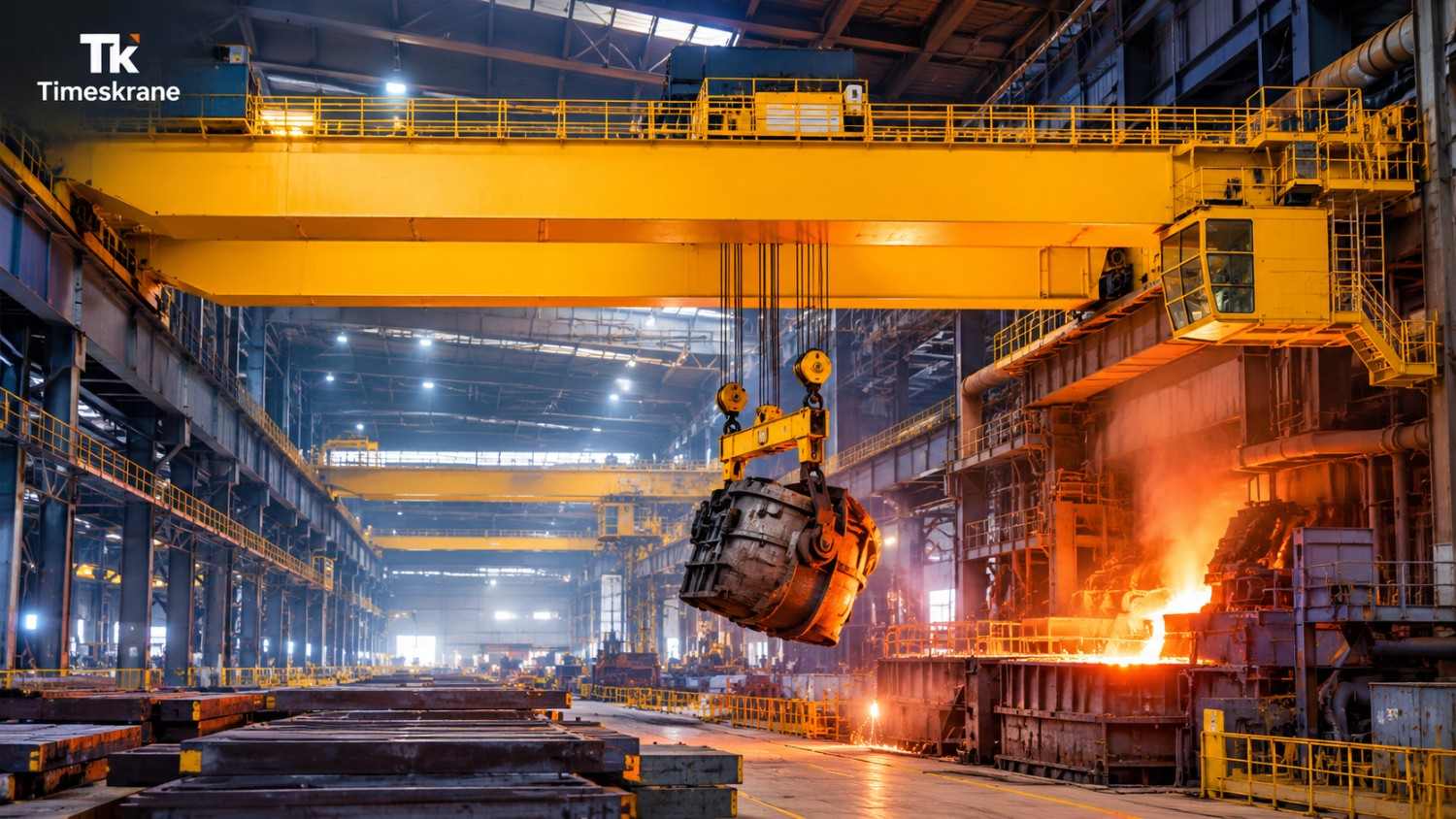
An honest breakdown of what makes a crane genuinely heavy duty for steel plant use, covering duty classification, capacity, and safety features buyers often miss.
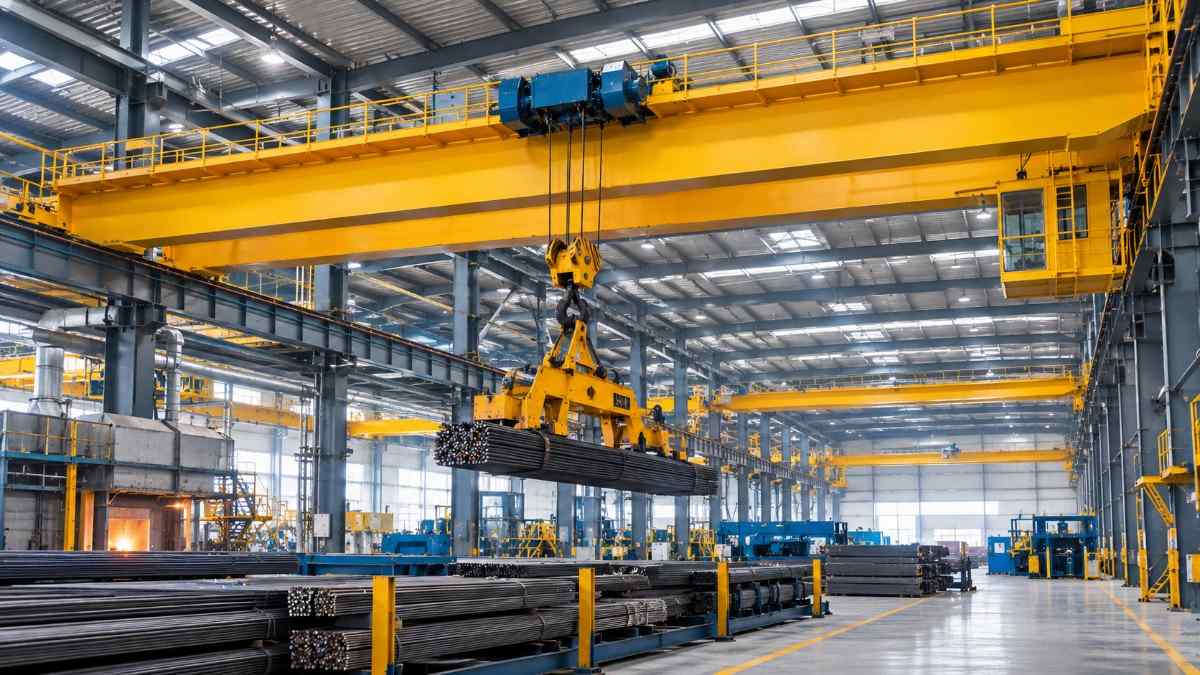
Finding the right steel plant crane manufacturer is perhaps the most important decision a procurement manager or plant owner will make. A poorly designed crane can increase both safety risks and downtime while excessively increasing maintenance costs.
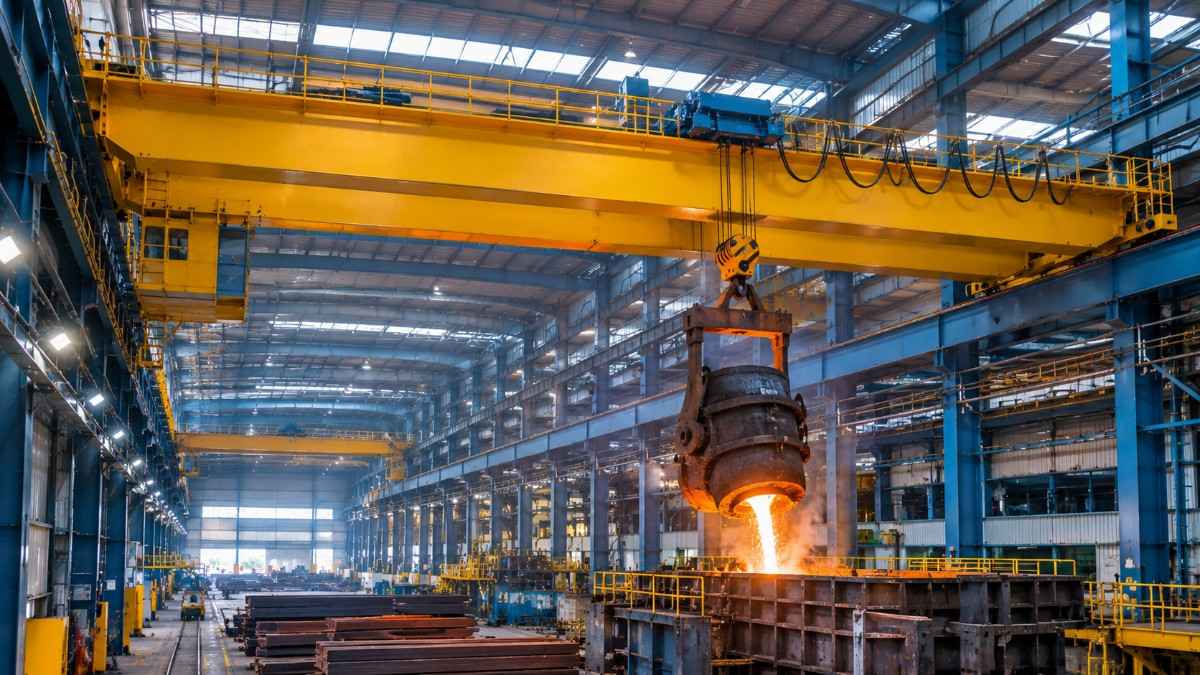
If you run or manage a steel plant, you already know that an overhead crane for steel plant operations is not a luxury. It is the backbone of your material handling process. From moving billets and coils to shifting ladles of molten metal, the right crane decides how smoothly your production line runs.
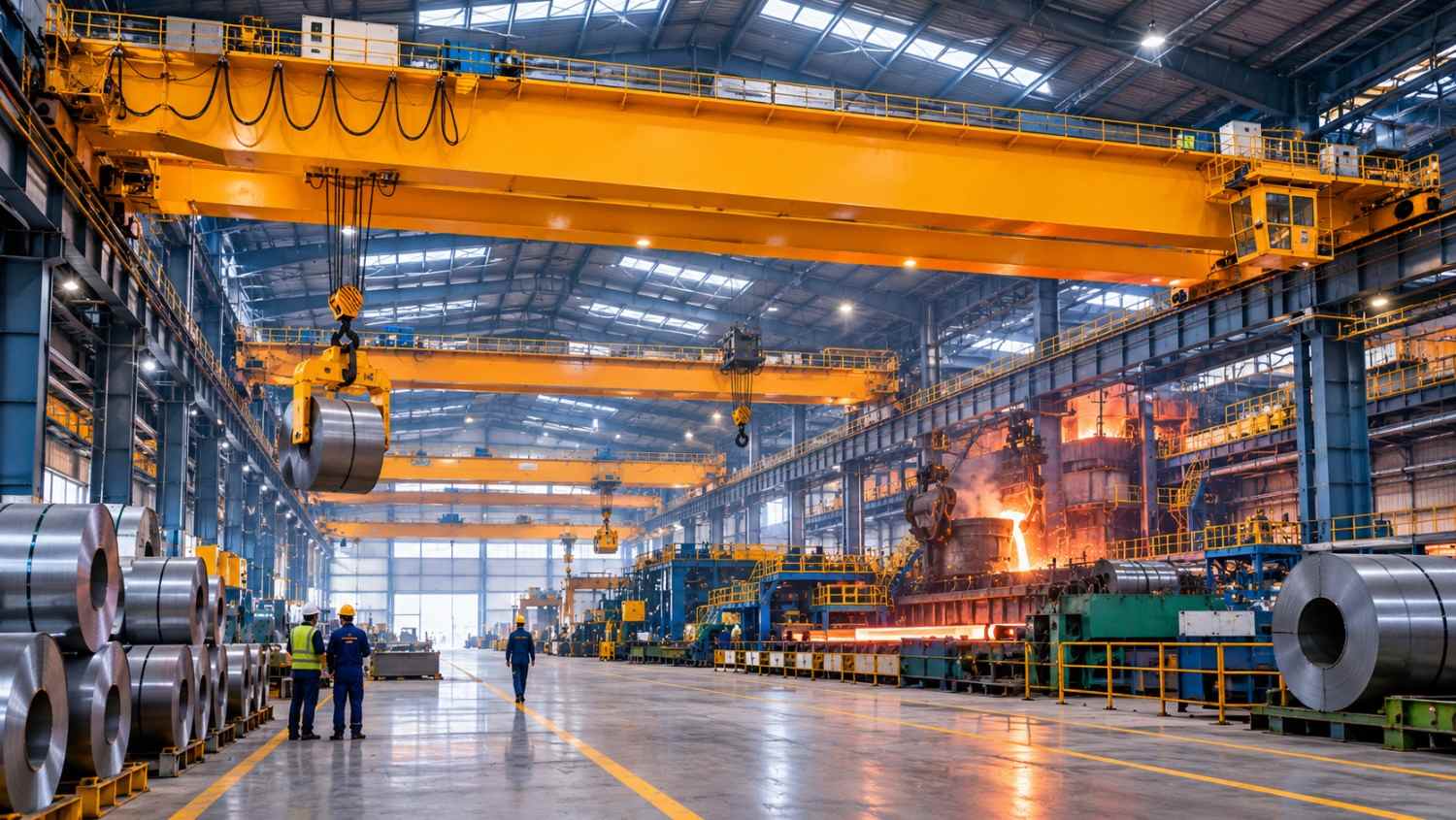
An honest, researched look at the top 5 crane manufacturers for steel plants in India, covering ladle, grab bucket, and coil handling cranes.
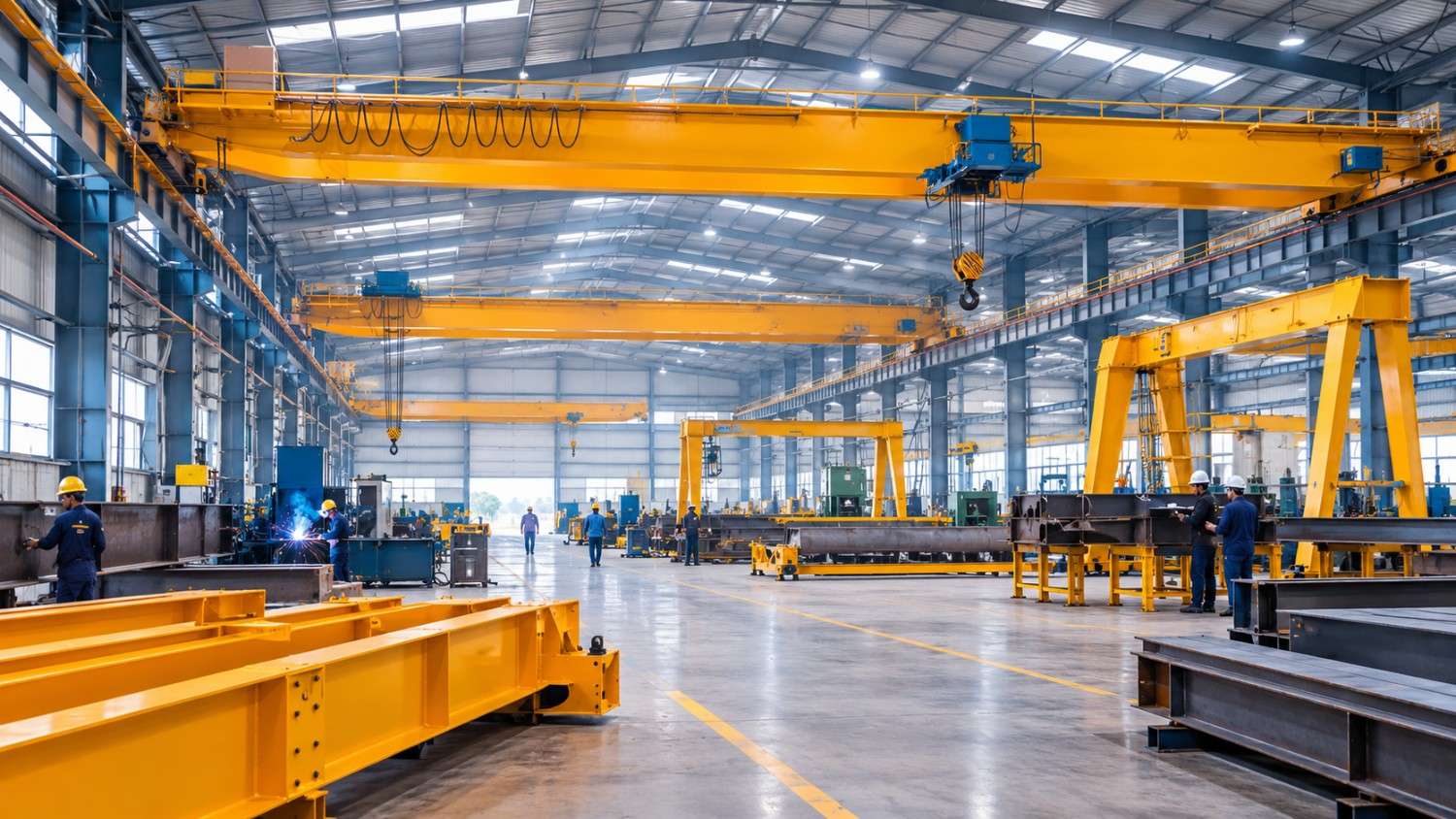
A real, researched look at the top 10 crane manufacturers in North India, covering Delhi NCR, Punjab, Haryana, UP, and Rajasthan, with what actually sets each one apart.
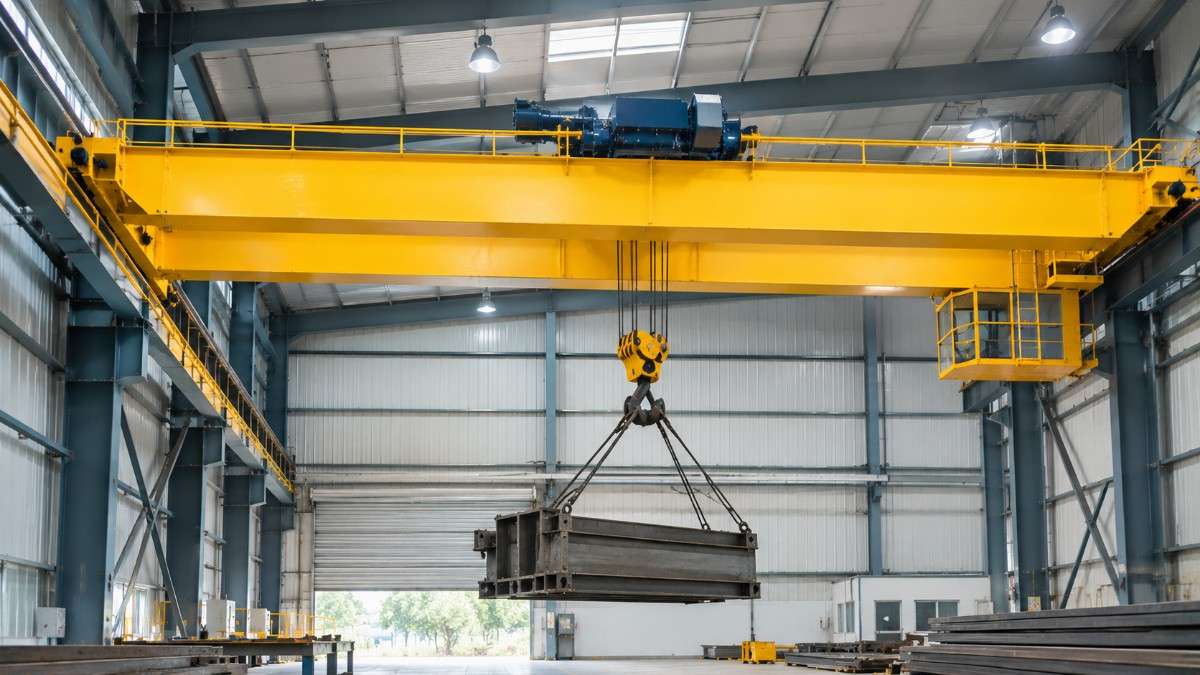
If you are looking for a 10 ton overhead crane for your factory or warehouse, the primary question that arises in your mind is whether this capacity will cater to your daily operations or it will turn out to be a useless and bulky addition to your storage.
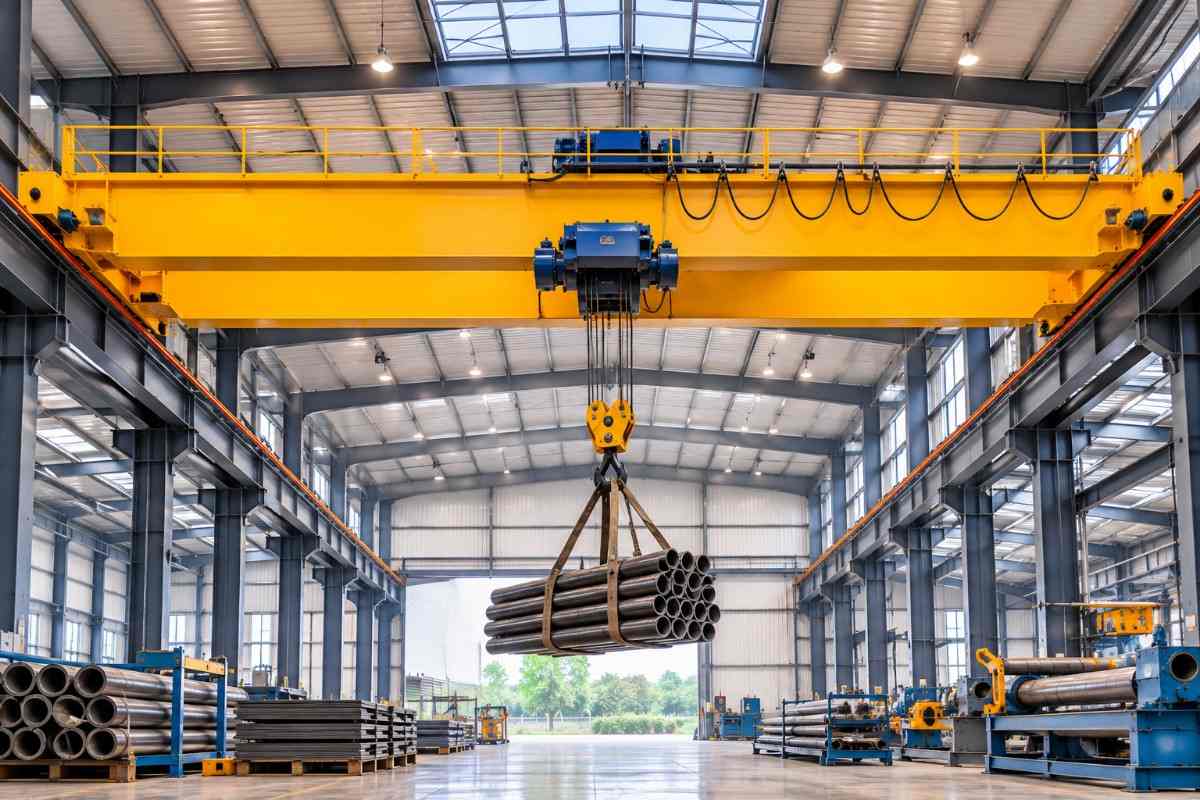
The 5 ton overhead crane is one of the most frequently ordered lifting systems in Indian manufacturing plants, and this is for a valid reason since it strikes a good balance: it is heavy enough to cope with serious fabrication, assembly, and warehousing tasks, yet it is small enough to be fitted into medium-sized factory sheds without requiring a major restructuring of the building.
Looking for a reliable partner for your next industrial project?