English
Contact
Configure
Catalog
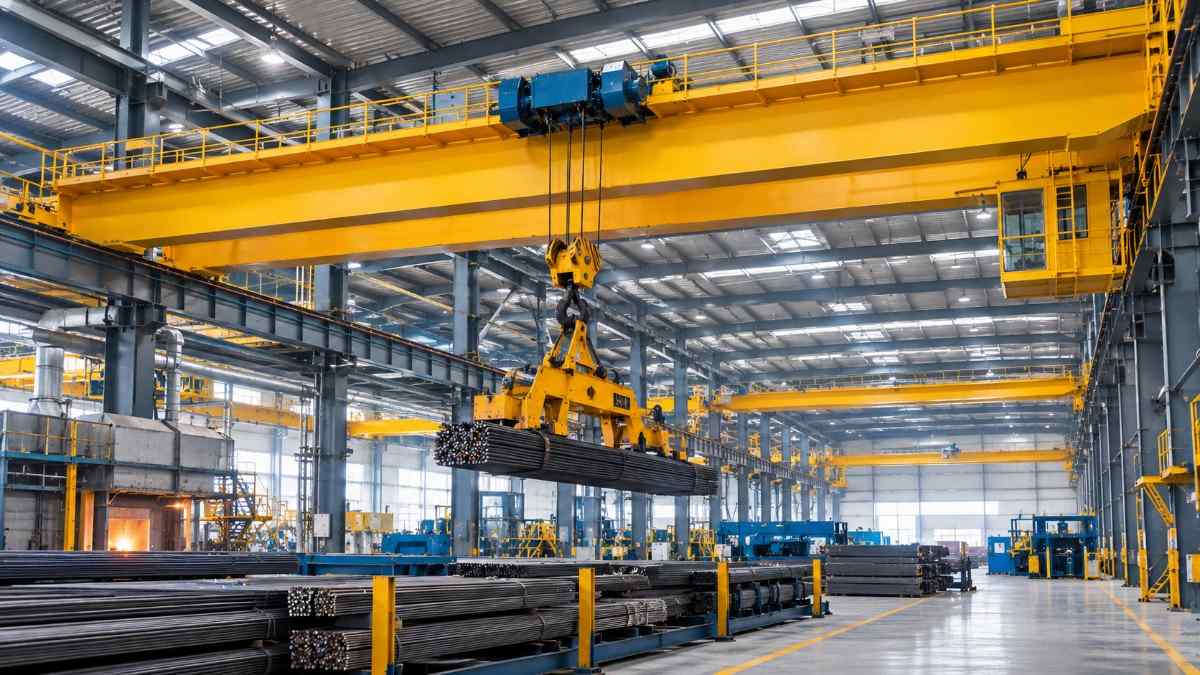
In my time working with steel manufacturers in Haryana, Gujarat, and West Bengal, I found that while making a purchase, the buyers focused overwhelmingly on the machine, and gave little to no attention to the manufacturer of the machine. The reliability of a crane is a direct result of the engineering, quality control, and the after-sales support of the manufacturer. Two seemingly identical cranes on paper can have drastically different performances over time.
This article will provide you with the information you need to identify a steel plant crane manufacturer, provide examples of crane types and their appropriate uses, and show the common mistakes buyers make when rushing to make a purchase. This article is also applicable to a person researching a general overhead crane for steel plant.
A steel plant crane manufacturer creates innovative solutions to the problems of crushing, moving, and stacking metals in the extremely hot and abrasive environment of a steel making plant. Their equipment must withstand the extreme temperatures and temperatures and near-continuous duty cycles of steel making.
This involves much more than assembling pre-made parts. A legitimate steel plant crane manufacturer is intimately familiar with IS 3177’s duty classification, the particular bay’s structure’s loading constraints, and the operational requirements of moving molten metal, billets, coils, and scrap. I’ve seen a significant improvement in equipment reliability when a steel plant has switched from general-purpose cranes to the properly specified steel plant equipment.
In short: the manufacturer is more important than the model because how a crane performs over its working life is influenced by things like the quality of the engineering and the components used as well as the after-sales service, as opposed to the stated capacity on the spec sheet.
Two 10-ton cranes made by different manufacturers can act very differently after 1.5 years of use in a steel plant. One thing that a lot of buyers tends to ignore is that the brand of the gearbox, the quality of the wire rope, and the design of the electrical panel can be more important than the headline capacity.
Things that make a strong manufacturer:
A good manufacturer will help you match the right crane type to your bay and load profile. They won't try to push you to buy a specific product.
Single girder overhead cranes have one main beam and can handle lighter to medium loads, which are typically found in finishing bays, warehouses, and secondary handling zones within a steel plant.
A double girder overhead crane has two parallel beams and provides greater capacity and longer spans. This type of crane is the standard choice for rolling mills and primary steel making bays as well as ladle handling areas.
A gantry crane has a runway which is at ground level as opposed to an elevated runway like other cranes. Steel plants typically use these in outdoor scrap yards and raw material stacking areas, as it is not economical to build an elevated runway in these locations.
A good overhead crane manufacturer in India will provide special attachments like magnet beams for scrap handling or ladle hooks and grab attachments for raw material yards, in addition to the base configuration of the crane. I have seen many plants regret going with a hook-only crane as they could have benefited from a magnet or grab attachment from day one.
Since manufacturing costs vary by customization and site requirements, this comparison focuses on girder type, span range, and application fit rather than pricing.
| Crane Type | Girder Configuration | Typical Span Range | Best Suited Application |
|---|---|---|---|
| Single Girder EOT Crane | Single beam | Up to 20 meters | Finishing bays, light to medium loads |
| Double Girder EOT Crane | Twin parallel beams | Up to 35 meters | Rolling mills, ladle handling, heavy loads |
| Gantry Crane | Single or double beam, ground supported | Site dependent | Outdoor scrap and raw material yards |
| Semi-Gantry Crane | Hybrid runway and rail support | Site dependent | Mixed indoor-outdoor bays |
Some manufacturers in India who claim to make overhead cranes may not have experience in making cranes in steel plants. Some may focus on lighter commercial or warehouse cranes and take on more industrial projects infrequently.
Before you make a decision, you should ask:
To get a general idea about the market, you can check out the top 5 crane manufacturers for steel plants in India, or look at a more comprehensive list of industrial crane manufacturers in India. That way you can compare against the entire field, not just the first few results.
Being able to recognize the important parts of an overhead crane allows you to assess the level of expertise of a crane manufacturer.
In my experience, limit switches and wire ropes are the first to fail when preventive maintenance is ignored. It is important that you ask the manufacturers that you are evaluating about the component brands that they use, as these are the areas where most of the cost cutting happens.
1. Comparing manufacturers on price before comparing specifications. Costs for overhead cranes vary for different duty classes, span, and components, so a low quote could mean a low spec, and an inferior product.
2. Believing all EOT crane manufacturers have steel plant experience. It is possible that a manufacturer that is strong in general fabrication has little to no experience with the heat, dust, and the intensity of a steel plant.
3. Not doing a site visit before finalizing the design. Bay dimensions, column spacing, and headroom can all impact the design of a crane. A manufacturer who quotes without doing a site visit or reviewing the working drawings is taking a short cut and it will cost you.
4. Not taking after sales support into consideration. A crane that has broken down and has no support to access service can result in lost production days. The service support and manufacturing quality play an equal role in the support and service of the crane.
5. Not considering regional manufacturing hubs. In areas like crane manufacturers in vatva ahmedabad, there are strong fabrications ecosystems and comparing manufacturers in different regions can result in differing lead times and cost structures.
This guide primarily focuses on the selection of steel plant crane manufacturers. However, the same manufacturers work in related heavy industries such as:
A manufacturer who works in these related industries also has the judgment of a broader engineer when designing a heavy duty crane for steel plant project, as the principles of structure and safety carry over from one heavy industry to another.
After the installation, a responsible manufacturer does not walk away from the project. Support should include:
I have worked at numerous plants, and those that have a direct relationship with their manufacturer for ongoing support have far less unplanned shutdowns compared to plants that view the original equipment purchase as a one-time transaction.
Large National Manufacturers
Pros: Adequate engineering tools and a modeled approach for quality control.
Cons: Longer response times for small or time-critical service requests.
Regional Specialist Manufacturers
Pros. Shorter response times for service calls, and more flexible in design time and custom fabrications.
Cons: Possibly fewer similar sized large scale steel references.
Turnkey Project Manufacturers
Pros: Reduced customer effort management of design, fabrication, and installation as a single contractor scope.
Cons: More costly than buying components separately.
At Times Krane, we manufacture EOT cranes and gantry cranes engineered specifically for demanding industrial environments, including steel plant operations. Our team works with clients from the initial site survey through installation and beyond, making sure the crane specification reflects your actual bay conditions and duty requirements rather than a generic template.
We are frequently approached by procurement managers who have already dealt with underspecified equipment or slow after-sales response from a previous supplier. What we focus on is building cranes that genuinely hold up under Indian steel plant conditions, backed by clear technical documentation and responsive service. If you are comparing an eot crane price in india across manufacturers, our engineering team is happy to walk you through a specification that matches your actual site.
Key Takeaways
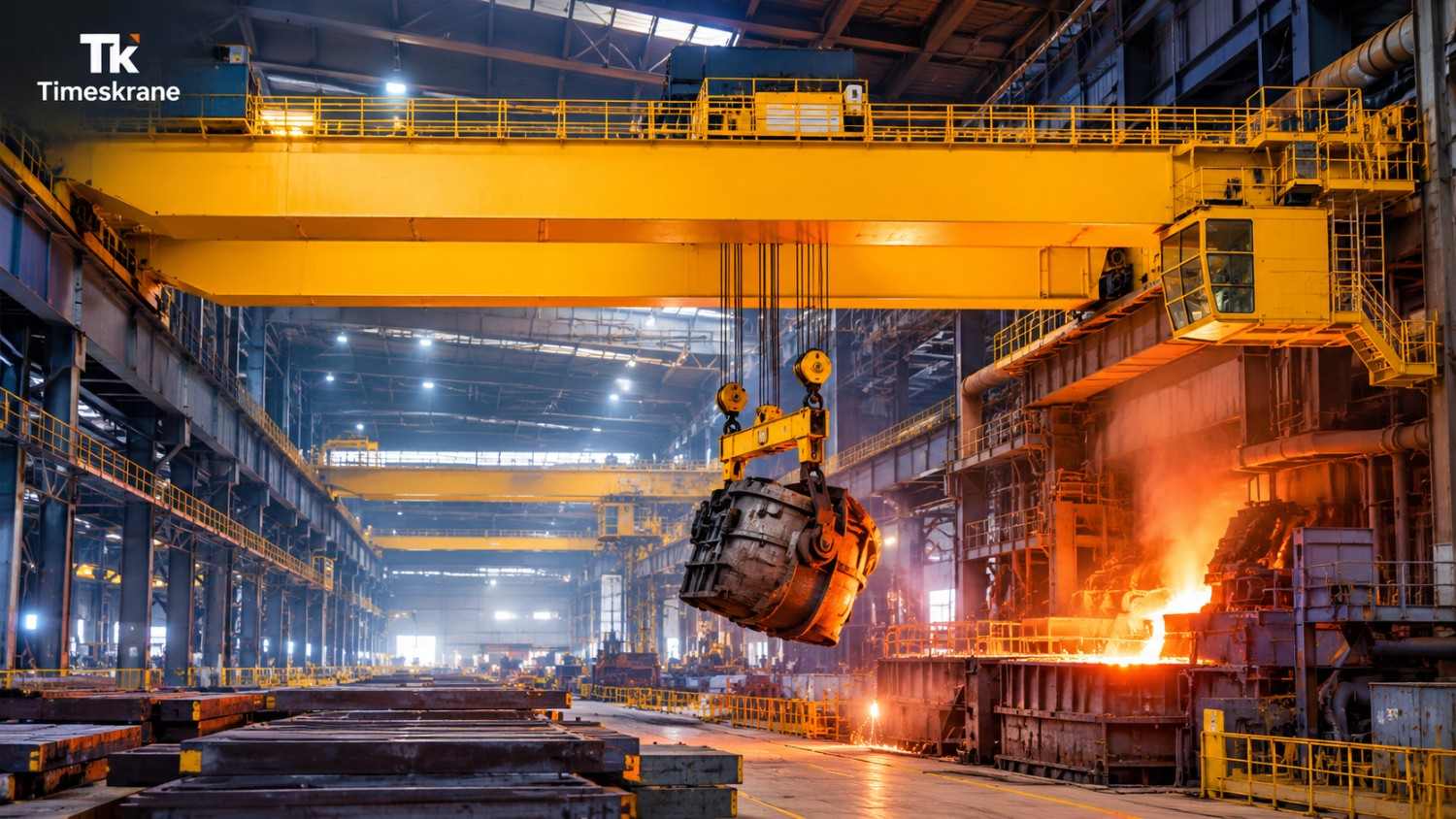
An honest breakdown of what makes a crane genuinely heavy duty for steel plant use, covering duty classification, capacity, and safety features buyers often miss.
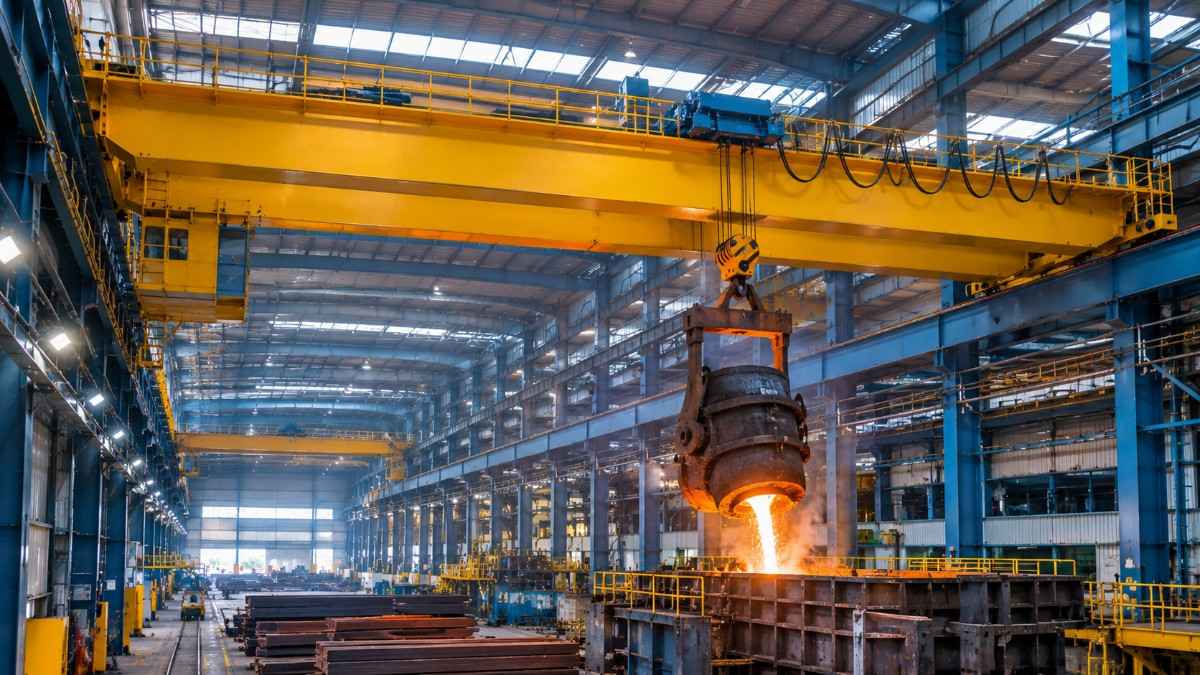
If you run or manage a steel plant, you already know that an overhead crane for steel plant operations is not a luxury. It is the backbone of your material handling process. From moving billets and coils to shifting ladles of molten metal, the right crane decides how smoothly your production line runs.
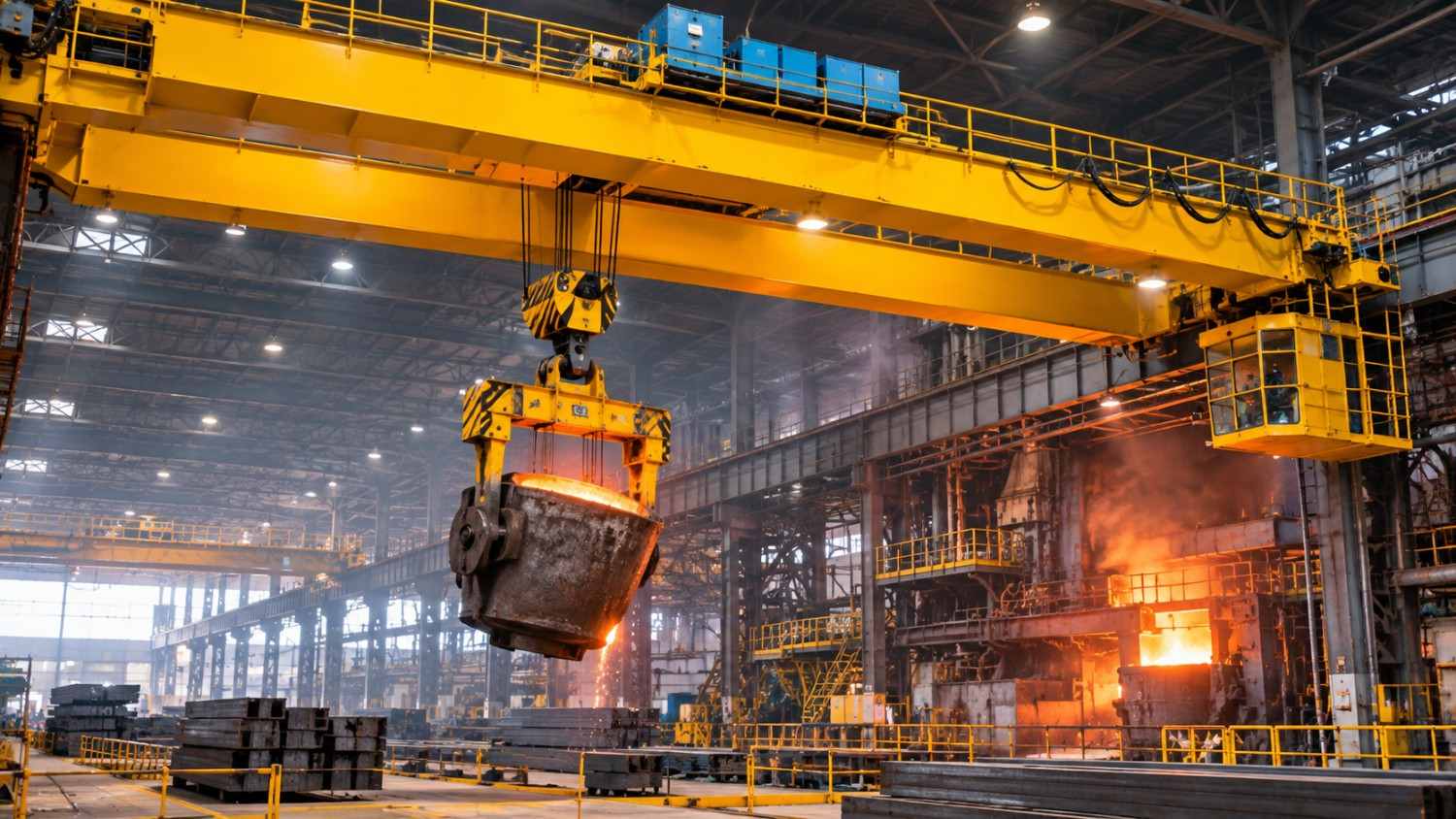
Discover how EOT cranes support steel plant operations, from material handling to molten metal lifting. Learn about crane types, duty classes, safety features, and how to choose the right EOT crane for your steel plant.
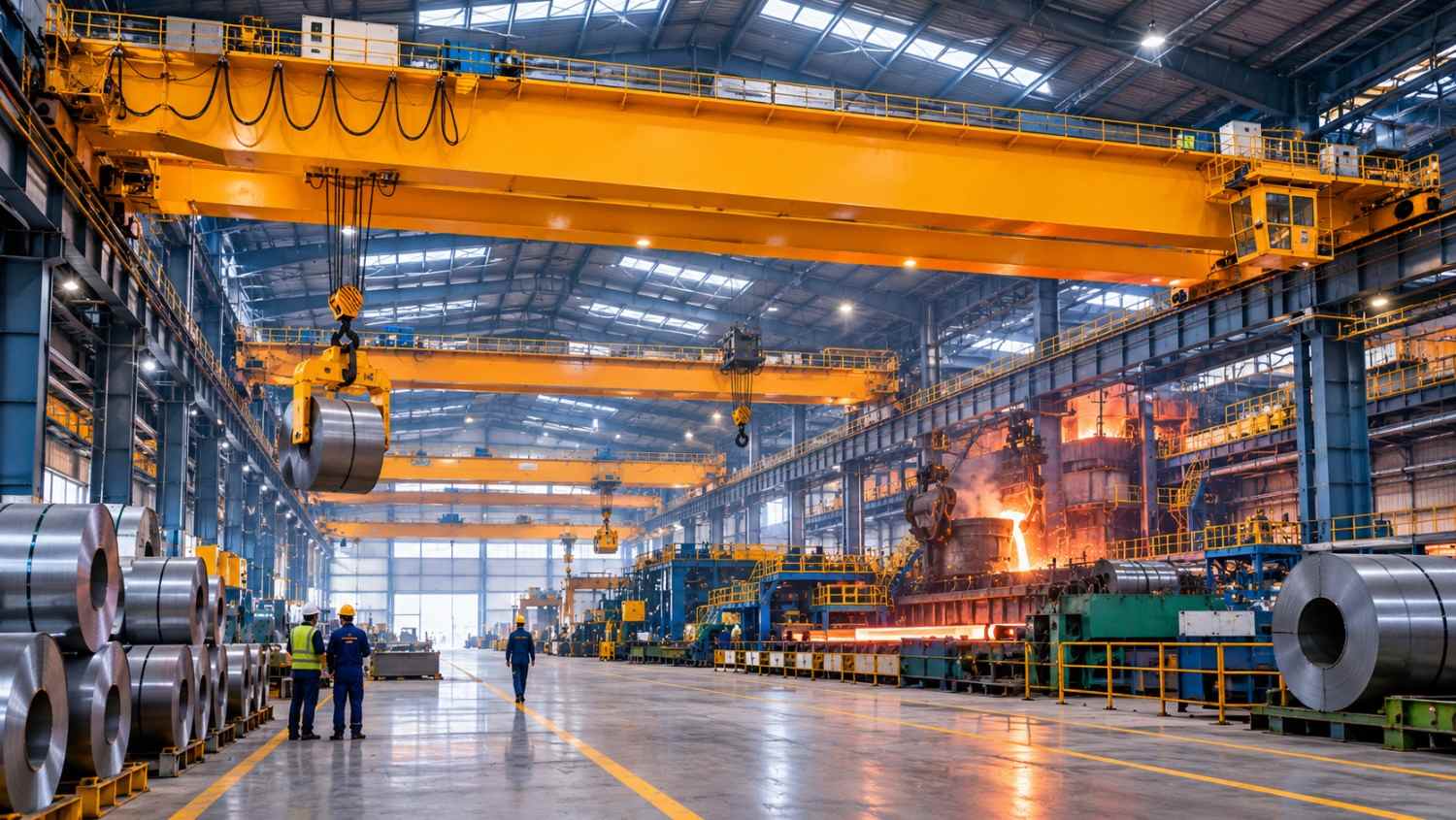
An honest, researched look at the top 5 crane manufacturers for steel plants in India, covering ladle, grab bucket, and coil handling cranes.
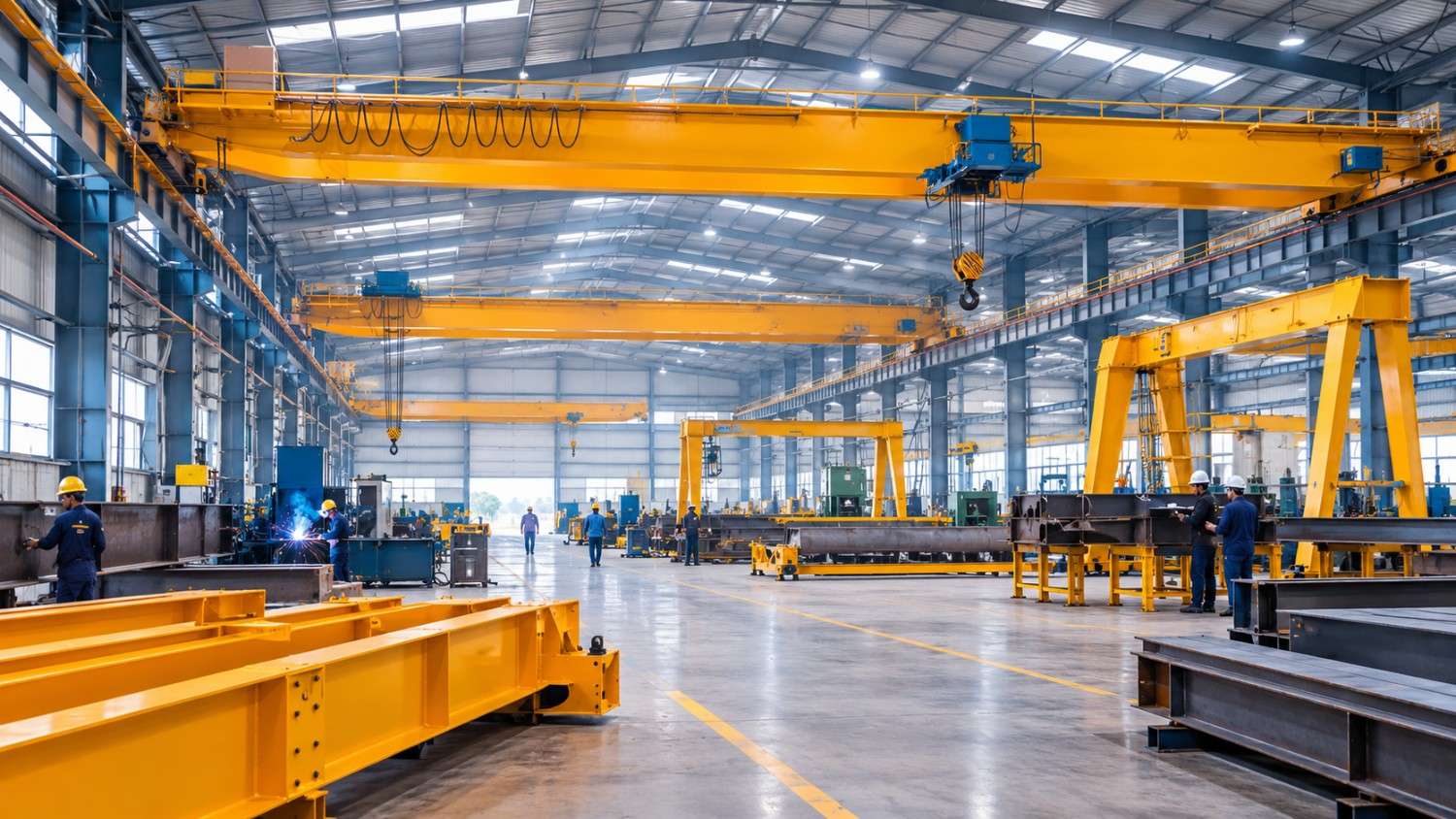
A real, researched look at the top 10 crane manufacturers in North India, covering Delhi NCR, Punjab, Haryana, UP, and Rajasthan, with what actually sets each one apart.
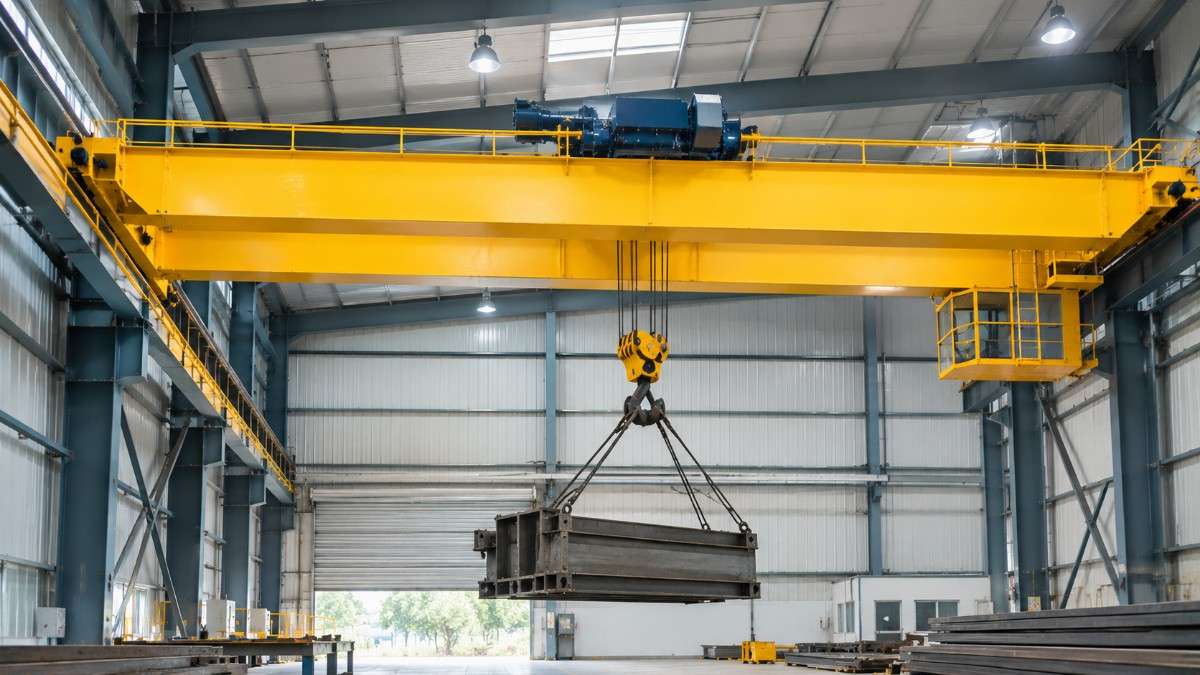
If you are looking for a 10 ton overhead crane for your factory or warehouse, the primary question that arises in your mind is whether this capacity will cater to your daily operations or it will turn out to be a useless and bulky addition to your storage.
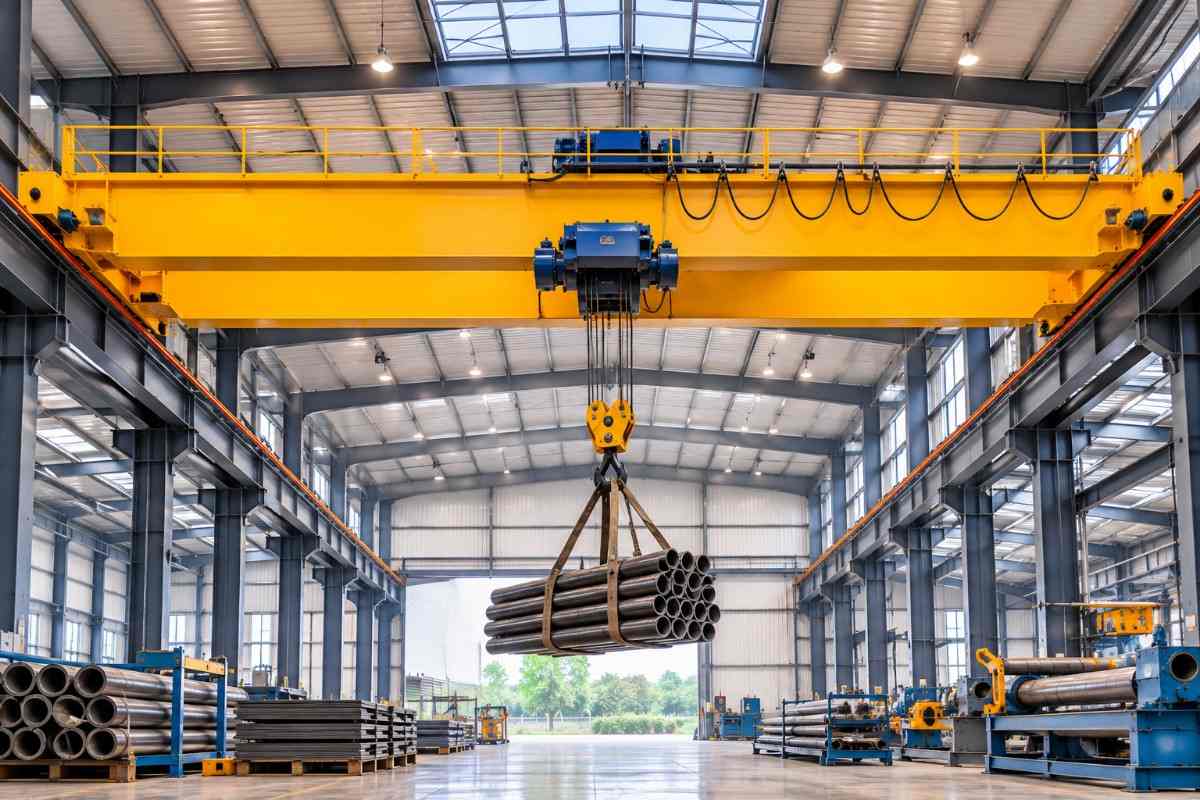
The 5 ton overhead crane is one of the most frequently ordered lifting systems in Indian manufacturing plants, and this is for a valid reason since it strikes a good balance: it is heavy enough to cope with serious fabrication, assembly, and warehousing tasks, yet it is small enough to be fitted into medium-sized factory sheds without requiring a major restructuring of the building.
Looking for a reliable partner for your next industrial project?