English
Contact
Configure
Catalog
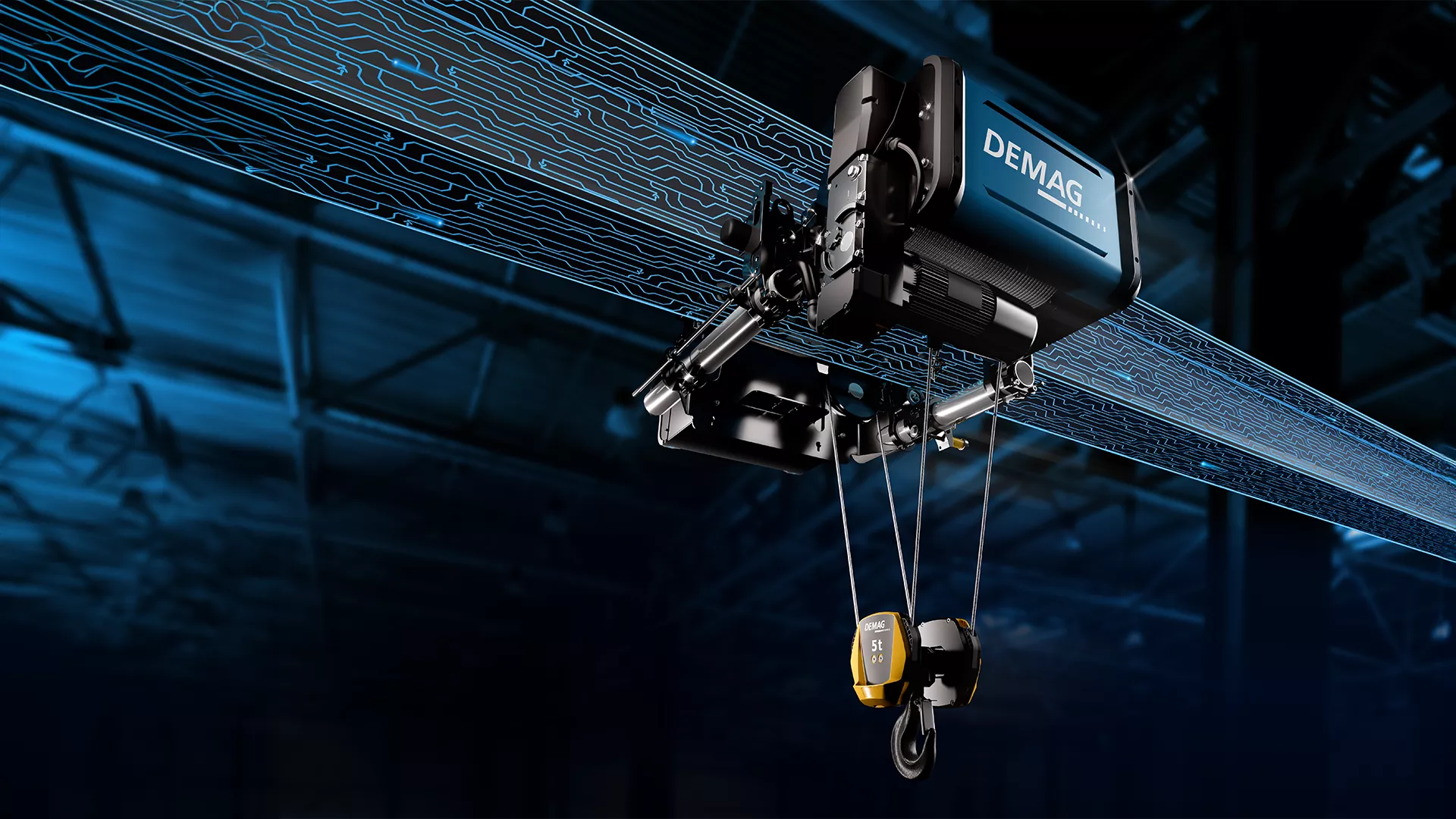
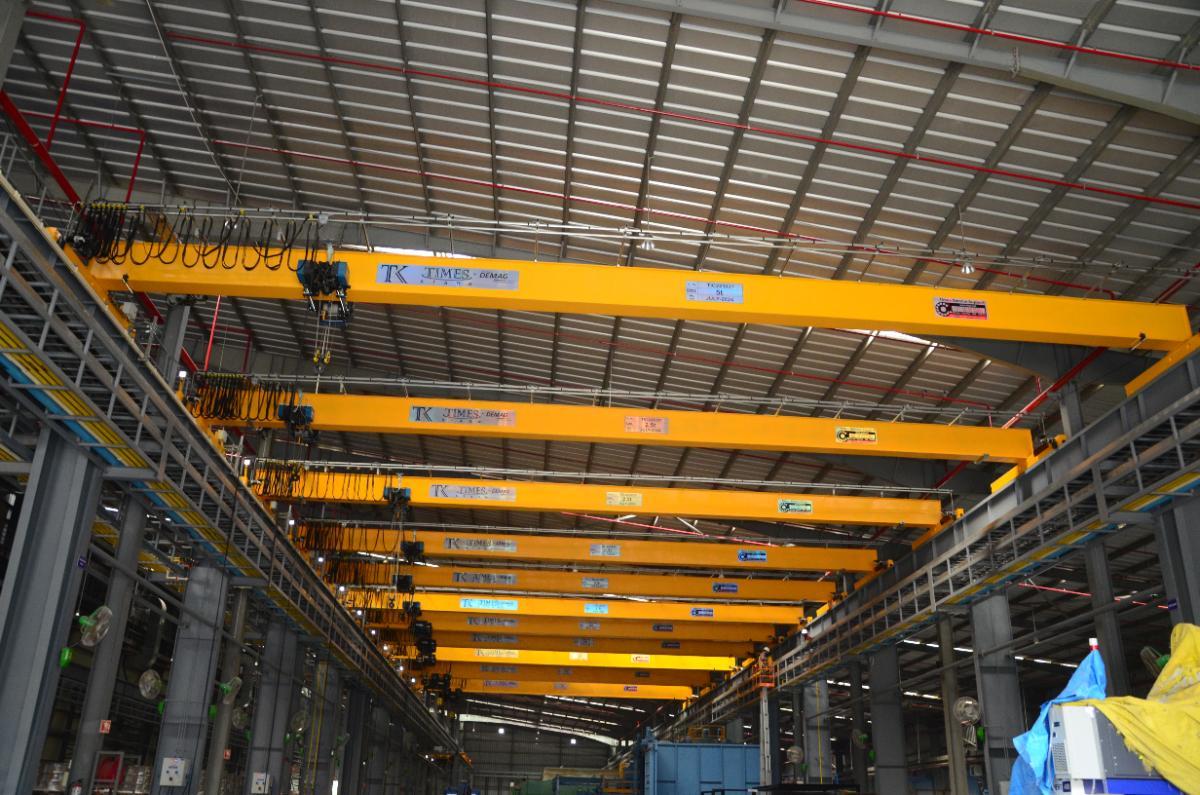
An underslung crane manufacturer in India has to solve a problem that top running cranes cannot: how to lift loads in a building that has limited headroom, a light roof structure or no room for separate crane columns. Timeskrane designs and builds underslung cranes, also called under slung or underhung cranes, for factories, workshops, assembly lines and warehouses across India. This page explains how an underslung crane works, where it beats a top running EOT crane, what you should specify before asking for a quotation, and how our engineers support the job from layout to commissioning.
An underslung crane is an overhead travelling crane whose bridge hangs from the bottom flange of the runway beams instead of sitting on top of rails. The end carriages run on the lower flange of the runway girders, and the hoist and trolley travel on the lower flange of the bridge girder. Because the crane hangs below the runway, the hook can reach closer to the roof, and the runway can be fixed directly to the building roof trusses or to a light support frame.
The idea is simple, but the engineering is not. The roof or support structure has to carry the crane weight, the lifted load and the dynamic forces from starting and stopping. That is why a good underslung crane supplier begins with your building drawing, not with a catalogue price.
The main parts are the runway beams, end carriages, bridge girder, hoist with trolley, and the electrical or control system.
Long travel, cross travel and hoisting are driven by separate motors, so the operator can place a load anywhere inside the rectangle of the bay. For light loads, the same layout can be built with a lighter profile, similar to a KBK system. You can compare that approach on our KBK light crane system page.
Choosing between the two depends on the building, the load and the duty. The table below shows how they differ in practice.
| Point | Underslung crane | Top running EOT crane |
|---|---|---|
| Support | Hangs from roof truss or light frame | Sits on rails over crane beams and columns |
| Headroom | Good use of available height | Needs more building height |
| Typical capacity | Light to medium loads | Light to very heavy loads |
| Building cost | Lower if the roof can carry it | Higher because of crane columns and beams |
| Coverage | Easy to add branch lines and curves in some designs | Straight bay only |
| Best for | Assembly lines, workshops, warehouses, machine shops | Heavy industry, foundries, steel plants |
If you are still deciding between a single or double girder top running crane, read our guide on single girder vs double girder EOT cranes. For a broader view of all crane families, see EOT crane types.
Underslung cranes suit work that is repetitive, light to medium in weight and spread across a bay. Typical users include:
Heavy duty plants such as foundries and steel plants normally need a top running double girder crane. Our page on EOT cranes for steel plants explains why.
Every crane is made to order. To prepare an accurate design and price, our team asks for the following details.
Tell us the heaviest load and the normal working load. The number of lifts per hour and shifts per day decide the duty class, which affects motors, gearboxes, brakes and wheels. A crane for one shift of assembly work is not built like one that runs three shifts.
Span is the distance between runway centres. Lift height is the distance the hook travels. Both depend on the bay size and the clearance from the lowest roof member.
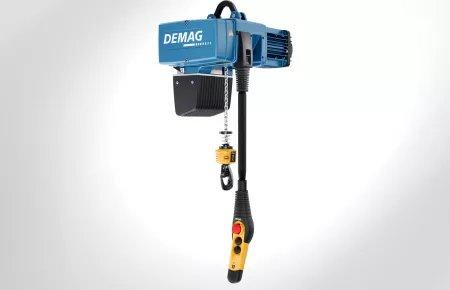
An electric chain hoist suits light loads and short lifts. A wire rope hoist suits higher capacities, longer lifts and heavier duty. See electric chain hoist price in India and our rope hoists for the options.
Single speed, two speed and variable frequency drive control are available. Smooth, slow positioning matters when you place delicate parts or fit components into a machine. Pendant and radio remote controls are both possible.
Limit switches for hoisting and travel, overload protection, emergency stop and warning devices are part of the design. For more on the rules that apply, read about EOT crane safety compliance in India.
An underslung crane is not the answer to every lifting job. Capacity is normally lower than a top running crane, and the building must be checked by a structural engineer before the crane is fixed to it. The runway should never be hung from a roof that was not designed for it. Very heavy, continuous duty or hot environments usually need a top running double girder crane. If your load is above the range of a light crane system, our double girder crane and single girder crane pages show the alternatives. For crane pricing basics, see EOT crane price in India.
Before the crane is ordered, three checks save money and delay.
Our engineers review your building drawing and tell you honestly if a different crane is a better fit.
We supply, install and commission underslung cranes, and train your operators on safe use. After handover, a regular inspection routine keeps the crane reliable. Our EOT crane maintenance page describes support, and the preventive maintenance checklist for EOT cranes gives a practical inspection routine your team can follow. Annual contracts are explained in EOT crane AMC cost and what is included.
Timeskrane has been engineering industrial lifting equipment since 1988 and serves customers in Delhi NCR, Gujarat, Maharashtra, Tamil Nadu and across India. We design to your bay, not to a stock size. You get a clear drawing, a written specification, a delivery plan and after-sales support. If you want to see all crane families we build, visit the EOT cranes page.
Send us your bay length and width, roof height, capacity, duty and a sketch or drawing of the roof structure. Our engineers will recommend the right crane, explain the structural requirements and prepare a quotation. Use our contact page to get started.
What decides the price of an electric wire rope hoist in India: capacity, lift height, duty class, speed, trolley type and controls. Share your duty details and get a clear quotation from Timeskrane.
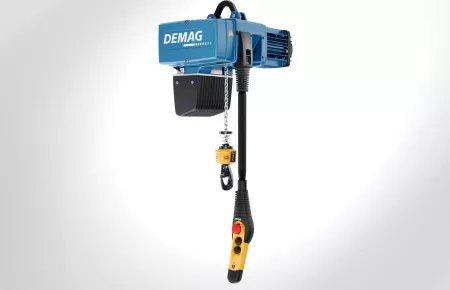
Understand electric chain hoist price in India by capacity, lift height, speed, trolley type and duty. Share your requirement with Timeskrane for an accurate quotation.
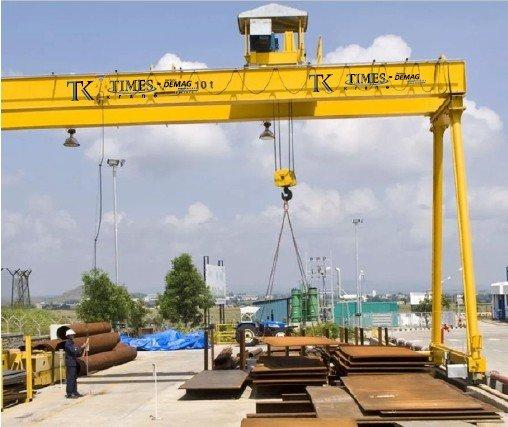
Timeskrane manufactures semi gantry cranes in India for workshops, yards and plants where one side runs on a floor rail and the other on a building runway.
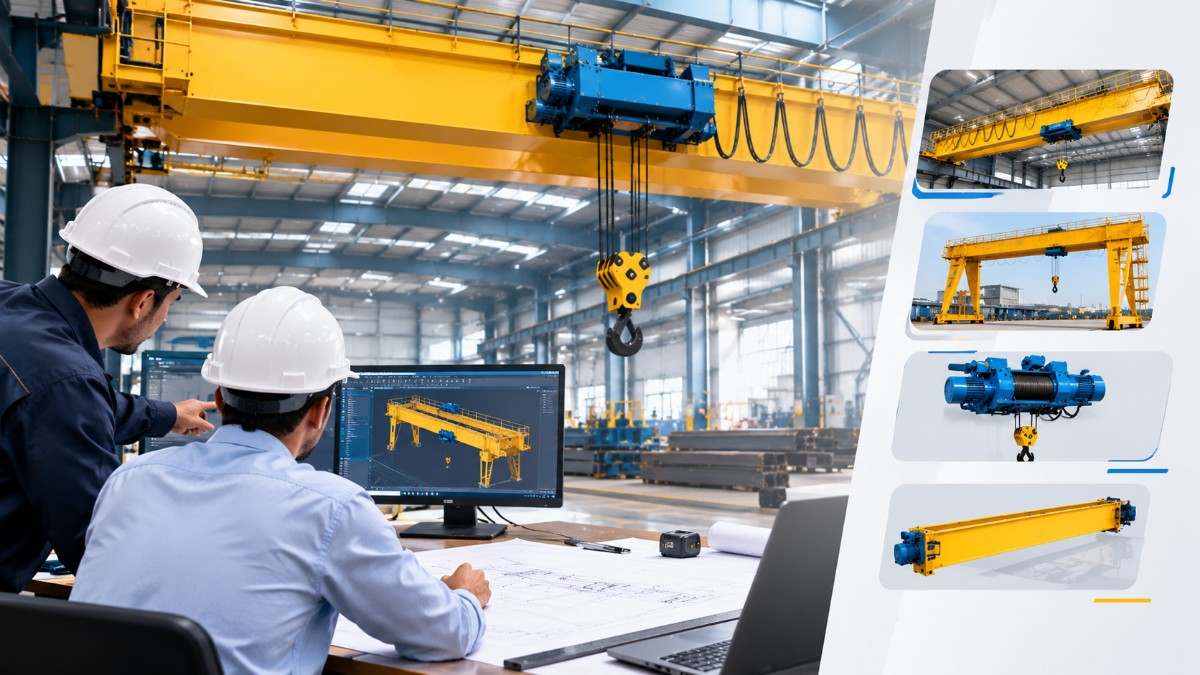
A fabrication shop with a low roof truss. A stamping line where two operators share one bay. A warehouse that cannot give up a single aisle. Each of these plants asks for the same thing in different words: a crane that fits the building, not a building that has to adapt to a catalog model.
EOT crane manufacturer in Mandi Gobindgarh: crane types, key specs and supplier checks for steel mills and rolling units.
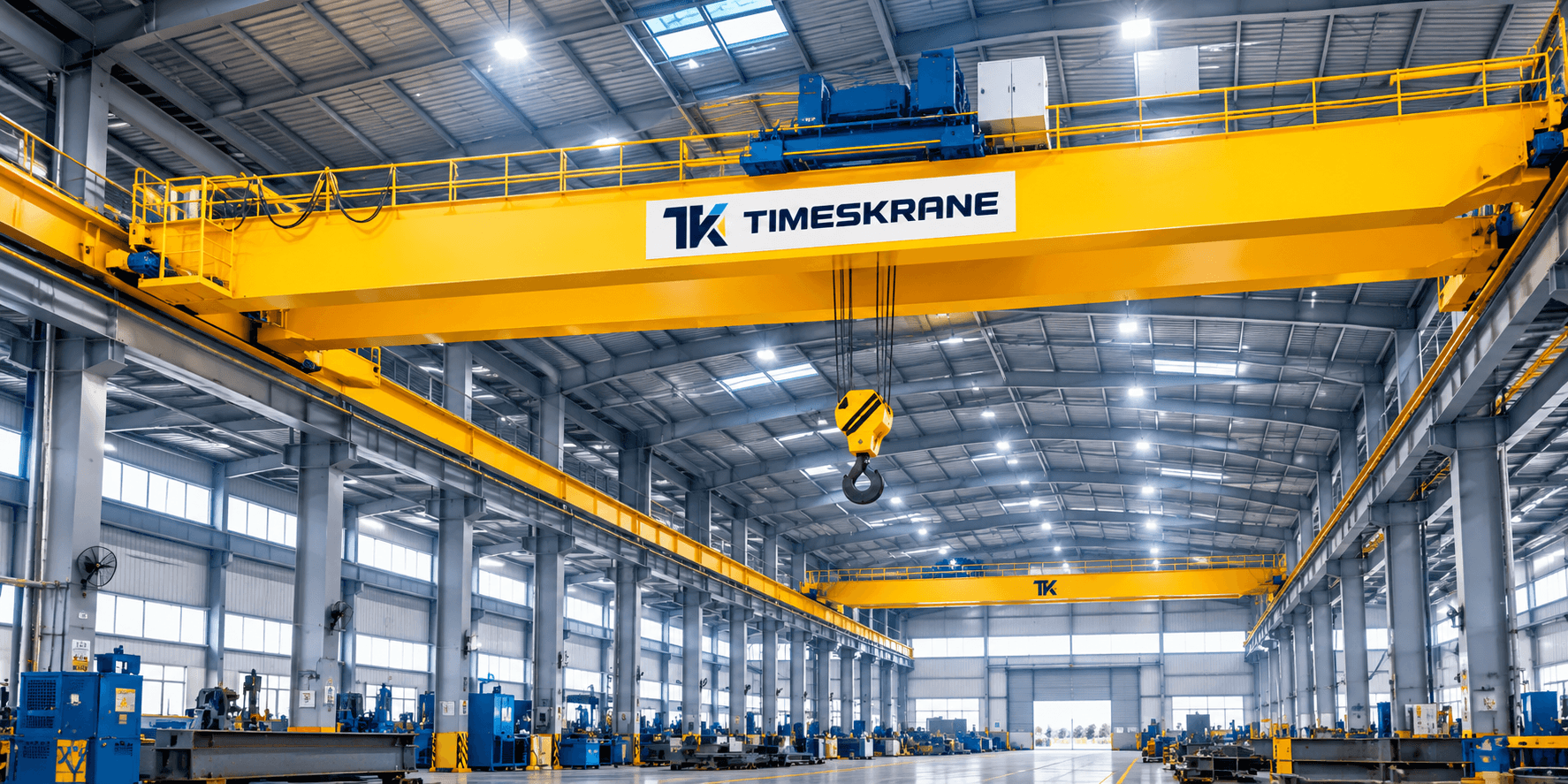
EOT crane manufacturer in Agra: crane types, key specs and supplier checks for foundries and industrial plants.
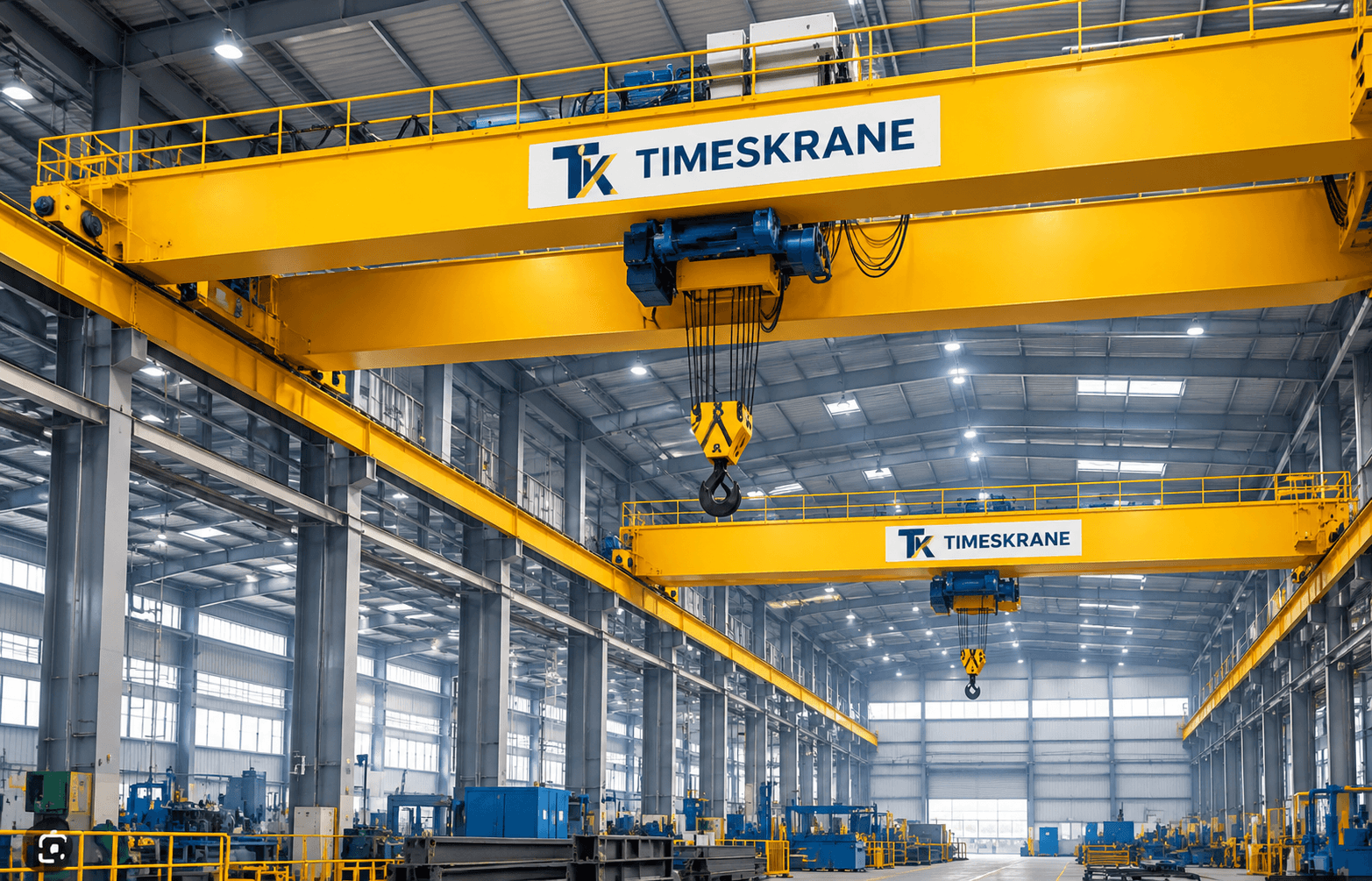
EOT crane manufacturer in Lucknow: crane types, key specs and supplier checks for industrial plants.
Looking for a reliable partner for your next industrial project?