
EOT Crane Safety Compliance in India
Table of Content

EOT Crane Safety Compliance in India
Owning an EOT crane in India comes with a legal responsibility, not just an operational one. Beyond choosing the right crane and keeping it maintained (see our preventive maintenance checklist for EOT cranes and EOT crane AMC guide), factory owners are required to keep their cranes inspected, tested, and certified under Indian law. This guide explains what that actually means in practice: the IS codes that apply, what the Factories Act requires, and how third-party load testing and certification work.
This article is meant to give you a clear starting point. Requirements can vary slightly by state (since factory rules are administered at the state level) and by industry, so always confirm the specific requirements applicable to your facility with your state Factory Inspectorate or a certified inspection agency.
Why Compliance Matters, Beyond the Legal Requirement
An EOT crane lifts and moves heavy loads over people, equipment, and work areas. A structural failure, a brake malfunction, or an overload situation can cause serious injury or worse. Compliance requirements exist because crane failures are largely preventable through regular inspection and testing, not because of arbitrary paperwork.
Beyond safety, staying compliant also affects:
- Insurance claims. Insurers can question or deny claims related to a crane accident if statutory inspection and certification records are missing or lapsed.
- Audits and certifications. Customer audits, ISO certifications, and factory license renewals often ask for crane inspection records.
- Legal liability. In the event of an accident, the absence of valid inspection and certification records can affect liability outcomes for the factory occupier and management.
The Legal Framework: Factories Act and the OSH Code
The primary law governing crane safety obligations in Indian factories has historically been the Factories Act, 1948, particularly the sections dealing with hoisting machinery and lifting equipment. This has been progressively replaced by the Occupational Safety, Health and Working Conditions Code, 2020 (OSH Code), which consolidates several older labour laws, though implementation and transition vary by state.
Under this framework, lifting appliances such as EOT cranes are generally required to be:
- Of good mechanical construction, sound material, and adequate strength
- Maintained in good working order
- Thoroughly examined by a competent person at set intervals, commonly cited as at least once every 12 months, and re-certified as safe for continued use
A "competent person" in this context refers to an individual or agency recognized and authorized to carry out statutory examinations of lifting equipment, distinct from your regular in-house maintenance staff or AMC service technician.
Because implementation details (forms, exact intervals for certain equipment classes, registration of competent persons) are handled at the state level, it's worth confirming the specific procedural requirements with your state's Factory Inspectorate or Directorate of Industrial Safety and Health.
Key IS Codes That Apply to EOT Cranes
The Bureau of Indian Standards (BIS) publishes the technical codes that govern how EOT cranes should be designed, built, tested, and inspected. The main ones relevant to compliance are:
IS 3177: Electric Overhead Travelling Cranes and Gantry Cranes, Code of Practice
This is the primary standard for EOT and gantry cranes (other than heavy steelwork cranes, which fall under IS 4137). It covers design classification, safety requirements, and inspection practice. The standard has been revised over time, with a more recent revision refining duty classification and safety provisions.
IS 807: Code of Practice for Design, Manufacture, Erection and Testing of Cranes and Hoists
This standard covers structural design principles and the duty classification system (M1 to M8) used to match a crane's design to how intensively it will be used. Duty class affects both the crane's build quality and its expected inspection intensity.
IS 4137: Heavy Duty Electric Overhead Travelling Cranes for Steel Work, Other Than Grab, Magnet and Metallurgical Cranes
This applies specifically to heavy-duty cranes used in steel plants and similarly demanding environments, where load cycling and operating conditions go beyond what standard IS 3177 cranes are built for.
IS 13367: Safe Use of Cranes, Code of Practice
This standard focuses on the operational and safety-practice side, covering safe working procedures, operator responsibilities, and site safety measures during crane operation, as distinct from design and manufacturing standards.
Confirming which IS code your crane was designed and built to, and asking your manufacturer for the relevant design and test certificates, should be a standard part of your purchase and compliance documentation. Our guide on choosing the right EOT crane manufacturer in India covers what to verify with a manufacturer at the time of purchase.
What Third-Party Inspection and Load Testing Actually Cover
A third-party inspection is carried out by an inspection agency or competent person who is independent of the crane's owner and, ideally, independent of the manufacturer or AMC service provider as well. This independence is what gives the certification its standing during audits and legal review.
A typical thorough examination and load test generally covers:
- Structural inspection: girders, end trucks, welds, and connections checked for cracks, deformation, or corrosion
- Mechanical inspection: wire ropes, hooks, sheaves, brakes, gearboxes, and wheels checked for wear and correct function
- Electrical inspection: motors, control panels, limit switches, and wiring checked for safe condition
- Safety device verification: overload protection, emergency stop, and other fitted safety systems tested for correct operation
- Load testing: the crane is tested under a proof load (commonly above its rated capacity, as specified by the relevant standard and inspection agency) to verify it can safely handle its rated load with an appropriate margin
- Documentation: a formal certificate or test report is issued, stating the crane's safe working load and the date until which the certification is valid
Because exact proof-load percentages, test procedures, and validity periods can differ depending on the applicable standard, crane duty class, and your state's specific rules, always confirm these details directly with your certifying agency rather than assuming a fixed figure applies universally.
How Often Should an EOT Crane Be Inspected?
Inspection frequency is generally layered:
| Level | Who Performs It | Typical Frequency |
|---|---|---|
| Pre-shift / daily check | Crane operator | Before each shift or daily |
| Routine maintenance inspection | In-house maintenance team or AMC technician | Weekly to monthly, depending on duty class |
| Statutory thorough examination and load test | Competent person / third-party inspection agency | At least annually (commonly cited interval; confirm with your state rules) |
Cranes running higher duty cycles (multi-shift operation, heavy industries like steel and foundries) are generally recommended to have more frequent internal checks between statutory examinations, even though the statutory certification interval itself doesn't change.
Consequences of Non-Compliance
Operating an EOT crane without a valid statutory inspection and certification can expose a factory to several risks:
- Legal liability under the Factories Act or OSH Code for operating uncertified lifting equipment
- Invalidated insurance coverage in the event of an accident, since insurers typically ask for compliance records as part of a claim
- Increased safety risk to workers and property, since the entire point of the examination is to catch developing faults before they cause failure
- Audit and certification issues, since many customer audits and management system certifications require documented crane compliance records
Exact penalty amounts and enforcement actions vary by state and by the applicable provisions of the Factories Act or OSH Code, so we won't quote a specific figure here. If you need the exact penalty structure applicable to your state, your Factory Inspectorate or a labour law consultant can confirm current figures.
A Practical Compliance Checklist
- Confirm which IS code(s) your crane was designed and manufactured to, and retain the manufacturer's design and test certificates.
- Identify a registered competent person or third-party inspection agency recognized under your state's factory rules.
- Schedule the statutory thorough examination and load test, and don't let certification lapse.
- Keep documented records of every inspection, test, and certificate, ideally in a format ready to produce during an audit.
- Pair statutory certification with a regular AMC so that day-to-day wear is caught between annual examinations, not just during them. See our EOT crane AMC cost and coverage guide for how these two things work together.
- Train crane operators on daily pre-shift checks and safe operating procedure, as covered under IS 13367.
- If you're evaluating a used or refurbished crane, verify its inspection and certification history before purchase. Our guide on EOT crane for sale: new vs refurbished covers what to check.
How Compliance and AMC Work Together
Statutory certification and an AMC are not the same thing, but they support each other. The annual thorough examination is a point-in-time legal certification. An AMC is the ongoing maintenance work that keeps the crane in the condition needed to actually pass that examination each year, and catches problems in between. A crane with a good AMC history generally has a smoother, less eventful annual inspection than one that's only looked at once a year for certification purposes.
Frequently Asked Questions
Is third-party inspection mandatory for EOT cranes in India?
Yes, EOT cranes as lifting equipment in factories are generally required to undergo periodic thorough examination by a competent person under the Factories Act or the OSH Code, 2020, as implemented by your state. Confirm the exact procedural requirements with your state's Factory Inspectorate.
What is the difference between IS 3177 and IS 4137?
IS 3177 covers standard EOT and gantry cranes. IS 4137 covers heavy-duty EOT cranes specifically designed for steelwork applications, which operate under more demanding load and duty cycles.
How long is a crane load test certificate valid?
Validity periods are set by the certifying agency in line with applicable standards and state rules, and commonly align with an annual cycle. Confirm the specific validity period with your inspection agency rather than assuming a fixed duration.
Can my AMC provider also issue the statutory certification?
This depends on whether your AMC provider is also a registered competent person or third-party inspection agency recognized under your state's rules. Many factories use separate providers for AMC and statutory certification to keep the independence of the certifying inspection intact.
Recent Posts
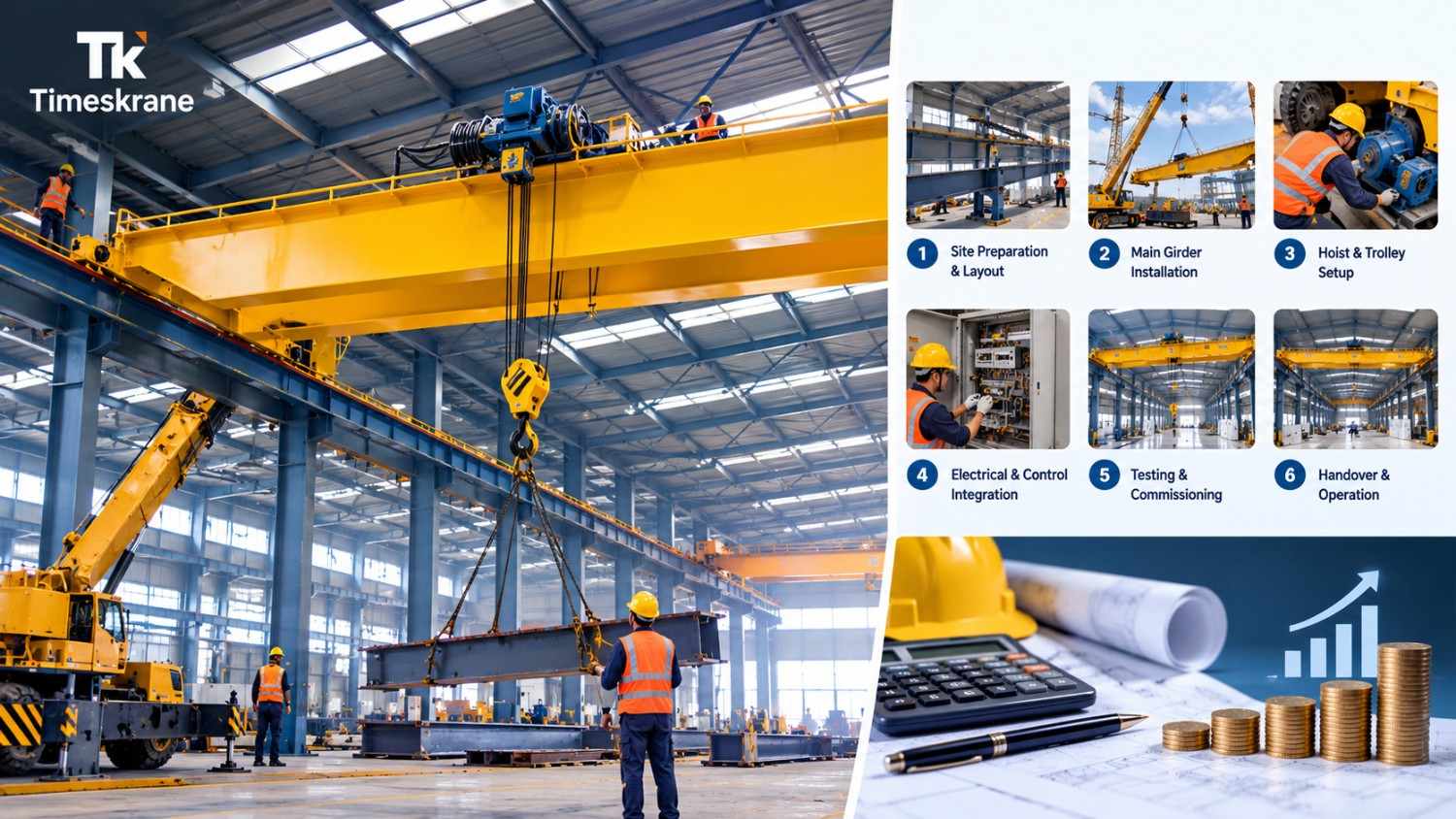
EOT Crane Installation Process and Cost in India
The complete EOT crane installation process in India, covering site survey, runway beams, load testing, and what installation actually costs beyond the crane price.
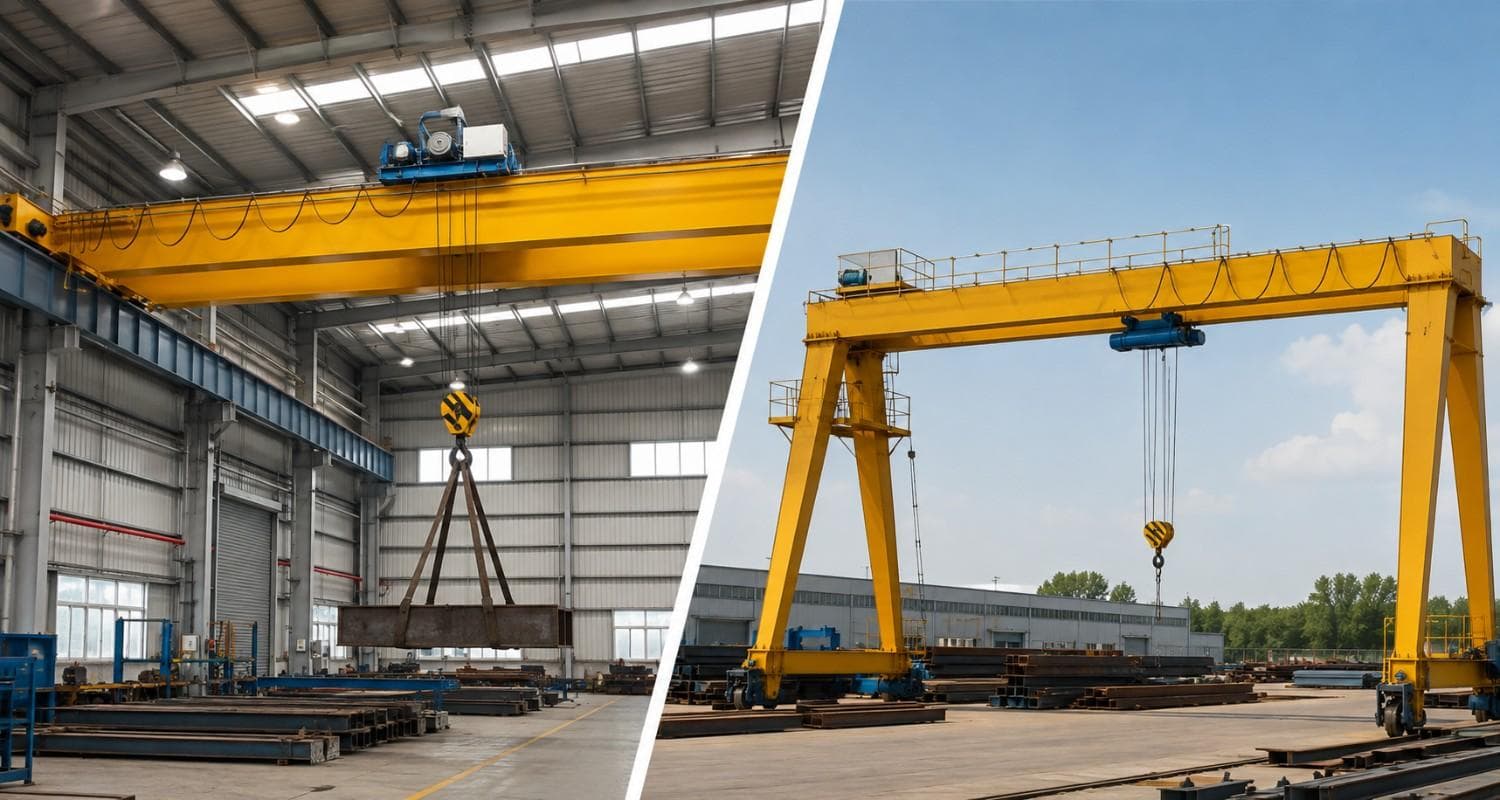
EOT Crane vs Gantry Crane: Which One Does Your Factory Actually Need?
EOT cranes and gantry cranes both lift heavy loads, but they suit very different factories. This guide walks through a simple decision tree covering building structure, floor space, budget, and indoor vs outdoor use, so you can confidently choose the right crane for your facility.

EOT Crane AMC Cost & Whats Included in 2026
What's actually included in an EOT crane AMC, how comprehensive and non-comprehensive contracts differ, and what drives the cost in India.
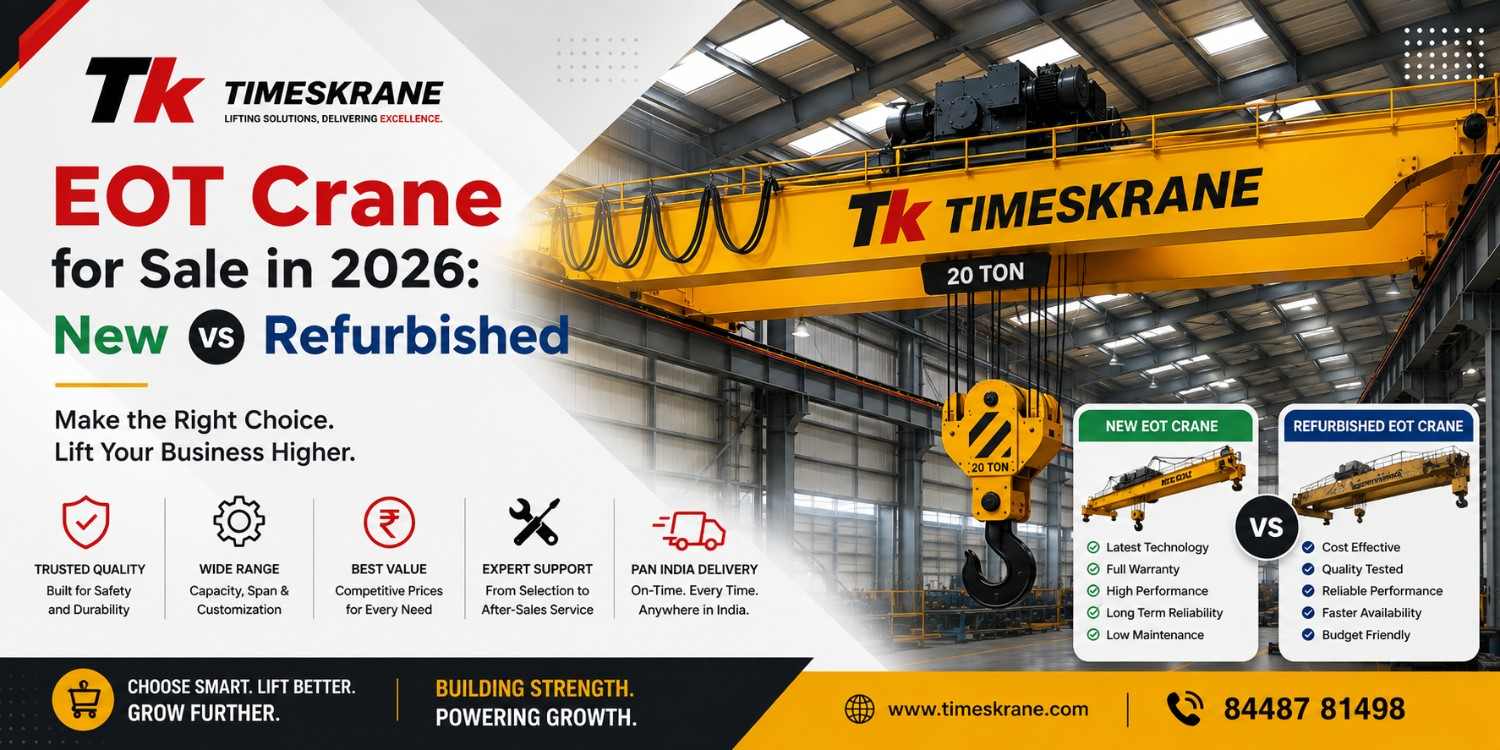
EOT Crane for Sale in 2026: New vs Refurbished
A practical comparison of new vs refurbished EOT cranes in 2026, covering cost, safety, warranty, and long term value, to help you choose based on your budget.
Need a Custom Lifting Solution?
Let’s Talk!
Looking for a reliable partner for your next industrial project?
- Expert Consultation
- Pan-India Service