
EOT Crane Control Panel and Remote Control Selection Guide
Table of Content
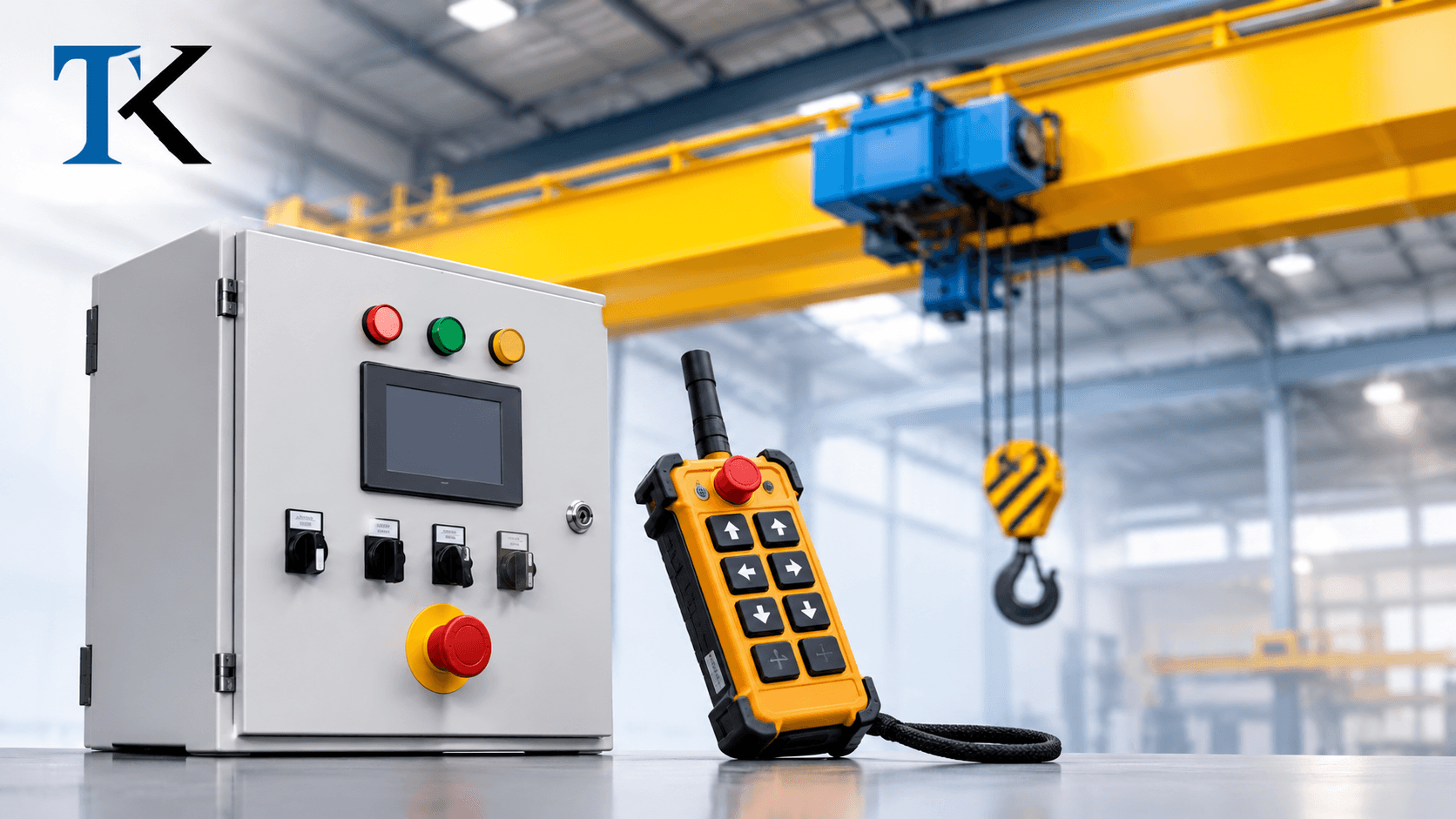
EOT Crane Control Panel and Remote Control Selection Guide
An EOT crane is only as dependable as the controls that tell it what to do. The control panel decides how smoothly the hoist starts, how safely the crane stops and how quickly a fault can be traced. The remote or pendant decides where the operator stands and how well he can see the load. This guide explains what sits inside an EOT crane control panel, compares pendant, radio remote and cabin control, and shows how to choose for your plant, duty and budget.
What an EOT Crane Control Panel Does
The control panel is the electrical heart of the crane. It receives commands from the operator, switches power to the hoist, cross-travel and long-travel motors, and protects those motors from overload, phase loss and short circuits. Limit switches and safety devices also report to the panel, which cuts power when a motion reaches the end of its range or when a safety circuit opens.
A well-built panel makes the crane predictable. A poor one shows up as jerky starts, tripping breakers, overheated contactors, nuisance stops and long searches for the cause of a breakdown. Because the panel touches every motion, a weak panel can make a mechanically sound crane look unreliable.
What Is Inside a Typical Crane Control Panel
Layouts differ between designs, but most panels share a common set of parts:
- A main isolator or circuit breaker that disconnects the crane from the supply
- Contactors for each motion, with overload relays that protect the motors
- A control transformer that supplies the lower voltage used in push buttons and relays
- A phase sequence or phase failure relay, so the crane never runs on a missing phase or in the wrong direction
- Variable frequency drives on cranes that need soft starts and precise positioning
- Terminal blocks and wiring that are numbered to match the electrical drawing
- Fuses or miniature breakers on control circuits, and a brake supply circuit
The enclosure matters as much as the parts inside. A dusty foundry bay, a coastal plant or an outdoor yard needs a sealed enclosure with a suitable protection rating, filtered ventilation and good cable glands, and not an open sheet-metal box.
Types of Crane Control: Contactor, Resistor and VFD
Conventional contactor control
This is the simplest arrangement. Contactors switch the motor on and off, usually with two speeds on the long and cross travel. It is low cost and easy for any electrician to maintain, but it starts abruptly, which can swing the load and load the gears and brakes.
Resistor control for slip-ring motors
Some heavier cranes use slip-ring motors with resistors that are cut in and out to control speed. It gives smoother torque than direct switching, but the resistors, slip rings and brushes need regular cleaning and checking.
Variable frequency drive control
A variable frequency drive (VFD) changes motor speed smoothly instead of switching it on and off. On a crane this reduces load swing, lowers shock on gears and brakes, and allows slow, precise movement when placing dies, castings or delicate equipment. It also protects the motor and can show a fault code that shortens troubleshooting. The trade-off is a higher purchase cost and the need for a clean, cool panel and a technician who understands drives.
Pendant, Radio Remote or Cabin: Which Control Suits You?
| Control type | How it works | Best for | Watch out for |
|---|---|---|---|
| Pendant push-button station | A wired station hangs from the crane and moves with it | Workshops, assembly bays and light to medium duty | The operator walks beside the load, and the cable can snag or wear |
| Radio remote control | A handheld transmitter sends commands to a receiver on the crane | Long bays, heavy loads and jobs where the operator needs a clear view | Battery care, correct pairing and a working emergency stop |
| Cabin control | The operator sits in a cabin on the crane | Heavy industry, hot bays and continuous duty | Higher cost, and the need for access ladders and platforms |
When a pendant is the right choice
A pendant is simple, inexpensive and has no battery to fail. In a machine shop where the operator stays close to the load, it is often all you need. Keep the pendant cable supported on a strain-relief wire, so that the weight of the station does not pull on the conductors.
When a radio remote is worth the extra cost
A radio remote lets the operator stand where the load can be seen from, away from hot metal, swinging loads and pinch points. It also removes the pendant cable, which cuts one common wear item. Choose a model with a clear emergency stop and make sure only one transmitter can control a crane at a time. Where several cranes work in one bay, each transmitter must be paired with its own receiver so that a command never reaches the wrong crane.
When a cabin makes sense
Cabin control suits cranes that run for long hours at height or in heat. The operator is protected from dust and temperature and has a wider view of the bay. A cabin should have a safe access route, a clear view of the hook and the main controls within comfortable reach.
Safety Features to Insist On
- An emergency stop that is easy to reach from the operating position
- Upper and lower hoist limit switches, plus travel limits at the ends of the runway
- Overload protection on the hoist
- A warning hooter or light on long-travel motion in busy bays
- Interlocks so that the crane cannot move while a maintenance gate is open
- A "dead-man" design on radio remotes, so that the crane stops when the transmitter is switched off or goes out of range
Our guide to EOT crane safety compliance in India explains how these features link to the standards and the inspections your factory is expected to follow.
Common Control Faults and What Usually Causes Them
| Symptom | Likely cause | First check |
|---|---|---|
| Crane does not start | Open emergency stop, tripped overload or phase failure | Isolator, emergency stop chain and phase relay |
| Jerky or uneven movement | Worn contactor tips, loose terminal or drive setting | Contactor condition and terminal tightness |
| Motor trips under load | Overload relay setting, overheating or a mechanical drag | Relay setting, motor temperature and brake release |
| Remote loses connection | Weak battery, poor pairing or a blocked receiver | Battery, pairing and receiver position |
| Motion stops at one point | Limit switch or wiring fault | Limit switch operation and cable condition |
Keeping the Control System Reliable
Most control faults come from dust, heat, loose terminals and worn contactors. A short routine catches them early: clean the panel, tighten terminals, check contactor tips for pitting, test the limit switches and test the emergency stop. Keep a current wiring diagram inside the panel door and a record of every change made to the circuit. The preventive maintenance checklist for EOT cranes gives a full inspection routine, our EOT crane maintenance page describes the service support available, and the EOT crane AMC cost and inclusions article explains how inspections can be covered by a yearly contract.
Upgrading the Controls of an Older Crane
If the structure and the hoist are sound, upgrading the controls is often cheaper than replacing the whole crane. Typical upgrades include adding a radio remote, replacing worn contactors, fitting a VFD on the travel motions, adding overload protection and replacing old wiring. Before an upgrade, an engineer should check the motors, brakes and limit switches, because new controls cannot make up for a failing brake or a damaged runway. A technical consultation and site survey helps you decide what to change and what to keep.
Five Questions to Ask Before You Order Controls
- How far from the load will the operator need to stand?
- Does the bay have heat, dust or moisture that needs a sealed enclosure?
- Do we need smooth, precise positioning, which points to a VFD?
- Who will maintain the panel, and are drawings and spares available?
- Can the supplier support the panel years after delivery?
Frequently Asked Questions
What is the difference between a pendant and a radio remote for an EOT crane?
A pendant is a wired push-button station that hangs from the crane. A radio remote is a wireless handheld transmitter that lets the operator choose a safe position and removes the pendant cable.
Can I add a radio remote to an existing EOT crane?
Often yes, if the existing contactors and control circuit are in good condition. A competent engineer should check the wiring, the emergency stop arrangement and the brake circuit before conversion.
Does an EOT crane need a VFD?
Not always. Light duty cranes without precision positioning work well with conventional contactor control. A VFD is worth considering when smooth starts, slow speeds and reduced load swing matter, or when you want to reduce wear on gears and brakes.
How often should the crane control panel be inspected?
Include it in the routine preventive maintenance, with a visual check each shift and a detailed check at the interval set in your maintenance plan, including terminals, contactors, limit switches and the emergency stop test.
What protection rating should a crane control panel have?
It depends on the site. A clean workshop may need only a basic dust-protected enclosure, while a foundry, outdoor yard or coastal plant needs a better sealed enclosure. Share the dust, water and temperature conditions with your manufacturer so the rating is chosen on facts.
Talk to Timeskrane About Crane Controls
Timeskrane designs and builds EOT cranes with pendant, radio remote and cabin control, and can advise on upgrading the controls of an existing crane. See the EOT crane range, or send your requirement through our quotation request page or contact page.
Need a Custom Lifting Solution?
Let’s Talk!
Looking for a reliable partner for your next industrial project?
- Expert Consultation
- Pan-India Service