English
Contact
Configure
Catalog
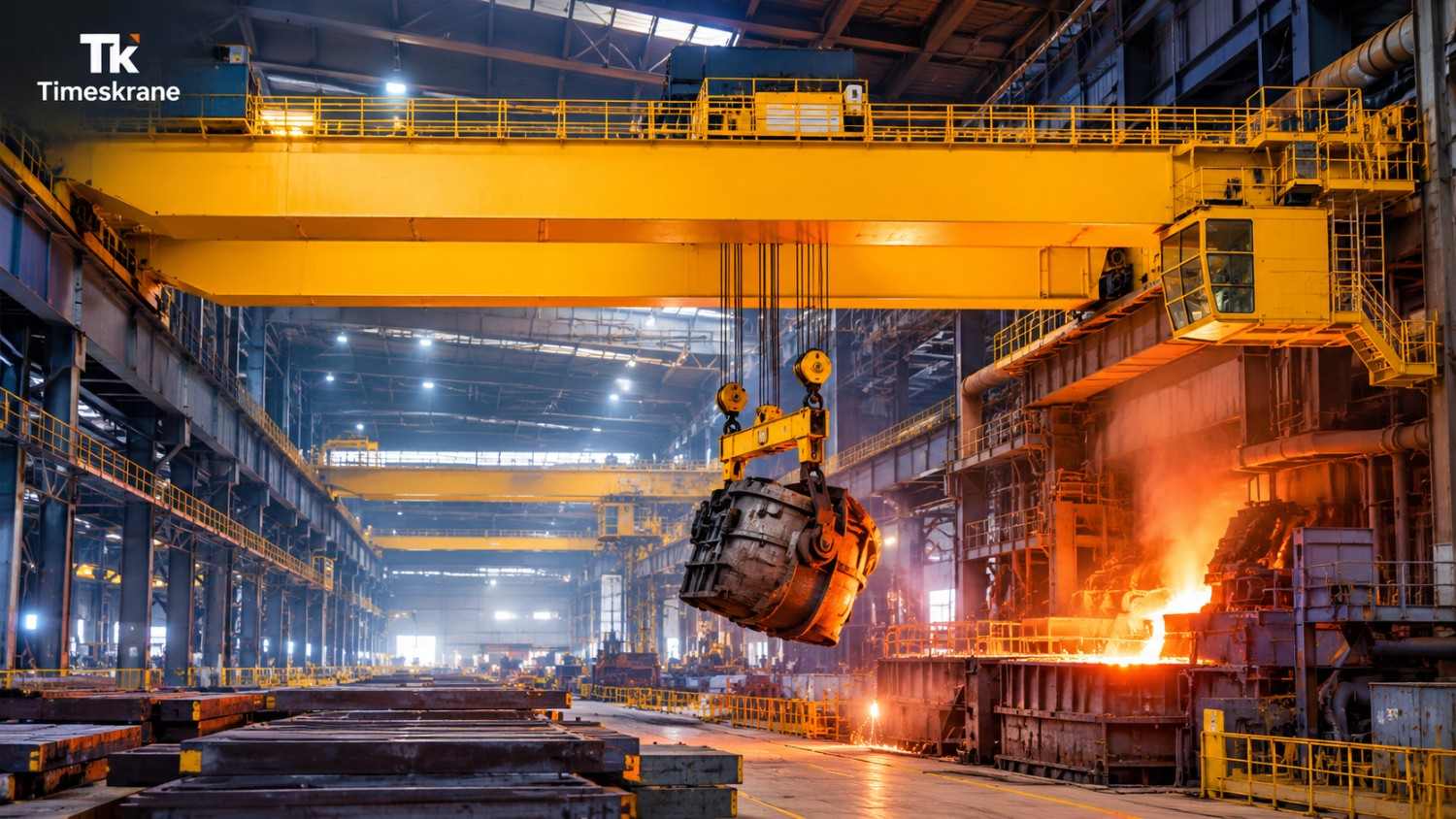
Not every crane that says "heavy duty" on a brochure can survive a steel plant. That's the honest truth, and it's one most buyers only learn after a gearbox burns out in month four or a wire rope frays faster than it should. A steel plant is not a warehouse with a bigger budget. It's furnace heat, dust that gets into everything, near-continuous cycling, and loads that sometimes include molten metal swinging over a working floor. A crane built for that environment needs to be engineered differently from the ground up, not just painted a heavier color.
This guide breaks down what "heavy duty" really means in duty classification terms, where these cranes get used inside a steel plant, what capacities and specs to expect, and how to avoid the mistakes that show up as breakdowns eighteen months later. If you'd rather skip the research and just talk through your plant's specific requirements, get in touch with our team here and we'll walk you through it.
"Heavy duty" isn't a marketing phrase, at least it shouldn't be. It refers to a specific duty classification that describes how hard a crane works over its lifetime, measured through two things: how many lifting cycles it performs and how close those loads run to its rated capacity.
Under the FEM and ISO systems, duty classes run from A1 (light, occasional use) up through A8 (extremely heavy, continuous use). A5 and A6 sit in the medium range. A7 is where "heavy duty" genuinely starts, and A8 covers the most punishing applications, like ladle cranes running near-continuous cycles at high average loads. In the American system, CMAA uses Classes A through F, and for steel plant work you're typically looking at Class D, E, or F, with F reserved for continuous severe service, the kind you'd find in a melt shop running around the clock.
India largely follows IS 3177 for crane design, which aligns closely with these international duty classes. A crane rated for general workshop use, even at a similar tonnage, simply isn't built the same way. It has lighter steel sections, a lower-rated motor, and brakes sized for occasional stops rather than dozens of cycles an hour. Put that crane into a rolling mill or next to a furnace, and it wears out fast. This is exactly why a properly specified heavy duty crane for steel plant applications costs more upfront than a generic overhead crane of the same tonnage. The extra cost buys structural fatigue life, not just lifting capacity.
A steel plant doesn't run on one crane design. Different bays need genuinely different machines, and lumping them together is one of the more common planning mistakes we see.
These carry molten metal from the furnace to the casting bay, and they're the single most demanding crane application in the entire plant. Ladle cranes are almost always double girder, built to A7 or A8 duty class, with two independently driven hoist drums so a single motor failure doesn't drop the load. Heat shielding on the cab, cables, and electrical panels isn't optional here. Neither is redundancy in the braking system.
Charging cranes feed scrap and raw material into the furnace, often fitted with a charging box or bucket attachment. They work in extreme heat right next to the furnace mouth and cycle constantly during a heat, which pushes them firmly into heavy duty territory even though the tonnage isn't always the highest in the plant.
Used in the soaking pit and ingot stripping areas, stripper cranes handle red-hot ingots with tongs, requiring precise positioning under serious thermal load. These run at very high duty cycles during rolling operations.
Raw material yards run cranes fitted with grabs or lifting magnets to move scrap into the melt shop. The loading here is more about impact and abrasion than sheer weight, so structural robustness against constant jarring matters as much as capacity.
Near the casting bay and rolling mill, cranes fitted with tongs, C-hooks, or specialized grabs move hot billets, blooms, slabs, and coils. If you want a deeper look at how these fit together across a full facility, our guide on overhead crane for steel plant setups covers the layout side of this in more depth.
For a narrower comparison focused specifically on EOT designs and girder choice, our EOT crane for steel plant guide is worth reading alongside this one.
Since buyers get quotes referencing different systems depending on the manufacturer, it helps to see them side by side.
| System | Scale | Heavy Duty Range | Typical Steel Plant Use |
|---|---|---|---|
| FEM / ISO 4301 | A1 to A8 | A7 to A8 | Ladle, charging, and stripper cranes |
| CMAA (US) | Class A to F | Class D to F | Melt shop and continuous service cranes |
| IS 3177 (India) | Aligned with FEM/ISO | Class 6 to 8 equivalent | Steel plant and heavy engineering cranes |
The two factors driving classification are load spectrum, meaning how heavy the average lift is relative to maximum capacity, and utilization, meaning how many cycles the crane completes over its design life. A crane lifting near its rated capacity dozens of times a day for years needs a fundamentally heavier structure, larger motor insulation class, and more robust braking than one lifting light, occasional loads at the same tonnage. This is the detail that gets glossed over in a lot of buying decisions, and it's the single biggest reason two cranes with identical capacity ratings can have very different price tags.
Capacity requirements vary enormously depending on where in the plant the crane sits and what stage of steel production it's supporting.
If you're comparing crane types across an entire facility rather than a single bay, it's worth reading our breakdown of overhead crane for steel plant requirements, since capacity needs shift significantly between raw material handling, primary production, and finishing areas within the same plant.
This is where a lot of the actual cost difference lives, and it's worth understanding before you compare quotes.
Structural steel and welding. Heavy duty cranes use thicker plate sections and more rigorous weld specifications to handle repeated fatigue loading over years of near-continuous cycling, not just the peak load on the nameplate.
Motor insulation class. Continuous-duty steel plant cranes typically need Class F or H motor insulation rather than standard Class B, since motors run hotter and longer between rest periods. Running an underrated motor in this environment is one of the more common causes of early hoist failure.
Variable frequency drives (VFD). VFDs allow smooth acceleration and deceleration, cutting mechanical shock on the structure and reducing sway on long lifts, which matters a lot when you're moving a ladle of molten metal.
Heat shielding and insulated cabins. For cranes working near furnaces, heat shields on cables, hoist components, and the operator cabin aren't a nice-to-have. Cabling that isn't heat-resistant degrades fast in this environment and becomes a recurring maintenance cost.
Anti-sway and redundant braking. On ladle and charging cranes especially, redundant braking systems and anti-sway control aren't upgrades, they're baseline safety requirements given what's at stake if a load shifts or drops.
| Factor | Standard Duty Crane | Heavy Duty Crane (A7/A8, CMAA D-F) |
|---|---|---|
| Typical duty class | A1 to A5 | A7 to A8 |
| Structural design | Lighter sections, standard fatigue life | Reinforced sections for high-cycle fatigue |
| Motor insulation | Class B typical | Class F or H typical |
| Braking | Single system usually sufficient | Redundant braking common on ladle/charging cranes |
| Typical environment | Workshops, warehouses | Melt shops, rolling mills, furnace areas |
| Cycles per day | Low to moderate | High, often near-continuous |
Given what's riding on these machines, a few things should be treated as non-negotiable rather than optional add-ons. Overload limit switches and rotary hook-travel limits prevent the two most common causes of catastrophic failure. Anti-collision systems matter wherever two or more cranes share a runway, which happens often in larger melt shops. Emergency stop controls need to sit within easy reach of the operator at all times.
For any application running near molten metal, insist on heat-resistant cabling, insulated cabins, and factory load testing before dispatch, followed by a second load test after site installation. Skipping the post-installation test to save a day or two is a shortcut some budget suppliers take quietly, and it's not worth the risk.
Duty class is the biggest cost driver by far. Moving from a medium duty A5/A6 rating to a heavy A7/A8 rating means heavier structural steel, larger motors, more robust brakes, and often redundant systems, all of which add up before you even factor in capacity. Thermal protection for furnace-area cranes, anti-collision systems, VFD drives, and radio remote operation all add further cost, though most plants consider them worth the spend given the safety and uptime benefits.
One thing buyers consistently underestimate is that the crane's quoted price is usually just the supply cost. Runway beams, electrical work, installation, and commissioning can add a meaningful amount on top, so it's worth asking for an all-in estimate rather than comparing bare equipment prices across manufacturers.
This is genuinely where most of the risk sits. Plenty of suppliers can quote you a tonnage and a price. Fewer have actually built and serviced cranes that survive years of steel plant duty. When evaluating a steel plant crane manufacturer, ask to see real installations in similar heat and duty conditions, not just a catalog. Ask how they determine duty class recommendations. A manufacturer who only asks for tonnage and never asks about cycles per hour or ambient temperature is likely underspecifying your crane, and that shows up as premature failure two or three years down the line.
It's also worth comparing a few industrial crane manufacturers in India on after-sales support specifically. A plant running continuous shifts can't afford a long wait for a spare gearbox or brake assembly, so local stock and response time matter as much as the initial quote. If you want a shortlist to start from, our review of the top 5 crane manufacturers for steel plants in India is a useful reference point.
Because these cranes run harder than standard equipment, maintenance intervals need to be tighter, not looser. Wire ropes on ladle and charging cranes should be inspected more frequently than the general plant schedule calls for, given the heat and cycle exposure. Brake linings wear faster under high-cycle duty and deserve closer attention. Gearbox oil analysis, rather than fixed-interval changes alone, helps catch thermal degradation before it causes a failure. None of this is complicated, but it does need to be built into the maintenance schedule from day one rather than added reactively after the first breakdown.
Getting a heavy duty crane for steel plant operations right comes down to matching the duty classification, structural engineering, and safety systems to what the crane will actually face every shift, not just the tonnage written on a quote. Get that match right and the crane will run reliably for well over a decade. Get it wrong, and you'll be paying for it in downtime and repairs long before the crane pays for itself.
If you're at the stage of finalizing specifications, comparing quotes, or just want a second opinion from people who've engineered these cranes for Indian steel plants, give us a call at 84487 81498 and we'll help you get the specification right the first time.
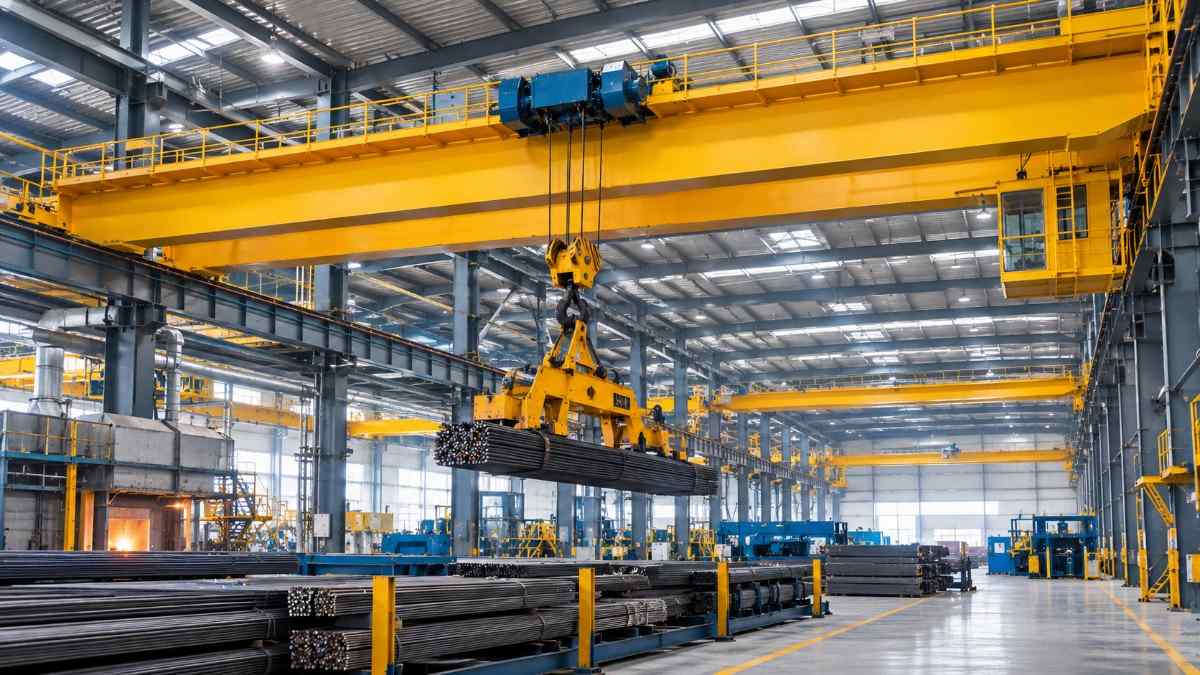
Finding the right steel plant crane manufacturer is perhaps the most important decision a procurement manager or plant owner will make. A poorly designed crane can increase both safety risks and downtime while excessively increasing maintenance costs.
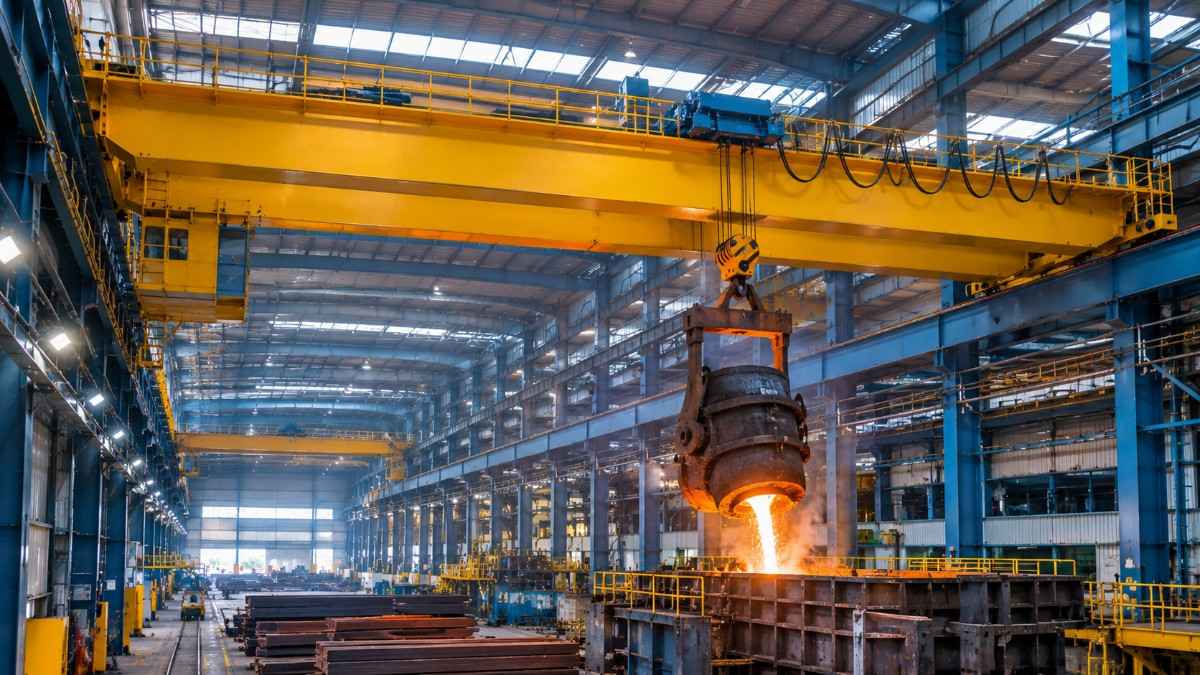
If you run or manage a steel plant, you already know that an overhead crane for steel plant operations is not a luxury. It is the backbone of your material handling process. From moving billets and coils to shifting ladles of molten metal, the right crane decides how smoothly your production line runs.
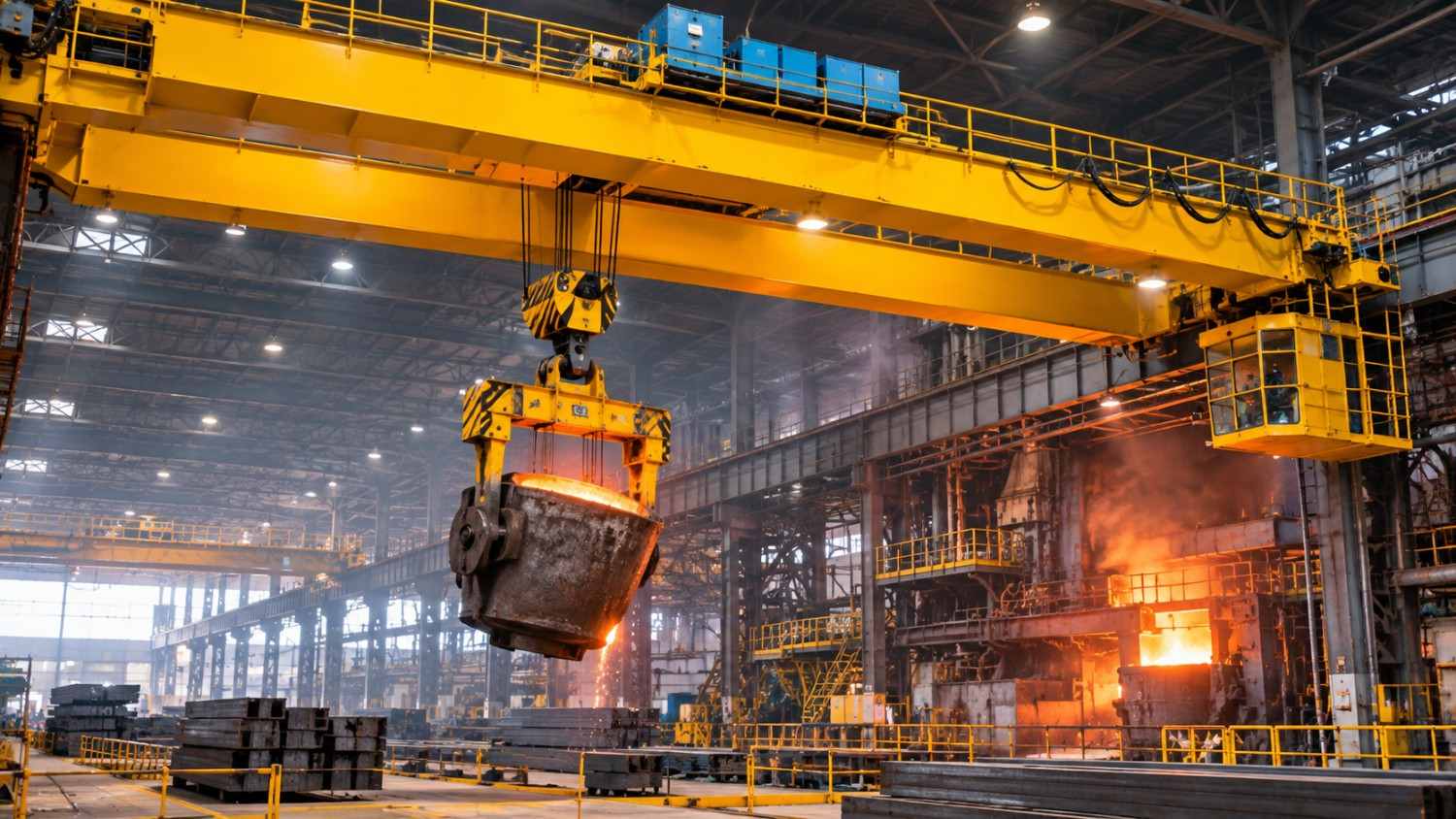
Discover how EOT cranes support steel plant operations, from material handling to molten metal lifting. Learn about crane types, duty classes, safety features, and how to choose the right EOT crane for your steel plant.
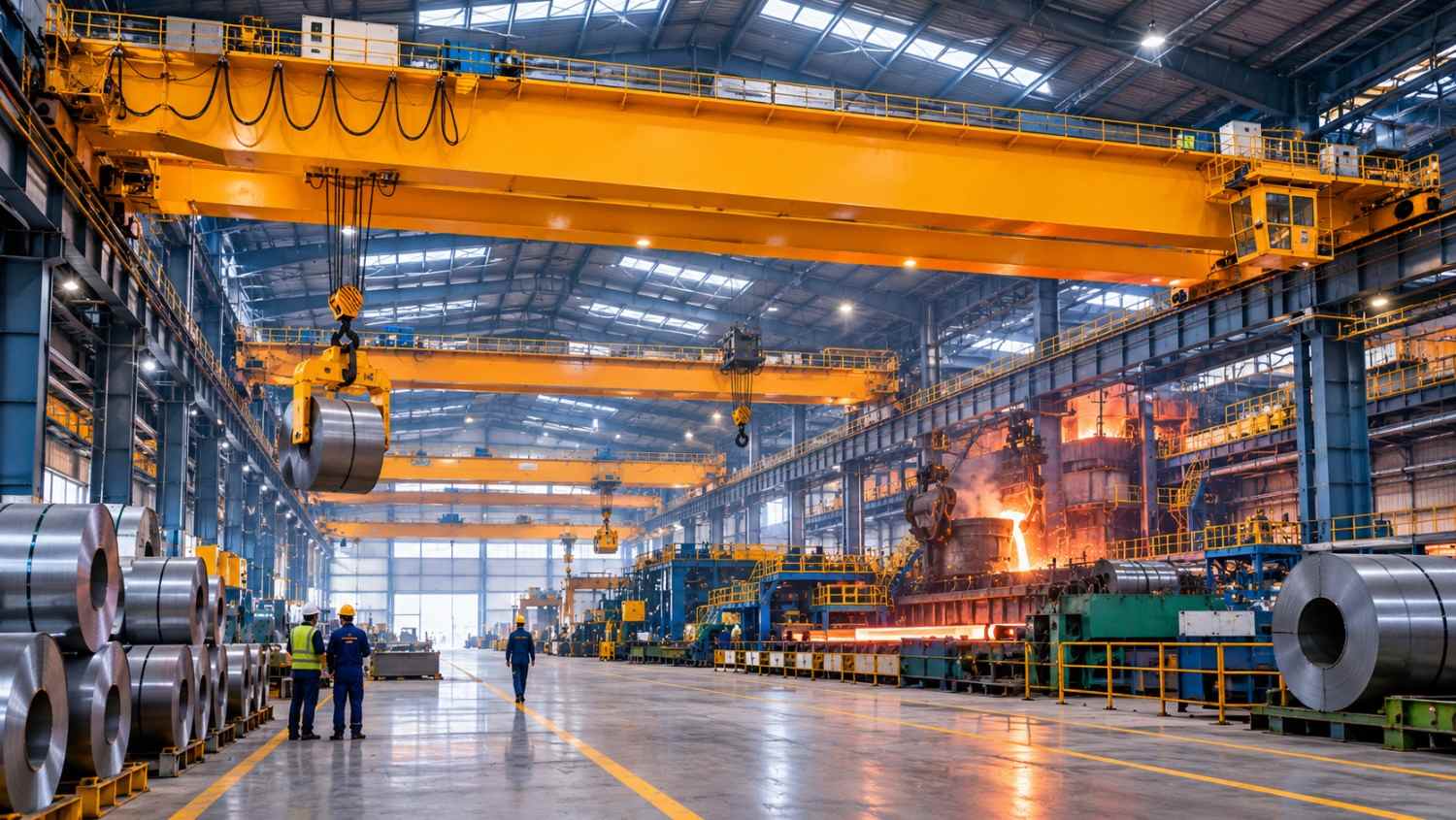
An honest, researched look at the top 5 crane manufacturers for steel plants in India, covering ladle, grab bucket, and coil handling cranes.
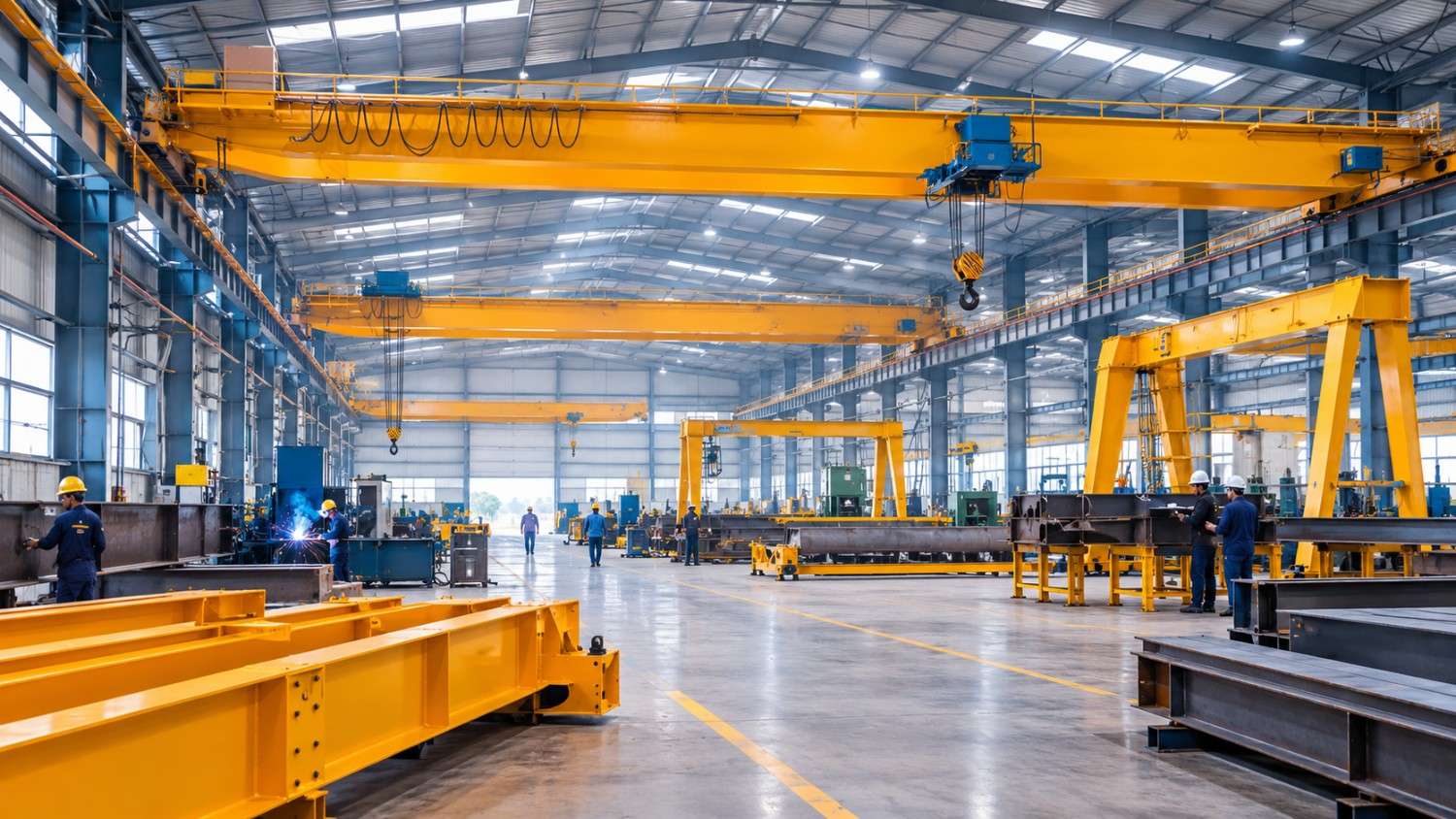
A real, researched look at the top 10 crane manufacturers in North India, covering Delhi NCR, Punjab, Haryana, UP, and Rajasthan, with what actually sets each one apart.
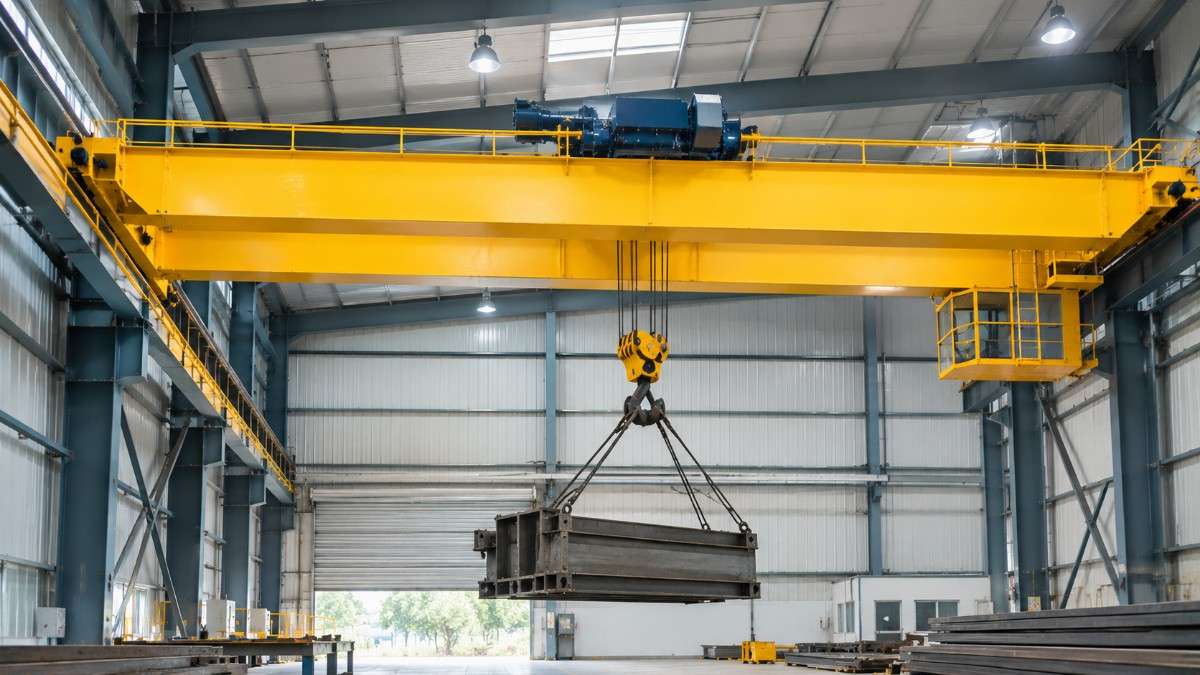
If you are looking for a 10 ton overhead crane for your factory or warehouse, the primary question that arises in your mind is whether this capacity will cater to your daily operations or it will turn out to be a useless and bulky addition to your storage.
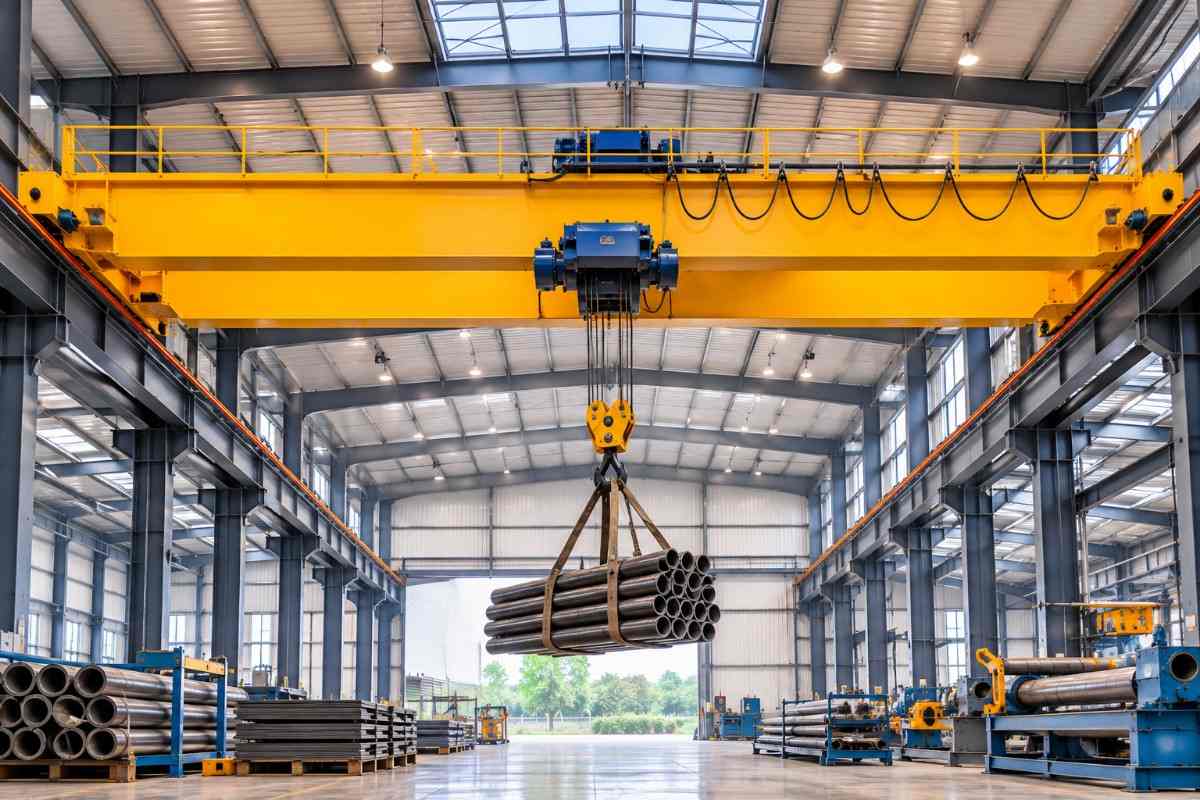
The 5 ton overhead crane is one of the most frequently ordered lifting systems in Indian manufacturing plants, and this is for a valid reason since it strikes a good balance: it is heavy enough to cope with serious fabrication, assembly, and warehousing tasks, yet it is small enough to be fitted into medium-sized factory sheds without requiring a major restructuring of the building.
Looking for a reliable partner for your next industrial project?