English
Contact
Configure
Catalog
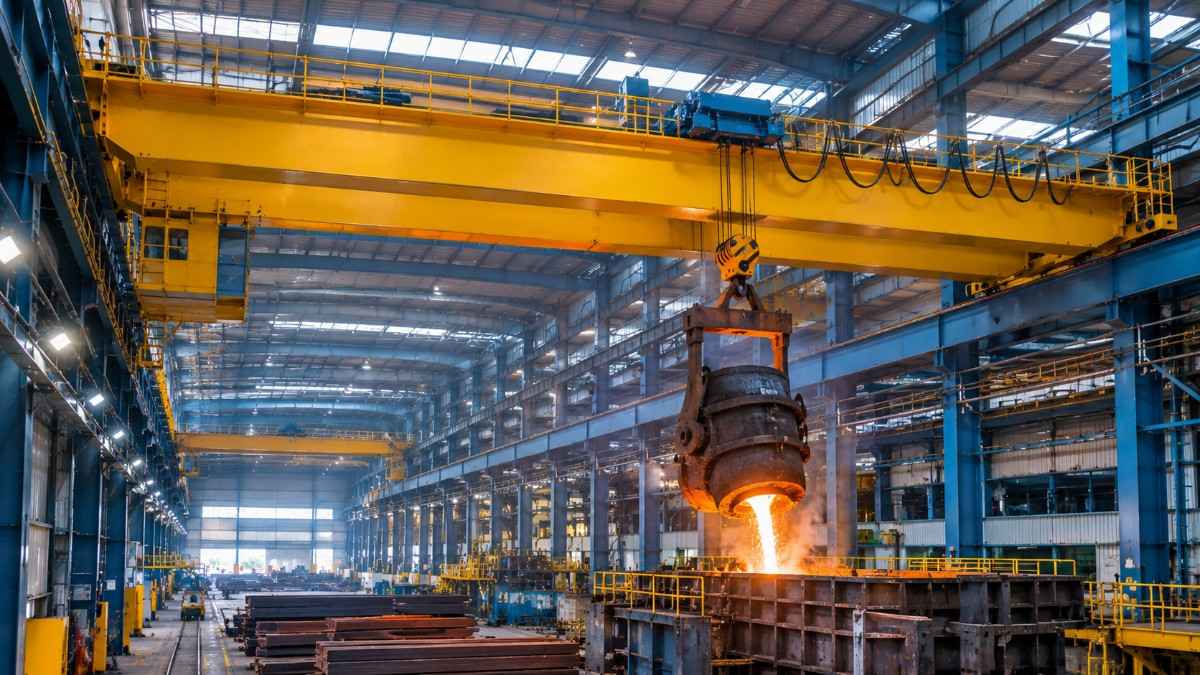
In my experience working with steel manufacturers across Haryana, Gujarat, and West Bengal, I have seen how the wrong crane choice creates bottlenecks that ripple through an entire plant. A crane that is undersized stalls production. One that is oversized wastes capital. Getting this decision right matters more than most buyers realize until they are stuck with the consequences.
This guide walks you through everything you need to know before selecting an eot crane for steel plant, including crane types, specifications, buying checklists, and common mistakes I have seen buyers make.
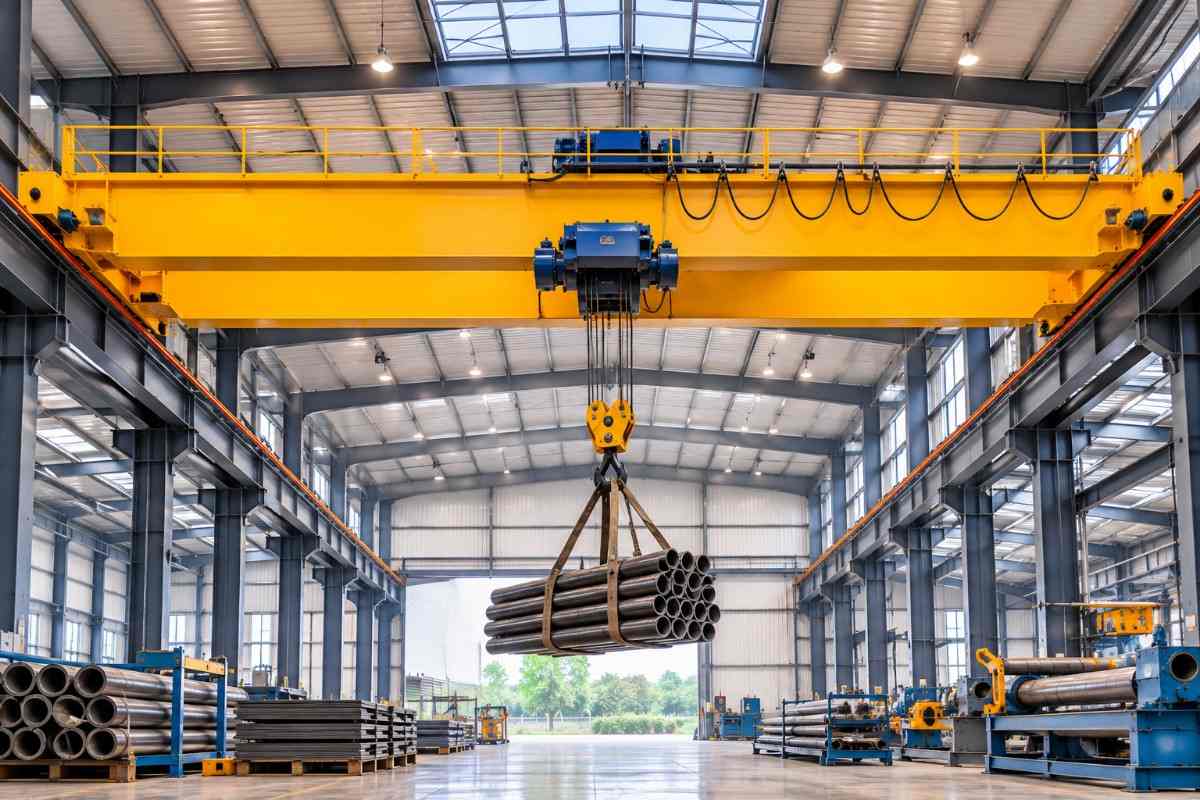
An overhead crane for steel plant use is a heavy duty lifting system that moved horizontally and vertically across a workshop or production bay. Steel plant cranes handle continuous, high-intensity duty cycles. These can include extreme heat, heavy tonnage, and even molten material.
Standard factory cranes can't compare to the steel plant cranes. Steel plant cranes have reinforced structural components and can be classified higher in duty. Additionally, steel plant cranes can have special attachments such as ladle hooks or magnet beams. EOT cranes (Electric Overhead Traveling cranes) are the standard cranes used in Indian manufacturing, and cover the steel plant crane category.
Steel plants' operations differ from other factories because of the severe working conditions, extremely heavy loads, and almost continuous duty cycles in many operations.
Here are the main differences in crane requirements for steel plants:
Buyers tend to overlook the fact that a crane rated for general manufacturing will not withstand the conditions of a steel plant. This is why it is important to work with a steel plant crane manufacturer rather than purchase from a generic catalog. Cranes that are designed for other duties have more quick wear out on the gearbox, wire ropes, and electrical components, resulting in frequent breaks and unexpected plant downtime.
The types of overhead cranes suitable for use in steel plants vary with the particulars of your load and span.
A single girder overhead crane consists of a single main beam supported at the ends by end trucks. Cranes of this type can handle lower to medium weight loads and shorter span distances, up to about 10 tons, in support areas of a steel plant such as finishing bays and warehouses.
A double girder crane has a framework made up of two parallel beams and provides greater headroom and span capacity than a single girder crane. It is the prefered choice for the primary steel making areas, rolling mills and ladle handling.
A gantry crane differs from other overhead cranes in that it has its runways at ground level. Steel plants use gantry cranes in outdoor yards for the handling of raw materials such as scrap, billets and coils prior to their placement on the production line.
There are special types of cranes that are commonly used in steel plants:
When I've worked with plants that are switching from manual handling to a crane-based system, the main concern has always been the specific type of crane that fits their bay layout and load pattern. There is no standard answer for this.
Since pricing varies significantly based on customization, I am comparing these cranes by girder type, span range, and typical application instead.
| Crane Type | Girder Configuration | Typical Span Range | Best Suited Application |
|---|---|---|---|
| Single Girder EOT Crane | Single beam | Up to 20 meters | Light to medium load handling, finishing bays |
| Double Girder EOT Crane | Twin parallel beams | Up to 35 meters | Heavy load handling, rolling mills, ladle areas |
| Gantry Crane | Single or double beam, ground supported | Variable, yard-dependent | Outdoor scrap yards, raw material stacking |
| Semi-Gantry Crane | Hybrid runway and rail support | Site dependent | Mixed indoor-outdoor bays |
The 10 ton overhead crane is among the most popular capacities requested for finish line and warehouse bay post-storage handling areas in Indian steel plants.
The Basic Specifications of a 10 Ton Overhead Crane
Some standard specifications of a 10 ton overhead crane include the following, but specific numbers should be verified with the manufacturer for your particular bay dimensions:
When considering 10 ton overhead crane price india options, know that the final price will depend on things like the span, duty class, control system, and the level of site-specific customization. Instead of looking at specific numbers, I suggest you look at our overhead crane prices page to see a breakdown of the factors that affect price, and then get a quote for a specific design so you can compare prices for the same or similar designs with other manufacturers.
Being able to name the main parts of an overhead crane allows you to have better discussions with your manufacturers and maintenance crews.
From my experience, limit switches and wire ropes are the two parts that see the most failure when maintenance is put off. While the two parts are relatively cheap to check, they can be very costly to replace.
Go through this checklist before selecting any overhead crane manufacturer:
I have seen these mistakes over and over again at plants of all sizes, and most of them are totally avoidable.
Buyers typically size cranes to the average load instead of the maximum expected lift. As a result, the crane is overloaded, wears out prematurely, and may even break.
Neglecting duty cycle classification is another common issue. A crane that is only meant for occasional use will definitely break from.near-continuous operation in a steel plant.
Going for the lowest price is another common issue. The price of an overhead crane needs to be balanced with the build quality, the brands of the components, and the after-sales support. It can't just be defaulted to the quote.
Not doing a site survey before finalizing the span is also an issue. There are many factors such as the bay dimensions, column spacing, and headroom that affect the design of the crane. A crane that has not been survey site adequately will probably need expensive changes later.
Operators need to be trained to use the crane. Without proper training of operators on load charts and safe lifting procedures, the crane becomes a safety hazard.
This guide focuses on steel plants, but the overhead crane manufacturers we work with serve the following industries as well:
Knowing about these parallel applications is important when assessing overhead crane manufacturers in india, since manufacturers operating in multiple industries have wider engineering experience which they can bring to steel plant projects.
Steel plant operations are 24/7. This means that you cannot treat maintenance as an afterthought.
From what I have seen, plants that maintain a documented maintenance schedule have less surprises in the form of unexpected shutdowns, compared to plants that maintain reactively.
Single Girder EOT Crane
Pros: Reduced structural load on the building and easier installation. Suitable for lighter steel plant zones.
Cons: Less capacity and span compared to double girder cranes.
Double Girder EOT Crane
Pros: More stable for long spans and can handle heavier steel plant loads and greater capacities.
Cons: Increased headroom and more structure maintenance for the building.
Gantry Crane
Pros: Cost-effective and no need for an elevated runway structure for outdoor yards.
Cons: Less precise positioning compared to overhead-mounted systems.
At Times Krane, we manufacture EOT cranes and gantry cranes designed specifically for demanding industrial environments, including steel plant applications. Our team works closely with clients from the site survey stage through installation, ensuring the crane specification matches actual operational needs rather than generic assumptions.
We are often approached by procurement managers who have already been burned by underspecified equipment elsewhere. What we focus on is building cranes that hold up under Indian steel plant conditions, backed by clear documentation and responsive after-sales support. If you are comparing a heavy duty crane for steel plant against lighter alternatives, our engineering team can walk you through the right configuration for your bay.
Key Takeaways
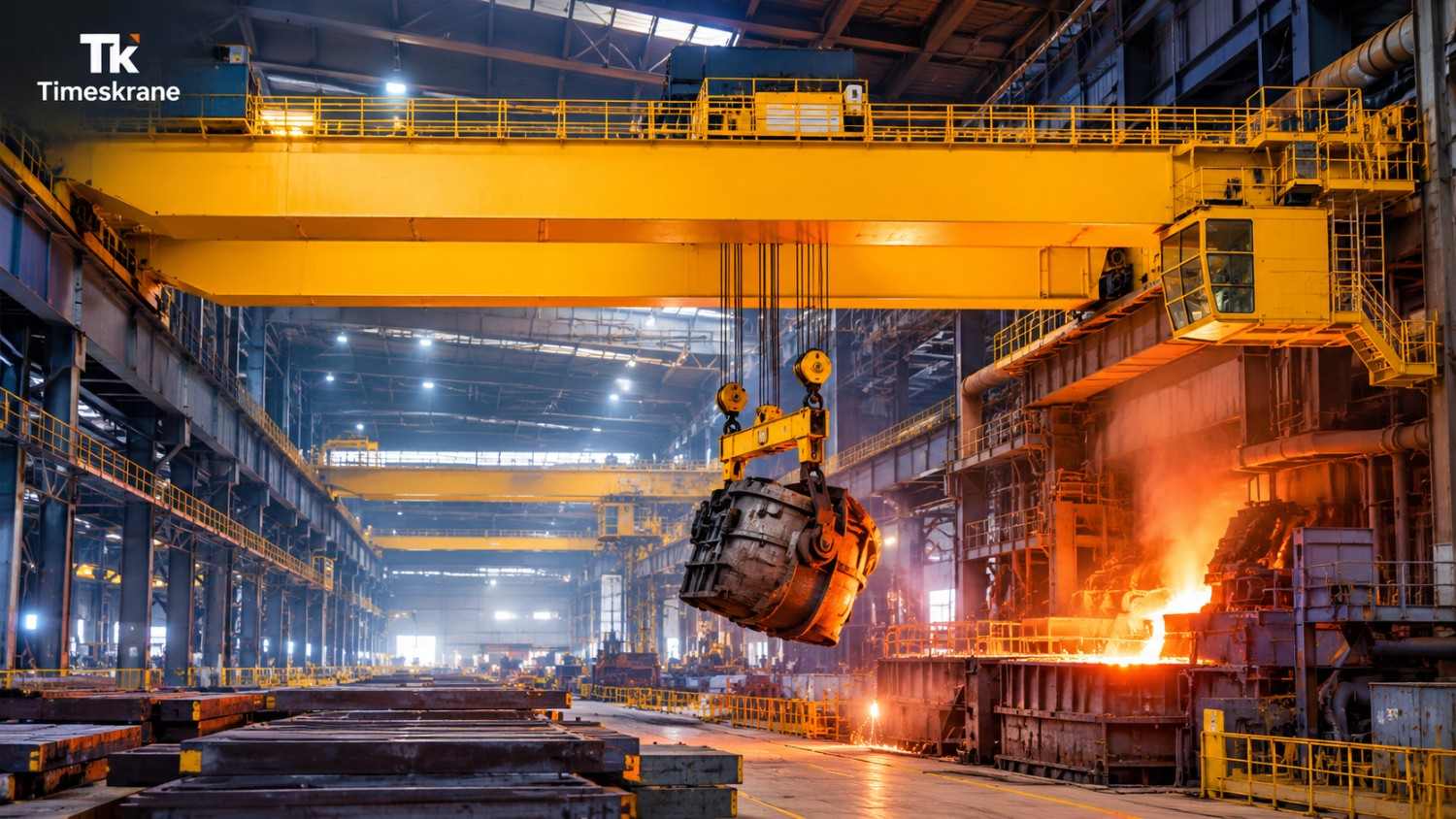
An honest breakdown of what makes a crane genuinely heavy duty for steel plant use, covering duty classification, capacity, and safety features buyers often miss.
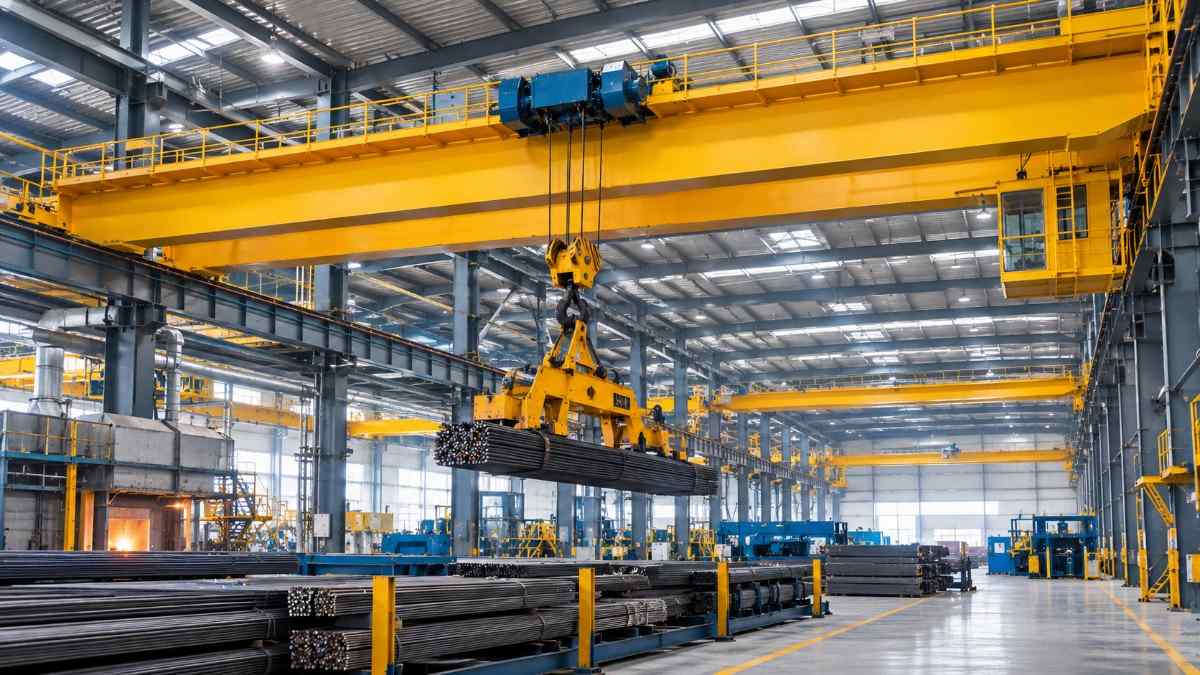
Finding the right steel plant crane manufacturer is perhaps the most important decision a procurement manager or plant owner will make. A poorly designed crane can increase both safety risks and downtime while excessively increasing maintenance costs.
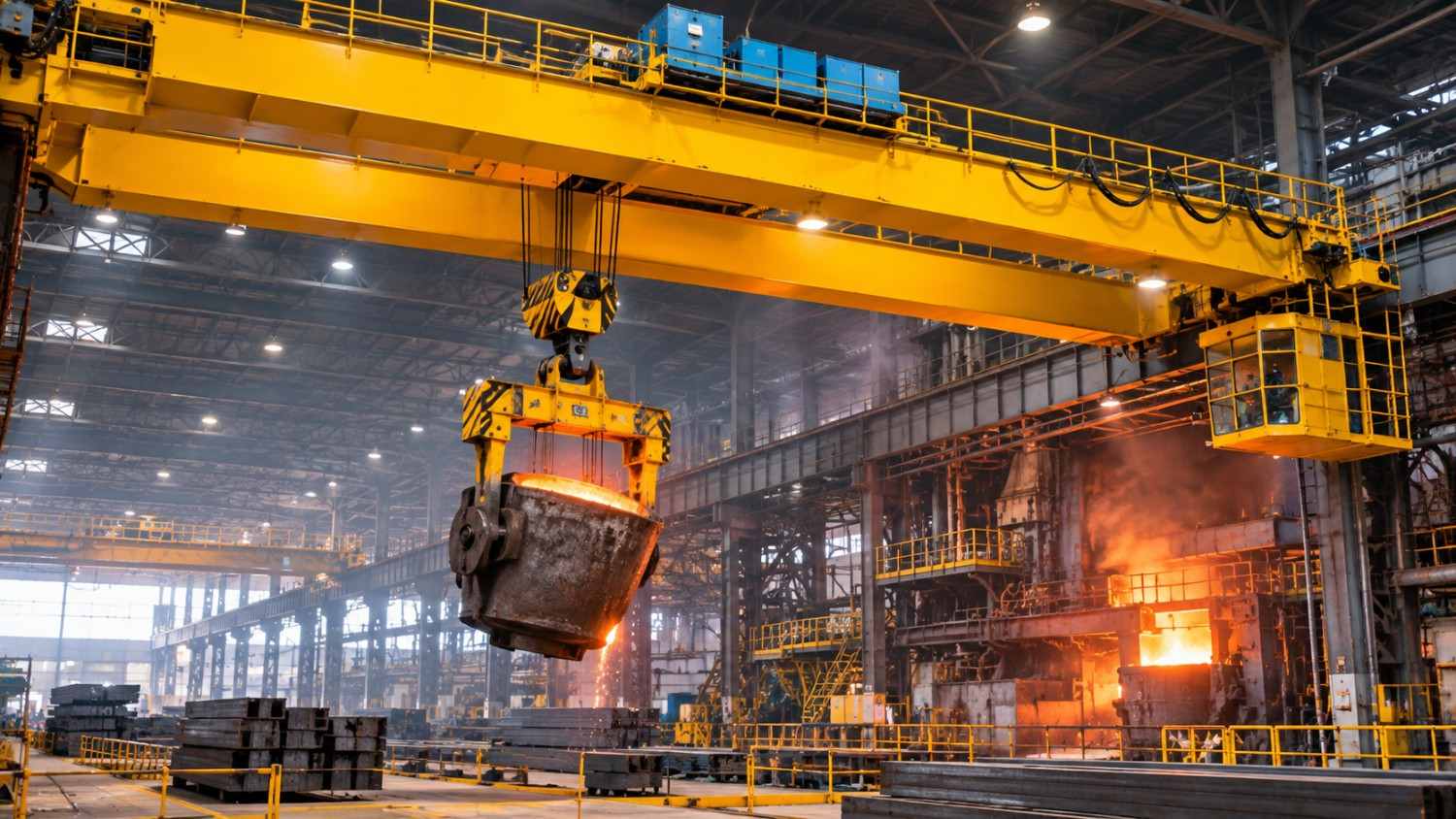
Discover how EOT cranes support steel plant operations, from material handling to molten metal lifting. Learn about crane types, duty classes, safety features, and how to choose the right EOT crane for your steel plant.
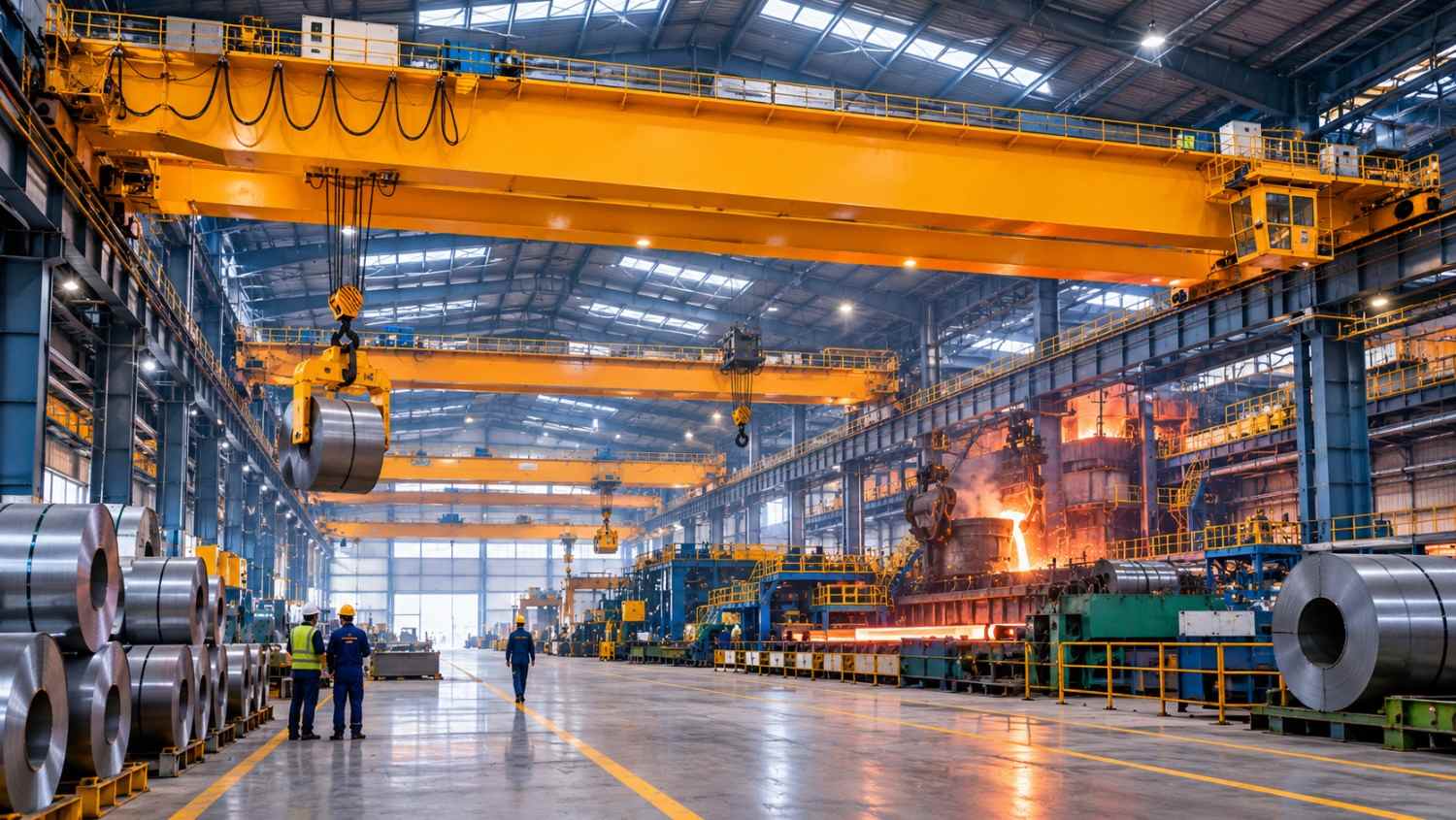
An honest, researched look at the top 5 crane manufacturers for steel plants in India, covering ladle, grab bucket, and coil handling cranes.
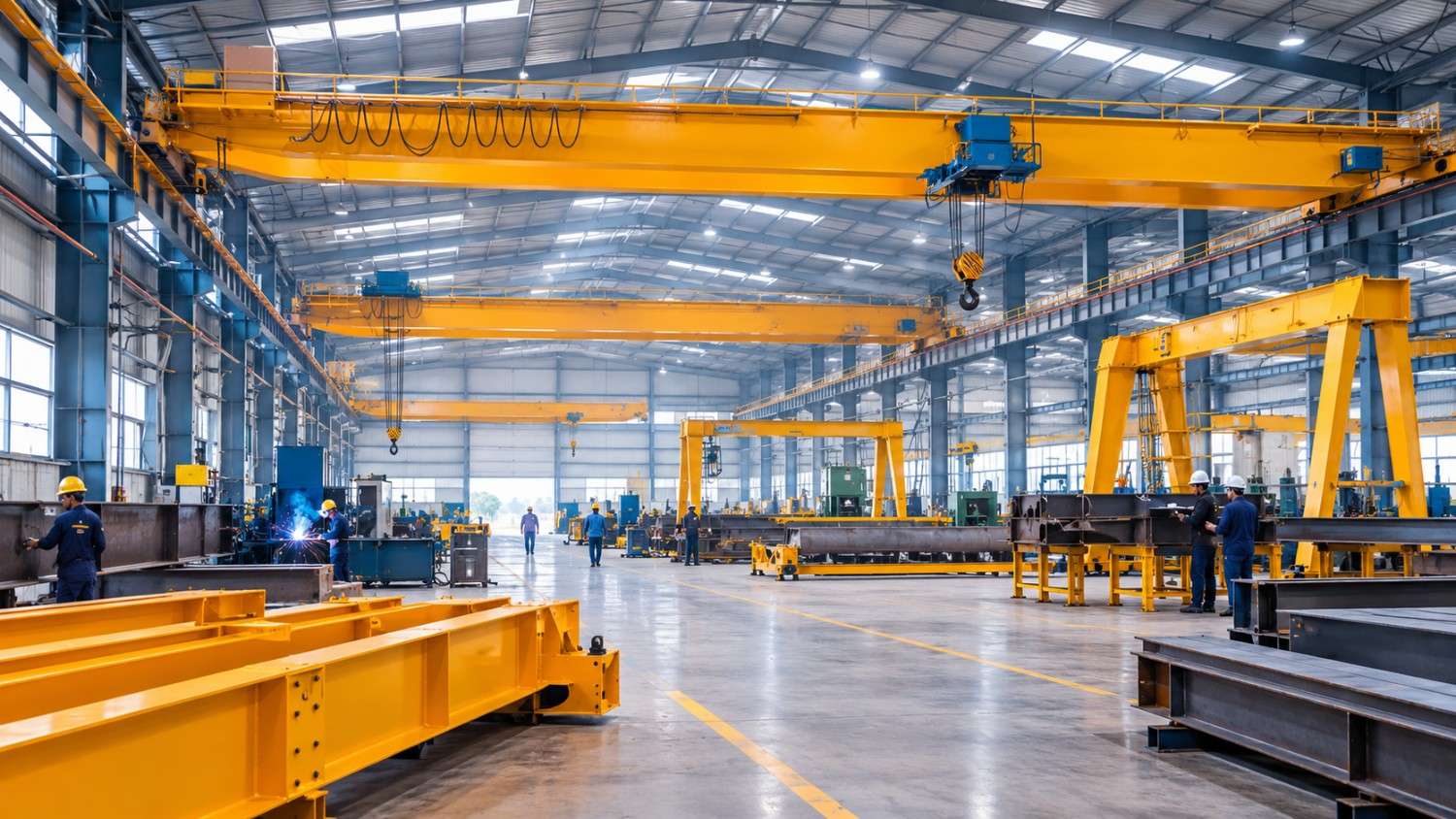
A real, researched look at the top 10 crane manufacturers in North India, covering Delhi NCR, Punjab, Haryana, UP, and Rajasthan, with what actually sets each one apart.
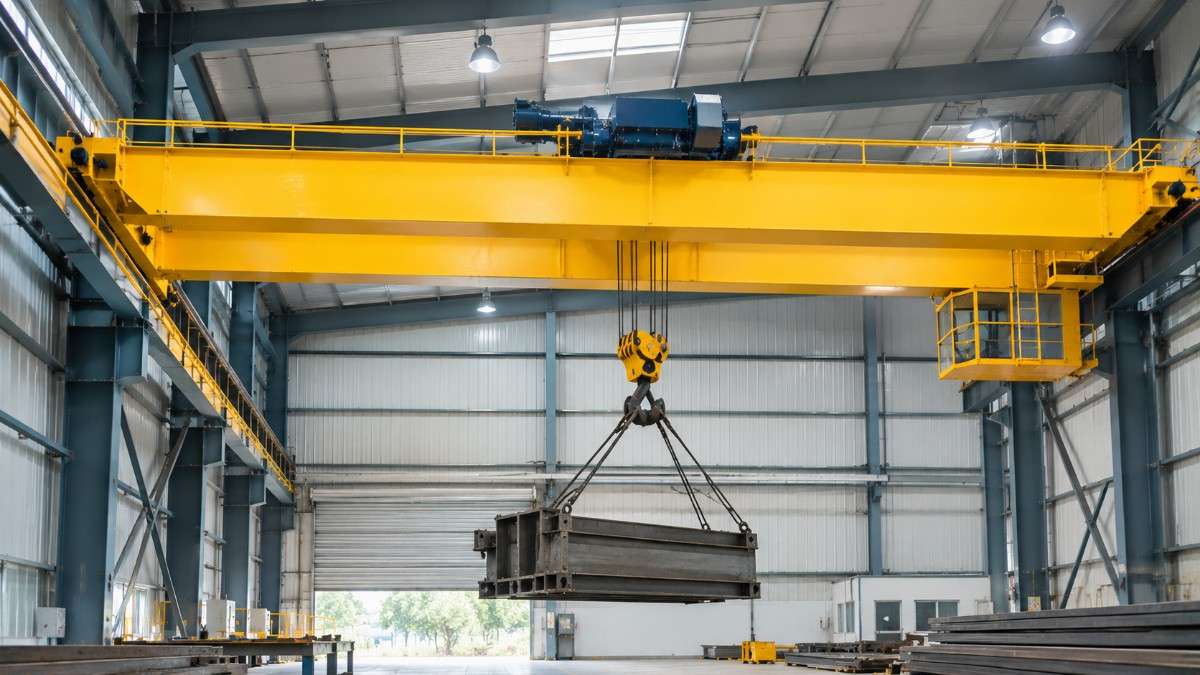
If you are looking for a 10 ton overhead crane for your factory or warehouse, the primary question that arises in your mind is whether this capacity will cater to your daily operations or it will turn out to be a useless and bulky addition to your storage.
The 5 ton overhead crane is one of the most frequently ordered lifting systems in Indian manufacturing plants, and this is for a valid reason since it strikes a good balance: it is heavy enough to cope with serious fabrication, assembly, and warehousing tasks, yet it is small enough to be fitted into medium-sized factory sheds without requiring a major restructuring of the building.
Looking for a reliable partner for your next industrial project?