English
Contact
Configure
Catalog
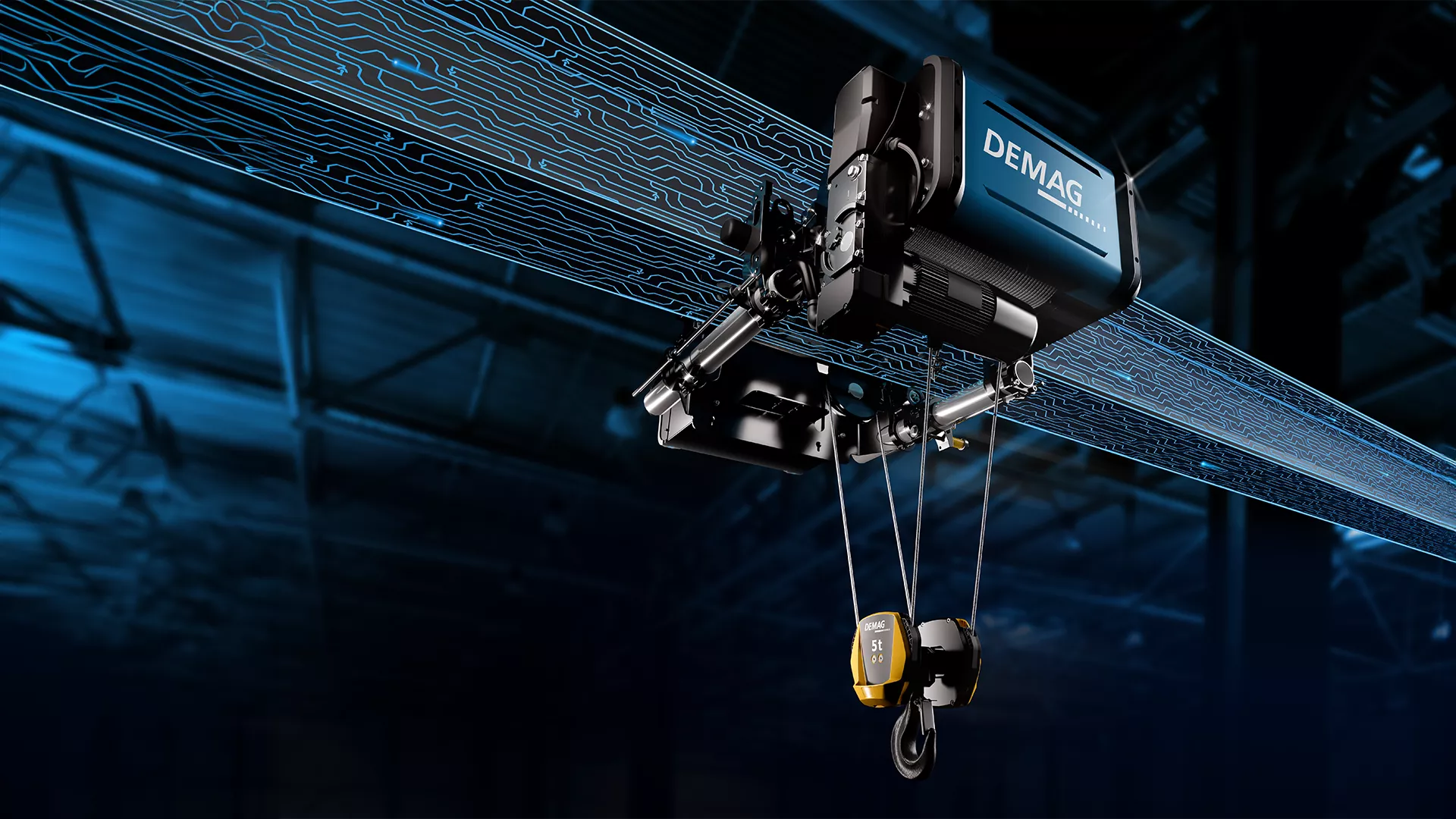
If you're planning to invest in an overhead crane, choosing the right manufacturer is one of the most important decisions you'll make. The crane itself may last for decades, but only if it is engineered correctly, installed professionally, and maintained with quality components.
India has become one of the world's largest manufacturing hubs. Industries are expanding rapidly, increasing the demand for safe and dependable lifting equipment.
Modern manufacturing facilities require cranes that can:
Leading overhead crane manufacturers understand these requirements and develop systems suited to different industries rather than offering a one-size-fits-all product.
An overhead crane, also called an overhead bridge crane, is a lifting system that moves materials horizontally and vertically within a facility. Unlike forklifts, overhead cranes operate above the work area, keeping valuable floor space clear while transporting heavy loads efficiently.
These components work together to lift, transport, position, and lower materials with precision.
Different industries require different lifting solutions. Choosing the appropriate crane depends on load capacity, span, working environment, and production requirements.
Best suited for:
Advantages:
Recommended for:
Benefits include:
Ideal where roof structures limit traditional crane installation.
Suitable for:
KBK modular systems provide flexibility for changing production layouts.
They are commonly used for:
Almost every manufacturing sector depends on reliable lifting equipment.
Common applications include:
In my experience, automotive and heavy fabrication facilities often require customised lifting solutions because production lines have unique space constraints and handling requirements.
Not every manufacturer offers the same level of engineering expertise.
The most reliable companies focus on the complete lifecycle of the crane instead of only supplying equipment.
A quality manufacturer evaluates:
This engineering-first approach results in longer equipment life and fewer operational issues.
Every facility is different.
I've noticed that many buyers assume standard cranes will fit every application. In reality, custom-designed cranes often improve productivity and reduce maintenance over the long term.
Customisation may include:
Reliable manufacturers use:
Following recognised standards such as ISO, BIS, and applicable engineering codes helps ensure consistent quality and operational safety.
Professional installation includes:
Improper installation is one of the leading causes of premature crane problems.
Selecting the right supplier involves more than comparing specifications.
Manufacturers with years of practical experience usually understand application-specific challenges better.
Check whether the company manufactures cranes in-house or merely assembles purchased components.
Engineering assistance during project planning reduces future complications.
One thing many buyers overlook is the importance of service response time. Even a minor breakdown can interrupt production schedules.
Look for:
Reliable suppliers follow recognised safety practices and relevant standards.
The Occupational Safety and Health Administration (OSHA) highlights routine inspection and preventive maintenance as essential for safe crane operation. While OSHA regulations are U.S.-based, the underlying engineering principles are widely respected across industries.
| Feature | Single Girder | Double Girder | Underslung |
|---|---|---|---|
| Load Capacity | Light to Medium | Medium to Heavy | Light |
| Installation Cost | Lower | Higher | Moderate |
| Lifting Height | Moderate | High | Moderate |
| Maintenance | Easy | Moderate | Easy |
| Building Requirement | Standard | Stronger Structure | Existing Structures |
| Best Application | Workshops | Heavy Industries | Space-Constrained Facilities |
Working with an experienced manufacturer provides advantages beyond the equipment itself.
These include:
From practical use, I've found that businesses focusing only on initial purchase cost often spend considerably more on repairs and downtime over the crane's lifetime.
Purchasing industrial lifting equipment is a long-term investment. Avoid these common mistakes:
A well-planned purchase reduces operational risks and improves return on investment.
Regular maintenance keeps cranes operating safely and efficiently.
A practical maintenance checklist includes:
Routine maintenance also supports compliance with workplace safety programs and helps minimise unexpected downtime.
Before finalising your investment, consider these recommendations:
When I've worked with industrial facilities upgrading older crane systems, early collaboration between the manufacturer, structural engineer, and plant team consistently leads to smoother installations and better long-term performance.
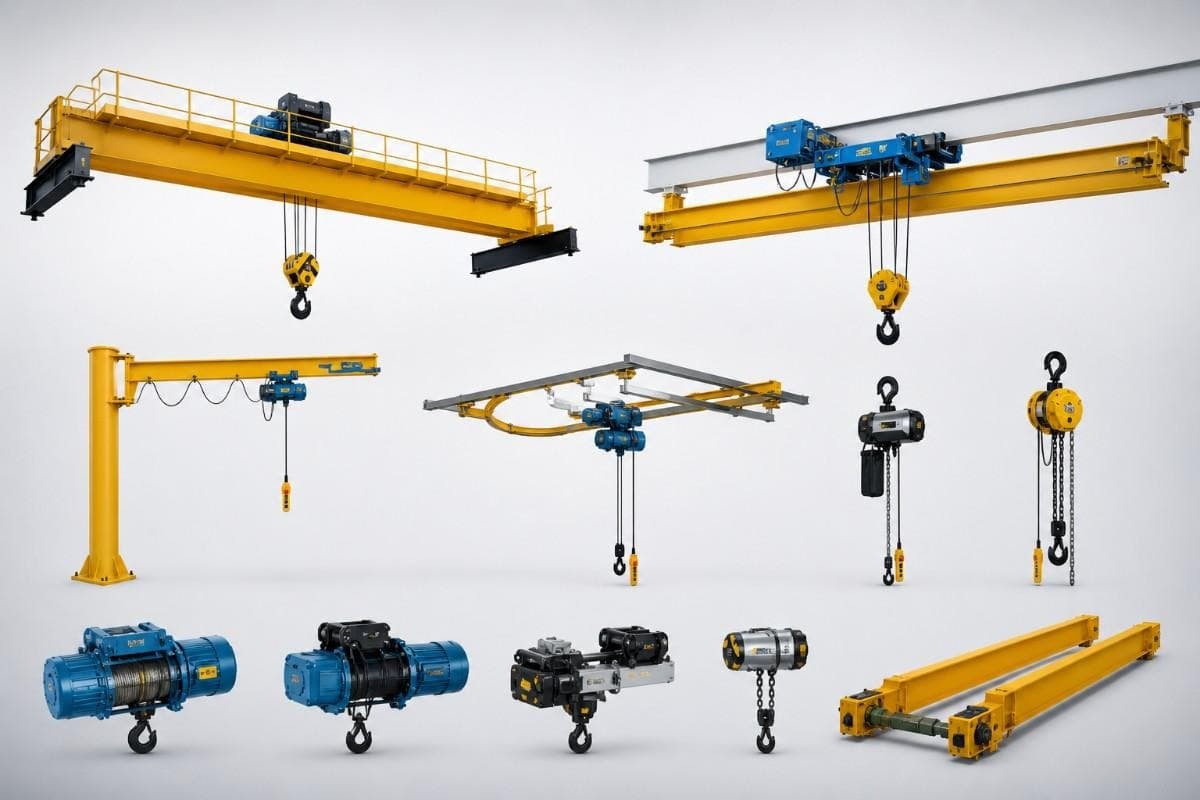
Times Krane focuses on delivering dependable material handling solutions designed around real industrial requirements. The company manufactures overhead cranes, gantry cranes, wire rope hoists, chain hoists, KBK crane systems, and customised lifting equipment for a wide range of industries.
Its approach combines engineering expertise, quality manufacturing, careful installation, and responsive after-sales support. Whether you need a crane for a fabrication workshop, automotive plant, warehouse, or heavy engineering facility, Times Krane works to provide a solution that aligns with your operational goals.
Choosing among the many overhead crane manufacturers in India is about more than comparing specifications. It requires evaluating engineering capability, manufacturing quality, safety practices, service support, and long-term reliability.
The right overhead crane supplier becomes a long-term partner who helps improve productivity while supporting safe and efficient material handling. If you're planning a new installation or upgrading an existing system, Times Krane offers customised lifting solutions backed by industry experience, technical expertise, and a commitment to quality.
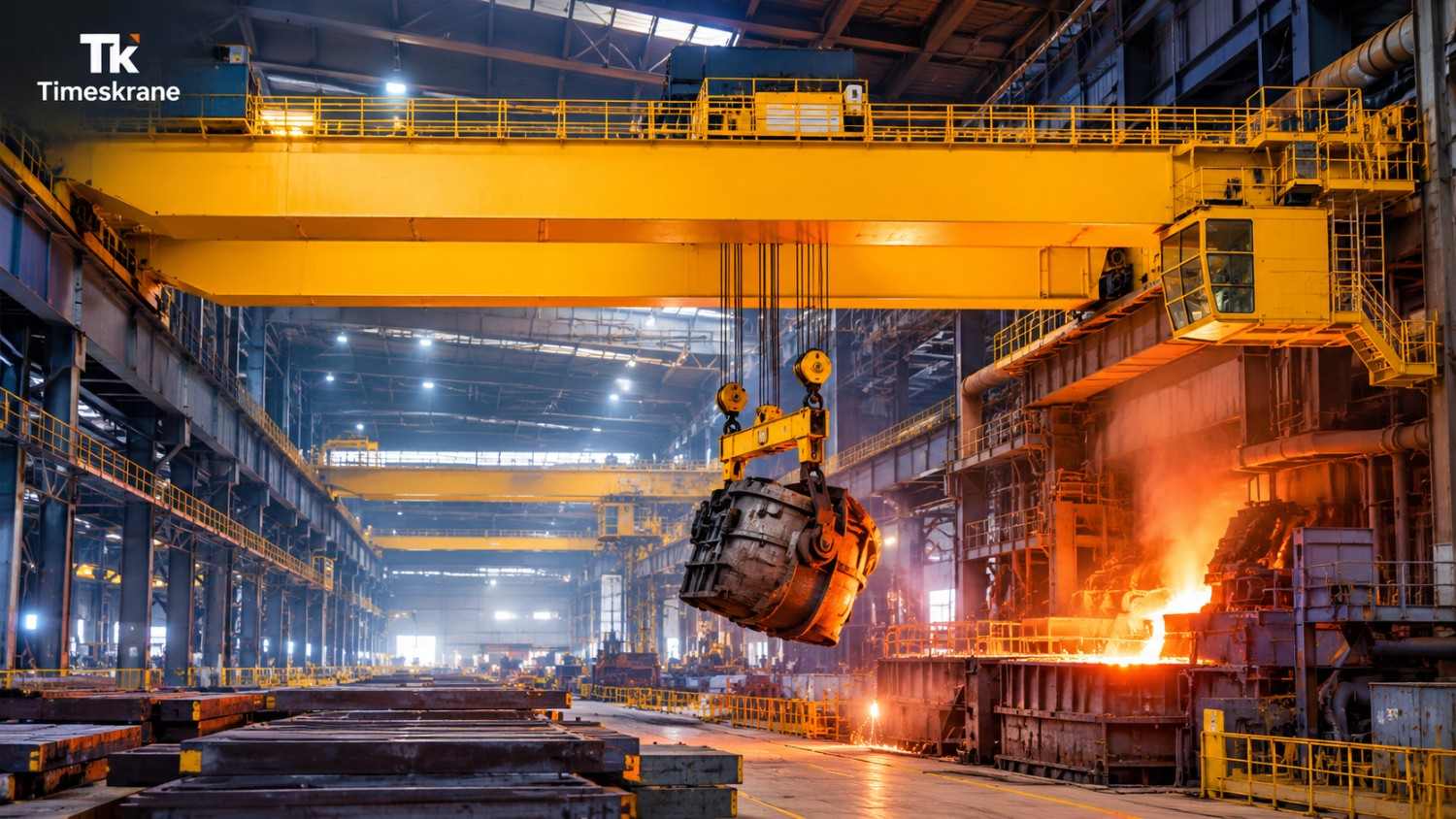
An honest breakdown of what makes a crane genuinely heavy duty for steel plant use, covering duty classification, capacity, and safety features buyers often miss.
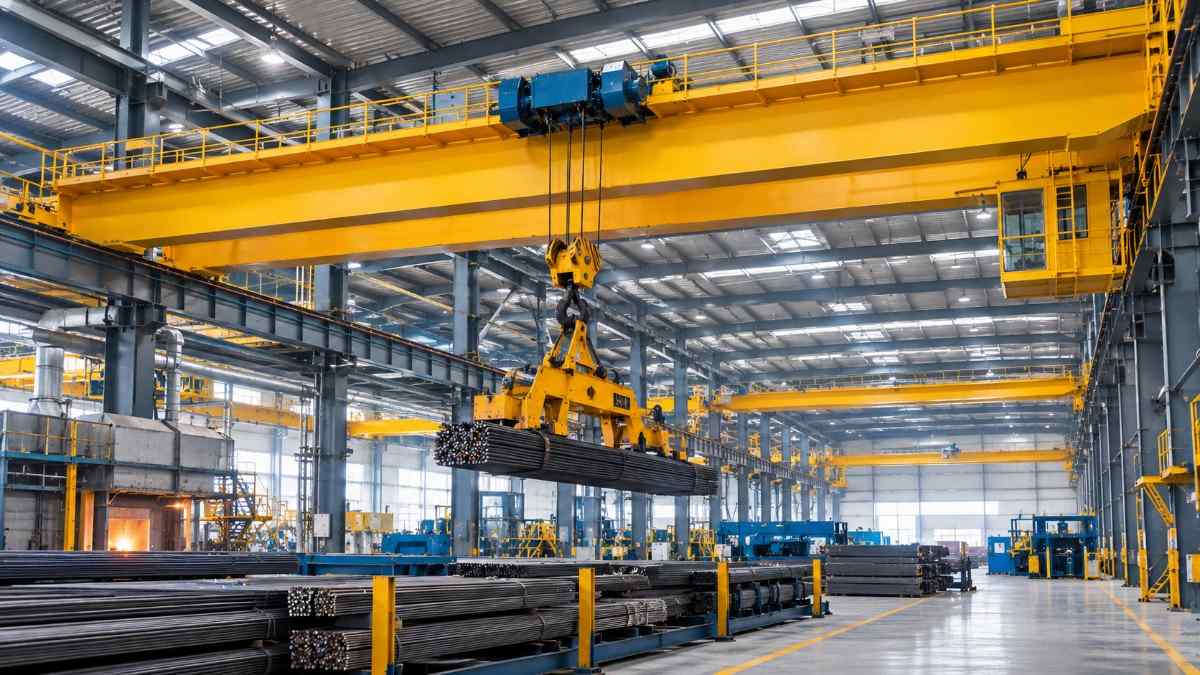
Finding the right steel plant crane manufacturer is perhaps the most important decision a procurement manager or plant owner will make. A poorly designed crane can increase both safety risks and downtime while excessively increasing maintenance costs.
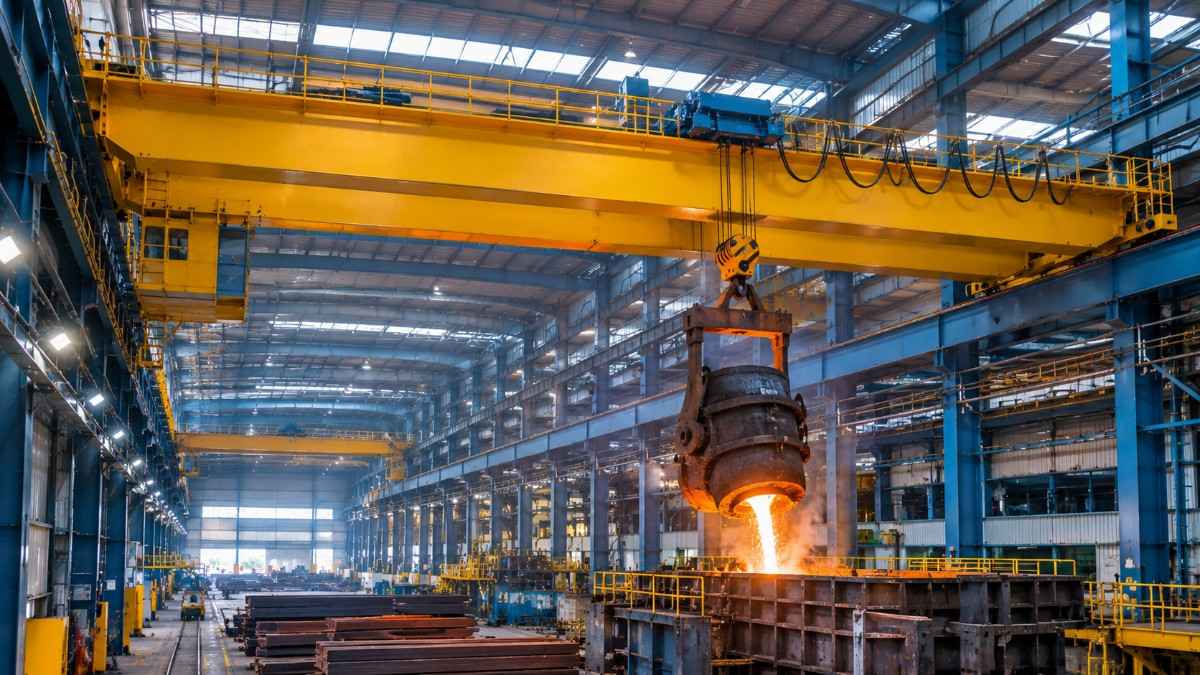
If you run or manage a steel plant, you already know that an overhead crane for steel plant operations is not a luxury. It is the backbone of your material handling process. From moving billets and coils to shifting ladles of molten metal, the right crane decides how smoothly your production line runs.
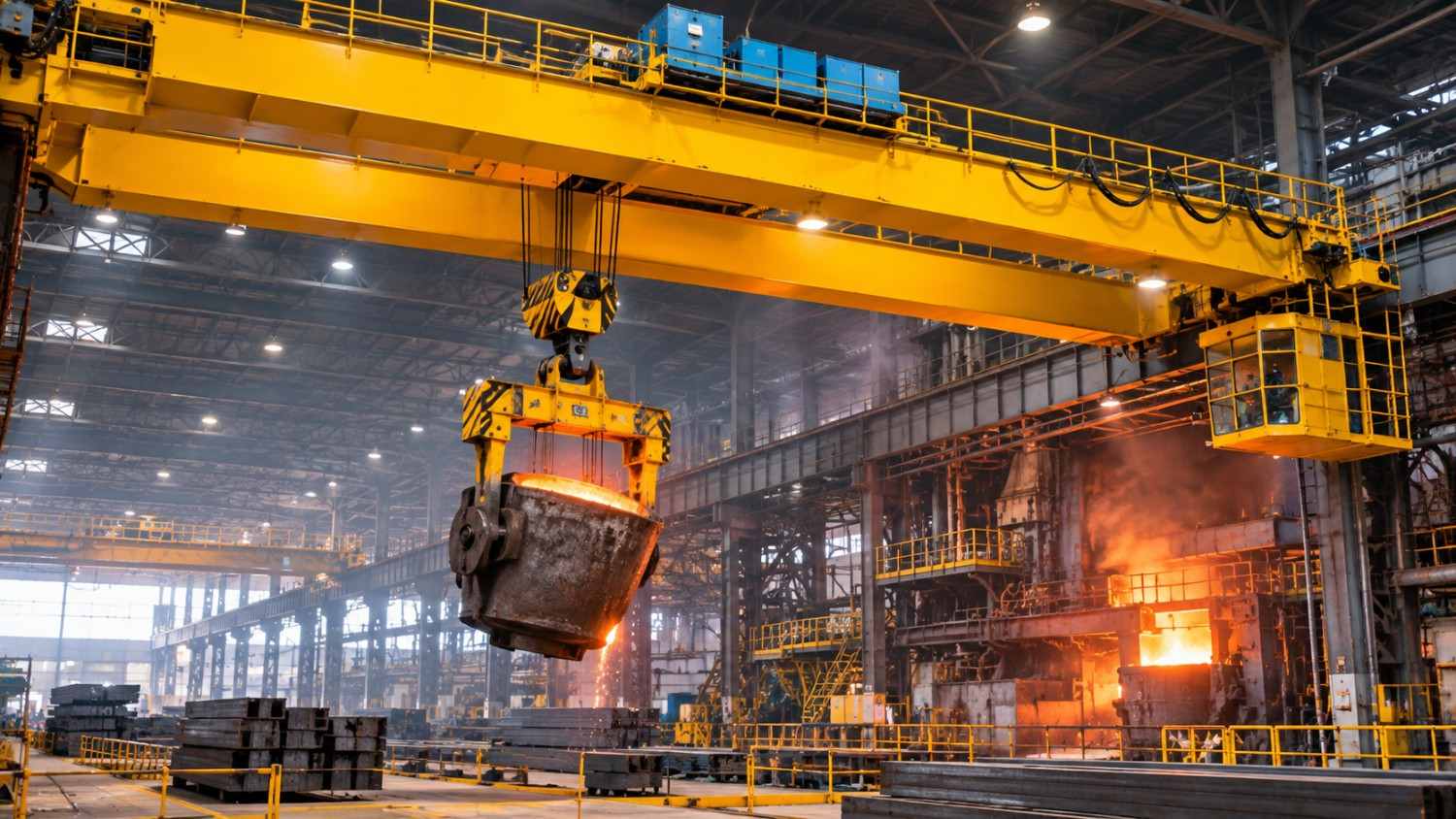
Discover how EOT cranes support steel plant operations, from material handling to molten metal lifting. Learn about crane types, duty classes, safety features, and how to choose the right EOT crane for your steel plant.
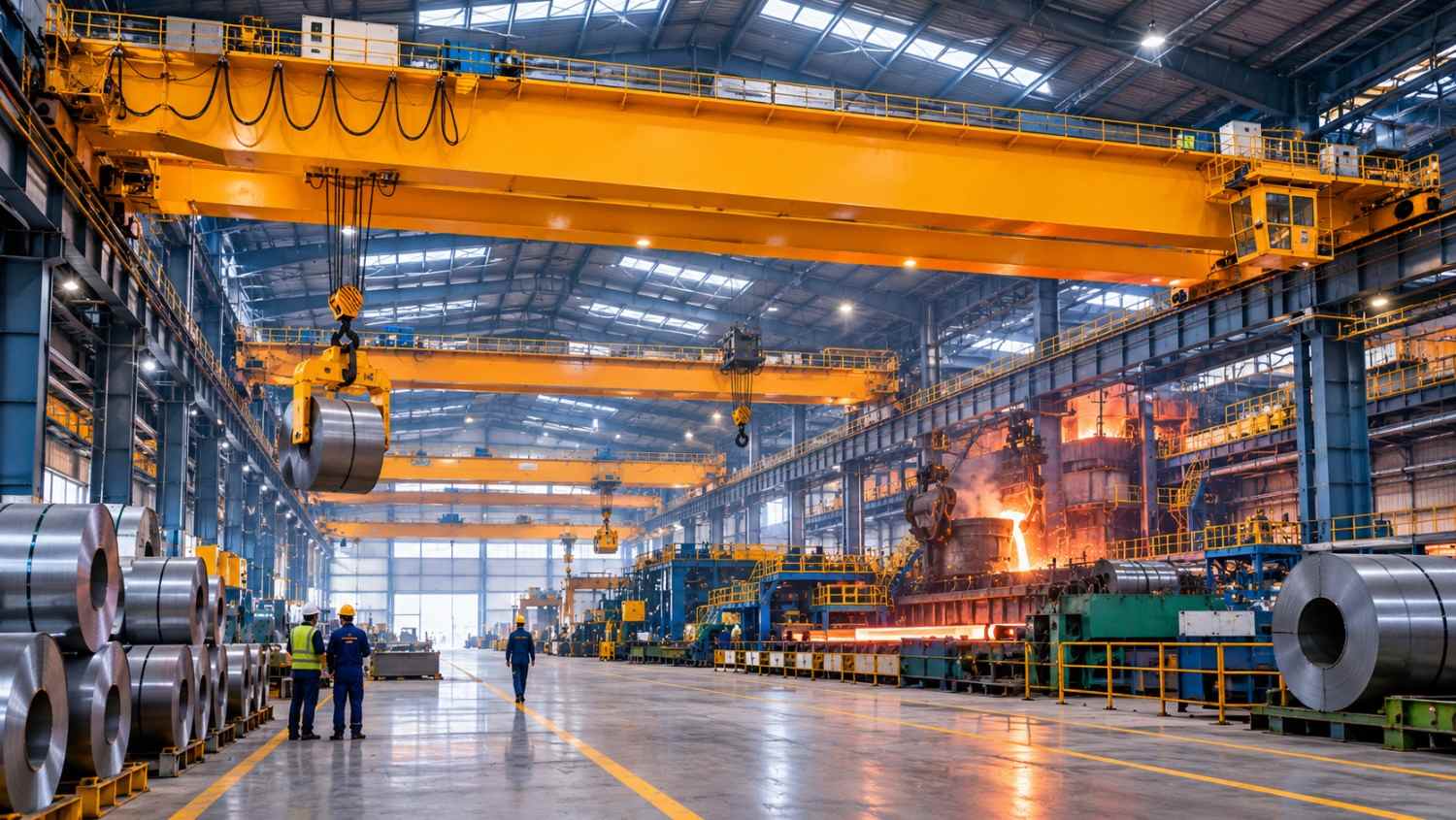
An honest, researched look at the top 5 crane manufacturers for steel plants in India, covering ladle, grab bucket, and coil handling cranes.
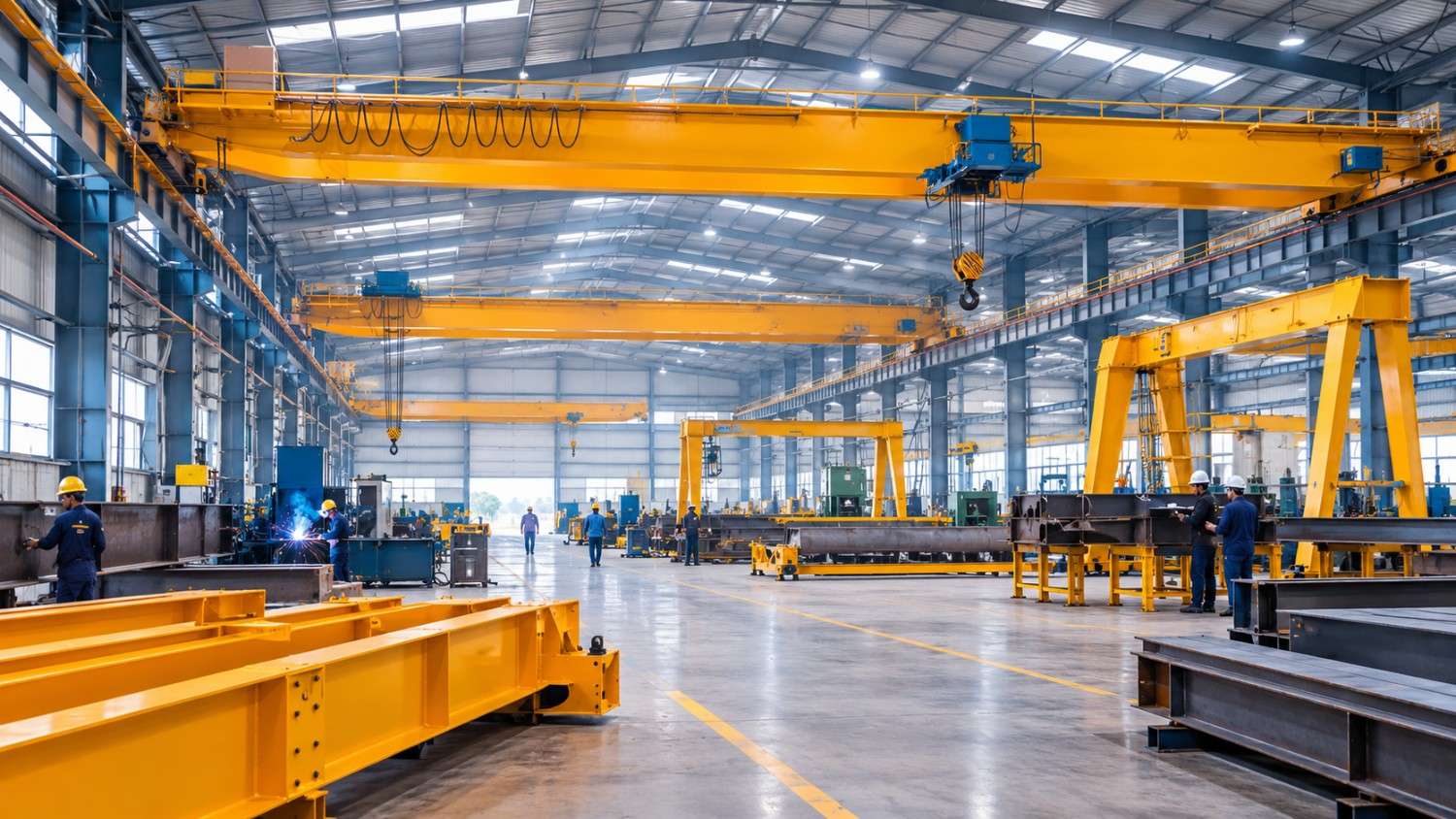
A real, researched look at the top 10 crane manufacturers in North India, covering Delhi NCR, Punjab, Haryana, UP, and Rajasthan, with what actually sets each one apart.
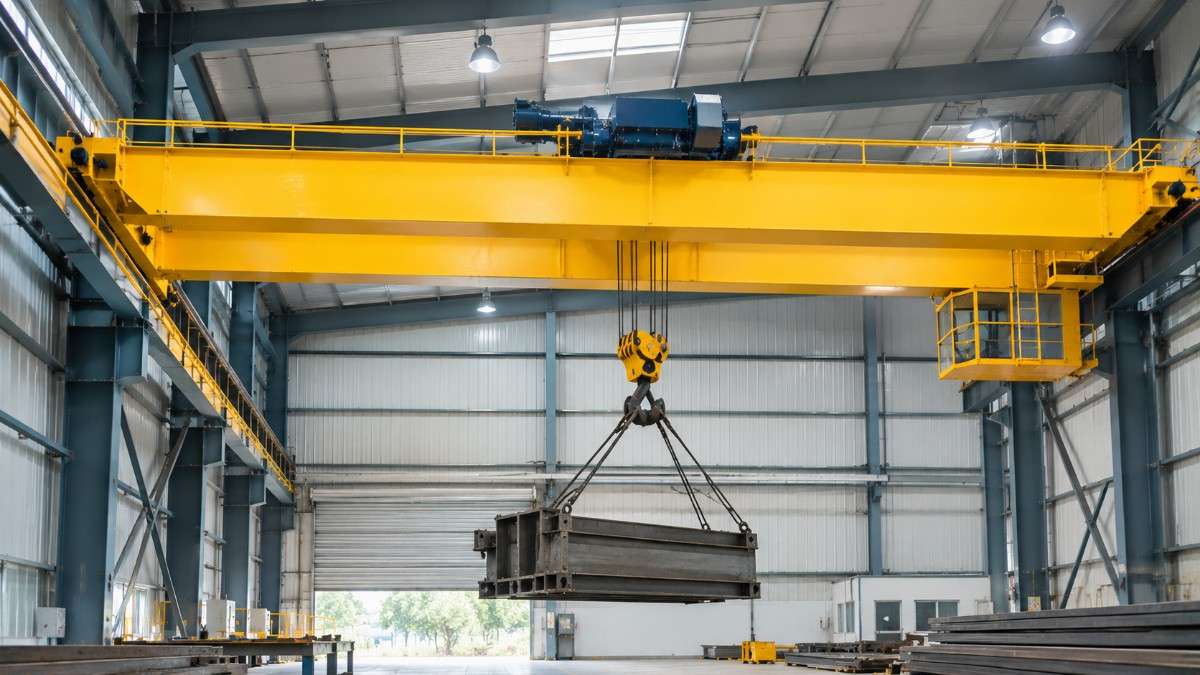
If you are looking for a 10 ton overhead crane for your factory or warehouse, the primary question that arises in your mind is whether this capacity will cater to your daily operations or it will turn out to be a useless and bulky addition to your storage.
Looking for a reliable partner for your next industrial project?