
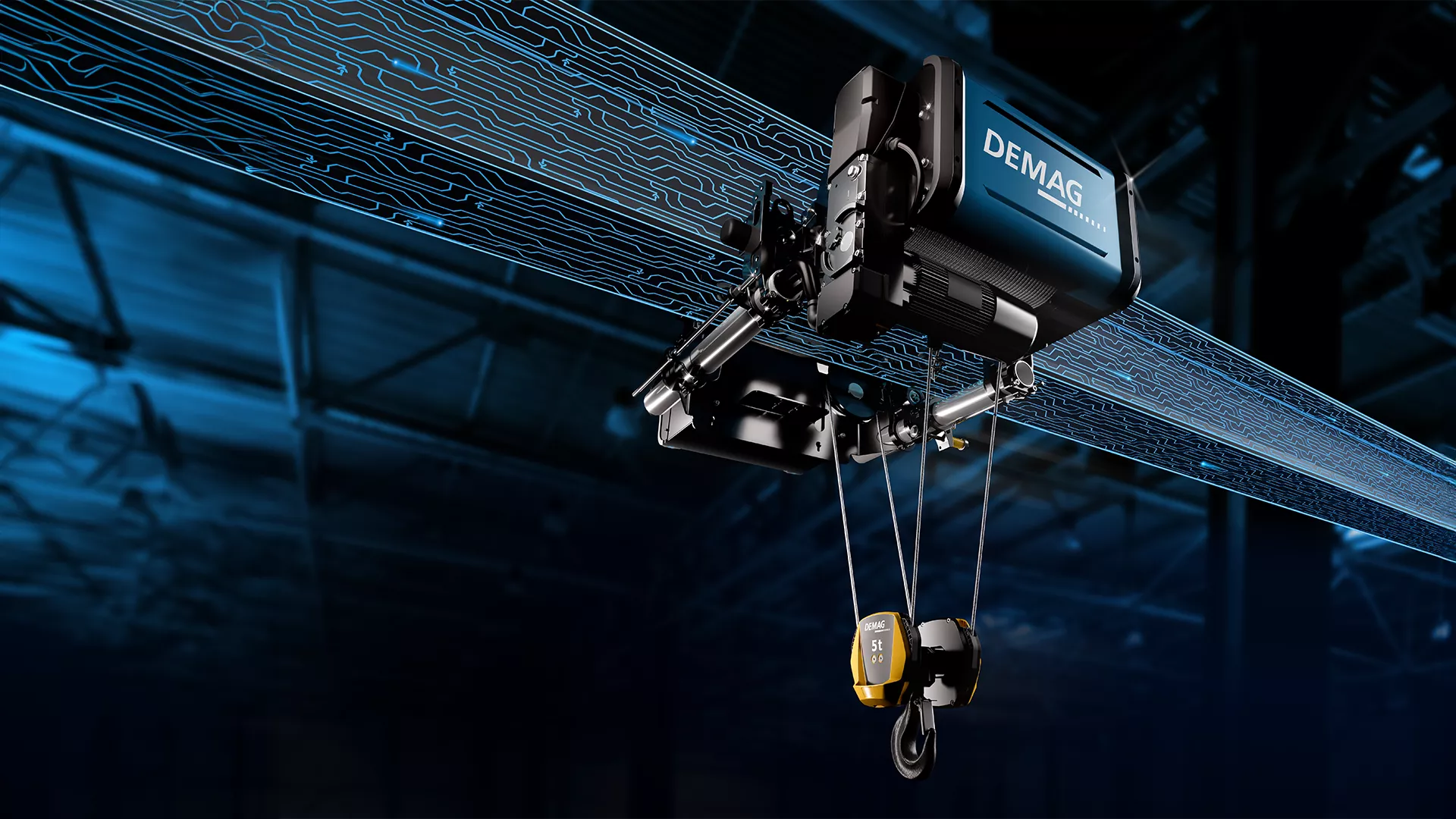
How to Choose the Right Single Girder Crane for Your Facility
Table of Content
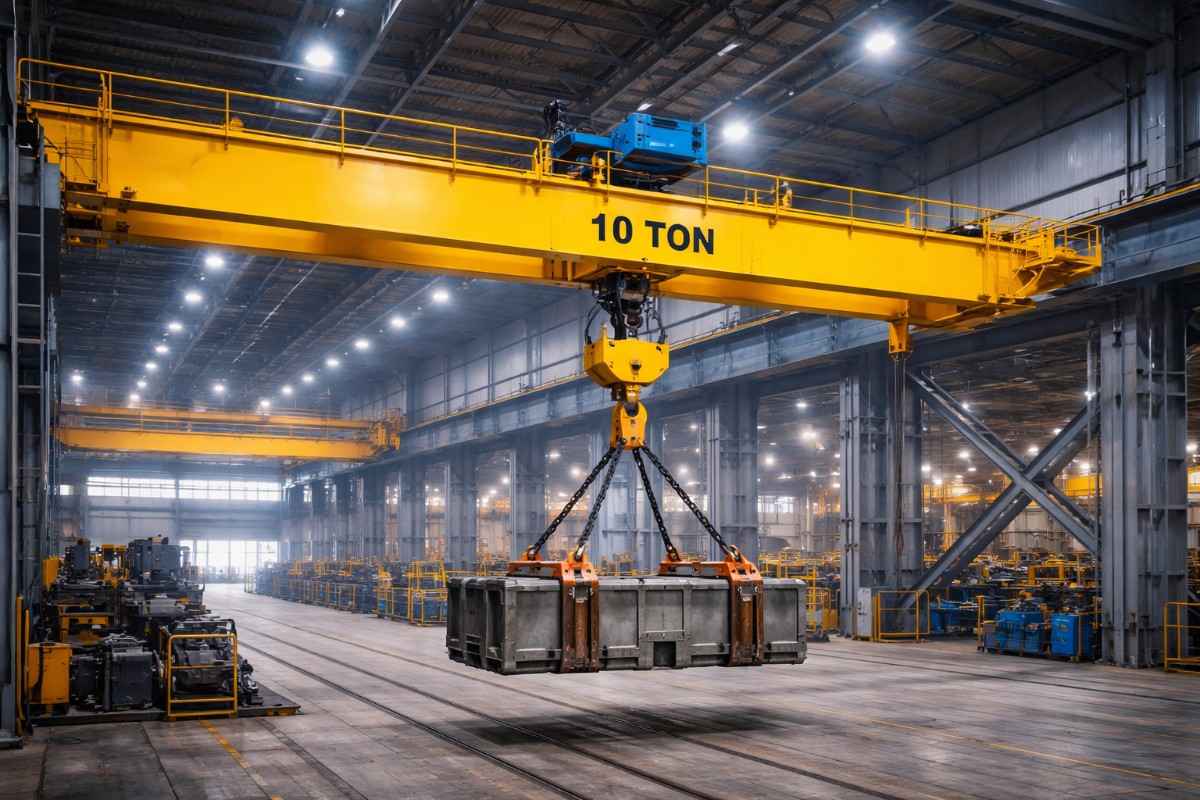
How to Choose the Right Single Girder Crane for Your Facility
Every plant manager has been there. Production is moving, deadlines are tight, and somewhere on the shop floor, a load needs to move from one point to another, quickly, safely, and repeatedly. The wrong lifting equipment does not just slow things down. It creates safety risks, inflates maintenance costs, and puts your entire operation under pressure.
A single girder crane is one of the most practical and widely used overhead lifting solutions in Indian industry today. But choosing the right one for your specific facility is not as simple as picking the highest capacity model from a catalogue. There are structural considerations, operational requirements, budget realities, and long-term performance factors that all need to align.
This guide is written specifically for industrial buyers, plant engineers, and business owners who want to make a confident, informed decision before investing in a single girder crane.
What Is a Single Girder Crane and Why Is It So Widely Used
A single girder crane is a type of electric overhead travelling (EOT) crane that uses one main horizontal beam, called the girder, to support the hoist and trolley assembly. The crane travels along runway beams mounted on the walls or columns of your building, allowing loads to be lifted and moved across the full length and width of the facility.
It is the go-to solution for light to medium duty lifting applications, typically handling capacities between 1 ton and 20 tons, with spans ranging from 5 metres to around 20 metres.
What makes it so popular across Indian manufacturing units, warehouses, and fabrication shops is its combination of practical advantages. It costs less than a double girder crane, requires less structural support from the building, and can be installed relatively quickly without major civil modifications.
The Key Factors That Determine the Right Single Girder Crane
This is where most buyers make mistakes. They focus heavily on lifting capacity and ignore everything else. Here is what actually needs to be evaluated before you finalise your crane.
1. Required Lifting Capacity
Start with the maximum load you will ever need to lift, then add a safety margin of at least 25 percent. If you are lifting loads up to 4 tons today but expect your operations to scale, consider planning for 6 tons from the start. Undersizing a crane is one of the most common and costly mistakes in material handling.
2. Span of the Crane
The span is the distance between the two runway rails on which your crane travels. This is directly determined by your building's bay width. Wider spans mean more structural stress on the single girder, which is why most single girder cranes are practical up to approximately 20 metres. Beyond that, a double girder configuration is usually recommended.
3. Hook Height and Headroom
How high does your load need to travel? The hook height is the vertical distance between the floor and the hook in its highest position. This depends on your building's clear height and the space taken up by the runway beam, crane structure, and hoist. In facilities with limited ceiling height, a low headroom hoist or an underslung single girder crane is worth considering.
4. Duty Class
This is perhaps the most overlooked factor. The duty class, defined by standards such as IS 3177 and FEM classifications, tells you how intensively the crane will be used. A crane that lifts loads 4 to 6 times a day sits in a completely different duty class than one running 40 to 50 lifts per shift. Using a light duty crane for heavy cycle operations leads to accelerated wear, frequent breakdowns, and shortened equipment life.
5. Type of Hoist
The hoist is the mechanism that actually lifts the load. For single girder cranes, you will typically choose between a wire rope hoist and a chain hoist. Chain hoists work well for lighter loads and lower lift heights. Wire rope hoists are better suited for heavier loads, greater lift heights, and more demanding operational cycles.
6. Control System
Will the crane be operated via a pendant control hanging from the crane, or do you need a radio remote control for greater operator flexibility? In environments where the operator needs to move with the load or maintain a safe distance, remote control is the better choice.
Top Running vs. Underslung Single Girder Cranes
When selecting a single girder crane, one of the first structural decisions is whether to go with a top running or underslung configuration.
In a top running single girder crane, the end trucks run on top of the runway beams. This is the most common configuration and allows for higher lift heights because the crane sits above the beam level.
In an underslung single girder crane, the crane hangs below the bottom flange of the runway beams. This is ideal for facilities with limited headroom or where the building structure cannot support a conventional runway system. It also allows for better coverage of the workspace since the crane can travel right to the edges of the building.
The right choice depends entirely on your building structure, headroom availability, and operational needs.
Common Problems Buyers Face and How to Avoid Them
Choosing capacity without considering span
A 10-ton single girder crane with a 20-metre span is a very different engineering challenge than a 10-ton crane with a 10-metre span. Always specify both together.
Ignoring the building's structural capacity
Your facility's columns, beams, and foundation need to be able to handle the crane's own weight plus the dynamic loads during operation. Always get a structural assessment done before installation, especially in older buildings.
Buying on price alone
A lower upfront cost can mean compromised steel quality, undersized components, or a manufacturer that will not support you with spares and service after the sale. Total cost of ownership matters far more than the purchase price.
Skipping duty class evaluation
Speak to your operations team about actual daily lift cycles before finalising the duty class. Overworking an M3 duty class crane on an M5 duty cycle will give you nothing but trouble.
Applications Where Single Girder Cranes Deliver the Best Results
Single girder cranes are the preferred lifting solution across a wide range of industries and applications.
In general manufacturing units, they handle raw material loading, component shifting, and finished goods movement efficiently without requiring heavy infrastructure.
In warehouses and storage facilities, they are used for loading and unloading of pallets, containers, and heavy goods with speed and precision.
In fabrication shops and workshops, they support welding operations, machine loading, and assembly line assistance where medium duty lifting is needed regularly.
In the automobile industry, they handle sub-assemblies, body parts, and tooling with smooth and controlled movement.
In the textile and paper industries, they move large rolls and bulk material that cannot be handled manually or with forklifts.
Why Times Krane Is a Trusted Single Girder Crane Partner
Times Krane has been designing and manufacturing industrial lifting equipment for clients across India. Every single girder crane that leaves the Times Krane facility is built to IS and FEM standards, engineered to match the specific operational requirements of the buyer, and backed by reliable after-sales service and spare parts support.
What sets Times Krane apart is not just the quality of manufacturing. It is the consultative approach. The team works directly with plant engineers and purchase managers to understand the exact operational environment before recommending a solution. This means you get a crane that is correctly sized, correctly specified, and built to last.
Times Krane offers customization across capacity, span, duty class, hoist type, control systems, and electrical configurations. Whether you need a standard 3-ton crane for a small workshop or a custom 15-ton crane for a demanding production environment, Times Krane has the engineering capability and production capacity to deliver.
Frequently Asked Questions
What is the maximum capacity of a single girder crane?
Single girder cranes are typically recommended for capacities up to 20 tons. For heavier loads, a double girder EOT crane is more suitable due to its stronger structural design and higher rigidity.
How long does it take to install a single girder crane?
Installation time depends on the span, the condition of the building structure, and whether a new runway system needs to be erected. A standard installation typically takes between 3 and 7 working days.
What is the difference between a top running and an underslung single girder crane?
A top running crane travels on top of the runway beams and is suitable for standard headroom conditions. An underslung crane hangs below the runway beams and is ideal for low headroom facilities or where space coverage needs to extend to the building edges.
How do I know which duty class is right for my operation?
Calculate the number of lifts per shift, the average load handled as a percentage of maximum capacity, and the total operating hours per day. Share this with your crane manufacturer and they will recommend the correct FEM or IS duty class.
Does Times Krane provide installation and after-sales service?
Yes. Times Krane provides complete turnkey support including supply, installation, commissioning, operator training, and annual maintenance contracts across India.
Conclusion
Choosing the right single girder crane is not a decision to rush. The capacity, span, headroom, duty class, hoist type, and structural compatibility of your building all need to come together for the crane to perform safely and reliably over its full service life.
Take the time to assess your operational requirements accurately, consult with a manufacturer who understands your industry, and prioritise long-term reliability over short-term cost savings.
If you are planning to install a single girder crane at your facility, the Times Krane team is ready to help you make the right decision. Reach out today for a free consultation and get a solution that is engineered specifically for your needs.
Recent Posts
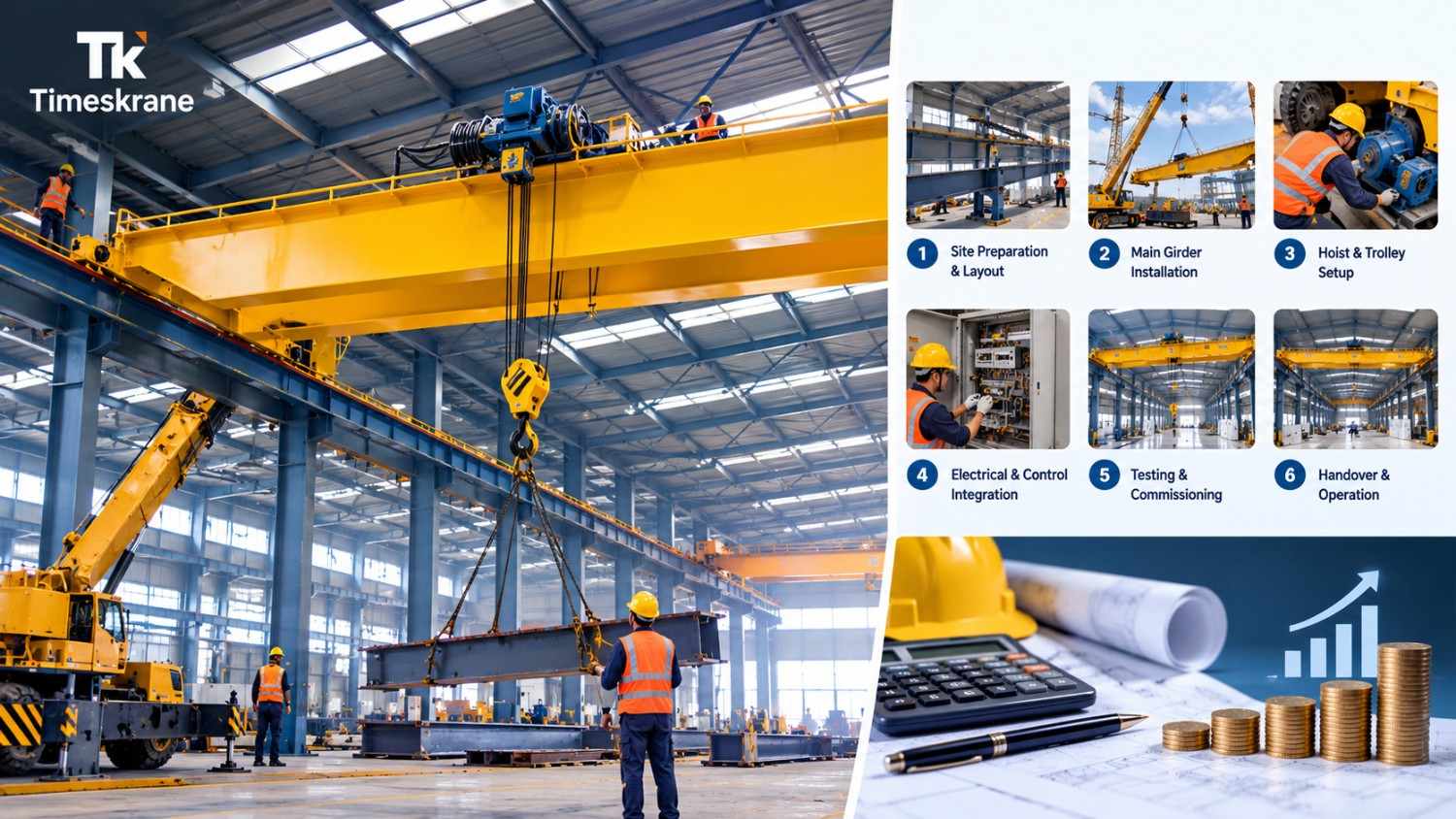
EOT Crane Installation Process and Cost in India
The complete EOT crane installation process in India, covering site survey, runway beams, load testing, and what installation actually costs beyond the crane price.
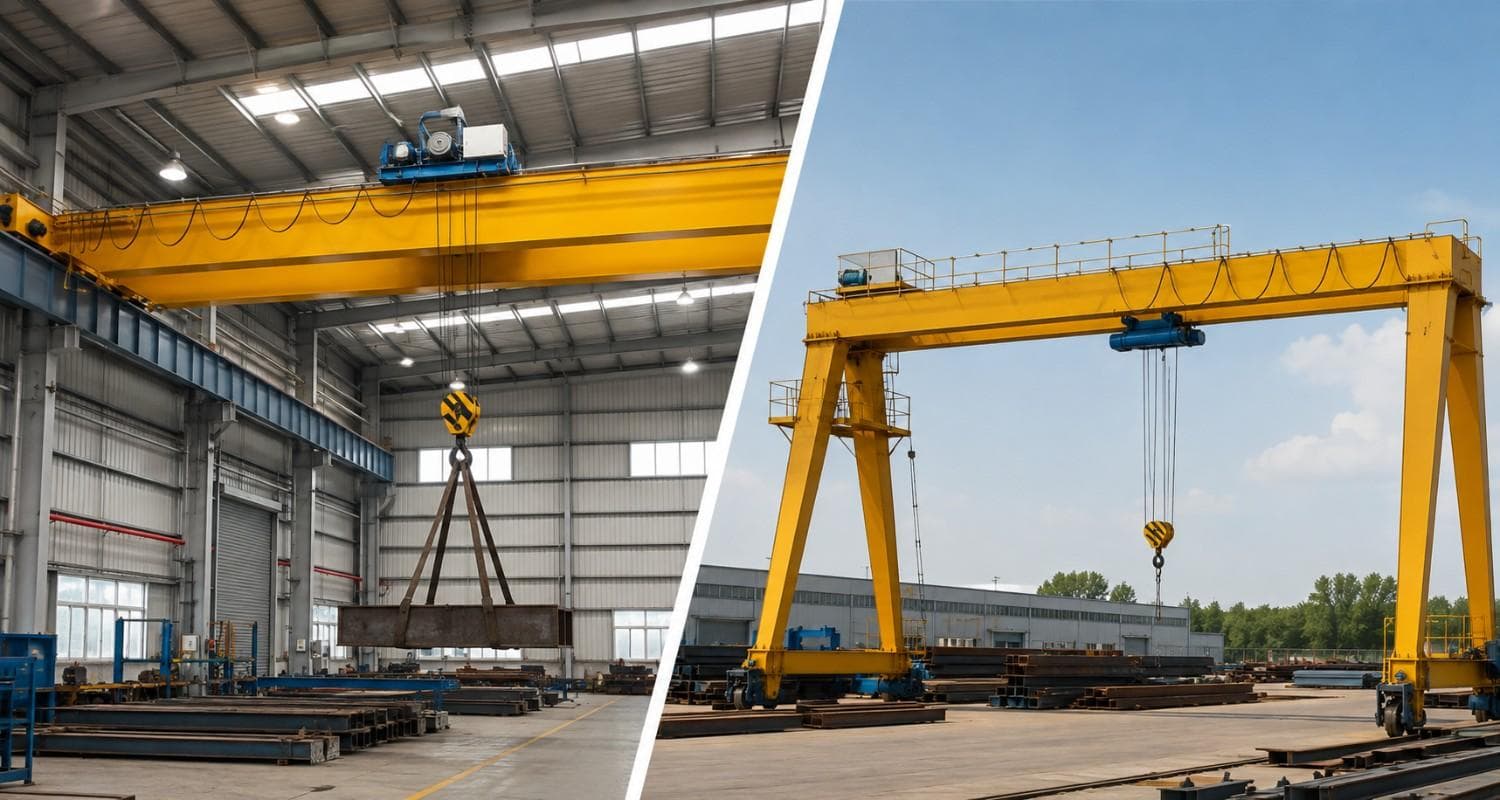
EOT Crane vs Gantry Crane: Which One Does Your Factory Actually Need?
EOT cranes and gantry cranes both lift heavy loads, but they suit very different factories. This guide walks through a simple decision tree covering building structure, floor space, budget, and indoor vs outdoor use, so you can confidently choose the right crane for your facility.

EOT Crane Safety Compliance in India
IS 3177, IS 807, Factories Act rules, and how third-party load testing and certification work for EOT cranes in India.

EOT Crane AMC Cost & Whats Included in 2026
What's actually included in an EOT crane AMC, how comprehensive and non-comprehensive contracts differ, and what drives the cost in India.
Need a Custom Lifting Solution?
Let’s Talk!
Looking for a reliable partner for your next industrial project?
- Expert Consultation
- Pan-India Service