
EOT Crane Installation Process and Cost in India
Table of Content
EOT Crane Installation Process and Cost in India
Buying the right EOT crane is only half the job done. How it gets installed decides whether that crane runs smoothly for the next twenty years or starts giving you trouble in year two. A lot of buyers spend weeks comparing crane prices and specifications, then treat installation as an afterthought that "the vendor will just handle." That's a mistake. Bad alignment, a skipped structural check, or rushed electrical work can turn a well built crane into a maintenance headache.
This guide walks through the full EOT crane installation process in India, what it actually costs, how long it takes, and what to check before you sign off on the job. If you already have a crane specification in mind and want a site visit scheduled, get in touch with our team here and we'll take it from there.
What the EOT Crane Installation Process Actually Involves
EOT crane installation is not just bolting a crane onto rails and switching it on. It's a sequence of engineering checks, mechanical assembly, electrical work, and safety testing that has to happen in the right order. Get one stage wrong and it shows up later as wheel wear, vibration, or a crane that skews slightly every time it travels.
A typical EOT crane installation covers:
- Runway beam and building inspection
- End carriage and bridge girder erection
- Hoist mounting and wire rope reeving
- Electrical wiring, control panel, and festoon cable installation
- Precision alignment
- A trial run without load
- Load testing and final commissioning
Each of these stages has its own checks, and skipping any of them is exactly how a crane ends up needing repairs within its first year of operation.
Before Installation: Site Survey and Planning
Good EOT crane installation starts well before anyone touches a spanner. This is the planning stage, and it's where a lot of future problems are either caught or missed.
Building and Structural Assessment
An EOT crane isn't a standalone machine. It becomes part of your building's structure, since the whole weight of the crane and its load passes through the runway beams into the building columns. Before installation begins, engineers need to check the building's column spacing, bay width, roof height, and whether the existing structure can actually take the static and dynamic loads a crane puts on it. If the structure isn't strong enough, it needs reinforcement before the crane goes anywhere near it.
Runway Beam and Civil Work
The runway beams are what the crane actually travels on, so their alignment has to be near perfect. Engineers check beam straightness, elevation, rail gauge, and weld quality. Even a small error here causes the crane to skew during travel, which wears out wheels and puts extra load on the drive motors far faster than normal. If your building doesn't already have runway beams in place, this civil and structural work has to be completed and inspected before mechanical installation can start.
Power Supply Planning
Electrical planning should happen alongside the structural work, not after it. This means confirming available voltage, cable routing from the main distribution board to the crane panel, earthing, and whether the facility's power supply can handle the crane without overloading other equipment. Sorting this out early avoids delays once the mechanical team is ready to start wiring.
Step by Step EOT Crane Installation Process
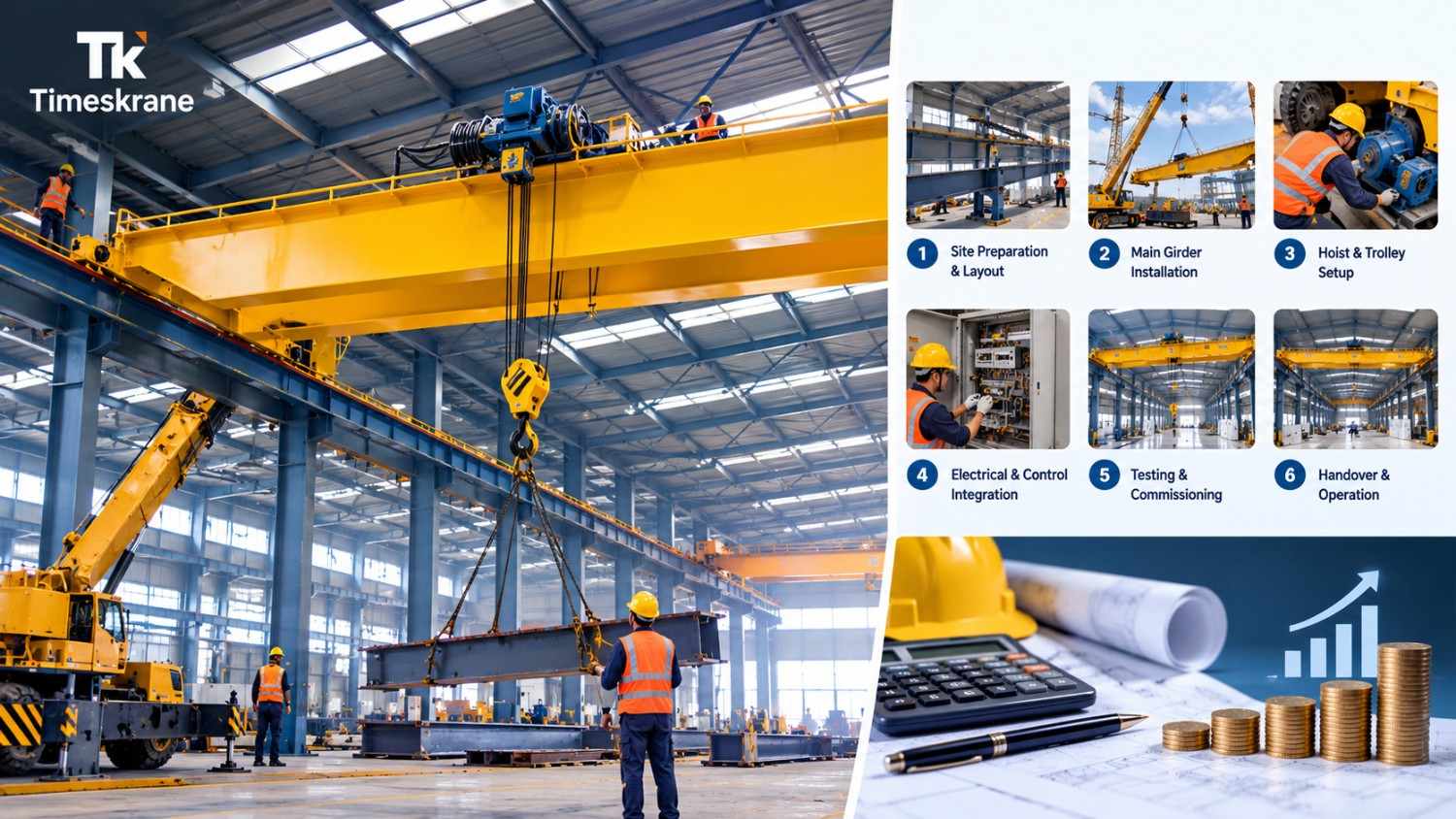
Once the site is ready, the actual EOT crane installation process follows a fairly consistent sequence, whether you're installing a 5 ton single girder crane in a workshop or a 50 ton double girder crane in a steel plant.
1. Site preparation and material inspection
The installation area is cleared, and every crane component delivered to site is checked against the drawings for transit damage, missing parts, and dimensional accuracy. Catching a problem here saves days of delay later.
2. Runway inspection
Before anything is mounted, the runway rails are checked one more time for alignment, elevation, and gauge. Any deviation is corrected before the bridge goes up.
3. End carriage installation
The end carriages, which carry the wheels that ride on the runway rails, are positioned first. Technicians check wheel alignment and bearing condition at this stage.
4. Bridge girder erection
Using a mobile crane or similar lifting equipment, the main bridge girder is lifted and positioned onto the end carriages. This is one of the more critical steps, since centerline alignment and bolt tightening sequence directly affect how smoothly the crane travels for its entire service life.
5. Hoist installation
The hoist unit is mounted on the bridge, and technicians check drum positioning, wire rope reeving, and hook block installation before moving on.
6. Electrical installation
This covers the control panel, festoon cable system, pendant or radio remote controls, motors, and earthing connections. Loose terminals or incorrect cable sizing at this stage cause electrical trips and motor overheating down the line, so this work needs proper inspection, not just a quick wiring job.
7. Alignment and calibration
The complete crane assembly is checked with precision instruments for wheel alignment, bridge squareness, rail gauge, and hook center alignment. This step is what separates a crane that runs smoothly for years from one that develops vibration and wear problems within months.
8. Trial run without load
Before any weight goes on the hook, the crane is run through its full motions, hoist, cross travel, long travel, brakes, and limit switches, to catch any issue before load testing begins.
If you want to see how factories in North India typically source this work, our overview of top EOT crane manufacturers in India covers what separates a company that installs cranes properly from one that just delivers and leaves.
Load Testing and Commissioning
No EOT crane should go into daily use without being properly load tested. This isn't a formality, it's what confirms the crane is actually safe to operate at its rated capacity.
No-load test: The crane is run through hoisting, travel, and braking without any weight, to catch installation or electrical issues early.
Static load test: A load equal to or slightly above the crane's rated capacity is lifted and held. Engineers check for girder deflection, hook performance, and brake holding capacity during this hold.
Dynamic load test: The crane is operated under load through hoisting, lowering, and travel motions together, to see how it performs under conditions closer to actual daily use.
Once testing is complete, commissioning confirms every mechanical, electrical, and safety system, limit switches, overload protection, emergency stops, is working as designed. Only after this should the crane be handed over for production use. In India, this testing needs to align with IS 3177 and IS 807 requirements, and you should get a proper load test certificate as part of the handover, not just a verbal confirmation that "it's been tested."
EOT Crane Installation Cost in India: What You Actually Pay For
This is where a lot of buyers get confused, because the crane's purchase price and the total installed cost are not the same thing. Most reputable manufacturers include basic installation and commissioning within the crane's supply price for a standard configuration. What usually sits outside that price is everything connected to the building itself.
Here's a rough breakdown of where installation-related costs come from:
| Cost Component | Typically Included in Crane Price? | Approximate Additional Cost |
|---|---|---|
| Basic mechanical and electrical installation | Yes, for standard configurations | Included |
| Factory testing before dispatch | Yes | Included |
| Runway beam fabrication and civil work | No | ₹5 lakh to ₹30 lakh, depending on facility size and existing structure |
| Power supply cabling from MDB to crane panel | No | Varies by distance and load |
| Radio remote control | Sometimes, ask to confirm | ₹50,000 to ₹1.5 lakh |
| Cabin control (for cranes above 20 ton) | No | ₹2 lakh to ₹5 lakh |
| VFD drives on hoist and travel motors | Sometimes | ₹1 lakh to ₹3 lakh per axis |
| Load test certificate | Sometimes | ₹8,000 to ₹25,000 |
For a detailed capacity wise breakdown of base crane pricing itself, our EOT crane price in India 2026 cost guide covers pricing from 1 ton right up to 50 ton, along with what typically drives the price up or down within each range.
The one thing worth remembering here is that a low headline installation quote that excludes civil work, runway beams, and power supply can end up costing more overall than a comprehensive quote that includes everything upfront. Always ask for a delivered and commissioned price, not just an equipment price.
EOT Crane Installation Timeline by Capacity
Installation duration depends heavily on capacity, site readiness, and whether any civil work needs to happen first.
| Crane Capacity | Estimated Installation Time |
|---|---|
| 1 to 5 ton | 2 to 4 days |
| 5 to 20 ton | 4 to 7 days |
| 20 to 50 ton | 1 to 2 weeks |
| 50 to 100 ton | 2 to 3 weeks |
| Above 100 ton | Project specific, planned individually |
These timelines assume the building and runway beams are already in place. If structural reinforcement or new runway beam fabrication is needed first, add several more weeks depending on the scope of civil work involved.
Common EOT Crane Installation Mistakes
Even a well built crane can develop problems fast if installation cuts corners. The most common issues we see are:
- Poor runway alignment, which leads to skewing, excessive wheel wear, and higher motor load over time
- Skipping the structural assessment, which can mean the building simply isn't rated for the loads a crane puts through it
- Loose or undersized electrical connections, which cause frequent trips and motor overheating
- Rushing alignment and calibration to save a day or two, which shows up later as vibration and premature bearing wear
- Skipping load testing to speed up handover, which is both a safety risk and a compliance issue under the Factories Act
Every one of these is avoidable with a proper installation process. None of them are worth the shortcut.
Documents You Should Get After Installation
A proper handover isn't complete without paperwork. Before signing off, make sure you receive:
- Installation completion report
- Load test certificate
- Commissioning report
- Electrical test report
- Operation and maintenance manual
- Warranty documentation
These documents matter for future maintenance planning and for statutory inspections, so don't let a vendor skip this step just because the crane is "working fine."
Choosing the Right Company for EOT Crane Installation
The installation team matters just as much as the crane manufacturer, sometimes more. When evaluating who will handle your installation, ask about their experience with your specific capacity range, whether they do in-house load testing or outsource it, and how they handle unexpected structural issues found during the site survey. A company that only sends a fitting crew without any engineering oversight is a red flag, regardless of how good their crane brochure looks.
If you're still comparing manufacturers at this stage, our guide to top EOT crane manufacturers in India breaks down what actually separates a dependable manufacturer from one that just sells equipment and moves on.
Frequently Asked Questions
How long does EOT crane installation take in India?
It depends on capacity and site readiness. Smaller cranes up to 5 tons typically take 2 to 4 days, while larger cranes above 50 tons can take two to three weeks or longer, especially if civil work is needed first.
What is the cost of EOT crane installation in India?
Basic mechanical and electrical installation is usually included in the crane's supply price. What adds to the total cost is civil work and runway beam fabrication, which can range from ₹5 lakh to ₹30 lakh depending on the facility, plus optional features like radio remote control or VFD drives.
Is a building structural assessment necessary before installing an EOT crane?
Yes. The crane transfers its weight and load into the building through the runway beams and columns. Without checking whether the structure can handle this, you risk structural damage or an unsafe installation.
Is load testing mandatory after EOT crane installation?
Yes. Load testing confirms the crane can safely handle its rated capacity and is a requirement under Indian safety standards including IS 3177 and IS 807. Skipping it is both a safety and compliance risk.
Can an existing factory building be retrofitted with an EOT crane?
In many cases, yes, but the building structure needs to be assessed first. Depending on the results, you may need reinforcement or new runway beams before installation can proceed.
What documents should I receive after crane installation?
At minimum, you should get an installation completion report, load test certificate, commissioning report, electrical test report, and the operation and maintenance manual.
Conclusion
A crane is only as good as its installation. You can buy the best engineered EOT crane on the market, but a rushed or poorly supervised installation will still give you skewing, premature wear, and unplanned downtime within a year or two. Take the site survey seriously, insist on proper load testing, and get your documentation in writing before signing off.
If you're planning an installation and want a team that handles the engineering assessment, mechanical work, and commissioning under one roof, call us at 84487 81498 and we'll help you plan it right from the first site visit.
Recent Posts
EOT Crane vs Gantry Crane: Which One Does Your Factory Actually Need?
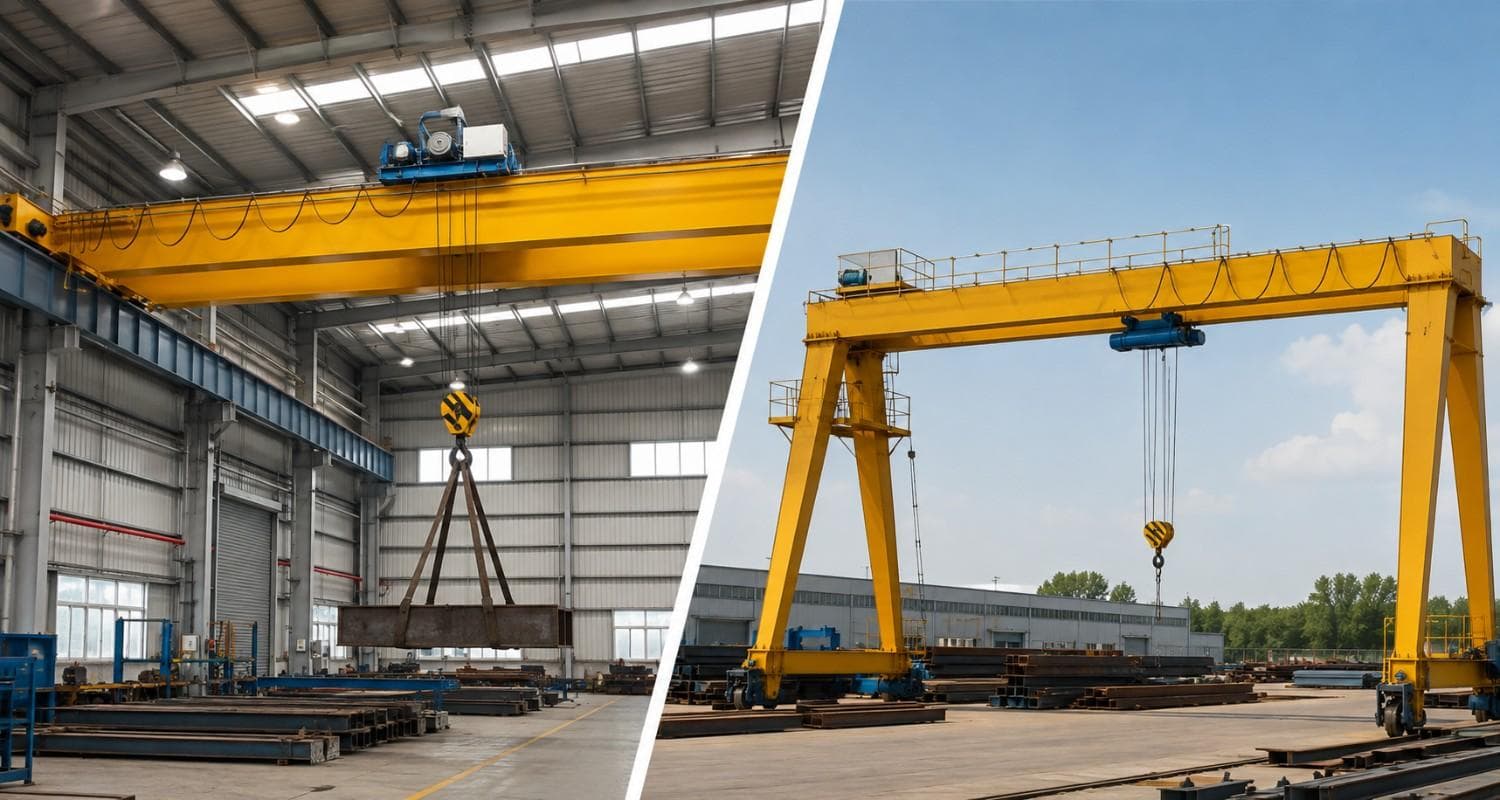
EOT cranes and gantry cranes both lift heavy loads, but they suit very different factories. This guide walks through a simple decision tree covering building structure, floor space, budget, and indoor vs outdoor use, so you can confidently choose the right crane for your facility.

EOT Crane Safety Compliance in India
IS 3177, IS 807, Factories Act rules, and how third-party load testing and certification work for EOT cranes in India.

EOT Crane AMC Cost & Whats Included in 2026
What's actually included in an EOT crane AMC, how comprehensive and non-comprehensive contracts differ, and what drives the cost in India.
EOT Crane for Sale in 2026: New vs Refurbished
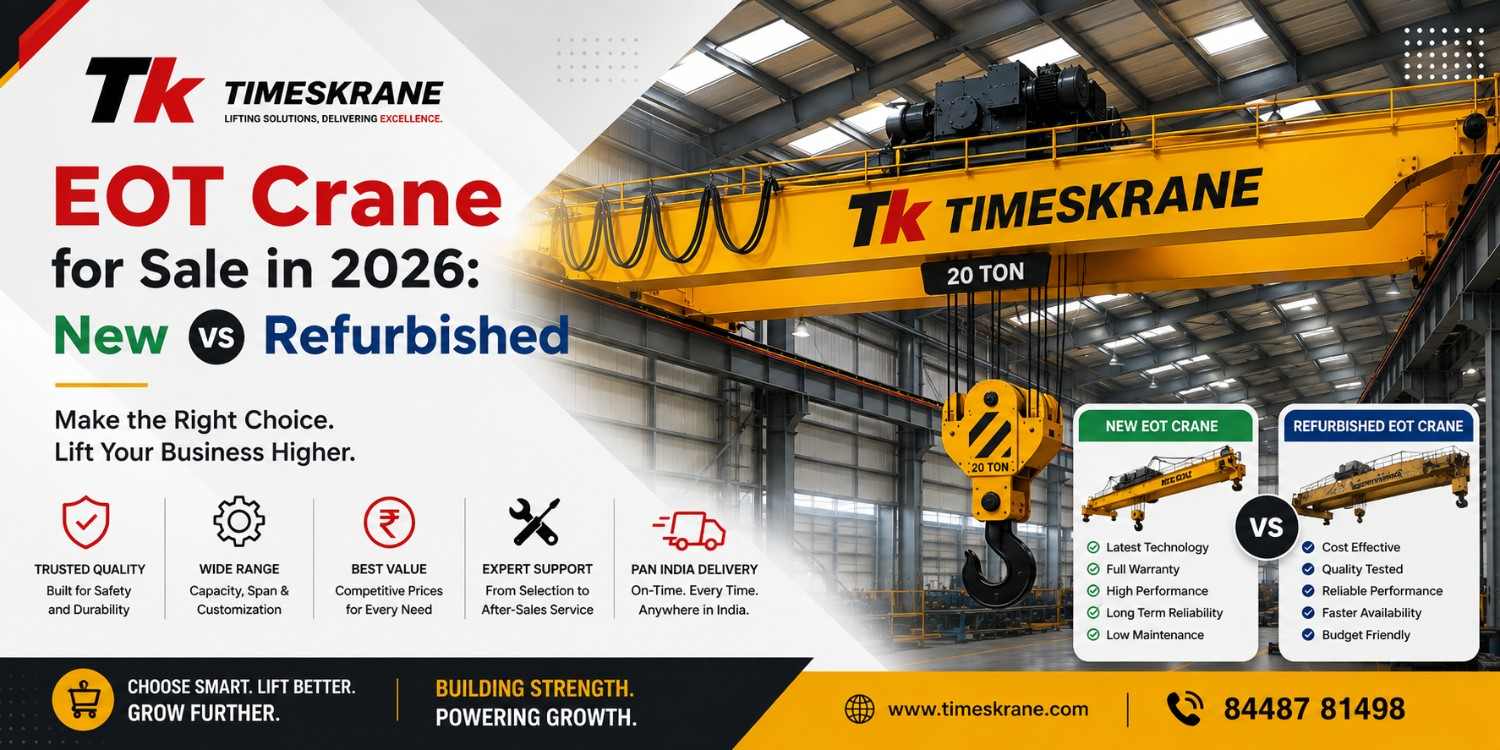
A practical comparison of new vs refurbished EOT cranes in 2026, covering cost, safety, warranty, and long term value, to help you choose based on your budget.
Need a Custom Lifting Solution?
Let’s Talk!
Looking for a reliable partner for your next industrial project?
- Expert Consultation
- Pan-India Service