English
Contact
Configure
Catalog
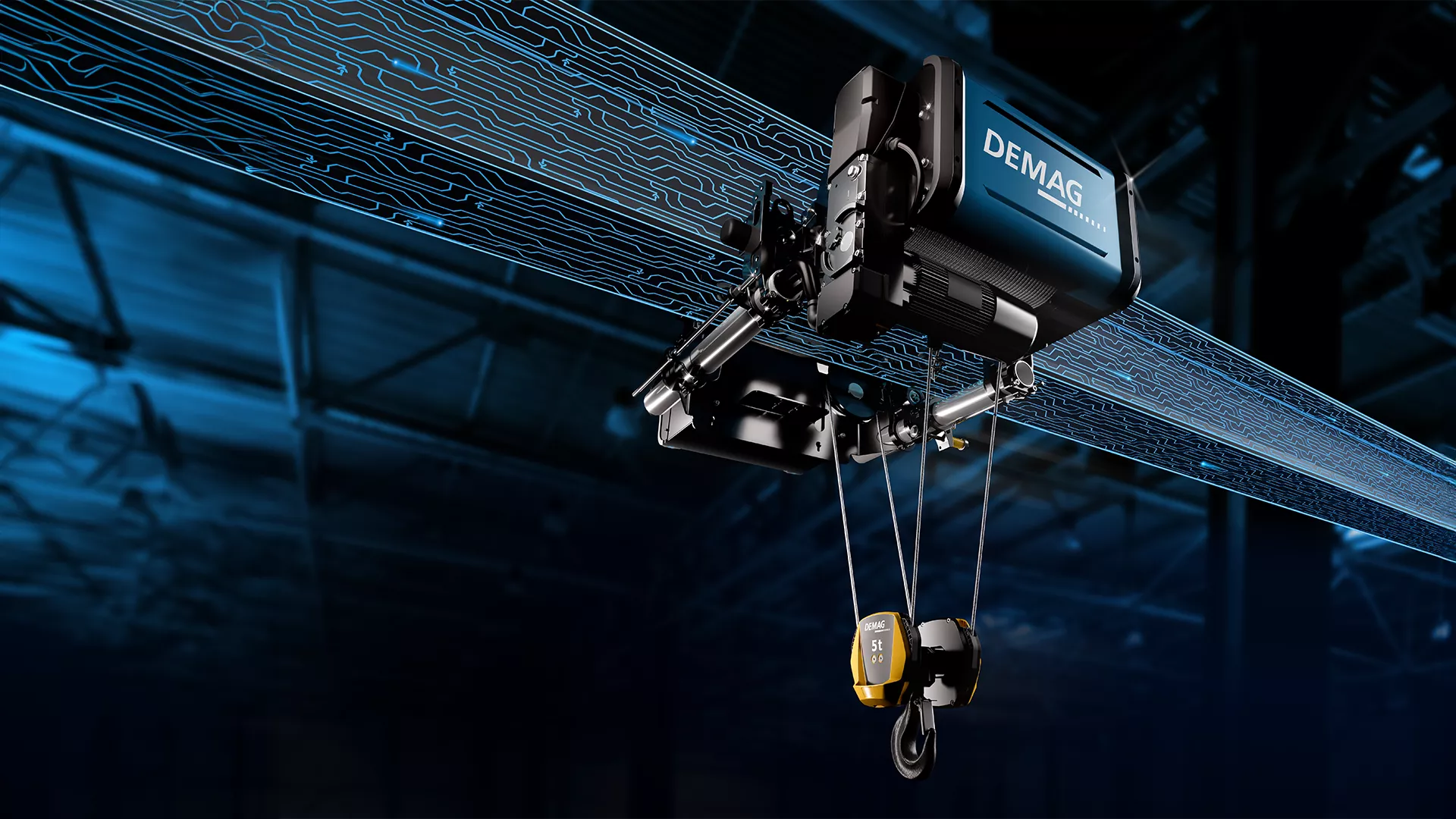
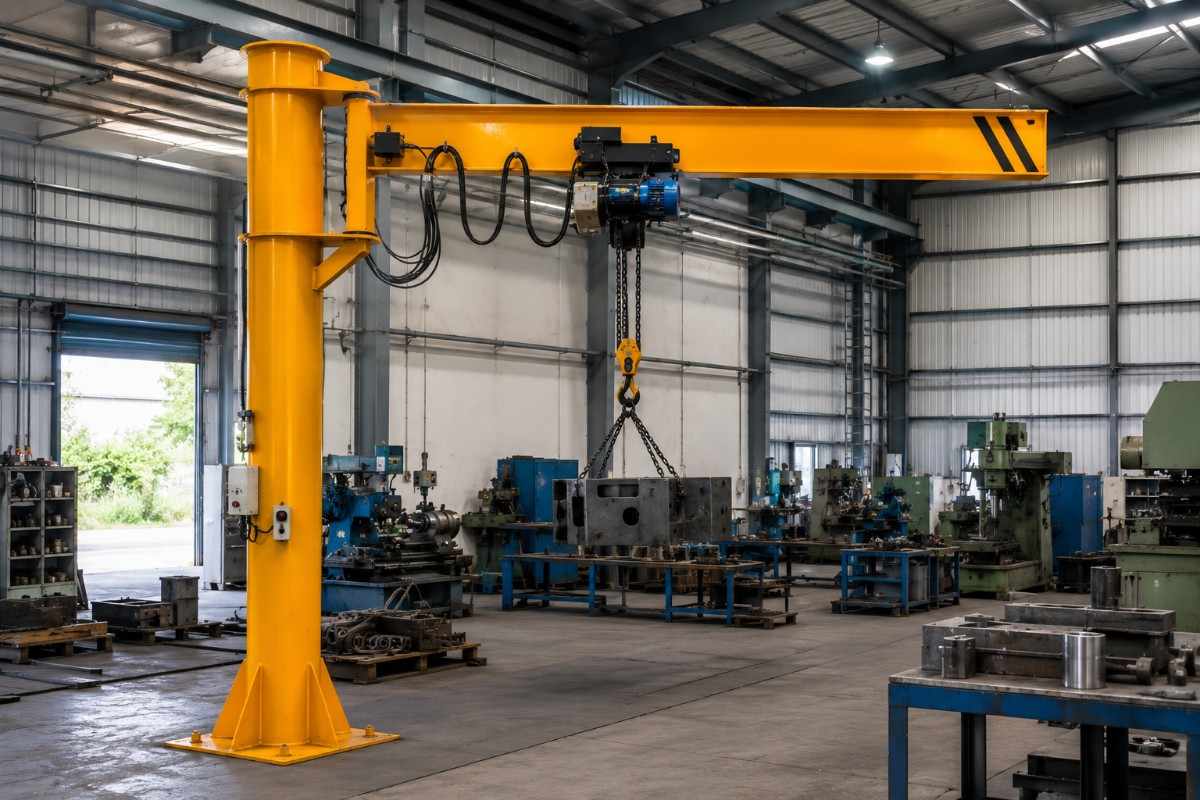
This guide breaks down what actually drives jib crane pricing across common capacities, how it compares to an eot crane, and what to check before you request a quote.
A jib crane is a fixed-point lifting system with a rotating arm, mounted either to a wall, a floor-standing column, or an existing structural column, used for localised, repetitive lifting within a defined work radius.
Unlike an eot crane, which travels the length of an entire building, a jib crane covers a fixed circular or semi-circular area around its mounting point. When I've worked with clients setting up individual workstations, assembly bays, or machine loading points, jib cranes consistently come up as the practical choice because they do not require the extensive runway structure an EOT system needs.
Here is a quick answer: choose a jib crane for localised, repetitive lifting at a single workstation, and choose an EOT crane when you need to move loads across a wide floor area or an entire production bay.
| Feature | Jib Crane | EOT Crane |
|---|---|---|
| Coverage Area | Fixed radius around mounting point | Entire span of the building |
| Structural Requirement | Minimal, often a single column or wall | Full runway and support structure |
| Typical Capacity | 0.5 to 10 tons | 1 ton and above, scaling much higher |
| Installation Complexity | Lower | Higher |
| Best Suited For | Individual workstations, loading bays | Full production floor material movement |
One thing many buyers overlook is that jib cranes and EOT cranes are not always competing options. In several facilities I've reviewed, both work together, with jib cranes handling localised tasks and an EOT crane managing the broader floor movement.
A 1 ton jib crane price sits at the lighter end of the range, and this capacity typically suits workstations, tool rooms, and light assembly operations.
At this capacity, the main cost factors are:
From practical use, I've noticed that buyers at this capacity often underestimate how much arm length affects the final specification, since even a modest increase in reach changes the column strength required.
A 2 ton jib crane price reflects a step up in structural requirement, particularly around the column base and arm reinforcement.
This capacity is common in machine shops, fabrication bays, and packaging lines where the load is heavier but still localised to a specific work area. The column type becomes more important here. Free standing jib cranes at 2 tons need a solid foundation designed to handle both the vertical load and the rotational torque generated during operation.
A 5 ton jib crane price is where structural engineering starts playing a much bigger role than at lighter capacities.
At this tonnage, the base foundation, column strength, and arm design all need careful calculation, since the rotational forces at 5 tons are considerably higher than at 1 or 2 tons. When I've worked with clients evaluating this capacity, foundry and heavy fabrication units come up most often, where the crane needs to handle repeated heavy lifting within a fixed work area throughout the shift.
| Capacity | Common Application | Key Cost Driver |
|---|---|---|
| 1 Ton | Tool rooms, light assembly | Arm length and rotation range |
| 2 Ton | Machine shops, packaging lines | Column strength and mounting type |
| 5 Ton | Foundry, heavy fabrication | Foundation design and structural engineering |
1. Mounting Type
Wall mounted jib cranes are generally more economical since they use existing structural columns, while free standing versions need dedicated foundations.
2. Arm Length and Rotation
A longer arm or full 360 degree rotation increases the structural demand on the column and base, which affects the overall specification.
3. Hoist Type
Chain hoists are common at lighter capacities, while wire rope hoists become more relevant as capacity and duty cycle increase.
4. Duty Classification
A jib crane used continuously through multiple shifts needs a stronger structural rating than one used occasionally.
5. Foundation and Civil Work
Free standing jib cranes, especially at higher capacities, require foundation work that adds to the overall project cost.
6. Control Method
Manual pendant control is standard at lighter capacities, while heavier or high-frequency applications may use powered rotation.
Mistake 1: Choosing capacity based on average load instead of maximum load
Always size the jib crane for your heaviest expected load, not the typical one, to avoid structural strain over time.
Mistake 2: Ignoring foundation requirements for free standing units
I've seen installations delayed because the foundation design was not finalised before the crane arrived on site.
Mistake 3: Underestimating arm length needs
A jib crane with insufficient reach limits its usefulness at the workstation, forcing manual repositioning that defeats the purpose of installing it.
Mistake 4: Overlooking rotation range requirements
Buyers sometimes choose a limited arc jib crane when their workflow actually needs full rotation, leading to inefficient material flow.
Benefits:
Challenges:
One thing I always recommend to first-time buyers is to map out their actual workstation layout before deciding on arm length and rotation range. Specification sheets look straightforward, but the practical reach needed at a busy workstation is often different from initial estimates.
Another useful reference point involves structural standards. Frameworks referenced by the Bureau of Indian Standards (BIS) for crane design provide a reliable basis for evaluating whether a proposed jib crane specification matches your actual operational demand.
Times Krane, based in Faridabad, Haryana, manufactures jib cranes alongside its broader range of EOT crane systems, giving buyers a single point of contact for both localised and full floor material handling needs. Our team evaluates your workstation layout, load requirement, and mounting constraints before recommending a configuration suited to your actual operation.
If you are comparing jib crane price in india across different capacities for your facility, our engineers can guide you through the specification process and prepare a proposal based on your exact requirements.
Understanding what shapes jib crane price in india across different capacities helps you make a more confident buying decision. Focus on matching arm length, rotation range, and mounting type to your actual workstation needs, since these factors determine how effectively the crane performs in daily use.
If you would like a detailed evaluation for your facility, the team at Times Krane is ready to guide you through the specification and proposal process based on your actual site requirements.
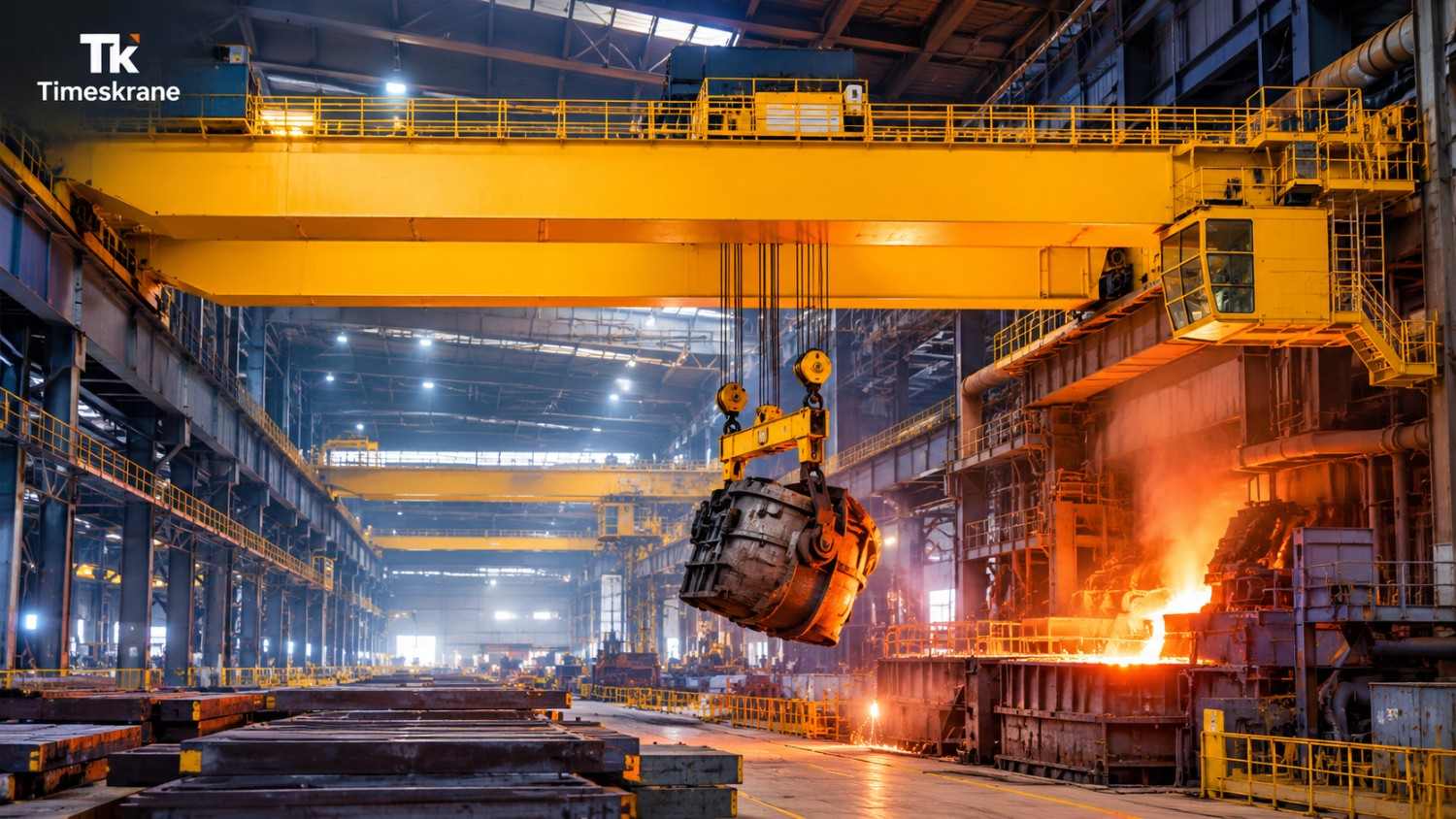
An honest breakdown of what makes a crane genuinely heavy duty for steel plant use, covering duty classification, capacity, and safety features buyers often miss.
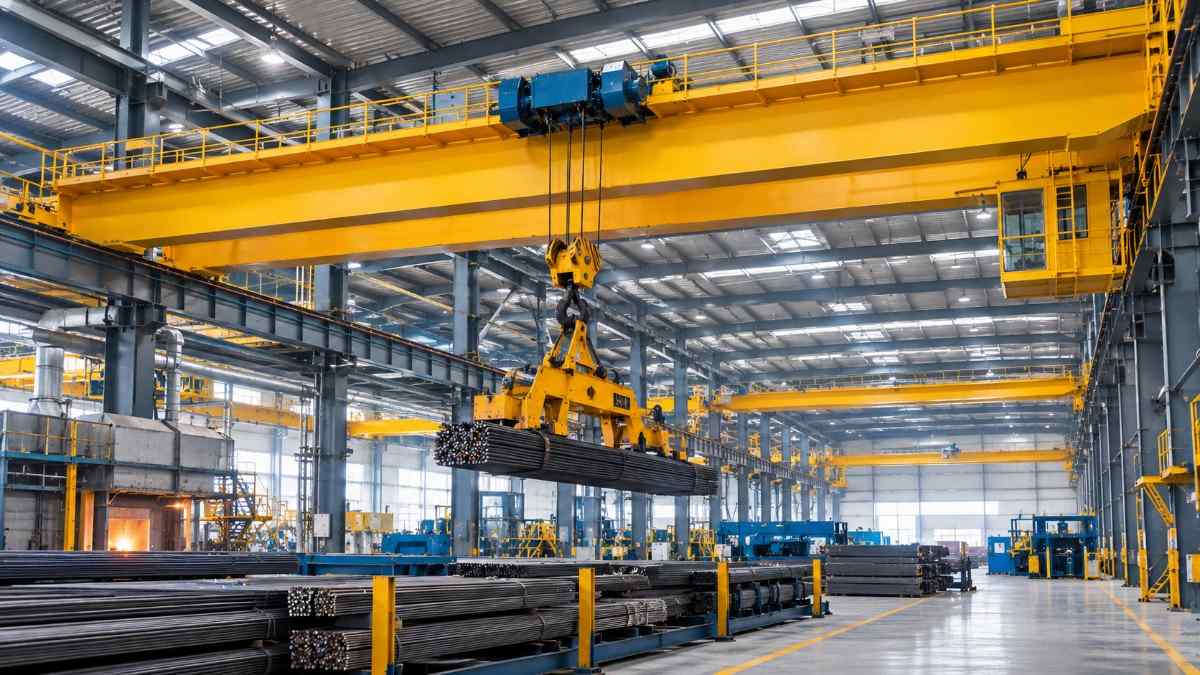
Finding the right steel plant crane manufacturer is perhaps the most important decision a procurement manager or plant owner will make. A poorly designed crane can increase both safety risks and downtime while excessively increasing maintenance costs.
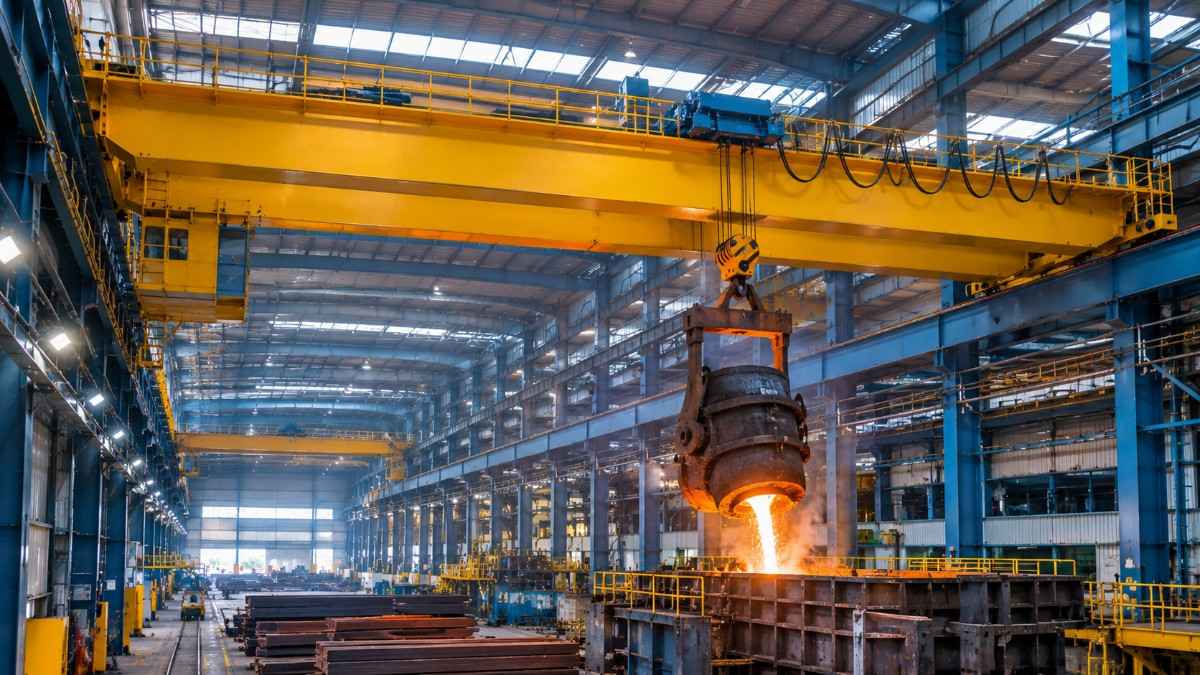
If you run or manage a steel plant, you already know that an overhead crane for steel plant operations is not a luxury. It is the backbone of your material handling process. From moving billets and coils to shifting ladles of molten metal, the right crane decides how smoothly your production line runs.
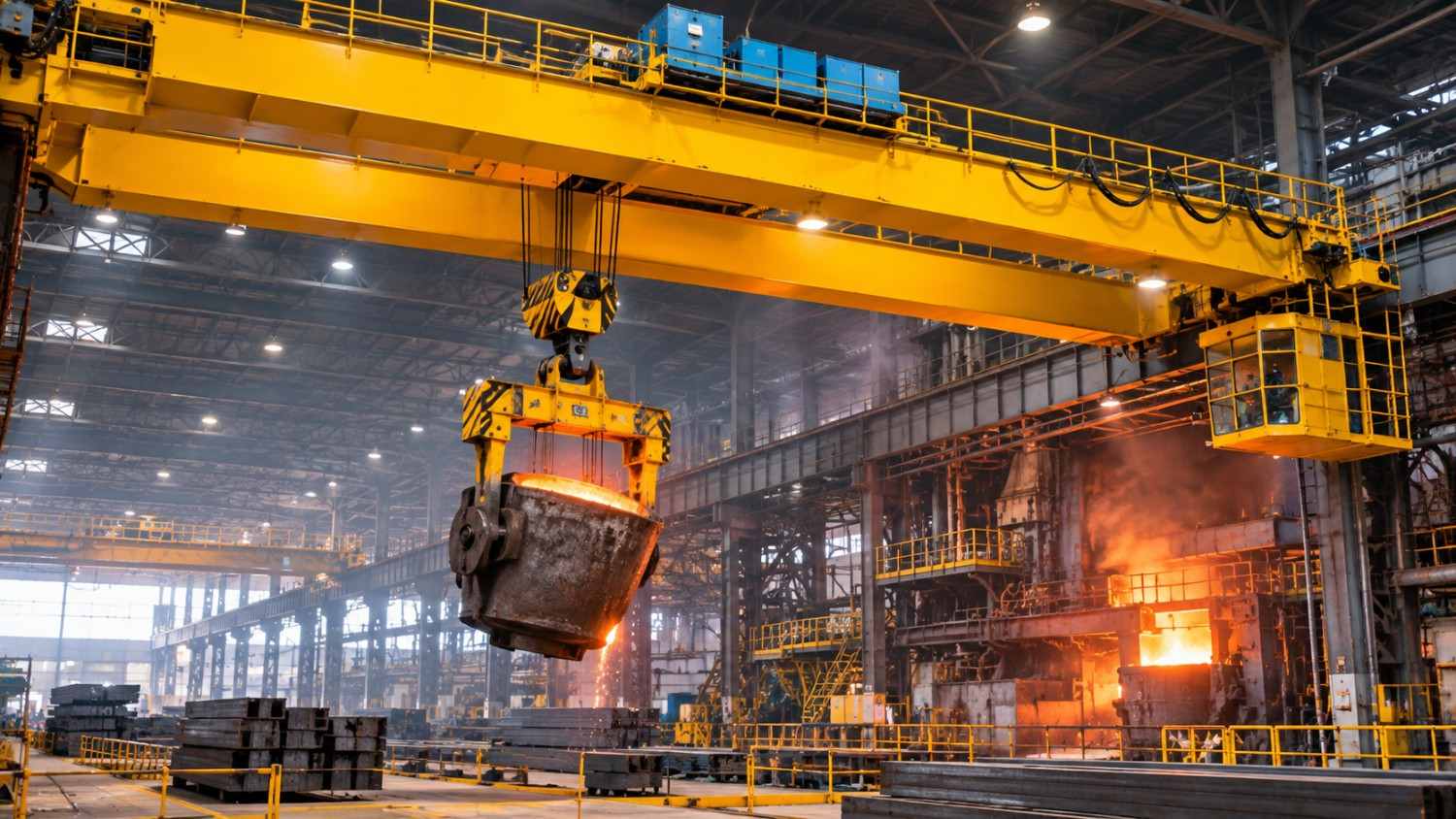
Discover how EOT cranes support steel plant operations, from material handling to molten metal lifting. Learn about crane types, duty classes, safety features, and how to choose the right EOT crane for your steel plant.
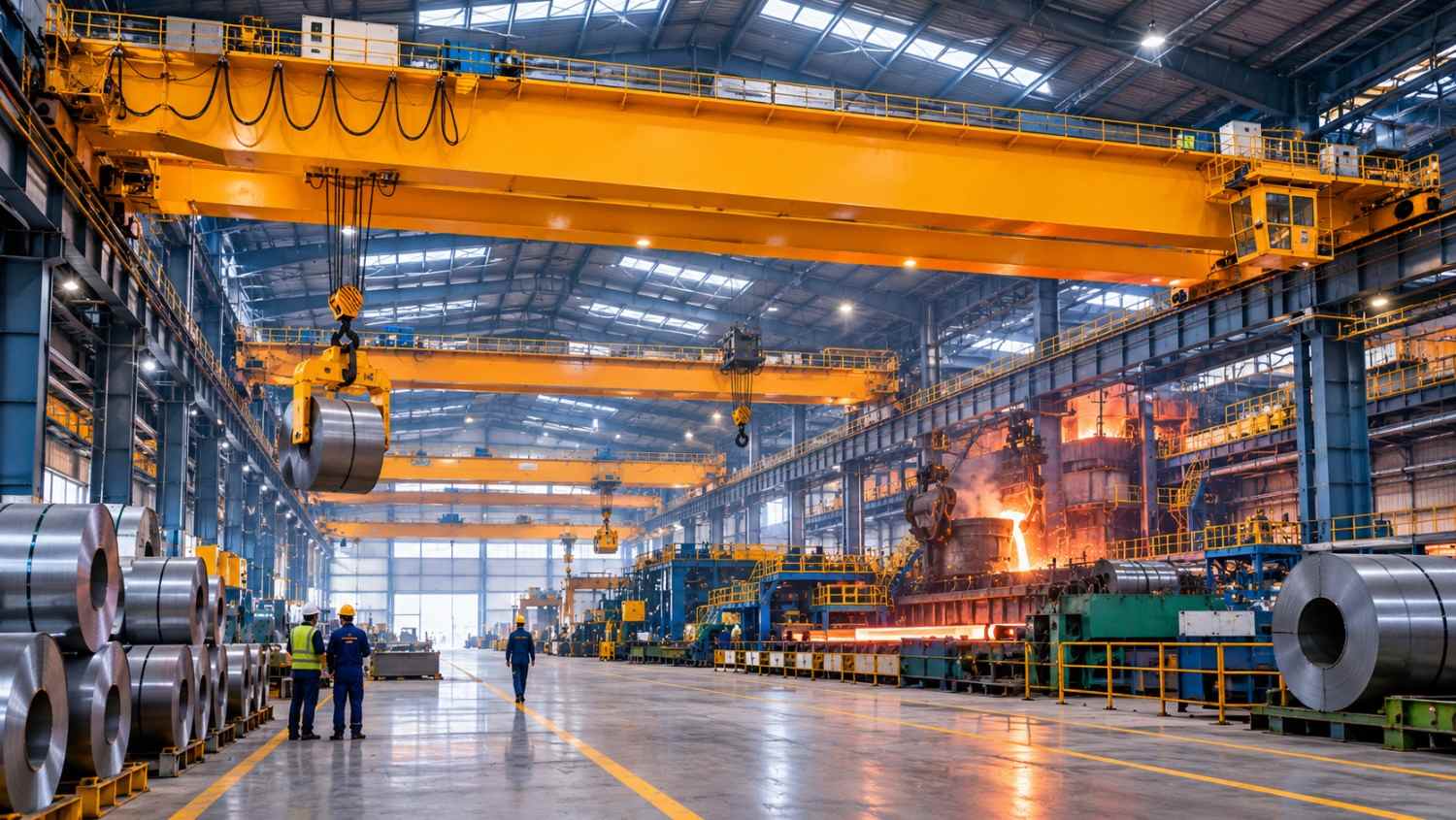
An honest, researched look at the top 5 crane manufacturers for steel plants in India, covering ladle, grab bucket, and coil handling cranes.
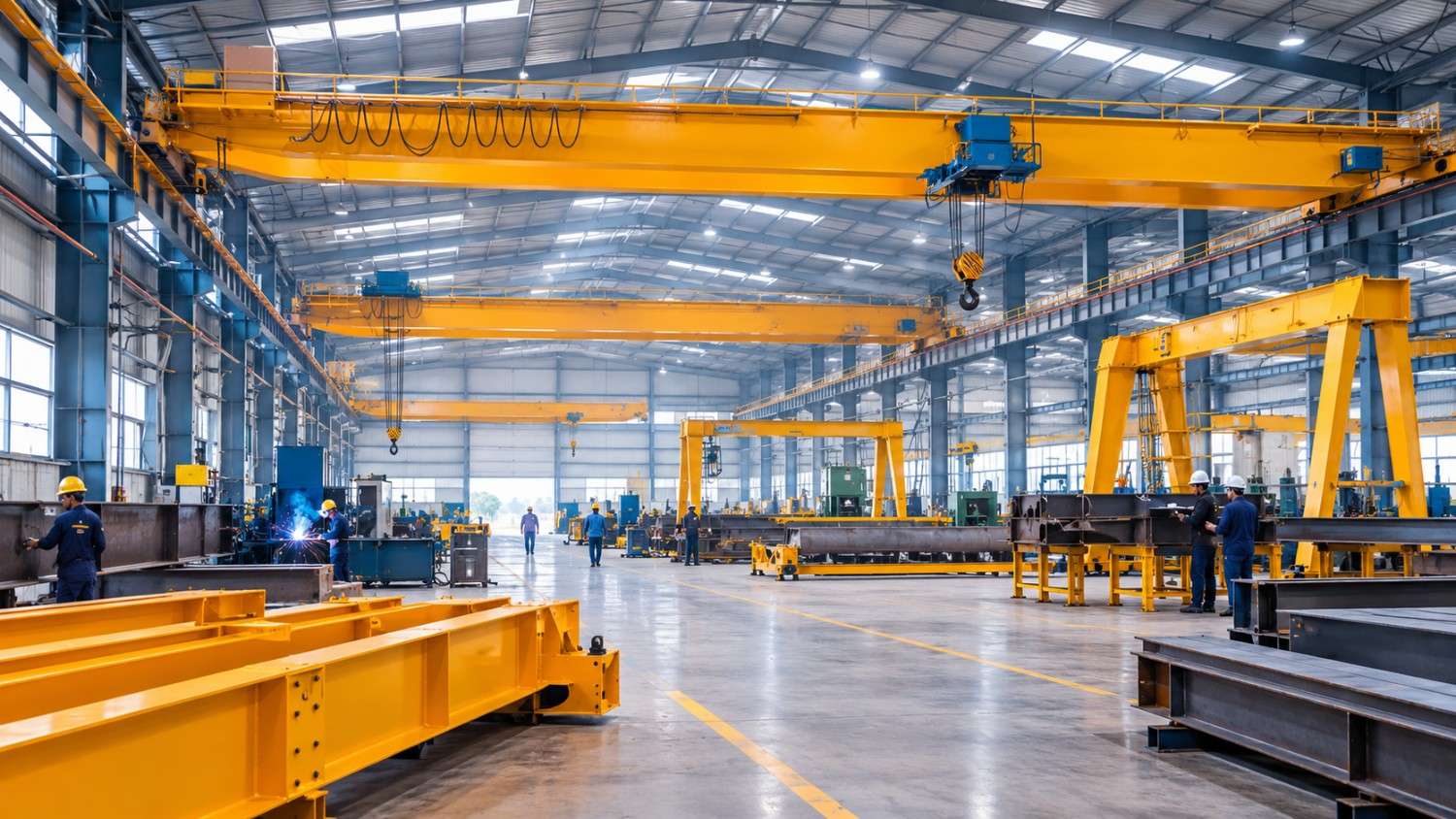
A real, researched look at the top 10 crane manufacturers in North India, covering Delhi NCR, Punjab, Haryana, UP, and Rajasthan, with what actually sets each one apart.
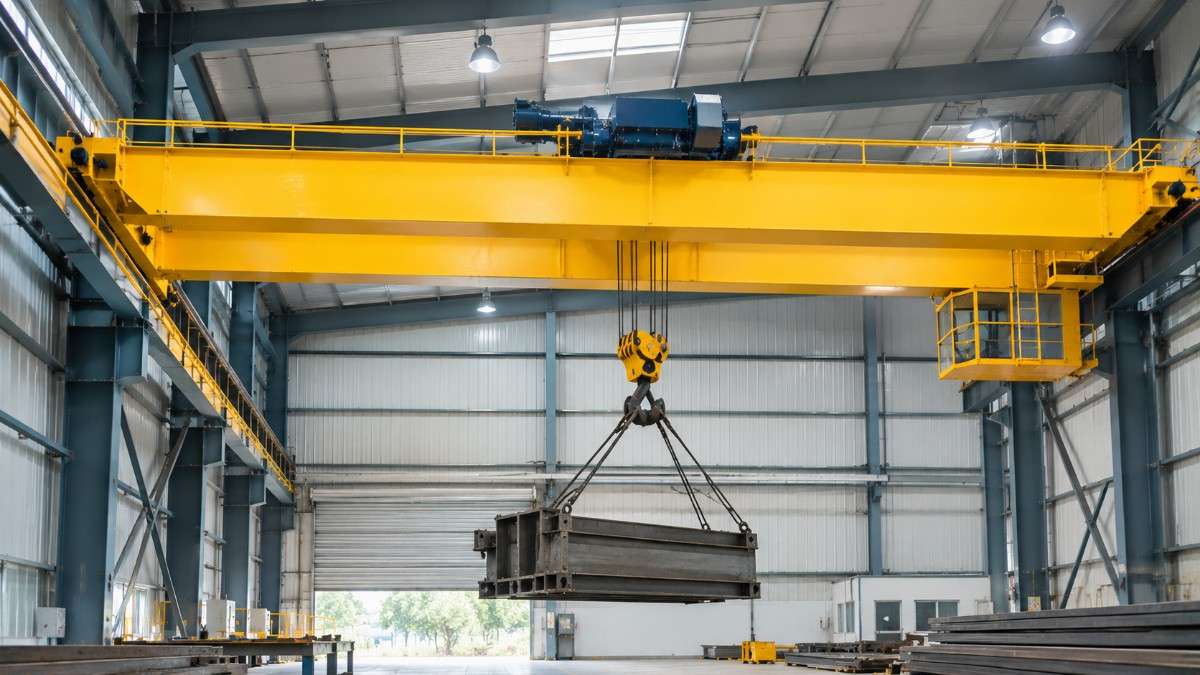
If you are looking for a 10 ton overhead crane for your factory or warehouse, the primary question that arises in your mind is whether this capacity will cater to your daily operations or it will turn out to be a useless and bulky addition to your storage.
Looking for a reliable partner for your next industrial project?