English
Contact
Configure
Catalog
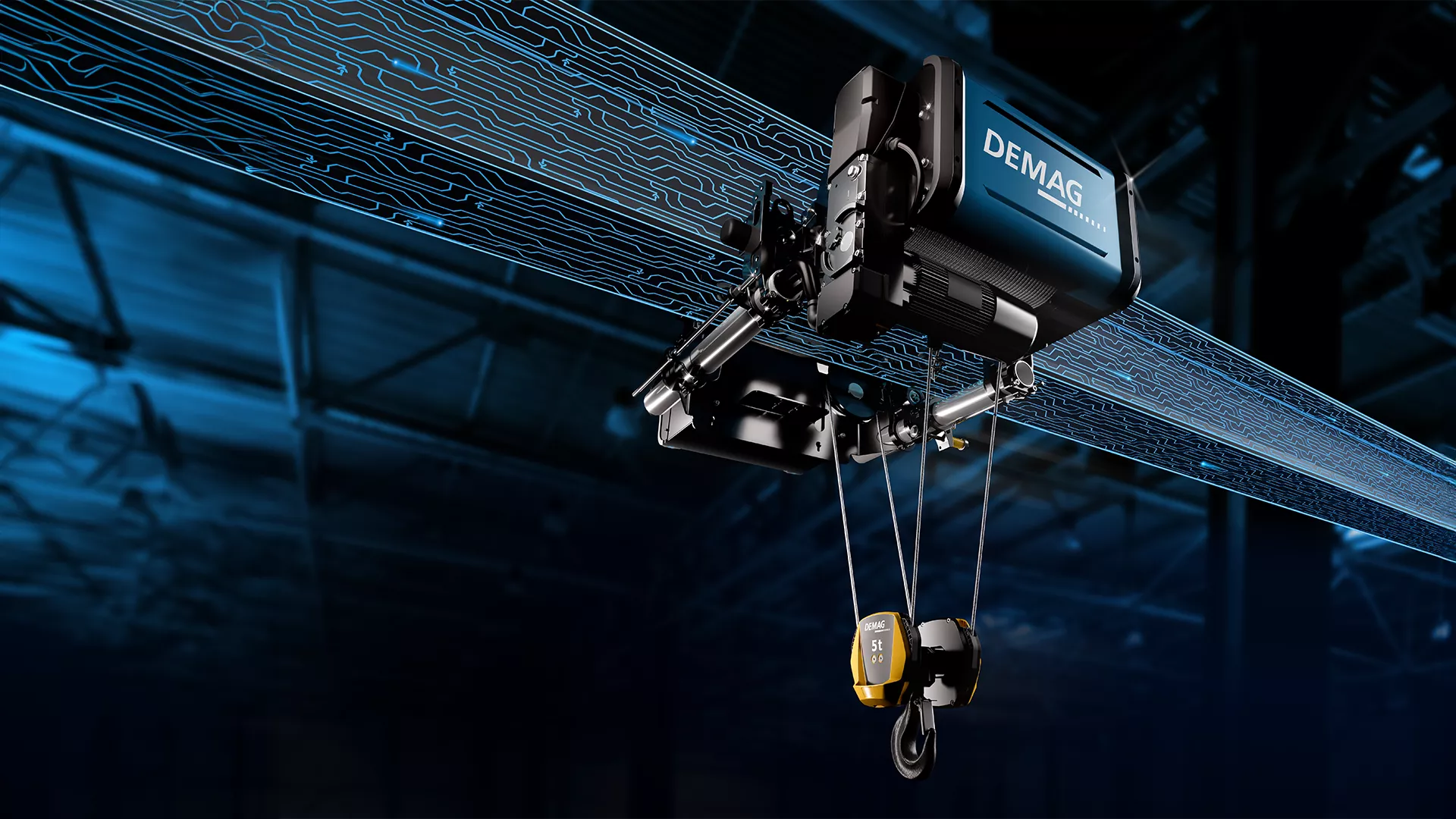
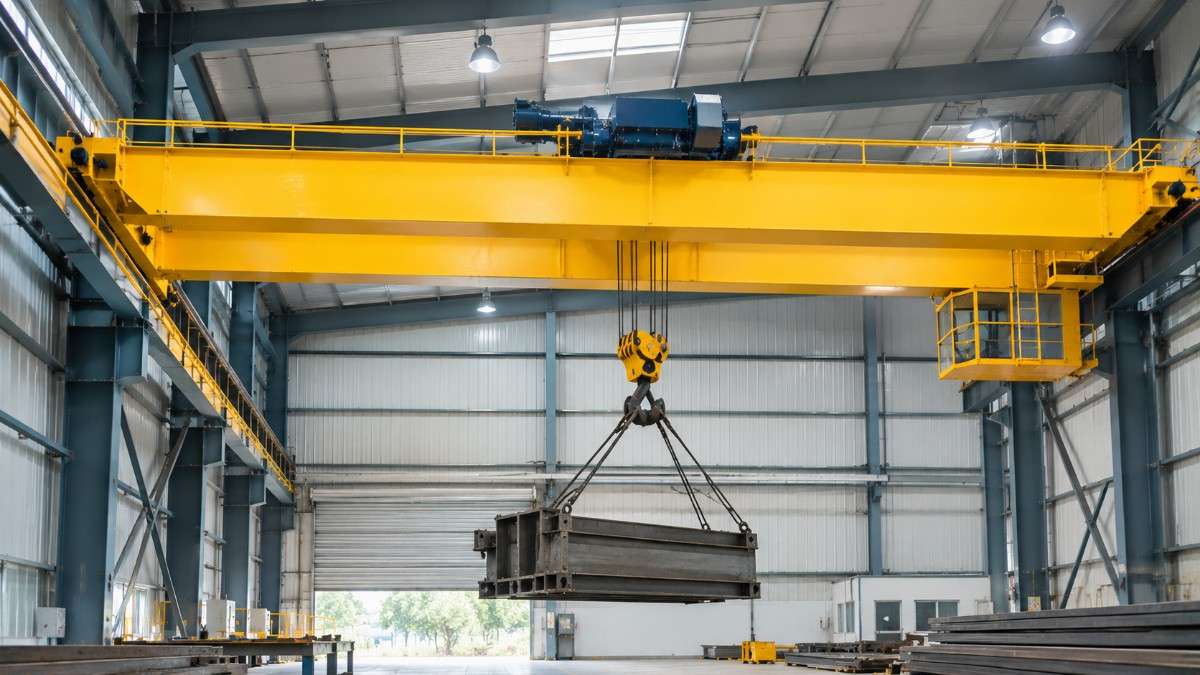
Based on my experience of dealing with factory owners and plant managers across Faridabad and the NCR belt, 10 ton is one of the most common capacity requirements as it falls in the sweet spot of the Indian manufacturing sector. It is just adequate to carry structural steel, machine parts, and other medium-sized fabrications without stretching the building infrastructure to the limits as required by 20 ton or 30 ton cranes.
In this post, I have compiled all the information a serious procurement manager or plant engineer needs to review before buying a new or used overhead crane. The types of overhead cranes available in this capacity class, their specs and technical details, girder configurations, common buyer errors, and the factors affecting 10 ton overhead crane price in India are discussed below.
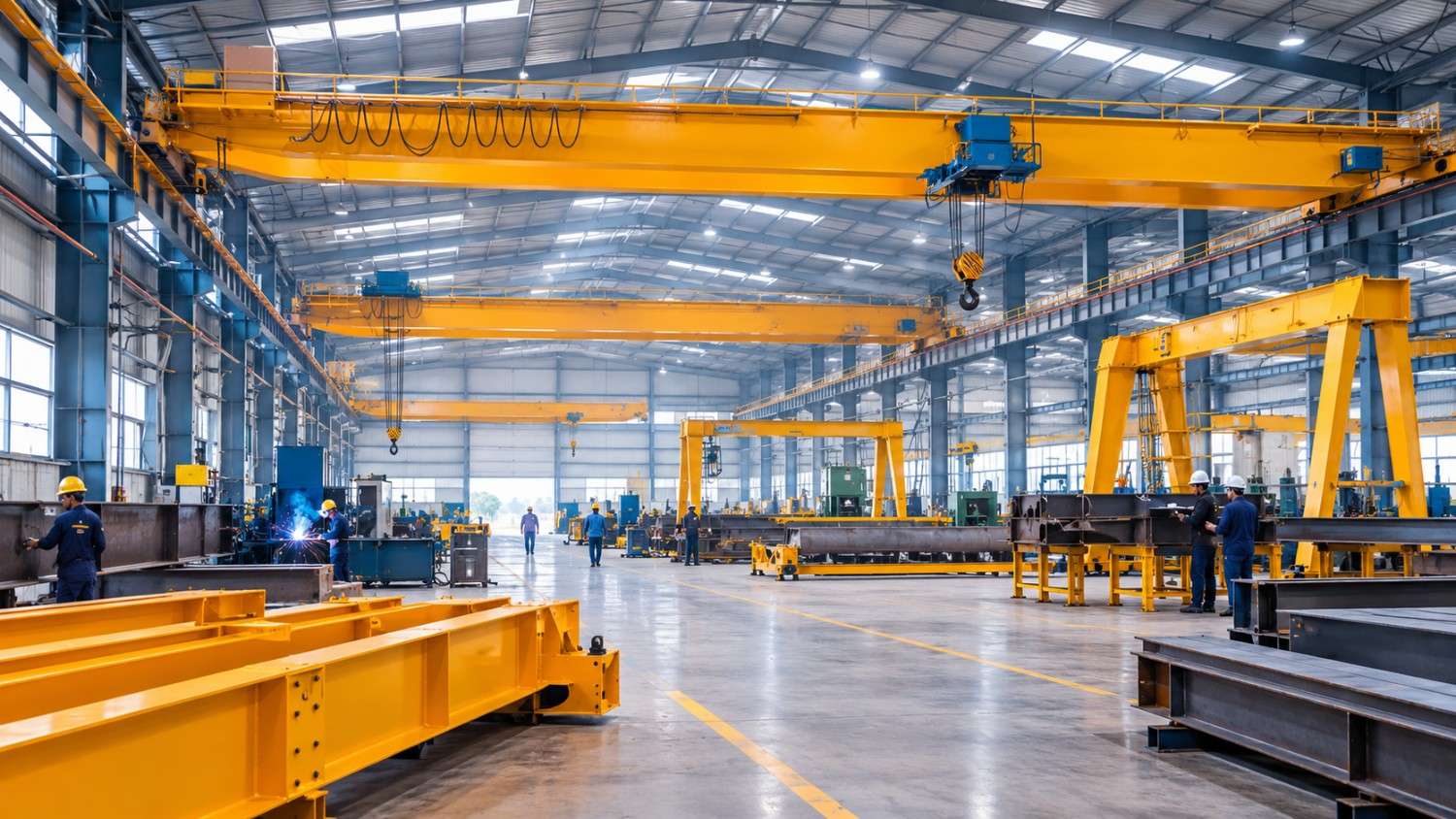
A 10 ton overhead crane, also known as 10 ton EOT Crane (Electric Overhead Travelling Crane), is basically a material handling equipment which carries loads of up to 10 tonnes horizontally on a pair of rails.
Unlike a mobile or jib type crane, the overhead crane travels over the length of the building along the overhead rails. This makes it perfect for repetitive lifting operations over a large floor area. Imagine a highway overhead carrying the heaviest of your material traffic, running end to end of your production line instead of weaving around it.
Such capacities are needed in:
10 Ton Overhead Crane Specification: What To Check First
While finalizing technical drawings for my clients, I have realized that the main source of confusion comes from specification sheets. Here are some of the important aspects that need to be considered while selecting a 10 Ton Overhead Crane.
Span: Distance between the two runways or the span should be mentioned. Usually, this distance varies from 10 to 30 meters in accordance to the shed size.
Lift: The vertical distance between the hook center and the top of the building determines the required lift. It depends on the eave height of the shed and the maximum height of the equipment being lifted.
Duty Class: Duty class of the crane determines the operating cycle per day and is divided according to IS 3177 and IS 807.
Speed: Cross, Long, and Hoisting speed should also be mentioned in specification sheets. Speeds are usually expressed in meters per minute.
Power Supply: The Indian main supply is 415V, 3 phase, 50 Hz, and the crane should be compatible with it.
The most common mistake that is done while preparing the specification sheet is to ignore the voltage at the plant location. If the voltage at the plant falls on a regular basis, it needs to be mentioned while finalizing the specifications.
Before placing the 10 ton overhead crane order, it may be useful to gain an insight into the different types of overhead cranes, as the layout of the building dictates most configurations.
If the building structure is unable to support runway rails, a gantry crane manufacturer can offer a floor mounted system, which does not require any structural steel work on the building or your overhead structure.
There's only one decision that is so common among the procurement teams that I see everyday. This is also the main reason why I decided to make this post.
| Feature | Single Girder Overhead Crane | Double Girder Overhead Crane |
|---|---|---|
| Typical Capacity Range | Up to 10-15 tonnes | 5 tonnes and above, including 10 ton class |
| Span Suitability | Shorter to medium spans | Medium to long spans |
| Headroom Requirement | Slightly more headroom loss | Better headroom utilisation |
| Duty Class Fit | Light to medium duty | Medium to heavy duty |
| Maintenance Access | Simpler, fewer components | Requires access to two girders |
| Ideal Application | Small workshops, warehouses | Fabrication units, heavy machine shops |
Please note that pricing has intentionally been left out of this comparison. The cost depends on many factors, including span and duty, so a general number that may apply to all scenarios is very difficult to come up with. If you see an ad offering single overhead cranes at this or that price, don't take it seriously. It's a good idea to request a quote from a particular supplier at your site.
Now, for what concerns the payload of 10 tons, both options are possible, but in my experience, double girder becomes significantly more convenient beyond spans of 18 or 20 metres due to decreased deflection of the main beam.
Even if you know who will be handling the crane on a daily basis, knowing the basic overhead crane parts will help you ask better questions when seeking a quote.
In my experience, the limit switches and the electrical part are where most problems arise that can totally stop the crane from functioning properly. Make sure to have branded electrical equipment, not a generic one, even if it means paying more.
We make it a point to refrain from giving out specific figures here, as a genuine quote for a 10 ton overhead crane price india would entail factors unique to your site. What we can help with, is laying out exactly what goes into determining that number so you're better informed when talking to vendors.
Factors that influence overhead crane prices are:
Length of span – Longer spans require extra girders and steel
Duty class of the crane – Higher classes call for reinforced parts
Configuration – Single girder vs. double girder overhead crane
Hoist type and brand – Imported hoists command a premium
Lift height – Higher lifts require more wire rope
Complexity of installation – New structure vs. existing
Warranty and service package
When my team had to compare quotations for a client last year, we had two options for an identical 10 ton overhead crane, one of which had a substantially higher price due to a higher duty class (capable of 3 shift operation). Duty class should always be decided by your operational needs and not the lowest price quoted.
If you're looking for an eot crane price in India guide or overhead crane cost benchmark, keep in mind that online listings are just a starting point. Quote your requirements (span, duty class) to an overhead crane manufacturer in india .
Develop a buying checklist to be followed while finalizing an order.
One common mistake buyers make when ordering a crane is not looking at current and future needs. Some factories exceed their initial 5 ton capacity within 2 years forcing them to re-install another crane which could have been avoided if they had originally specified a 10 ton overhead crane.
Other common mistakes by buyers include:
A well-maintained 10 ton overhead crane has been known to last for more than ten years. Here are some maintenance tips based on my experience at the multiple installations I have handled.
The overhead 10 ton crane is used in various industries including:
Benefits:
Challenges:
In my experience, the willingness of the vendor to come to your site before quoting reflects their reliability better than their own website. A manufacturer that analyzes your building structure, electrical supply and load pattern before quoting a specification is more likely to provide a crane that meets your actual needs.
Ask also about their experience in supplying double girder overhead crane installation for spans exceeding 20 metres since not all fabricators are confident about that.
We manufacture and install EOT cranes, Gantry cranes and Jib cranes from our own facility in Faridabad, Haryana serving the industrial buyer community across India. Our engineers work directly with the plant engineers to design a crane specification which uses the appropriate pattern of operation based on actual usage rather than pushing a catalogue configuration.
If tower cranes or specialized mobile lifting equipment fall outside our manufacturing vertical for a given scenario, we are upfront about that and can guide you to the appropriate category of specialist as a crane not suited to your application will create more problems than it solves.
Times Krane has served factories with everything from single girder overhead crane installations for light fabrication units to heavy duty double girder systems for continuous shift operations.
If you are evaluating a 10 ton overhead crane for your facility, reach out to Times Krane for a site assessment and a specification suited to your actual operating conditions.
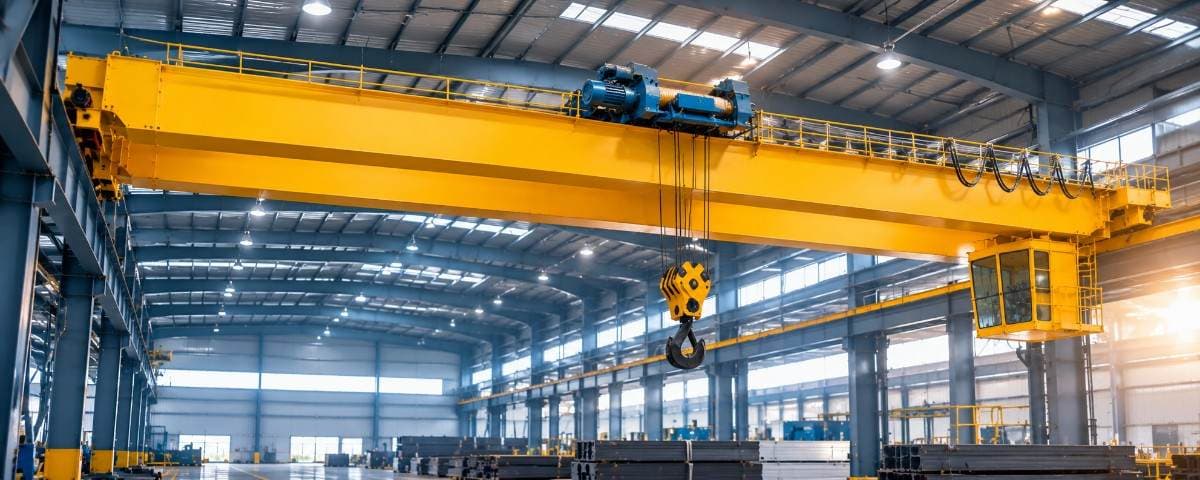
Custom EOT Crane in India: Engineered Around Your Plant, Not a Catalogue
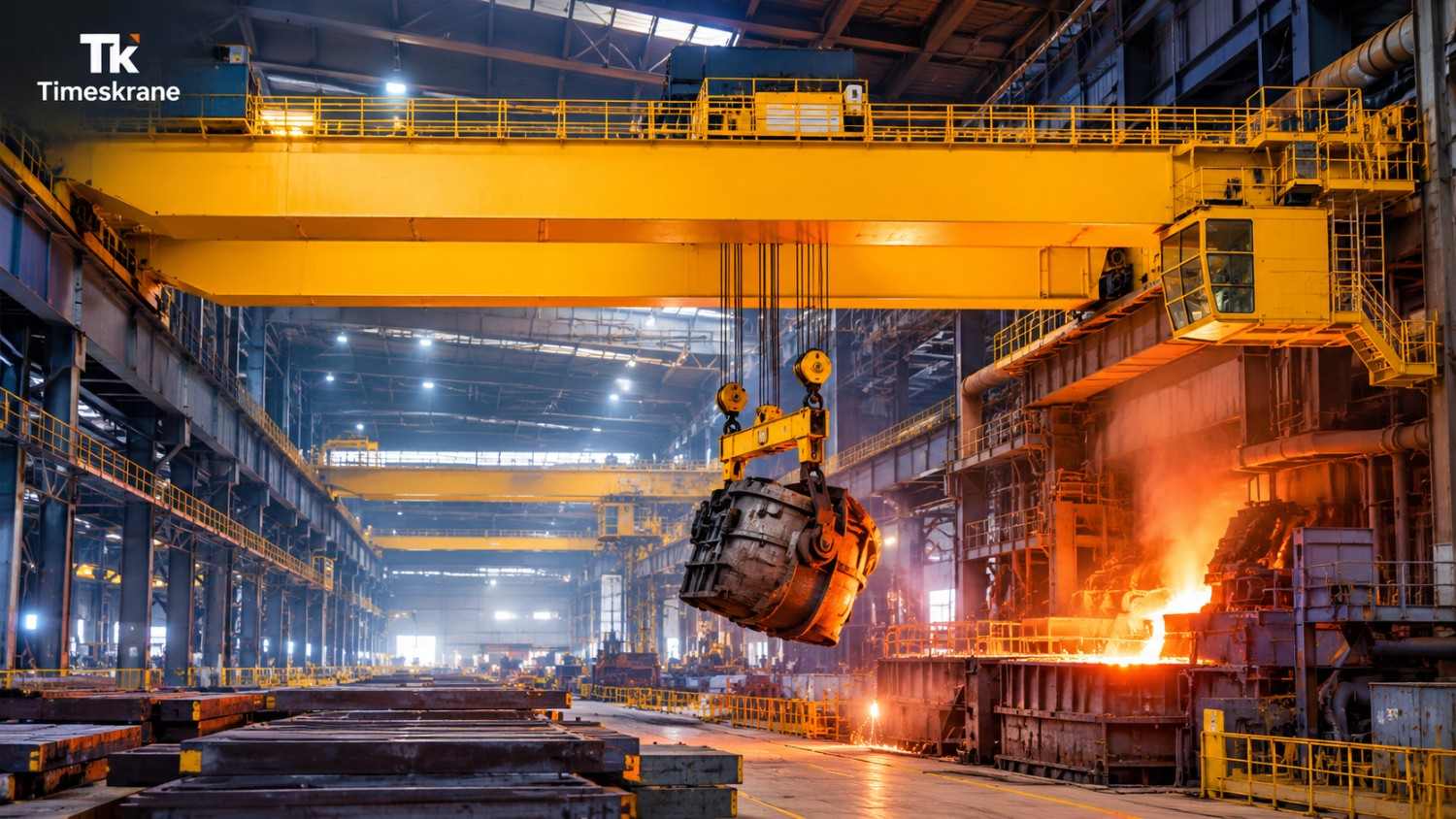
An honest breakdown of what makes a crane genuinely heavy duty for steel plant use, covering duty classification, capacity, and safety features buyers often miss.
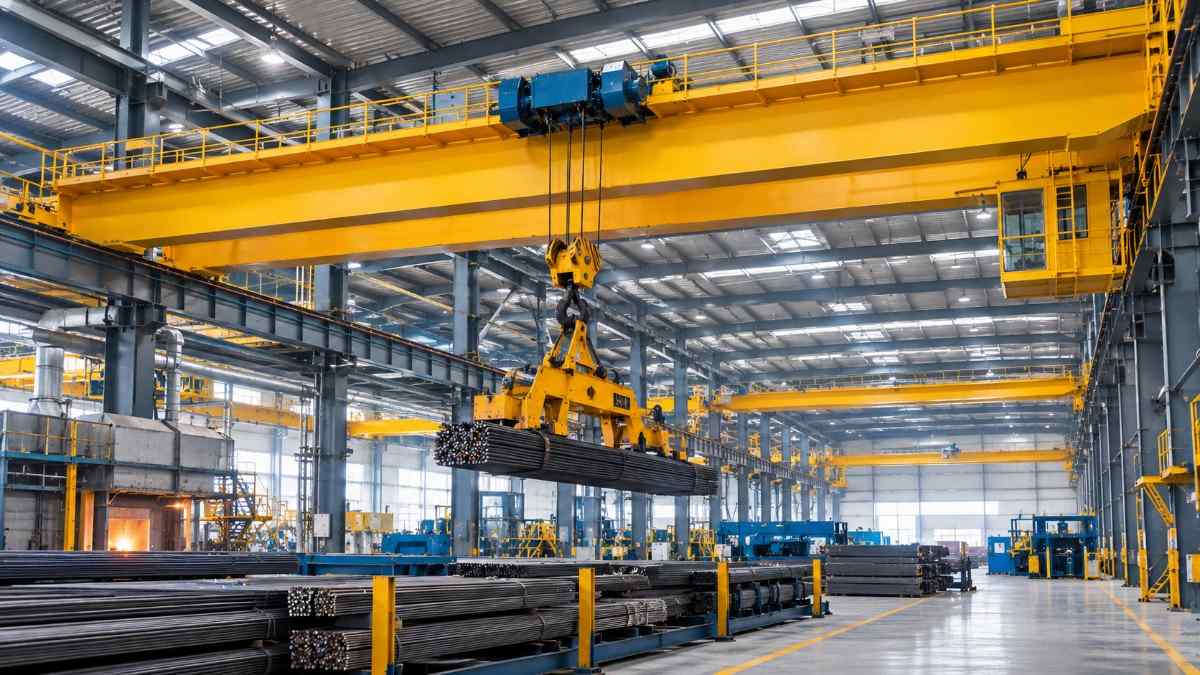
Finding the right steel plant crane manufacturer is perhaps the most important decision a procurement manager or plant owner will make. A poorly designed crane can increase both safety risks and downtime while excessively increasing maintenance costs.
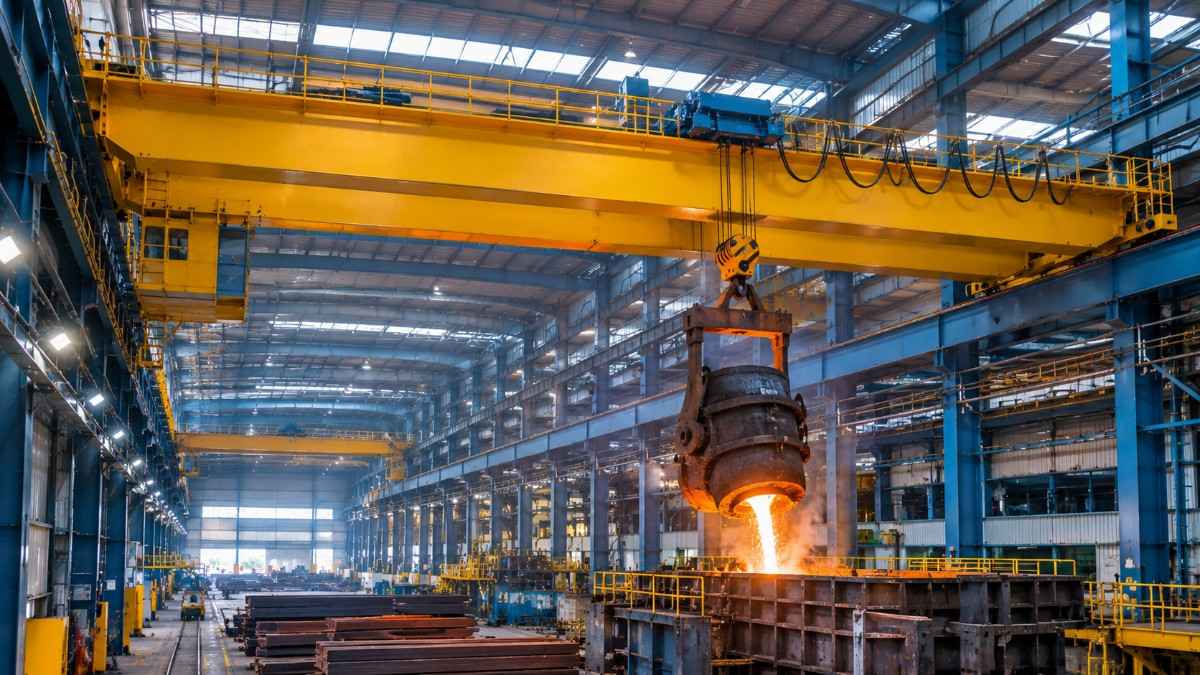
If you run or manage a steel plant, you already know that an overhead crane for steel plant operations is not a luxury. It is the backbone of your material handling process. From moving billets and coils to shifting ladles of molten metal, the right crane decides how smoothly your production line runs.
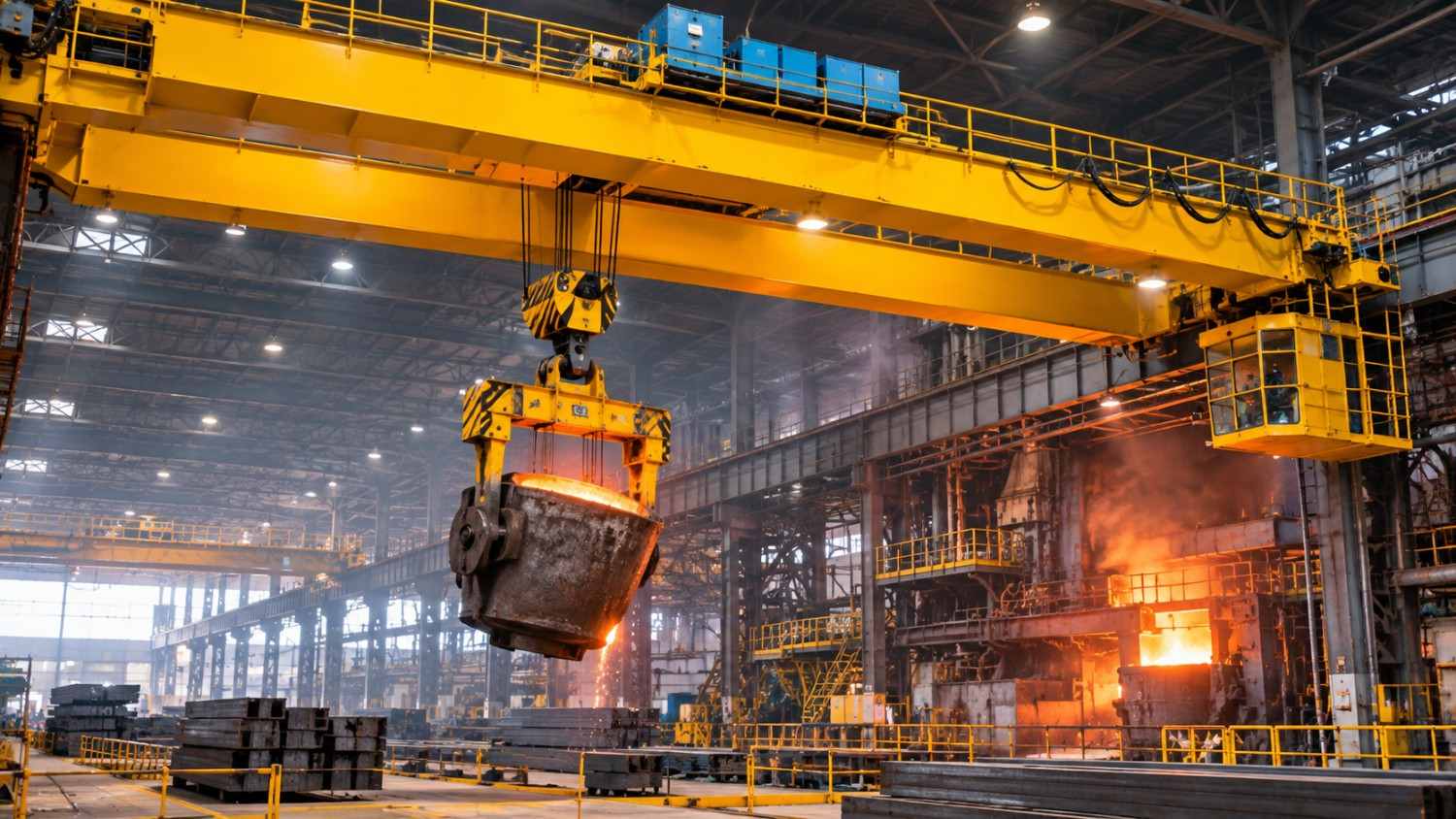
Discover how EOT cranes support steel plant operations, from material handling to molten metal lifting. Learn about crane types, duty classes, safety features, and how to choose the right EOT crane for your steel plant.
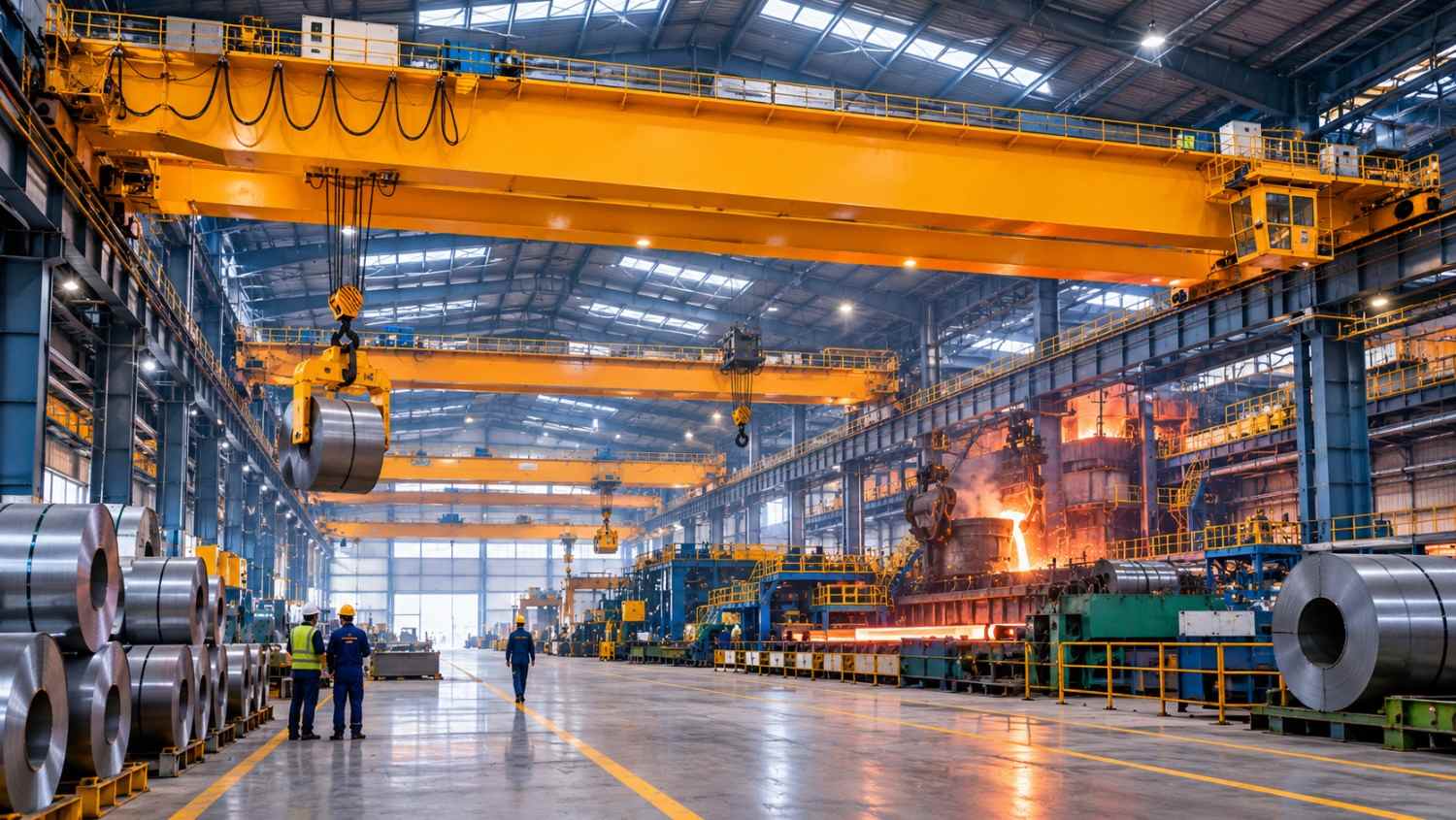
An honest, researched look at the top 5 crane manufacturers for steel plants in India, covering ladle, grab bucket, and coil handling cranes.
A real, researched look at the top 10 crane manufacturers in North India, covering Delhi NCR, Punjab, Haryana, UP, and Rajasthan, with what actually sets each one apart.
Looking for a reliable partner for your next industrial project?