English
Contact
Configure
Catalog
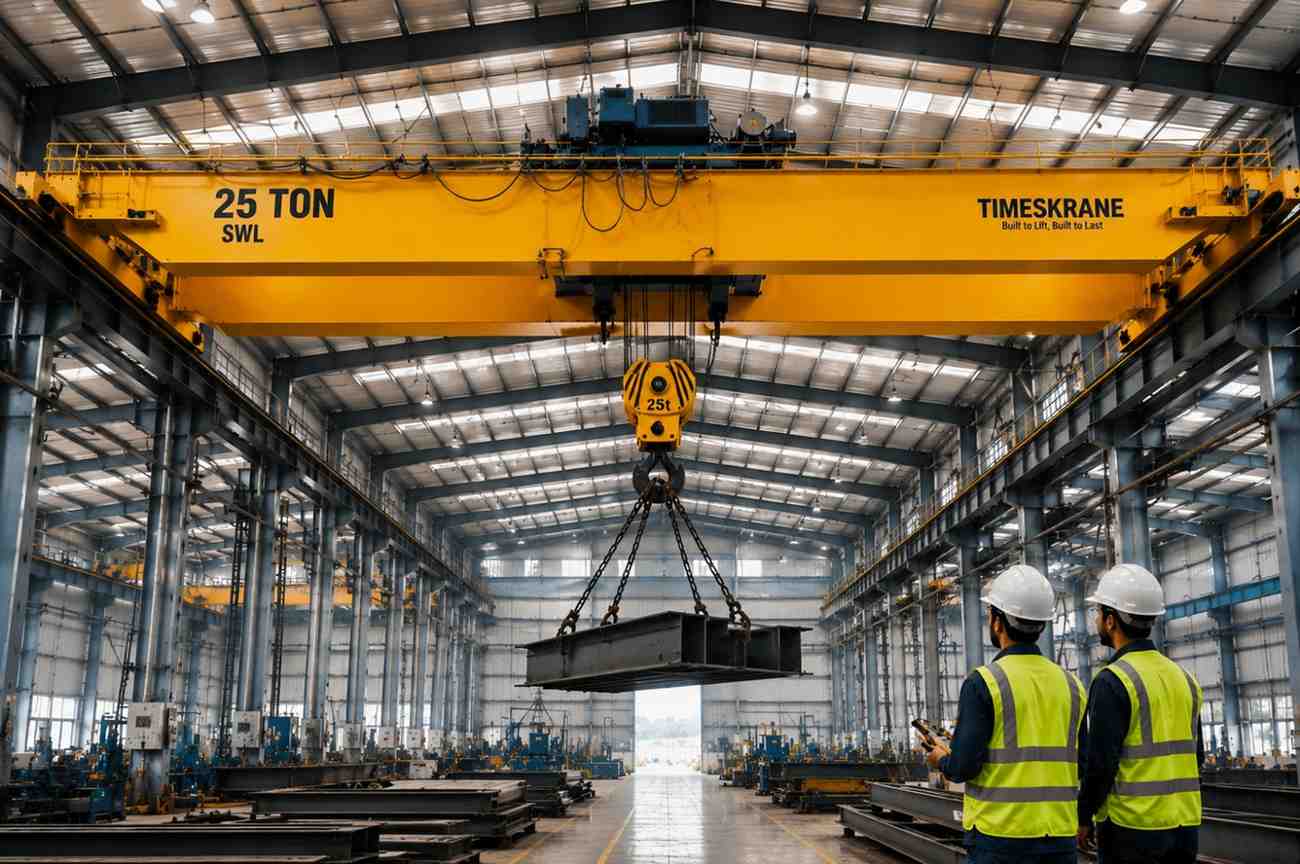
If your plant is handling heavy steel coils, large machine parts, precast concrete blocks, or bulky cargo at a port, a 25 ton overhead crane is usually the equipment that gets called in. It sits at the point where standard industrial lifting ends and heavy duty material handling begins. This crane is built for jobs that a smaller 10 ton or 15 ton crane simply cannot handle safely.
In this guide, we will cover what a 25 ton overhead crane actually is, where it is used, what decides its price, and what you should check before you invest in one for your facility.
Not sure which capacity or configuration fits your plant? You can always send an enquiry to our team and we will help you work out the right specification for your load and site.
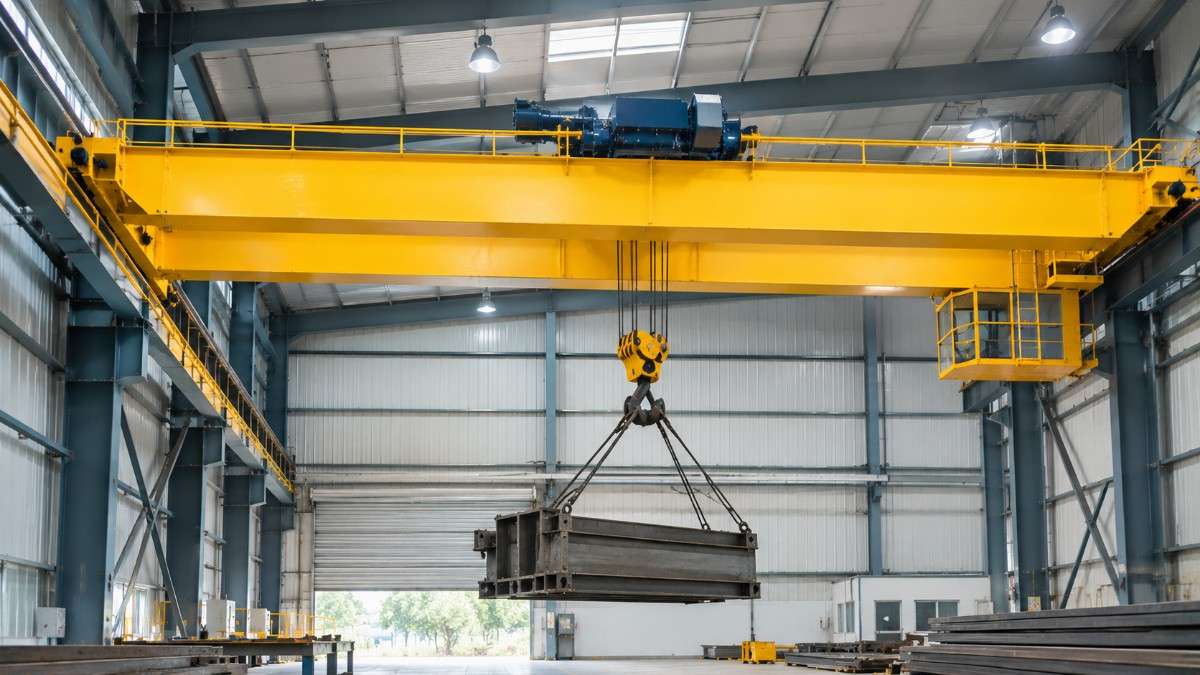
A 25 ton overhead crane, also called an EOT crane (Electric Overhead Traveling crane), is a heavy duty lifting machine that runs on rails fixed high up along the walls or columns of a building. It moves back and forth along the length of the shed (long travel) and side to side across the width (cross travel), while the hoist lifts and lowers the load.
At this capacity, almost every crane is built as a double girder crane. A single girder design is not strong enough or stable enough to safely handle 25 tons over a reasonable span. The double girder structure gives the crane the strength to carry heavy loads, the rigidity to avoid excessive bending, and the space needed to fit a proper trolley and hoist assembly on top of the girders.
This capacity is common in:
If your operation regularly lifts loads between 20 and 25 tons, or you expect your production volumes to grow into that range, this is the capacity bracket to plan for.
Before finalising a 25 ton overhead crane, look closely at these specifications:
Span – This is the distance between the two rails the crane runs on. A standard span is around 10 to 15 metres, but many industrial sheds need more. Longer spans mean more steel in the girders and a higher price.
Lift height – The vertical distance the hook can travel. Standard lift height is around 6 metres, but taller buildings or deeper pits will need more.
Duty class – Cranes are rated M1 to M8 based on how hard and how often they will be used. A crane running almost continuously in a steel plant needs a much higher duty class than one used a few times a day in a general warehouse.
Girder type – At 25 tons, double girder is the standard choice. It is not really optional at this capacity.
Control system – Pendant control is standard, but many buyers at this capacity choose radio remote control or a cabin, especially if the operator needs a clear line of sight over a busy floor.
This is usually the first question every buyer asks, and it is a fair one, since this is a significant investment. Based on current market data, a 25 ton overhead crane price in India typically falls between ₹60 lakh and ₹95 lakh, excluding GST, for a standard configuration with a 10 to 15 metre span and 6 metre lift height.
That range is wide because a 25 ton crane price depends heavily on the exact specification. Two cranes with the same 25 ton capacity can be priced very differently depending on span, duty class, and the features included. If you want to see how this compares with other capacities, our eot crane price in india guide breaks down pricing across every standard tonnage, from 1 ton workshop cranes to 50 ton heavy duty installations.
A few factors move the 25 ton overhead crane price the most:
When you get a quotation for a 25 ton overhead crane, check that it clearly lists the girder assembly, the hoist with wire rope and hook block, long travel and cross travel drives, control panel, limit switches, and factory load testing. Things like runway beams, civil work, radio remote control, and GST are commonly excluded, so always confirm this before you compare quotes. A price that looks lower on paper can turn out costlier once you add the missing items back in.
For a full breakdown of what typically goes into and stays out of an overhead crane quotation, our overhead crane price guide covers this in more detail, along with pricing patterns across different capacities and crane types.
This is one area where buyers sometimes get confused, so it is worth clearing up. Single girder cranes are common up to around 10 tons and are a good economical choice at that capacity. Once you move up to 25 tons, double girder becomes the practical and often the only sensible option.
A double girder design spreads the load across two girders instead of one, which gives the crane better stability, a longer service life, and the ability to support heavier trolleys and hoists. It also allows for cabin operation and special attachments, both of which are common at this capacity. If your requirement genuinely sits at 25 tons, you should be comparing double girder quotes only, not single girder options.
At 25 tons, the cost of getting the crane wrong is much higher than at lower capacities. A crane running with undersized motors, low grade wire rope, or thinner structural steel might work fine for the first year or two. The real problems usually show up after three to five years, in the form of more frequent breakdowns, higher maintenance bills, and unplanned downtime on a production line that cannot afford to stop.
Look for a manufacturer that factory tests every crane before dispatch, builds to IS:3177 and IS:807 standards, and can show you load test certificates from past installations. These standards exist for a reason, and at 25 tons, they are not something to compromise on. To understand how manufacturers differ in build quality and process, our detailed page on the overhead and gantry crane manufacturer landscape in India is a useful read before you shortlist suppliers.
Start by confirming your actual load requirement, including a safety margin, rather than just going by what your current heaviest job needs. Then work out your span and lift height based on your building layout, not a standard catalogue size. Decide on duty class based on how many lifts you expect per day and how continuously the crane will run.
From there, get at least two or three technical quotations for the exact same specification, so you are comparing like for like. Ask each supplier about after-sales support, spare parts availability, and how quickly their service team can reach your location if something goes wrong. For a 25 ton crane running in a busy plant, downtime is expensive, so service response matters just as much as the purchase price.
A 25 ton overhead crane is a serious investment, and it is one that will likely stay in service for 20 years or more if it is built and maintained well. The price range of ₹60 lakh to ₹95 lakh gives you a starting point, but your actual cost will depend on span, duty class, lift height, and the features your operation genuinely needs.
At Timeskrane, we manufacture 25 ton overhead cranes under the TK Crane brand, built to IS:3177 and IS:807 standards, with factory load testing on every unit and a service team that supports customers across India. If you want a detailed, no-obligation quotation matched to your exact site and load requirement, send an enquiry to our team and we will get back to you with a specification and price that fits your operation.
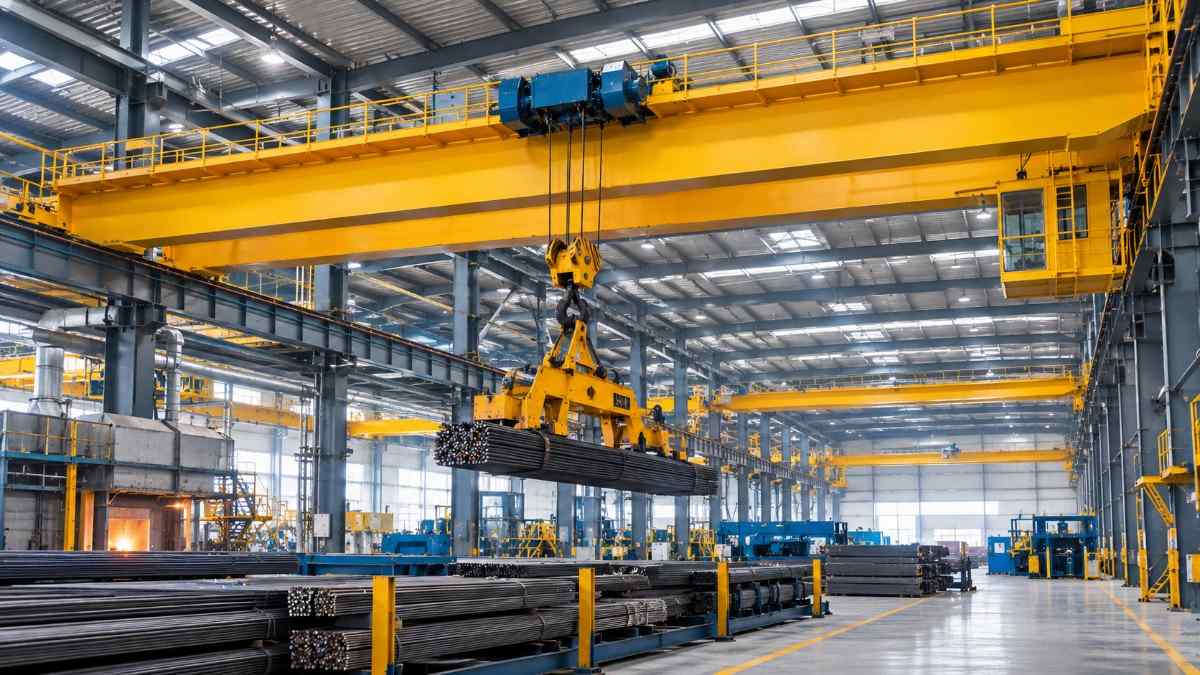
An honest breakdown of what makes a crane genuinely heavy duty for steel plant use, covering duty classification, capacity, and safety features buyers often miss.
Finding the right steel plant crane manufacturer is perhaps the most important decision a procurement manager or plant owner will make. A poorly designed crane can increase both safety risks and downtime while excessively increasing maintenance costs.
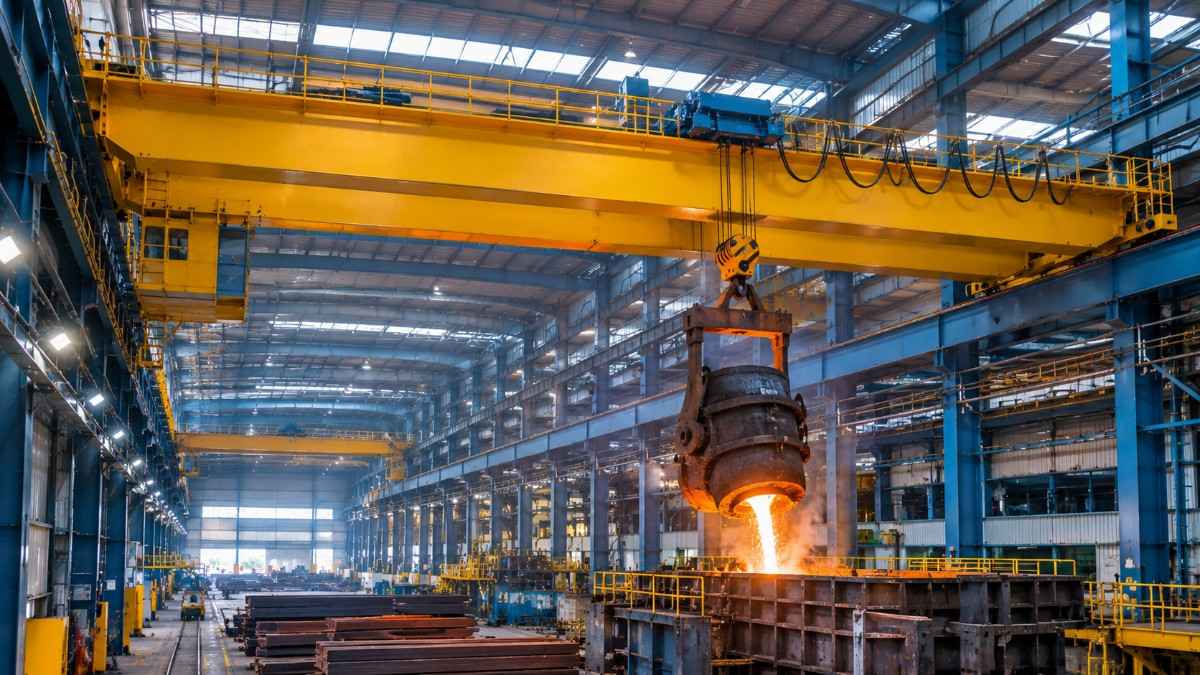
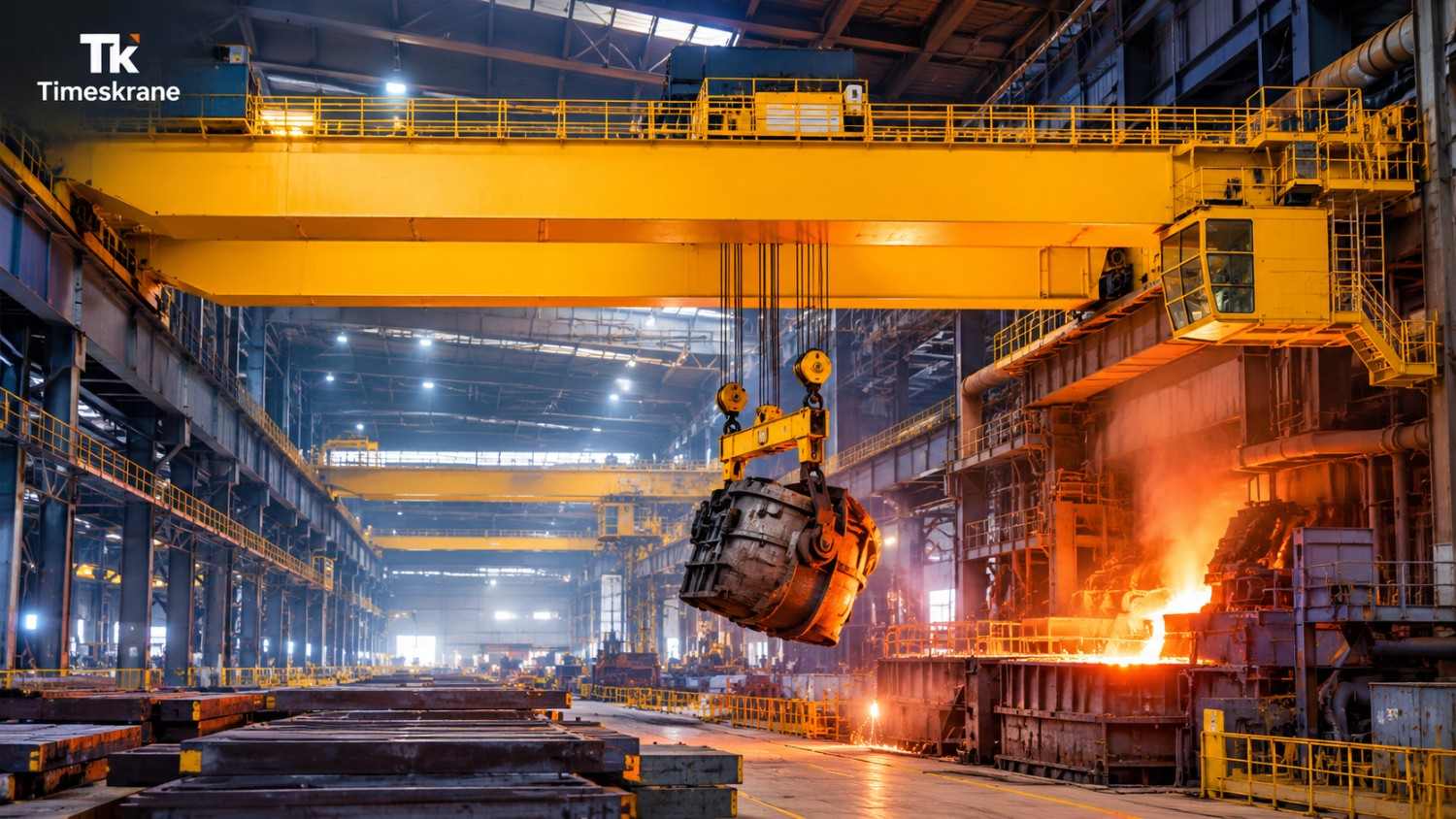
If you run or manage a steel plant, you already know that an overhead crane for steel plant operations is not a luxury. It is the backbone of your material handling process. From moving billets and coils to shifting ladles of molten metal, the right crane decides how smoothly your production line runs.
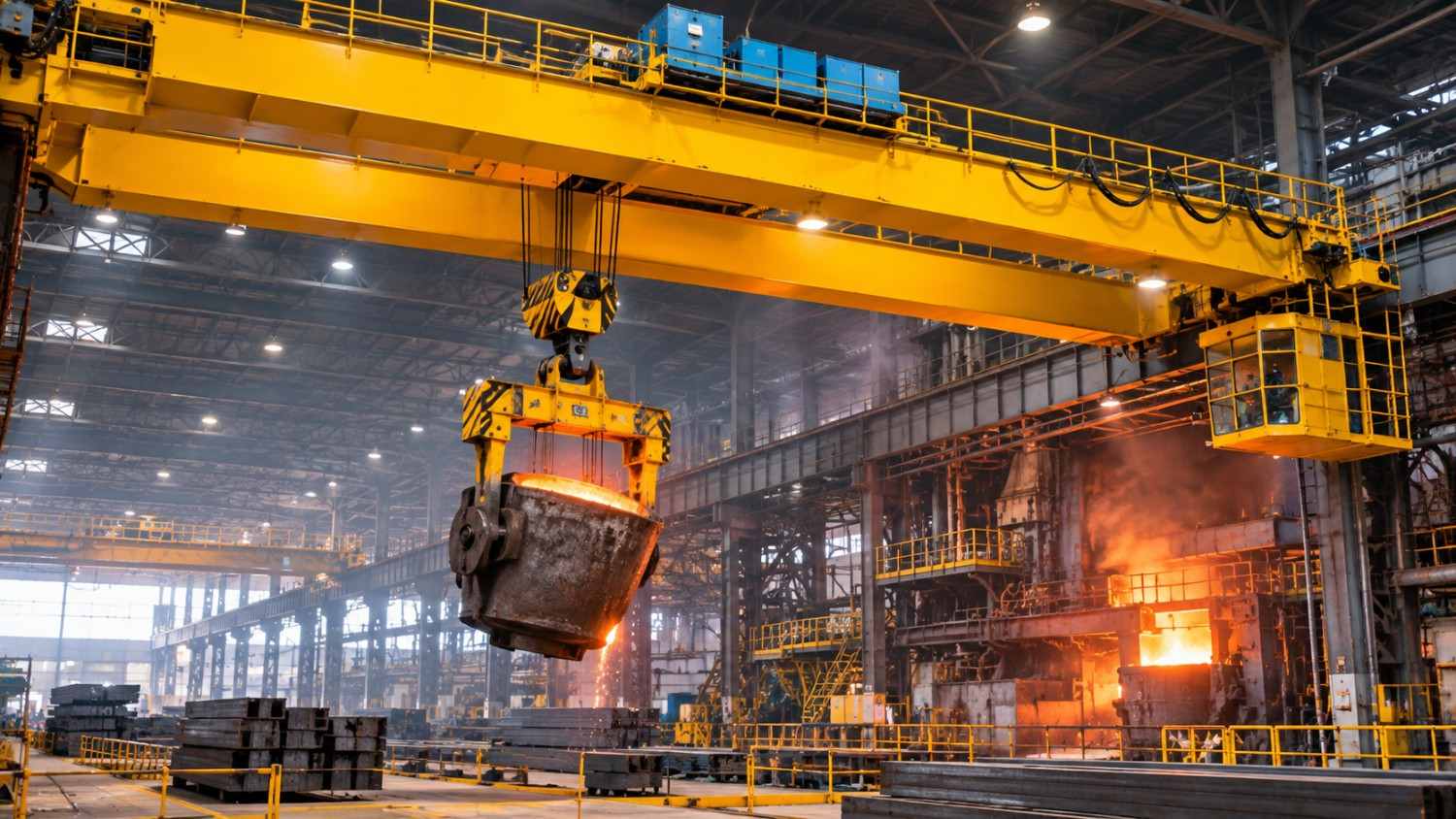
Discover how EOT cranes support steel plant operations, from material handling to molten metal lifting. Learn about crane types, duty classes, safety features, and how to choose the right EOT crane for your steel plant.
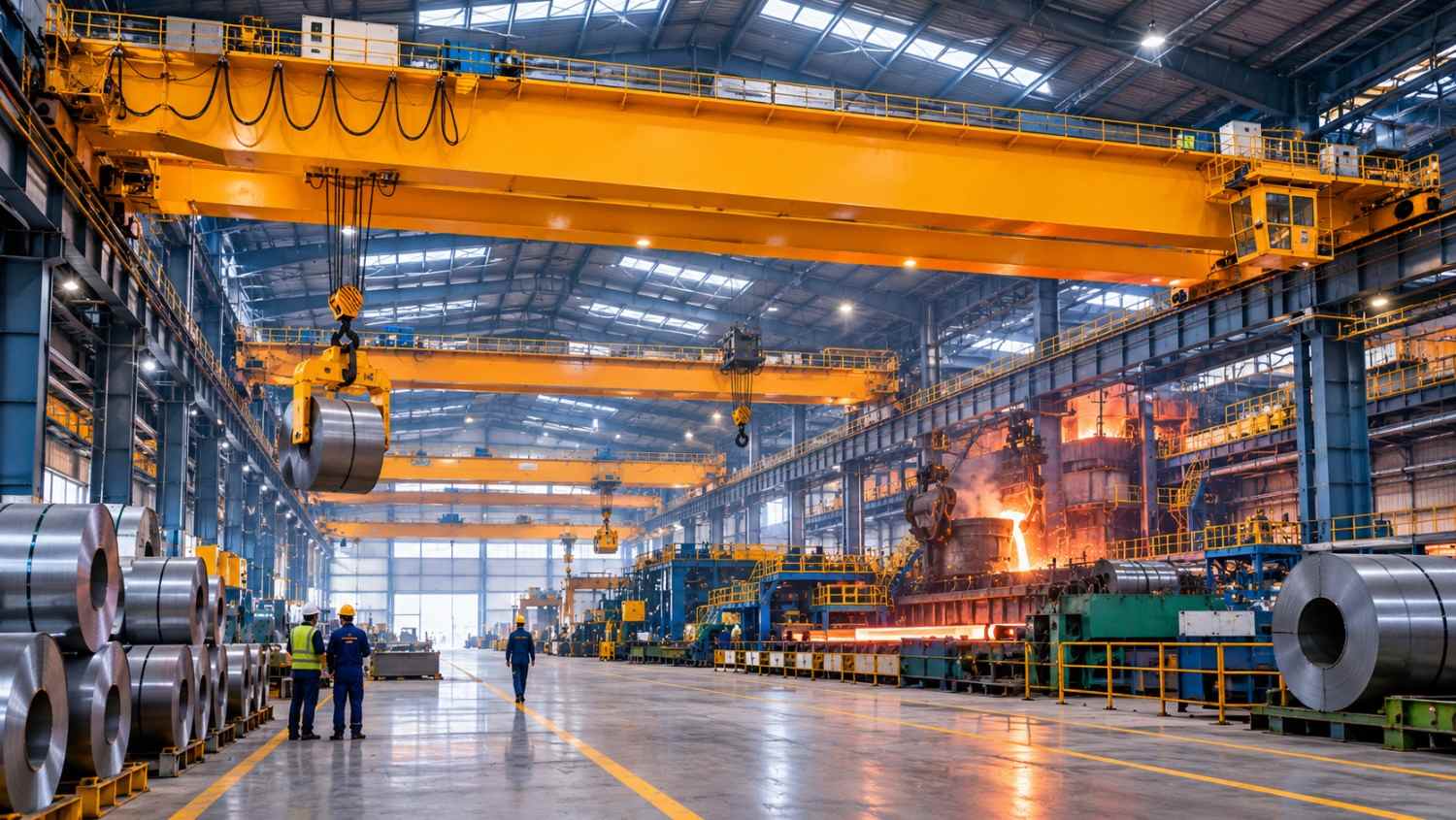
An honest, researched look at the top 5 crane manufacturers for steel plants in India, covering ladle, grab bucket, and coil handling cranes.
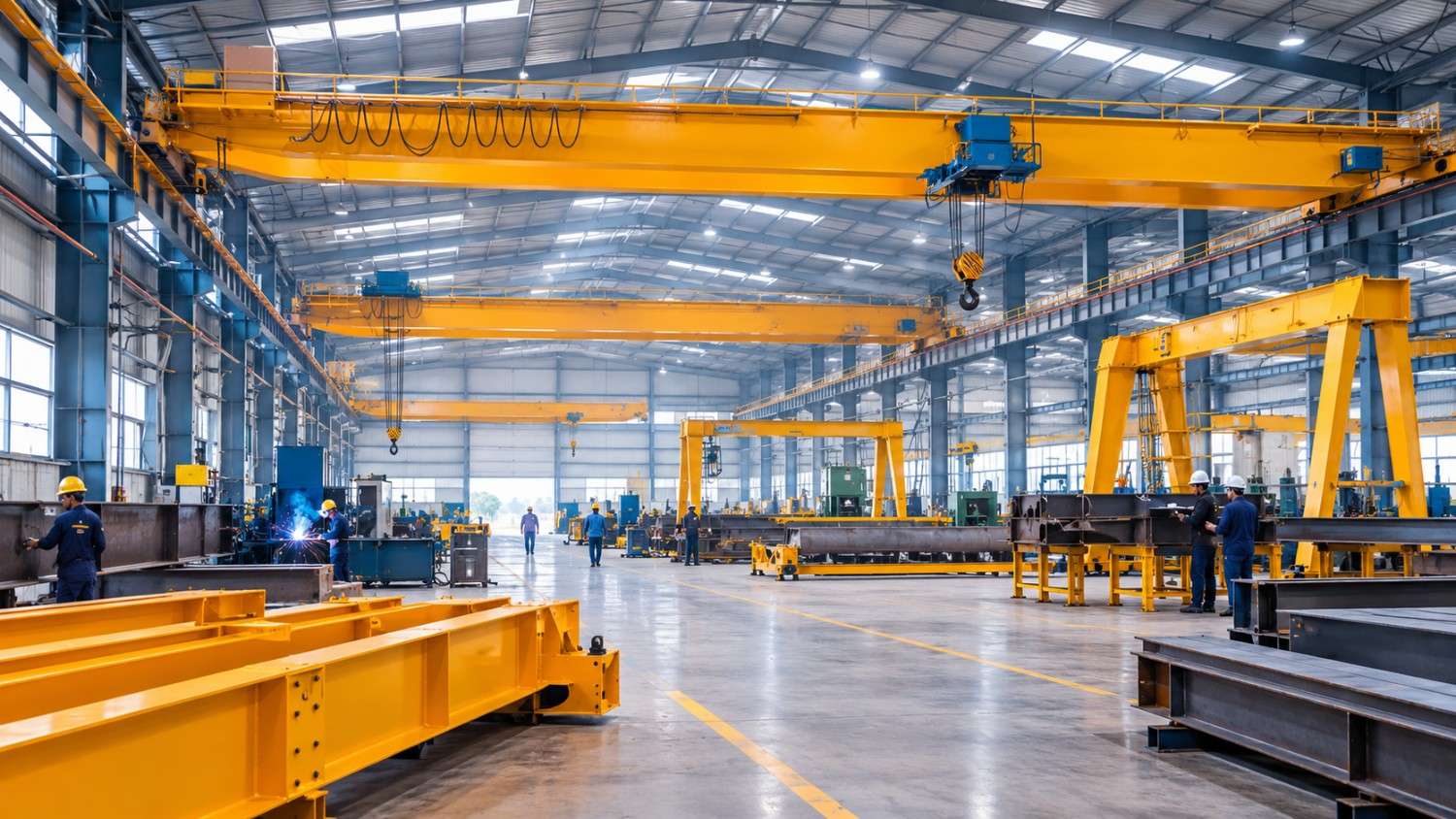
A real, researched look at the top 10 crane manufacturers in North India, covering Delhi NCR, Punjab, Haryana, UP, and Rajasthan, with what actually sets each one apart.
If you are looking for a 10 ton overhead crane for your factory or warehouse, the primary question that arises in your mind is whether this capacity will cater to your daily operations or it will turn out to be a useless and bulky addition to your storage.
Looking for a reliable partner for your next industrial project?