
EOT Crane vs Gantry Crane: Which One Does Your Factory Actually Need?
Table of Content
EOT Crane vs Gantry Crane: Which One Does Your Factory Actually Need?
If you are setting up a new production line, expanding a warehouse, or replacing an old material handling system, you have probably run into this question more than once: should you go with an EOT crane or a gantry crane? Both lift heavy loads. Both move materials efficiently. But they are built for different environments, and picking the wrong one can cost you money, floor space, and downtime for years to come.
This guide breaks the decision down step by step, so you can match the crane type to your actual facility instead of guessing.
Not sure which crane suits your site? Say hello to our crane experts and we will help you figure it out.
What Is an EOT Crane?
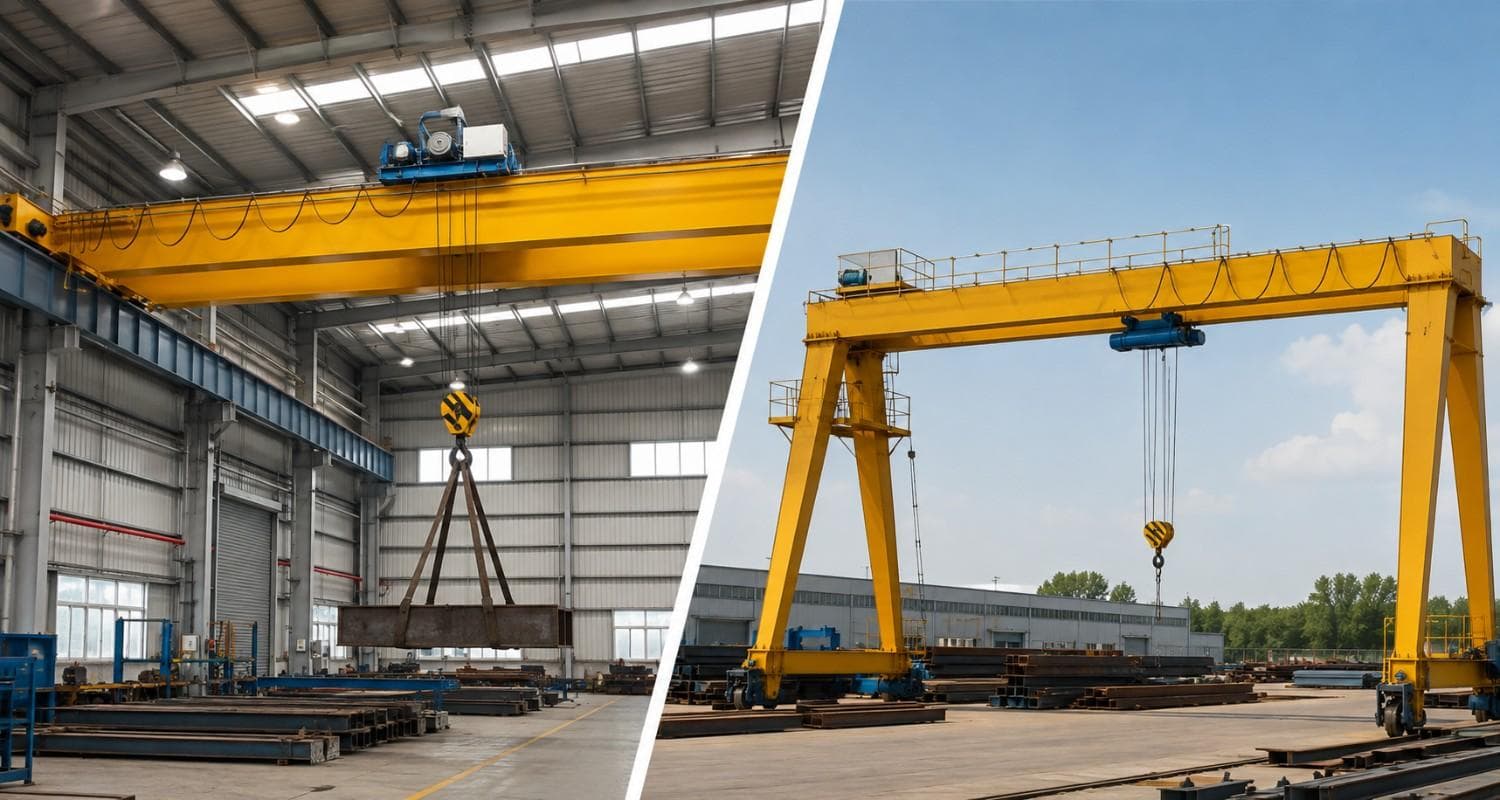
An EOT crane, short for Electric Overhead Traveling crane, runs on rails mounted high up on your building's structure or on a dedicated support system. The crane bridge travels along these rails above the work area, and the hoist moves along the bridge, giving you full coverage of the floor below without anything touching the ground.
EOT cranes are the standard choice for factories that need to move heavy loads repeatedly across a fixed area, such as steel plants, engineering workshops, and heavy fabrication units. If you want a deeper look at how these systems work and where they fit best, our complete guide to EOT cranes for industrial use covers the fundamentals in detail.
What Is a Gantry Crane?
A gantry crane does the same basic job, lifting and moving loads, but it does not need overhead rails fixed to your building. Instead, it stands on its own legs, which run on rails at ground level or sometimes on wheels for a mobile setup. This makes it a practical option when your building structure cannot support overhead rail loads, or when you need a crane outdoors, in a yard, or in a space without a permanent roof structure.
Our post on overhead and gantry crane manufacturers in India goes into more detail on how gantry systems are designed and where Indian manufacturers typically deploy them.
The Core Difference: Structure and Support
This is really where the decision starts. EOT cranes need your building to have columns and structure strong enough to carry the crane rails and the load. Gantry cranes carry their own weight down to the ground through their legs, so your building structure barely matters.
If you already have a factory with strong steel columns and enough headroom, an EOT crane is usually the more space efficient and cost effective choice. If you are working outdoors, in a shed with a weak roof structure, or in a space that was not originally built for crane loads, a gantry crane is often the safer and cheaper route since you avoid expensive structural reinforcement.
Decision Tree: Which Crane Fits Your Facility
Ask yourself these questions in order.
1. Is the work happening indoors or outdoors?
If your operation is mostly outdoors, such as a scrap yard, container yard, or precast concrete area, gantry cranes are almost always the better fit because they handle exposure to weather well and do not need a building at all.
If the work is indoors, move to the next question.
2. Can your building structure support overhead rails?
This depends on the strength of your columns and roof trusses. A structural engineer can confirm this quickly. If your building can take the load, an EOT crane gives you a cleaner floor with no obstructions, which is a big advantage in busy production areas. If it cannot, a gantry crane sidesteps the problem entirely.
3. How much floor space can you spare?
Gantry cranes need legs and rail tracks at floor level, which eat into usable floor area. EOT cranes run overhead and leave your floor completely clear. If floor space is tight or you need to move other equipment underneath the crane's path, EOT is usually the smarter pick. This is one reason many warehouses lean toward overhead systems, similar to how they benefit from underslung cranes for space saving in tighter layouts.
4. Is the crane a permanent fixture or does it need to move between sites?
If you need a crane that can be relocated or that only needs to serve a temporary project, a mobile gantry crane on wheels is far more practical than an EOT system, which is fixed once installed.
5. What is your budget, including civil work?
EOT cranes can involve additional cost if your building needs reinforcement to carry the rails. Gantry cranes usually cost less upfront in civil work but may need more site preparation for ground level rails or a solid, level base. For a full breakdown of what drives cost by capacity, see our EOT crane price guide for 2026.
Quick Comparison Table
| Factor | EOT Crane | Gantry Crane |
|---|---|---|
| Support structure | Needs building columns and rails | Self-supporting legs |
| Best environment | Indoor factories, workshops | Outdoor yards, weak or no building |
| Floor space usage | Clear floor, overhead only | Uses floor space for legs and tracks |
| Mobility | Fixed installation | Can be mobile or relocatable |
| Civil work cost | Higher if structure needs reinforcement | Lower structural cost, more ground prep |
| Typical industries | Steel, engineering, fabrication | Yards, construction, precast, shipping |
What Heavy Industries Usually Choose
Most heavy industries such as steel manufacturing, automotive, and engineering workshops go with EOT cranes because their buildings are designed from the start to carry crane loads, and the constant, repetitive lifting cycles suit an overhead system better. If you want to understand why this crane type has become the backbone of heavy industry operations, our post on what makes EOT cranes essential for heavy industries explains this in more depth.
Gantry cranes tend to show up more in construction sites, ports, and outdoor storage yards, where there is no fixed roof structure to rely on.
Do Not Skip the Safety and Compliance Angle
Whichever crane you choose, compliance is not optional. Both EOT and gantry cranes fall under the same regulatory framework in India, covering load testing, inspection schedules, and operator certification. Before you finalize your purchase, it is worth reviewing our guide on EOT crane safety compliance in India so your new installation is compliant from day one rather than needing corrections later.
New Installation or Refurbished Unit?
Once you have settled on EOT or gantry, the next decision is whether to buy new or go refurbished. This choice affects both your upfront cost and long term maintenance load, and it deserves its own evaluation. Our comparison on new vs refurbished EOT cranes for 2026 walks through the trade-offs so you are not caught off guard by hidden costs later.
Conclusion
There is no universally better option between EOT and gantry cranes. The right choice depends entirely on your building, your floor space, your budget for civil work, and whether your operation is indoors or outdoors. Walk through the decision tree above with your actual site conditions in mind, and you will land on the crane type that fits your factory rather than one that just sounds standard.
If you are still unsure which setup suits your facility, our team at Timeskrane can walk you through a site-specific recommendation. You can also browse our guide on how to choose the right industrial crane for a broader look at selection criteria across all crane types.
Recent Posts
EOT Crane Installation Process and Cost in India
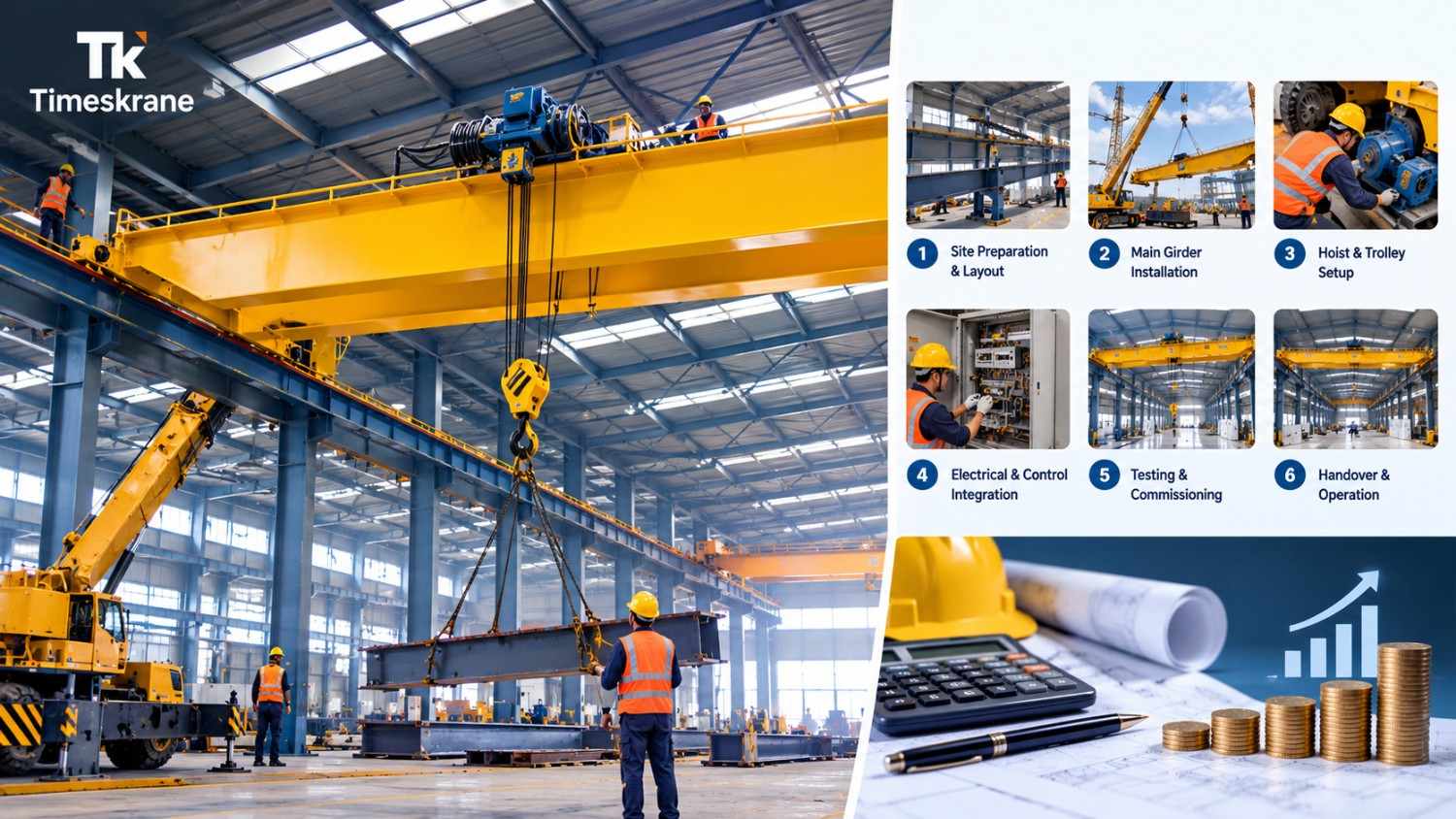
The complete EOT crane installation process in India, covering site survey, runway beams, load testing, and what installation actually costs beyond the crane price.

EOT Crane Safety Compliance in India
IS 3177, IS 807, Factories Act rules, and how third-party load testing and certification work for EOT cranes in India.

EOT Crane AMC Cost & Whats Included in 2026
What's actually included in an EOT crane AMC, how comprehensive and non-comprehensive contracts differ, and what drives the cost in India.
EOT Crane for Sale in 2026: New vs Refurbished
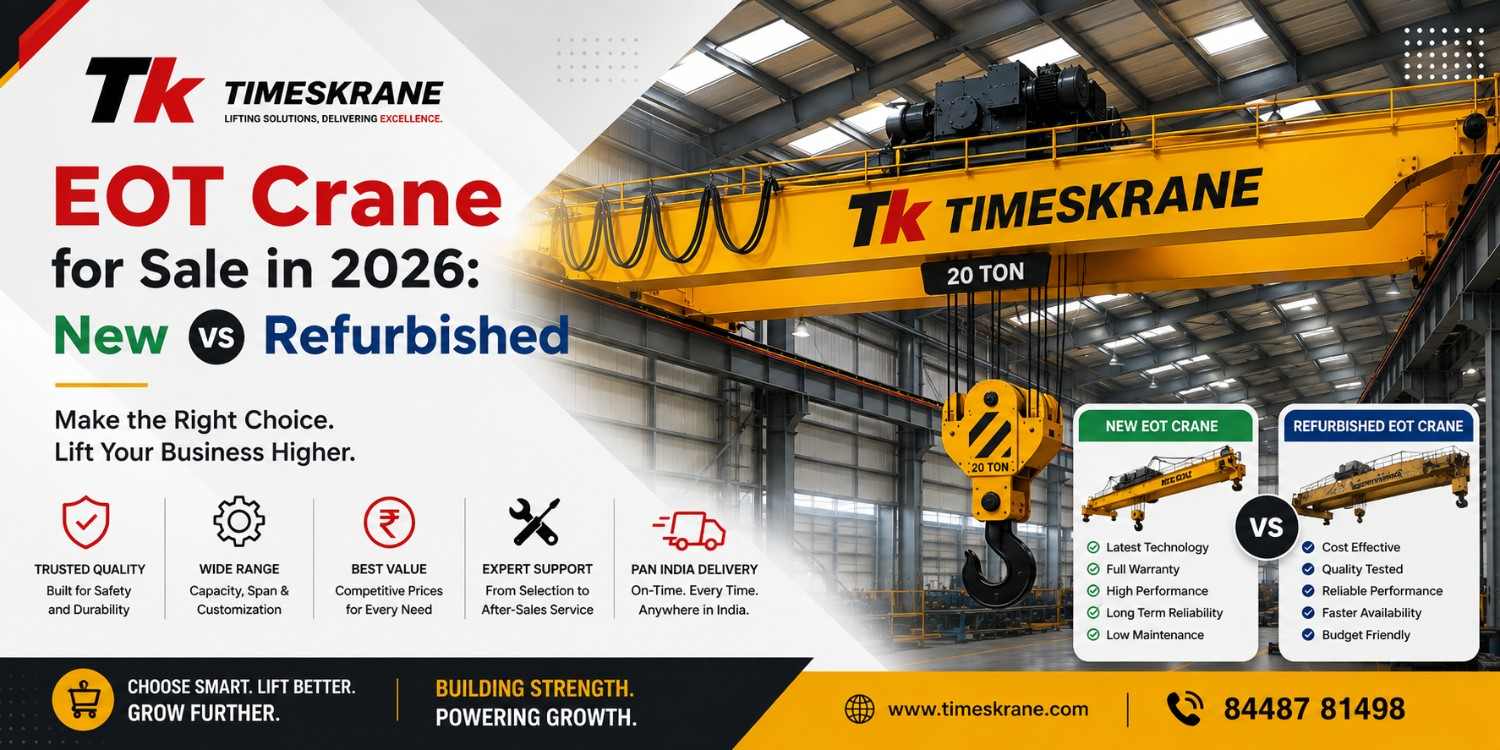
A practical comparison of new vs refurbished EOT cranes in 2026, covering cost, safety, warranty, and long term value, to help you choose based on your budget.
Need a Custom Lifting Solution?
Let’s Talk!
Looking for a reliable partner for your next industrial project?
- Expert Consultation
- Pan-India Service