
What Makes EOT Cranes Essential for Heavy Industries
Table of Content
What Makes EOT Cranes Essential for Heavy Industries
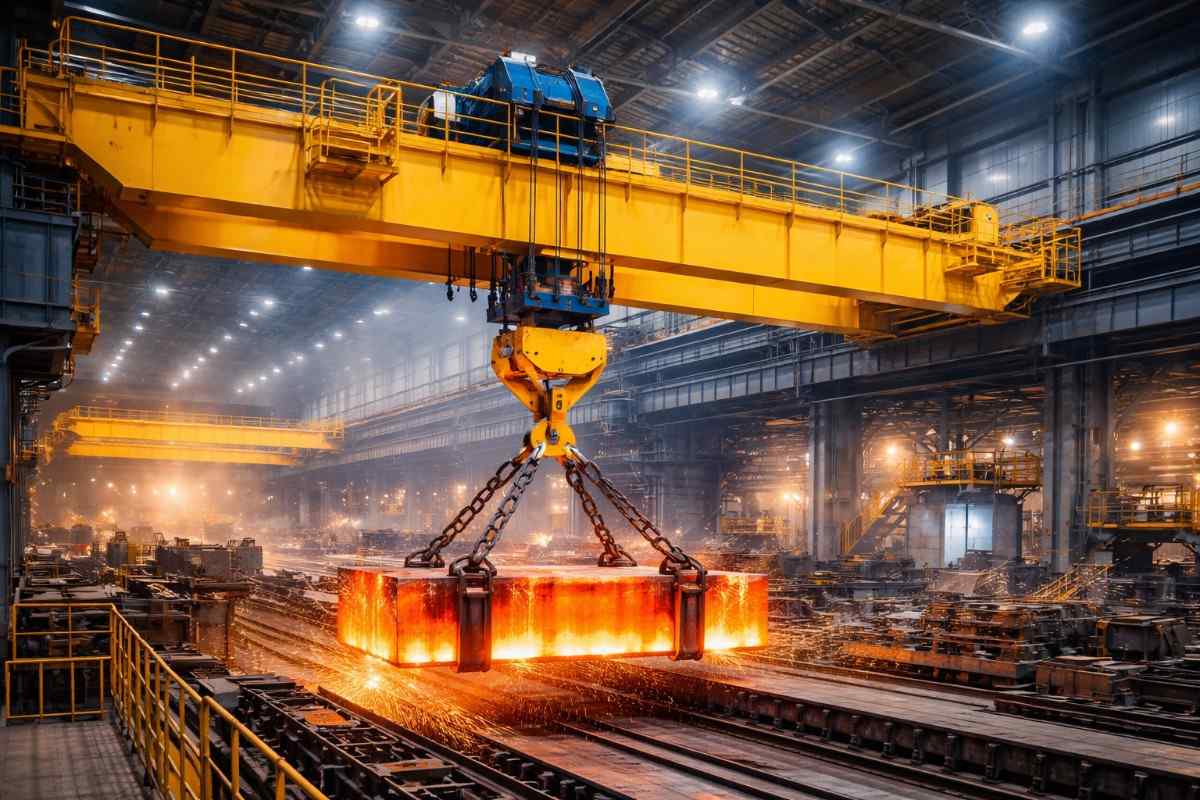
Walk into any steel plant, automobile factory, or cement facility in India, and one thing stands out immediately. Massive loads are moving overhead, smoothly, safely, and without disrupting the work happening on the floor below.
That's the power of EOT cranes at work.
If you've ever wondered how heavy industries manage to lift and move loads that weigh several tonnes with such ease and precision, the answer almost always involves an EOT crane. These machines are not just equipment. They are the silent workhorses that keep some of India's most demanding industries running every single day.
In this guide, you'll learn exactly what EOT cranes are, why they matter so much to heavy industries, how they function, and what to keep in mind before investing in one.
What Is an EOT Crane?
EOT stands for Electric Overhead Travelling Crane. It is a type of crane that runs on elevated rails or runways fixed either to the building structure or to dedicated columns. The crane travels horizontally along these rails, while the hoist mechanism moves vertically to lift and lower loads.
Unlike mobile cranes or floor-mounted equipment, an EOT crane operates entirely in the air, above the working area. This means it doesn't take up any floor space, doesn't interfere with ground-level operations, and can cover the entire span of a factory bay.
EOT cranes are electrically powered, hence the name, and are controlled by an operator either through a pendant control (a hanging push-button station) or a wireless remote control. In some large installations, a cabin-mounted operator controls the crane from an elevated cab.
There are three main types of EOT cranes:
- Single Girder EOT Crane: Uses one bridge beam. Suitable for lighter loads, typically up to 15 to 20 tonnes. Cost-effective and widely used in small to medium industries.
- Double Girder EOT Crane: Uses two parallel bridge beams. Handles heavier loads, offers better precision, and allows for a wider span. Used in steel plants, heavy engineering, and shipyards.
- Semi-Girder EOT Crane: A hybrid design where one end of the bridge is supported by a wall-mounted rail and the other by a floor-mounted column. Used in facilities with specific space constraints.
According to the Bureau of Indian Standards, EOT cranes in India are designed and tested as per IS 3177 (code of practice for electric overhead travelling cranes) and IS 807 (code of practice for design, manufacture, erection, and testing of cranes).
Why EOT Cranes Matter in Heavy Industries
Let's put this in perspective with a real-world example.
A steel re-rolling mill in Raipur handles molten metal billets that weigh anywhere between 2 to 10 tonnes each. Moving these manually is impossible. Forklifts can't handle the heat or the weight. The only practical, safe, and efficient solution is an overhead crane system that can lift, travel, and position these loads with precision, from above.
That's precisely where EOT cranes become not just useful, but absolutely essential.
Here's why heavy industries across India rely on EOT cranes:
- Handling Extreme Loads: EOT cranes can be engineered to lift loads from a few hundred kilograms to several hundred tonnes. This makes them indispensable in industries where no other equipment comes close in terms of capacity.
- Full Bay Coverage: A single EOT crane can cover the entire length and width of a factory bay, meaning every point within that area is accessible for lifting. No dead zones, no repositioning equipment.
- Improved Worker Safety: By removing the need for manual lifting or floor-level vehicles near heavy loads, EOT cranes significantly reduce the risk of workplace injuries and accidents.
- Higher Productivity: Cranes move loads faster and more consistently than manual or vehicle-based methods. This directly improves throughput and reduces cycle times in production.
- Durability for Demanding Environments: EOT cranes are built for continuous, heavy-duty use. They are classified by duty class (M1 to M8), allowing them to be matched precisely to the intensity of the application, whether it's occasional use or round-the-clock operation.
- Versatility Across Industries: From automobile manufacturing and cement plants to paper mills and power stations, EOT cranes are used wherever heavy material movement is a daily requirement.
How EOT Cranes Work: A Step-by-Step Breakdown
Understanding how an EOT crane functions helps you make better decisions when specifying or purchasing one.
Step 1: The Runway Structure
EOT cranes travel on a pair of elevated rails called the runway. These rails are mounted either on dedicated columns (in an outdoor or open bay setting) or on corbels attached to the building's structural columns. The runway defines the length of travel available to the crane.
The runway must be engineered to handle both the static weight of the crane and the dynamic forces generated during lifting and travel.
Step 2: The Bridge
The bridge spans across the two runway rails. In a single girder crane, one beam forms the bridge. In a double girder crane, two parallel beams are used. The bridge travels along the runway, providing coverage across the full width of the bay.
The span of the bridge is one of the most important design parameters. It determines how wide an area the crane can serve and also influences the structural requirements.
Step 3: The Crab or Trolley
The crab is the sub-assembly that sits on top of (or suspended below) the bridge and travels along it. It carries the hoisting mechanism and allows the load to be positioned at any point along the width of the bridge.
In double girder cranes, the crab sits on top of the two girders, allowing for a lower hook height and better utilisation of the available headroom.
Step 4: The Hoisting Mechanism
The hoist is the heart of the crane. It consists of an electric motor, gearbox, drum, wire rope, and hook block. When the operator activates the hoist, the drum winds or unwinds the wire rope, raising or lowering the hook and the attached load.
Modern EOT cranes use Variable Frequency Drives (VFDs) for smooth acceleration and deceleration, which reduces load swing and mechanical stress on the structure.
Step 5: The Drive System
EOT cranes have two additional drive systems: the long travel drive (for moving the bridge along the runway) and the cross travel drive (for moving the crab along the bridge). Both are electrically powered with motors, gearboxes, and wheels running on the respective rails.
Step 6: Controls and Safety Systems
Operators control all three motions (hoist, long travel, cross travel) through a pendant control or radio remote. Safety features typically include:
- Overload protection device
- End travel limit switches
- Emergency stop
- Anti-collision systems (in multi-crane bays)
- Warning alarms and lights
All safety features must comply with the relevant IS standards before the crane is commissioned for use.
Common Problems and Practical Solutions
Even well-built EOT cranes face operational challenges. Here are some common issues industries encounter and how to address them:
Problem 1: Excessive Vibration During Operation
Cause: Worn wheels, misaligned rails, or loose structural connections.
Solution: Schedule regular inspections of rail alignment and wheel condition. Rail joints should be checked for gaps or height differences. Tighten all structural bolts periodically as part of your preventive maintenance routine.
Problem 2: Hoist Motor Overheating
Cause: Operating the crane beyond its rated duty class or continuous use without adequate rest cycles.
Solution: Match the crane's duty class to your actual usage pattern during the specification stage. If your operations have grown since the crane was installed, a technical review may be needed to assess if an upgrade is required.
Problem 3: Uneven Wheel Wear on the Bridge
Cause: Runway rails that are not perfectly level or parallel, causing the crane to skew during travel.
Solution: Runway geometry should be surveyed and corrected. This is a relatively straightforward maintenance task but is often overlooked until wear becomes severe. Regular runway checks save significant repair costs in the long run.
Problem 4: Electrical Faults and Control Failures
Cause: Dust, moisture, heat, or age-related deterioration of electrical components.
Solution: Use enclosures with appropriate IP (Ingress Protection) ratings for your environment. Schedule electrical inspections as part of your annual maintenance. Keep a stock of critical electrical spares such as contactors, limit switches, and fuses to reduce downtime during failures.
Why Times Krane for Your EOT Crane Needs
At Times Krane, we work with industries across India to supply, install, and service EOT cranes that are built for the demands of real-world operations.
Here is what we offer, plainly and honestly:
- We supply both single girder and double girder EOT cranes, engineered to your specific load, span, and duty class requirements
- Every crane we supply is designed and tested in compliance with IS 3177 and IS 807
- Our team conducts thorough site surveys to understand your facility layout, structural conditions, and operational needs before recommending a solution
- We provide complete installation, load testing, and commissioning services
- Our after-sales support includes preventive maintenance contracts, breakdown service, and spare parts supply
- We serve industries including steel, cement, automotive, heavy engineering, power, and logistics
We believe in giving you the right crane for your application, not the most expensive one. Our goal is a long-term working relationship built on reliability and honest service.
Frequently Asked Questions (FAQs)
Q1. What is the difference between a single girder and double girder EOT crane? A single girder EOT crane uses one bridge beam and is suitable for lighter loads, generally up to 15 to 20 tonnes. A double girder crane uses two parallel beams, handles heavier loads, offers a lower hook height, and provides better stability for precision lifting applications.
Q2. What duty class should I choose for my EOT crane? Duty class depends on how frequently the crane will be used and the intensity of each lift. Light or occasional use suits M3 or M4 class. Heavy continuous industrial use requires M6, M7, or M8. Your crane supplier should assess your actual usage cycle and recommend the appropriate class.
Q3. How often should an EOT crane be inspected? A general visual inspection should be done daily by the operator before use. A detailed mechanical and electrical inspection should be carried out every three to six months, with a comprehensive annual overhaul depending on usage intensity. All inspections should follow IS 3177 guidelines.
Q4. Can an EOT crane be installed in an existing building? Yes, in most cases. The building's structural columns or roof trusses must be able to support the crane runway loads. A structural assessment is required before installation. In some cases, minor reinforcements to the building structure may be needed.
Conclusion
Heavy industries run on precision, efficiency, and safety. And at the heart of all three is reliable material handling. EOT cranes have earned their place as one of the most trusted and widely used lifting solutions across India's industrial landscape, for good reason.
From steel plants and automobile factories to cement works and power stations, EOT cranes deliver the lifting power, floor-space efficiency, and operational reliability that heavy industries simply cannot do without.
If you are evaluating EOT cranes for your facility or looking to replace an ageing system, Times Krane is ready to help you make the right decision, with honest guidance and complete support from assessment to commissioning.
Contact Times Krane today for a free site assessment and find the right EOT crane solution for your industry.
Recent Posts
EOT Crane Installation Process and Cost in India
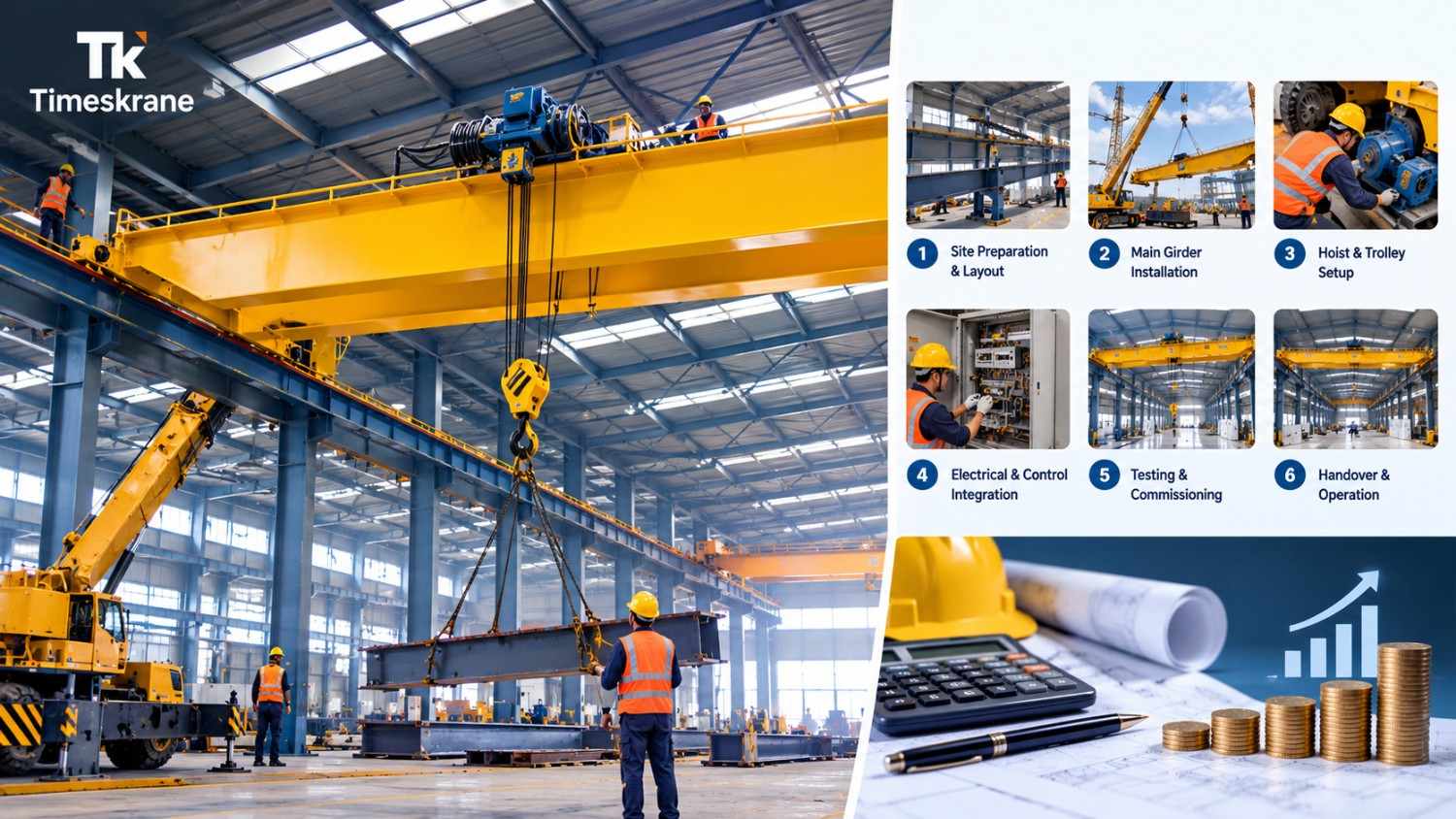
The complete EOT crane installation process in India, covering site survey, runway beams, load testing, and what installation actually costs beyond the crane price.
EOT Crane vs Gantry Crane: Which One Does Your Factory Actually Need?
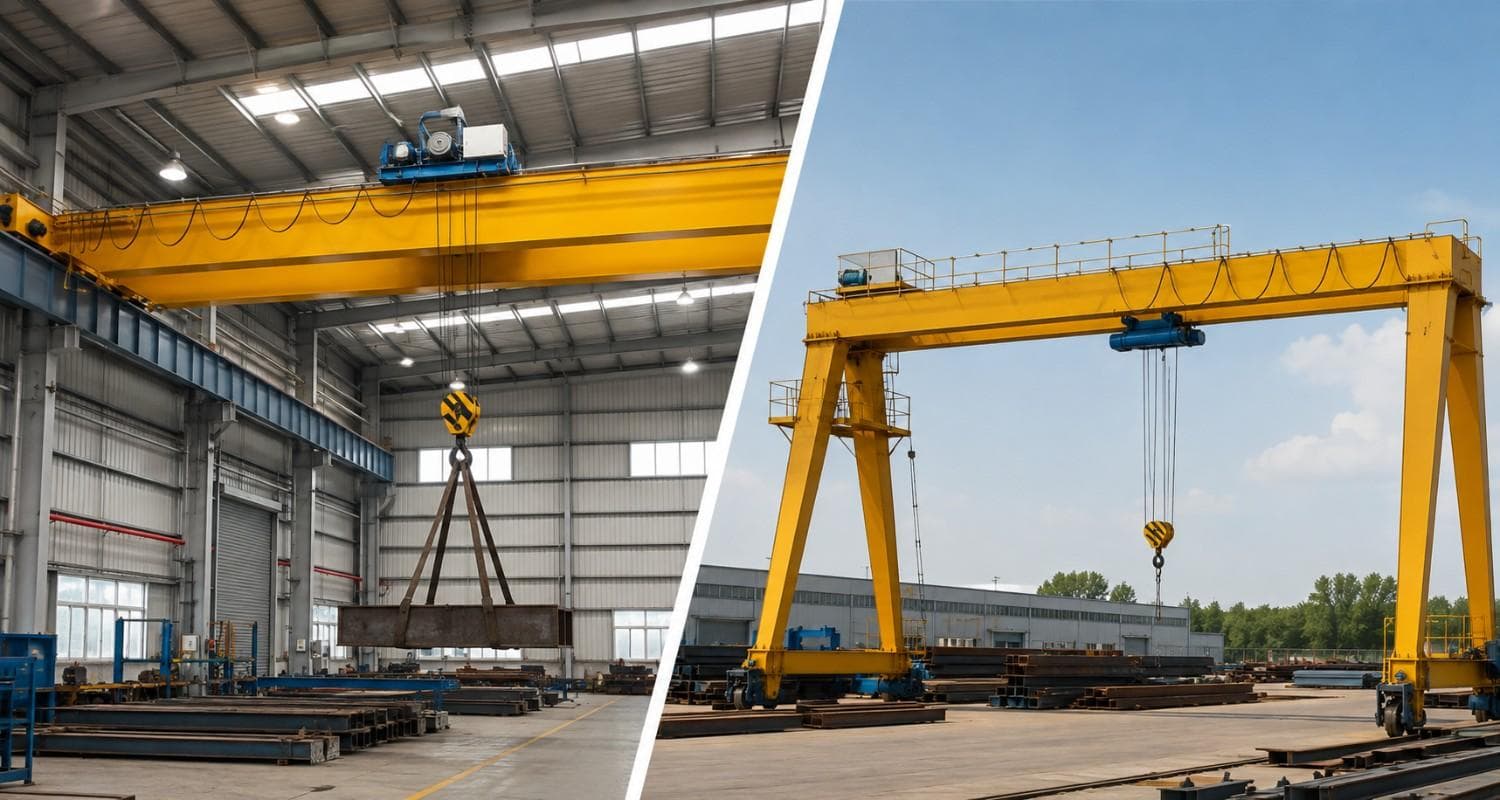
EOT cranes and gantry cranes both lift heavy loads, but they suit very different factories. This guide walks through a simple decision tree covering building structure, floor space, budget, and indoor vs outdoor use, so you can confidently choose the right crane for your facility.

EOT Crane Safety Compliance in India
IS 3177, IS 807, Factories Act rules, and how third-party load testing and certification work for EOT cranes in India.

EOT Crane AMC Cost & Whats Included in 2026
What's actually included in an EOT crane AMC, how comprehensive and non-comprehensive contracts differ, and what drives the cost in India.
Need a Custom Lifting Solution?
Let’s Talk!
Looking for a reliable partner for your next industrial project?
- Expert Consultation
- Pan-India Service