English
Contact
Configure
Catalog
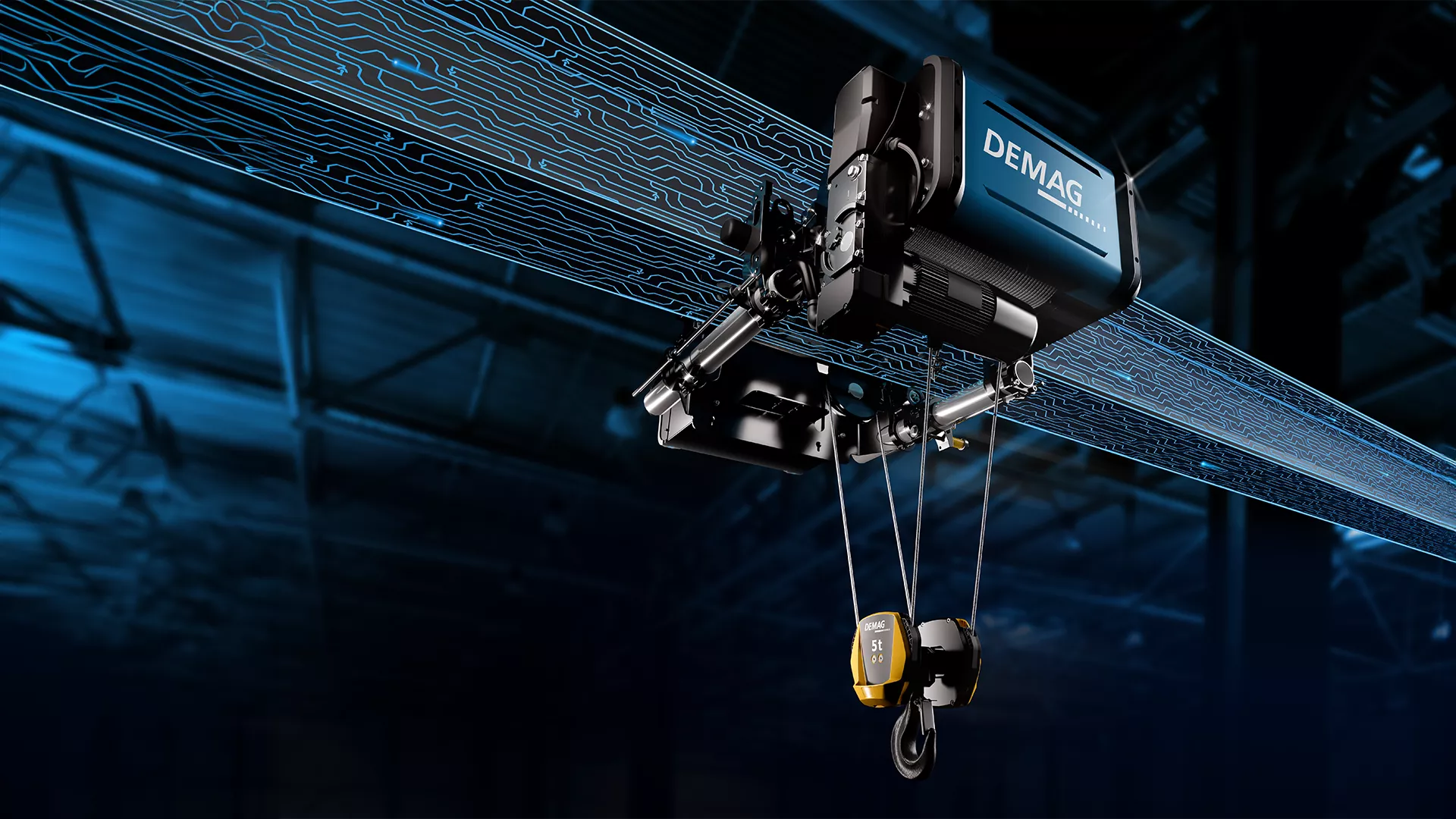
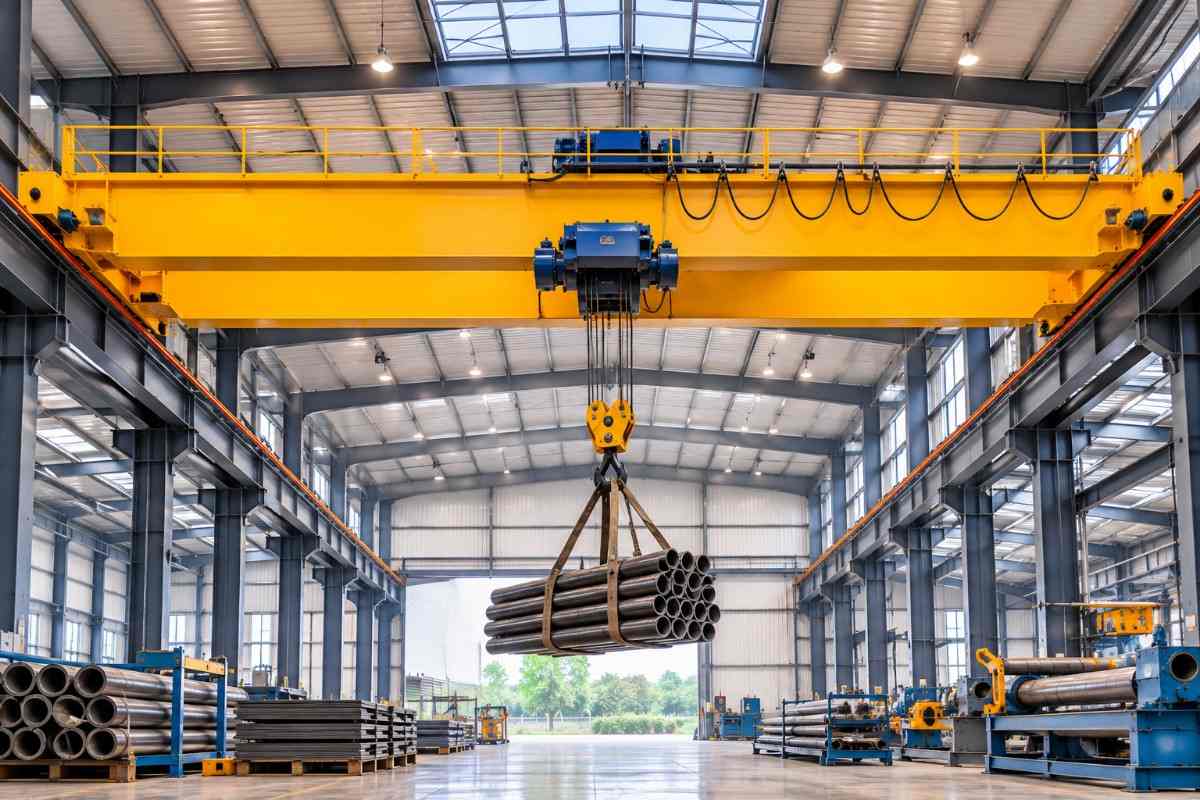
When I have been working with factory owners in Faridabad, Ghaziabad and the wider NCR industrial area, the 5 ton capacity crane is generally the first one that a business adopts after manual chain hoists and forklifts begin to slow down production. Should you be considering purchasing one for your own facility, the following guide shows you all the things that really matter, including details about specifications and girder types as well as the actual buying errors that I have observed unit owners making.
A crane of 5 tonnes capacity, also known as an EOT crane (Electric Overhead Traveling crane), is a type of bridge crane which runs on rails that have been fixed to the building's columns or to a special gantry structure and is capable of lifting and moving loads up to 5 tonnes both horizontally and vertically within a specified work area.
A quick answer is that a 5 ton overhead crane is a type of bridge crane capable of safely lifting and transporting loads of up to 5,000 kg, and it is generally used in workshops, warehouses, and in light to medium fabrication establishments.
Rather than swinging in an arc like jib cranes or standing on floor-mounted legs like gantry cranes, an overhead crane moves along the full length and width of a building on runway beams. This results in a much greater coverage area, which is the reason why it is the standard choice when a factory floor extends beyond a single work cell.
The 5 ton class is popular since it includes the weight range of most machine tools, engineering components, packaged goods, and structural steel items handled in small and medium-sized enterprises involved in manufacturing in India, without requiring the more substantial civil structure that higher tonnages call for.
I have noticed that new buyers generally think that tonnage has nothing to do with other factors besides the weight of the object being lifted; in fact, it involves three things working in unison:
The 5 ton overhead crane is usually used for handling die sets, motor assemblies, pump housings, structural steel sections, and packaged machinery, which is the reason it is frequently found in general engineering, auto ancillary, and metal fabrication units all over India.
What actually matters when you are comparing specification sheets is not just marketing brochures.
Typical specification range for a 5 ton overhead crane:
The two figures which are most frequently underestimated when preparing a technical RFQ in collaboration with procurement teams are span and duty class; a crane specified for occasional light lifting will wear out quickly if it is in fact being used for two or three shifts each day.
The duty class is indicative of how intensely the crane is meant to operate, not merely its lifting capacity. IS 3177 and FEM grading systems range the cranes from light to heavy continuous duty operations.
There is one very common mistake that buyers tend to make, that is buying a crane with lower duty class to save money in the first place and then operating the crane in high cycle production environments. This will greatly reduce the life of bearing and wire ropes and hence increase the maintenance cost than saving in the first place.
Simple answer: For any span up to about 15-18 meters, a single girder overhead crane can lift a load of 5 tons with efficiency. Any longer than that span or when headroom is restricted, then a double girder overhead crane will be more suitable.
This is one of the most frequently asked questions, so here is a simple explanation.
| Feature | Single Girder Overhead Crane | Double Girder Overhead Crane |
|---|---|---|
| Girder Type | One main beam with underslung hoist | Two parallel beams with top-running hoist |
| Typical Span Range | Up to 15–18 metres | 15–30 metres and above |
| Duty Class Suitability | Light to medium duty | Medium to heavy duty |
| Headroom Requirement | Slightly higher headroom loss | Better headroom utilisation |
| Application | Workshops, warehouses, light fabrication | Production lines, longer bays, heavier duty cycles |
From a practical standpoint, I would choose the single girder system in the case of a bay not wider than 15 metres that uses general lifting equipment. It will be much simpler in construction, less burdensome for the building structure and more convenient for maintenance. However, when the bay gets bigger and the cycles approach continuous operation, the double girder system proves its advantages.
Knowing the key components allows you to be more specific when evaluating vendors.
I always advise new buyers to ask about the exact brand used for hoist, motor, and limit switches. Just this one component has an impact on maintenance costs more than anything else specified on the sheet.
In addition to this guide, it may be important to understand where the 5 ton overhead crane stands in the grand scheme of things:
This is the reason why the 5 ton overhead crane acts as a stepping stone between a small shop hoist and full-scale production line cranes.
Before finalizing a vendor, make sure that you have covered all these points:
Quick Answer: The overhead crane cost cannot be decided just on the basis of span, duty, girder type, hoist brand and the civil work requirement, hence while comparing the rate of price per ton it is essential to look out for the specifications that the manufacturer has provided against the crane capacity as most buyers who ask price per ton of overhead cranes tend to get mislead due to varying specifications among suppliers.
While sitting across the procurement manager, the question that I frequently come across is about the price of an overhead crane. Most buyers are concerned about how much the price changes on increasing the tonnage of the overhead crane, which in reality doesn't change proportionately. The reason why a 5 ton crane doesn't cost exactly half of a 10 ton crane is mainly due to the structural changes in the former.
If you are using an eot crane price guide to compare the quotation given by different manufacturers, understand that the guide should serve as a reference material to compare two similar cranes. To get an accurate quotation, you need to compare the given parameters and then ask the shortlisted manufacturers to provide you with the site specific quotation as two manufacturers might quote differently for the same specification. In case you are still not sure about the differences between the two overhead crane quotes, get back to me with the parameters mentioned above.
A common mistake that most buyers commit when asking price per ton of over head cranes is not getting a detailed quotation from the manufacturer including the things that are provided free of cost. In case the buyer asks for a detailed breakup of the pricing, he should ask separately for the cost of runway beam supply along with its installation labour and testing charges.
What is the most common mistake made by buyers? The biggest mistakes are inadequate duty class specification, lack of consideration for future capacity requirements, and focusing on installation speed rather than post-installation support.
The following mistakes tend to recur in most of the cases I see during my site visits to manufacturers:
One of the most common misconceptions about overhead cranes is that their initial purchase price is a significant determinant of total cost. In reality, a crane’s operating costs are determined to a large extent by the ease of maintenance and the availability of spare parts.
As a rule, cranes that have a properly maintained service schedule can operate with a much longer period between major repairs. In my experience, such equipment usually has significantly longer-lasting motors and gearboxes than those that were not properly serviced before.
Pros:
Cons:
Unlike many companies that base quotations for 5 ton overhead bridge cranes on a given structure's tonnage needs, we take the time to assess the actual requirements of the building, not just the number of tonnes it needs to lift. Our team works through span verification, duty class choice and girder type suggestions before any fabrication work commences, thus avoiding costly rework that comes with ordering a crane from a catalogued design.
Being an established overhead crane manufacturer in India, we are able to produce our cranes locally instead of relying on imported parts, which means better control over project timelines, spares inventory and quality of every project to deliver.
With our base in Faridabad, Haryana, we serve clients across the NCR belt and work within IS 3177 and BIS guidelines at every stage of the design and manufacturing process.
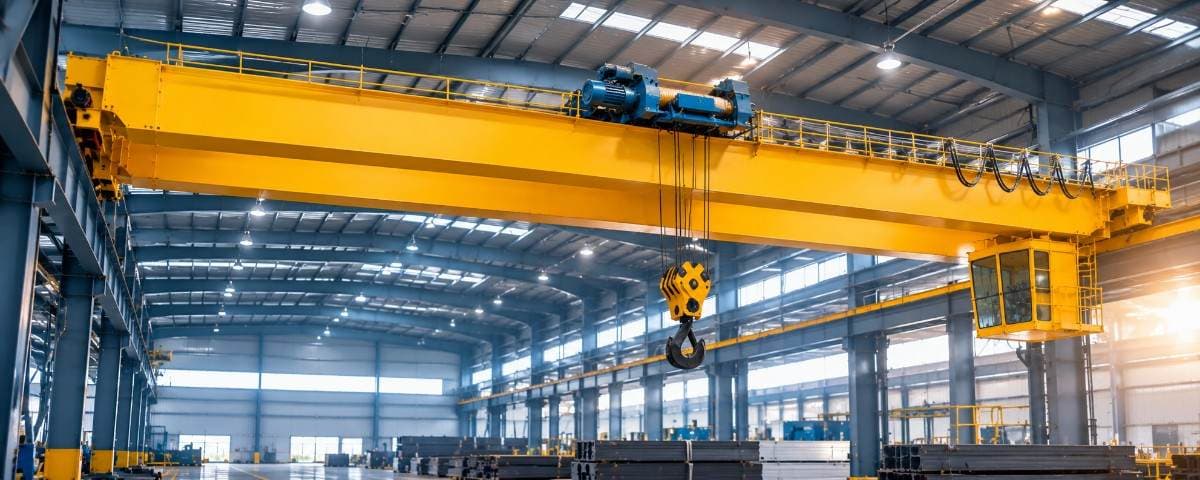
Custom EOT Crane in India: Engineered Around Your Plant, Not a Catalogue
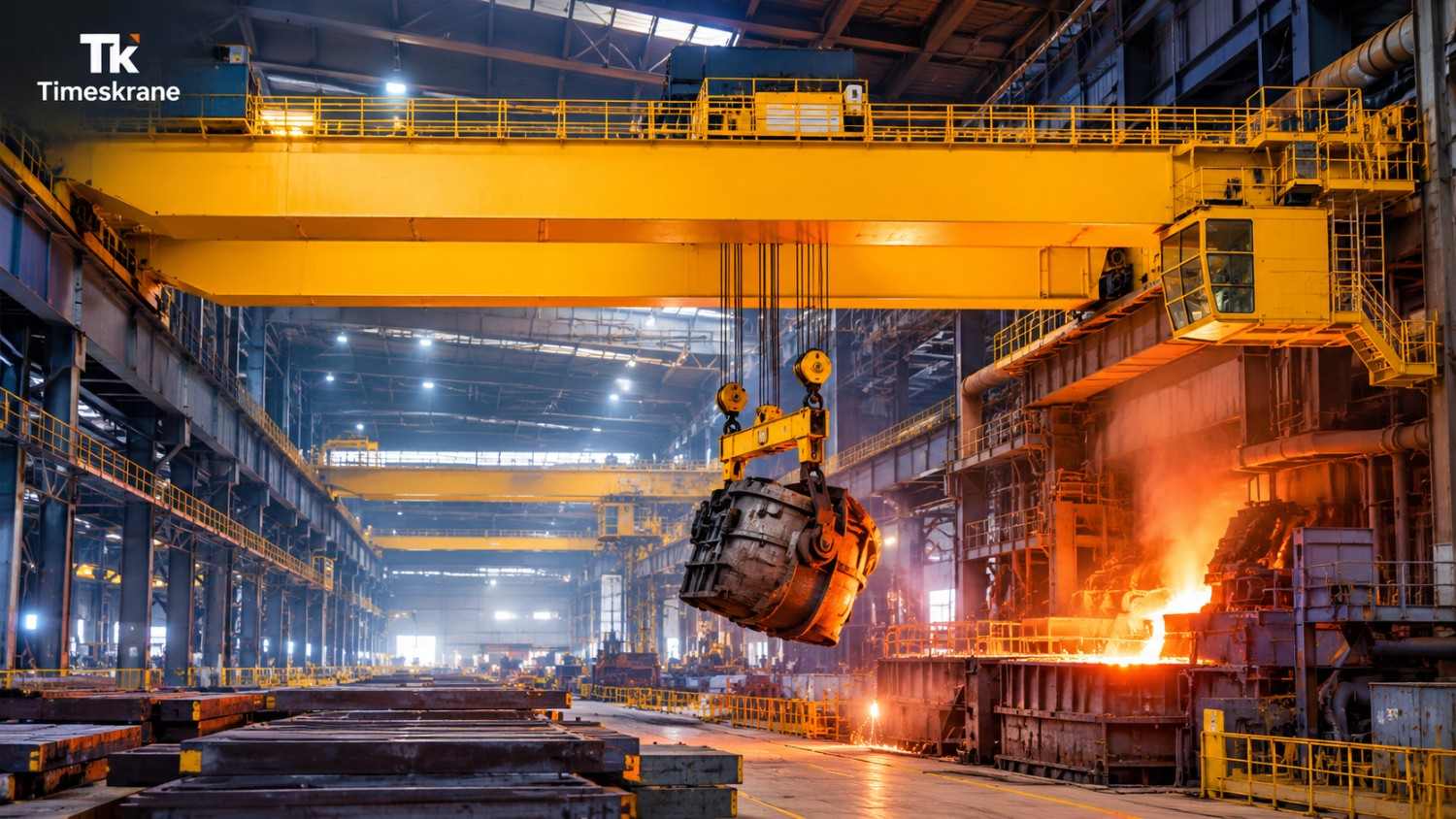
An honest breakdown of what makes a crane genuinely heavy duty for steel plant use, covering duty classification, capacity, and safety features buyers often miss.
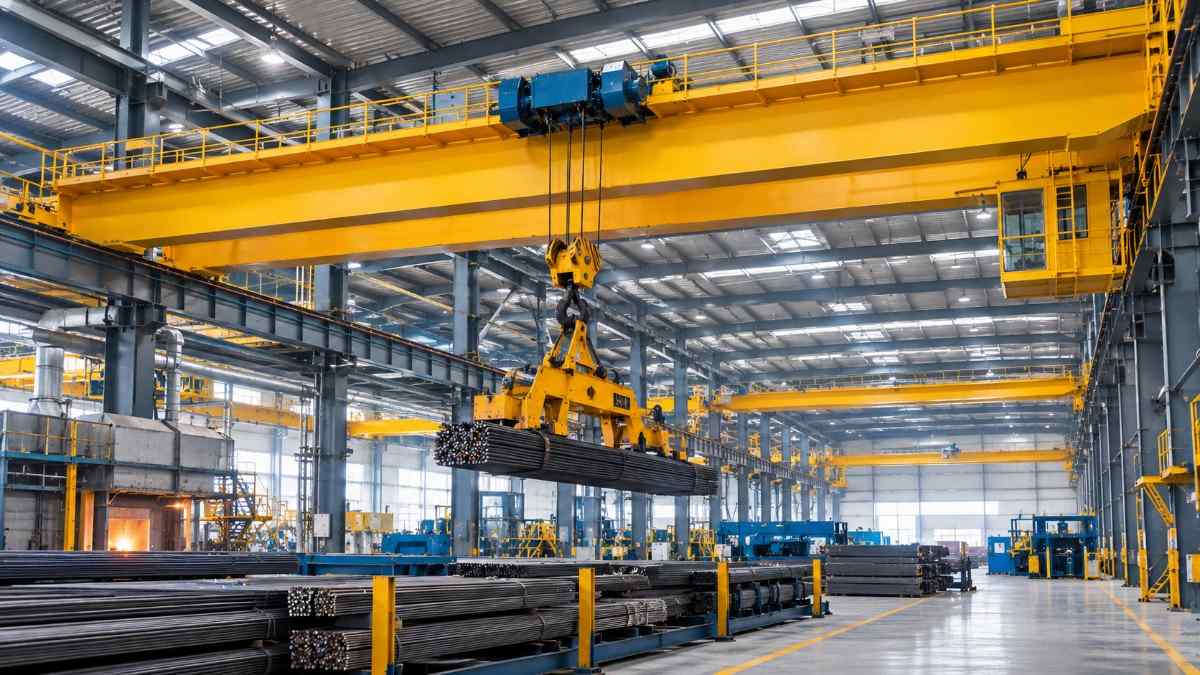
Finding the right steel plant crane manufacturer is perhaps the most important decision a procurement manager or plant owner will make. A poorly designed crane can increase both safety risks and downtime while excessively increasing maintenance costs.
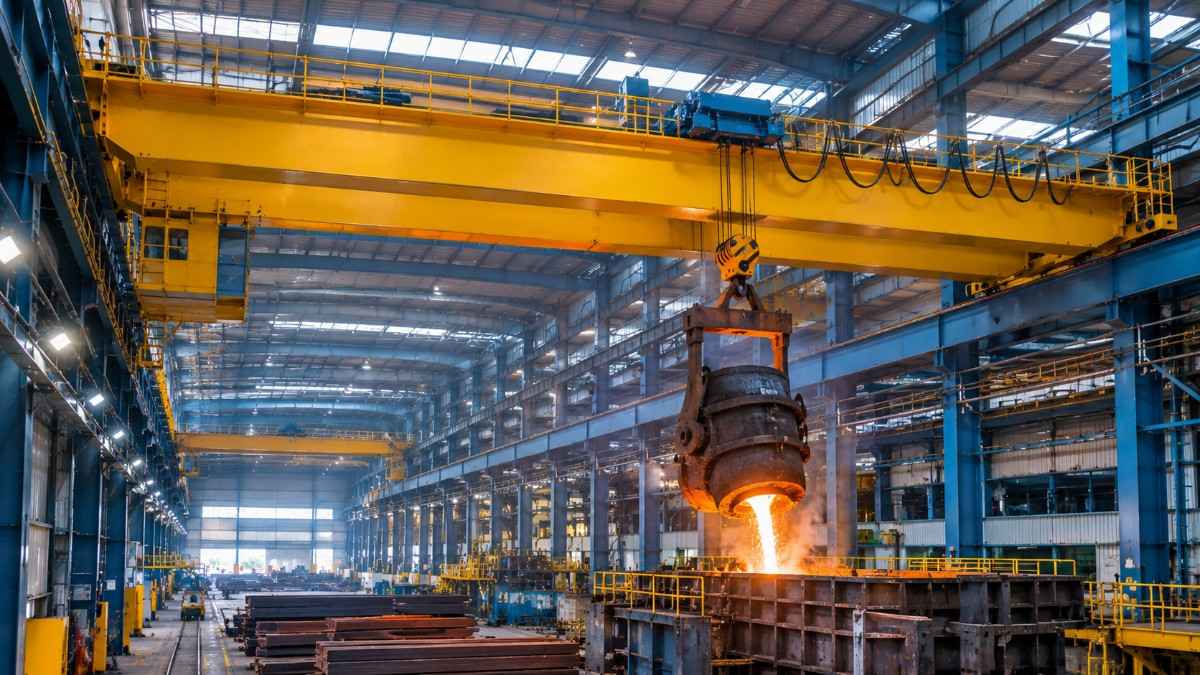
If you run or manage a steel plant, you already know that an overhead crane for steel plant operations is not a luxury. It is the backbone of your material handling process. From moving billets and coils to shifting ladles of molten metal, the right crane decides how smoothly your production line runs.
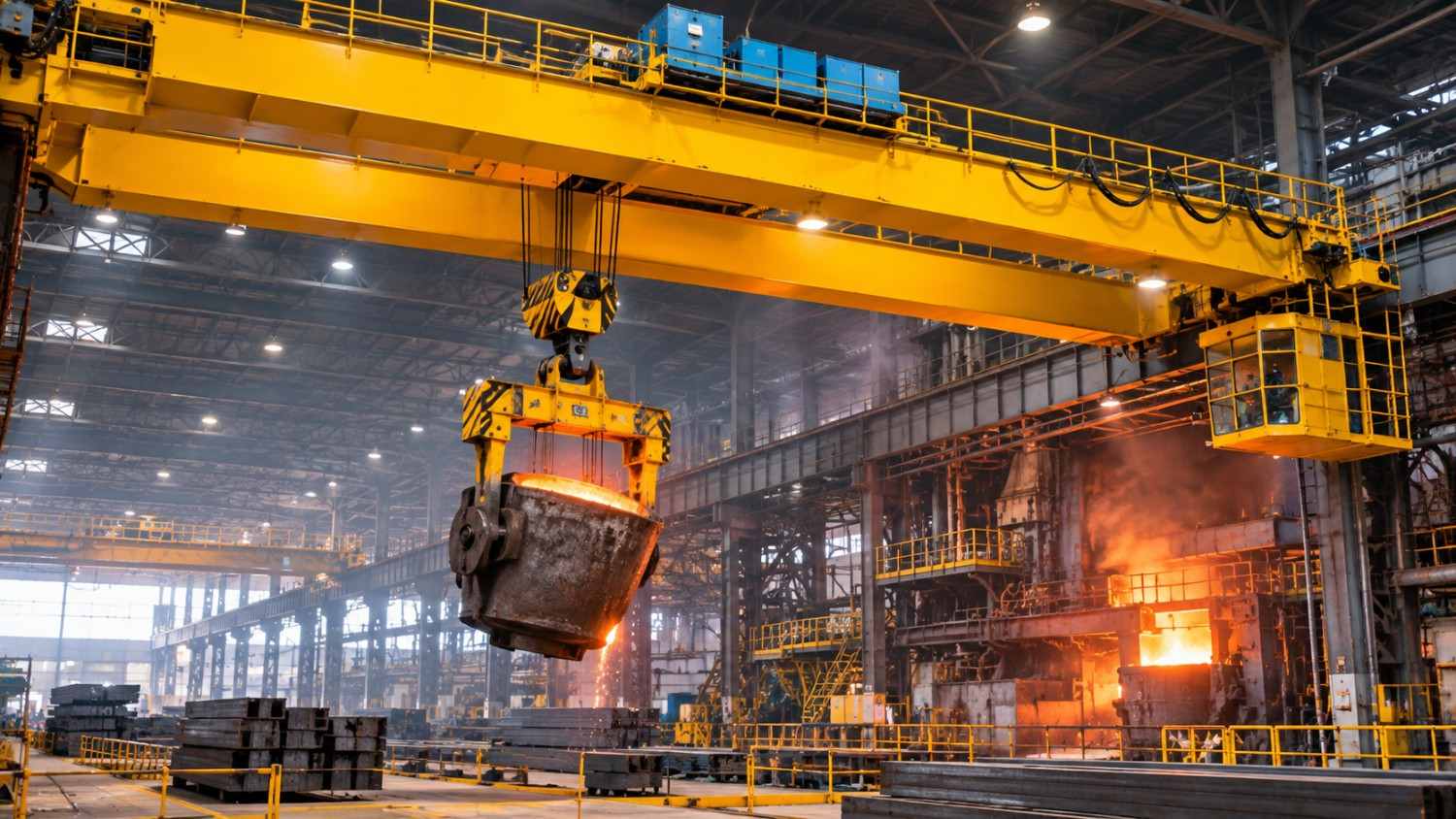
Discover how EOT cranes support steel plant operations, from material handling to molten metal lifting. Learn about crane types, duty classes, safety features, and how to choose the right EOT crane for your steel plant.
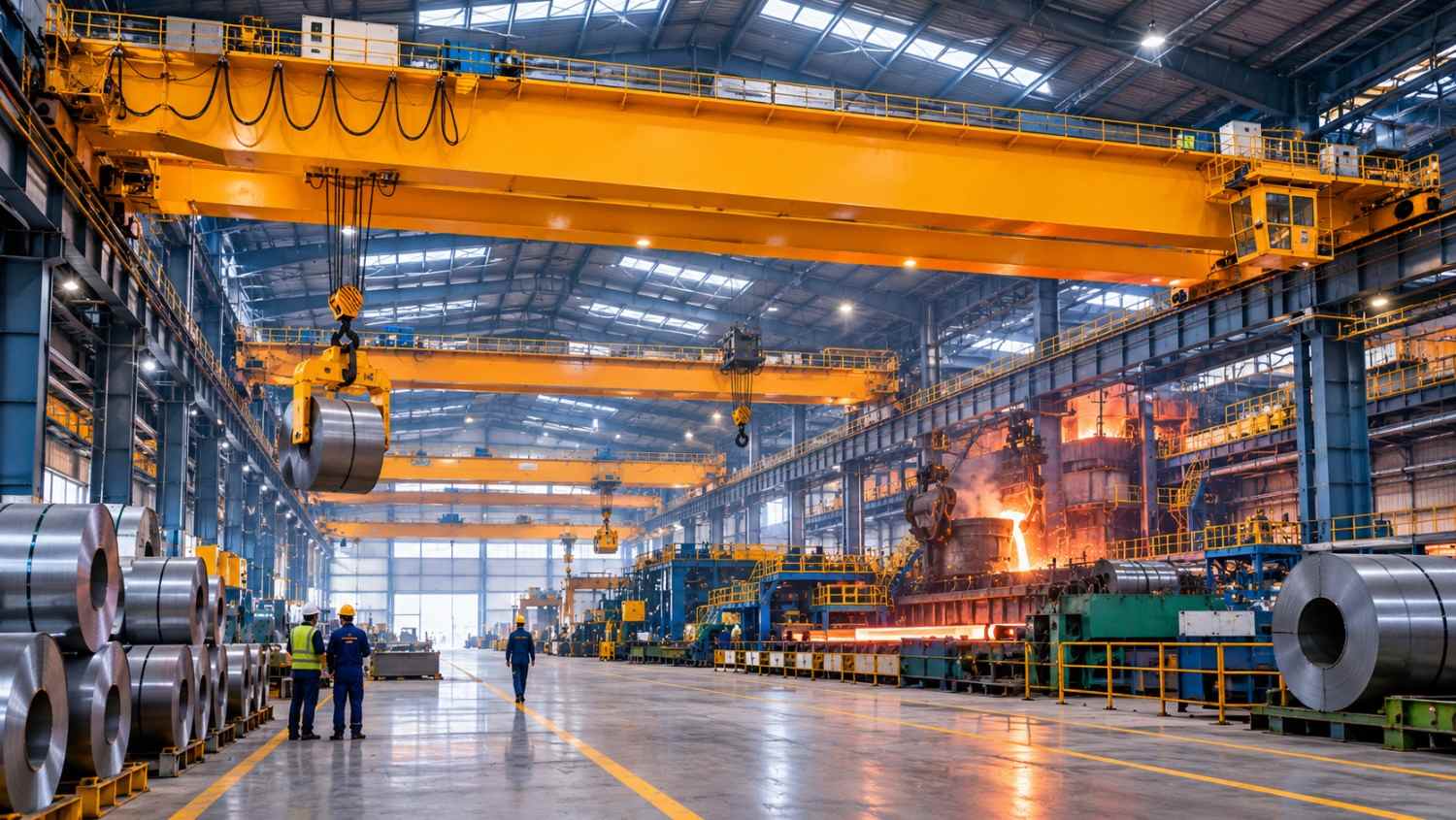
An honest, researched look at the top 5 crane manufacturers for steel plants in India, covering ladle, grab bucket, and coil handling cranes.
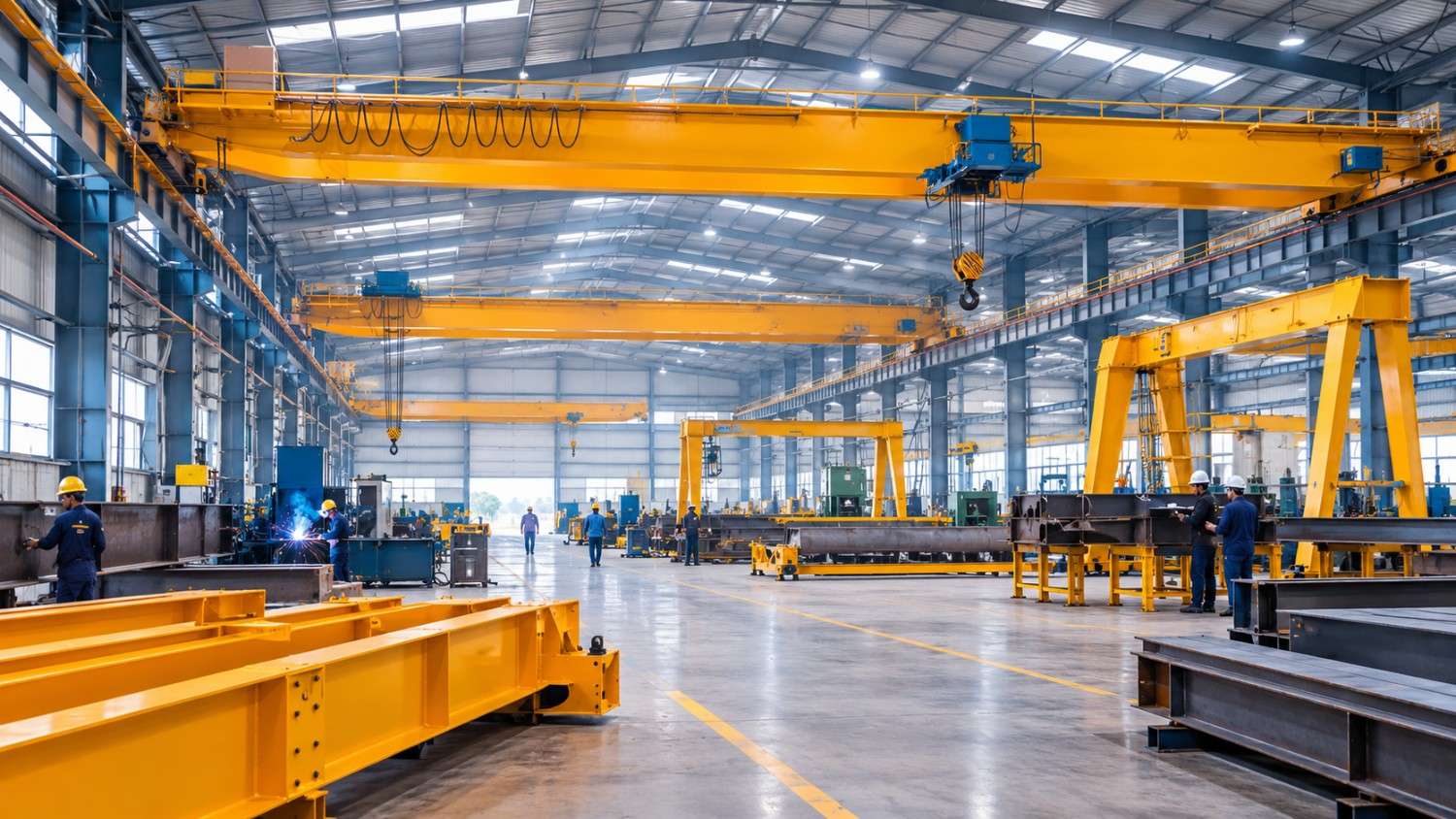
A real, researched look at the top 10 crane manufacturers in North India, covering Delhi NCR, Punjab, Haryana, UP, and Rajasthan, with what actually sets each one apart.
Looking for a reliable partner for your next industrial project?