English
Contact
Configure
Catalog
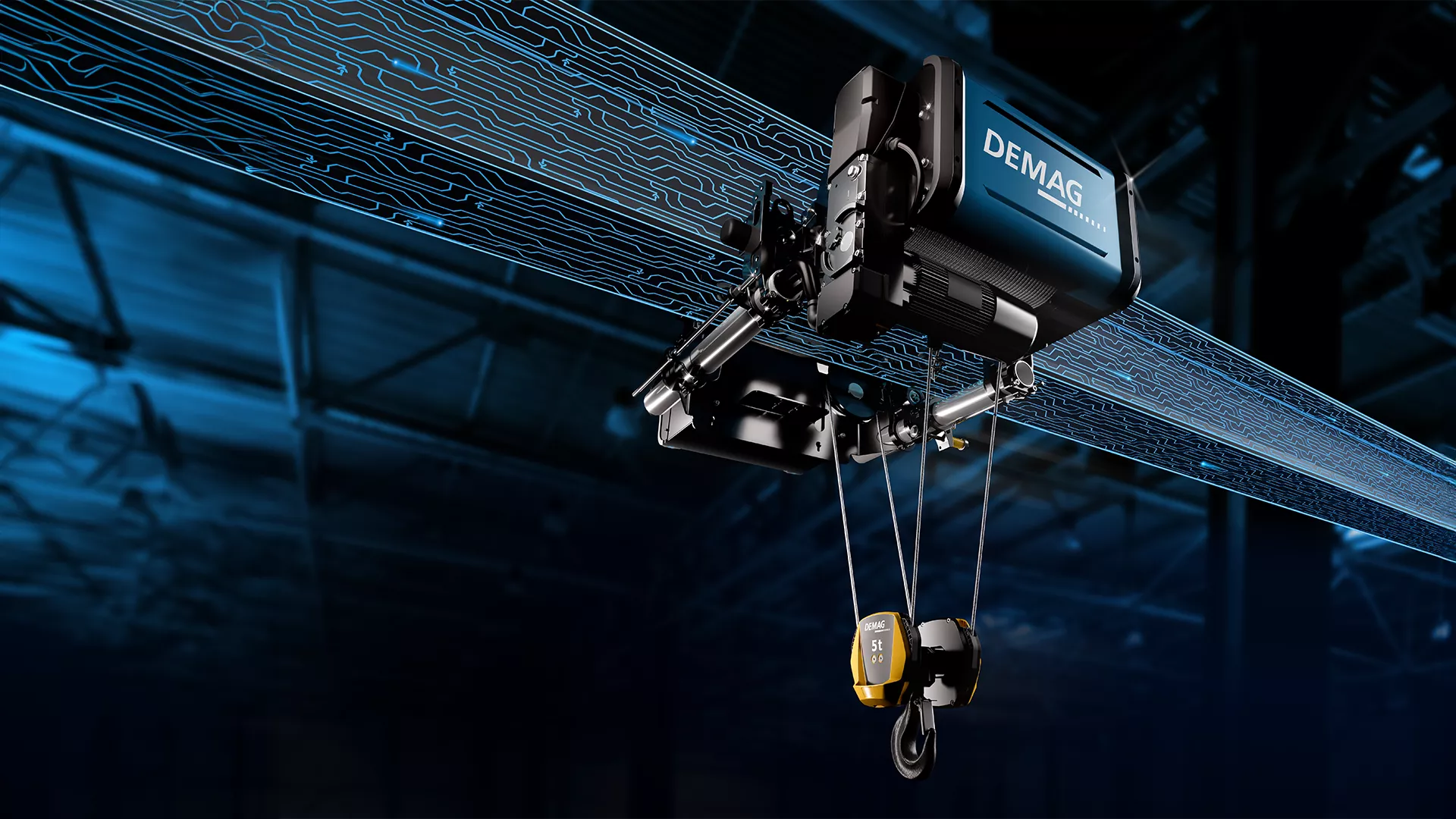
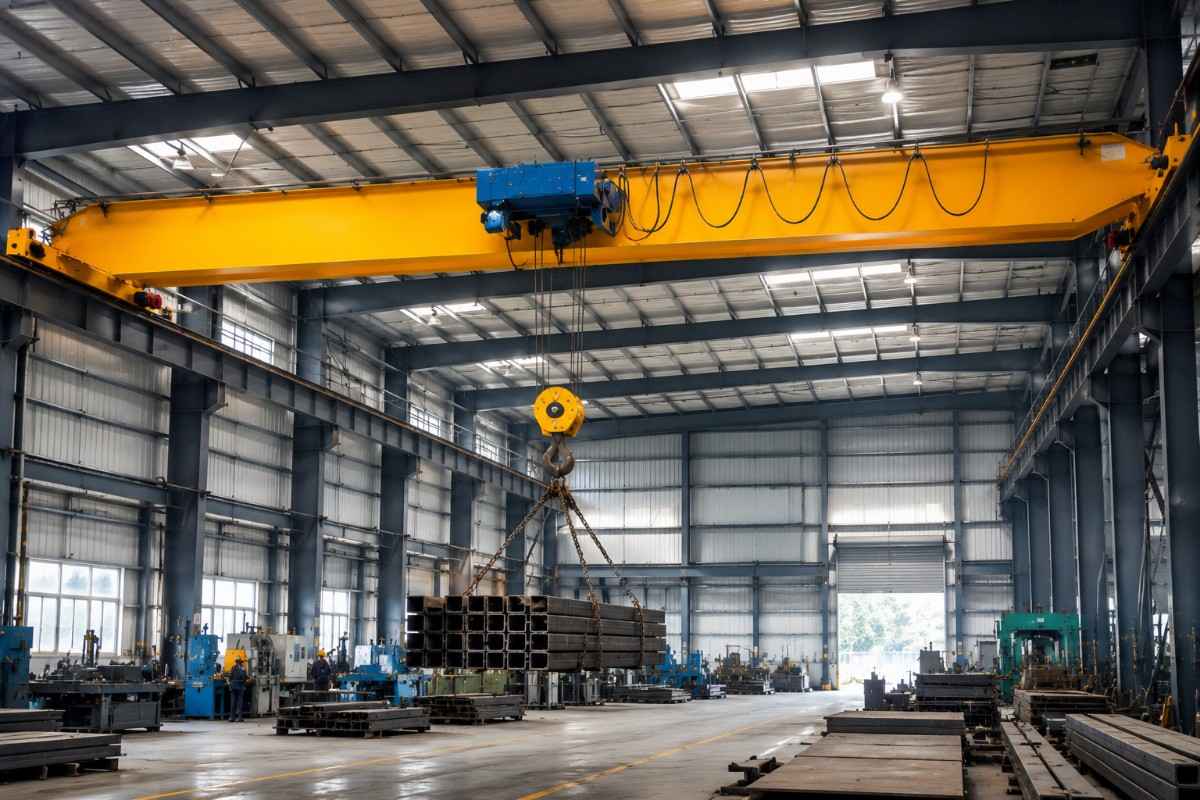
This guide breaks down exactly what shapes that cost, what specifications actually matter, and how to avoid the mistakes that slow down procurement. By the end, you will know enough to have a confident, informed conversation with any manufacturer.
A 3 ton EOT crane sits comfortably in the mid-capacity range, handling loads too heavy for manual handling but not yet requiring the heavier structural investment of higher tonnage cranes.
When I've worked with clients in this bracket, they usually run mid-sized fabrication units, machine shops, or warehousing operations where loads are handled repeatedly through the day rather than occasionally. That repeated cycle is exactly why duty classification matters so much at this capacity, something we will cover shortly.
EOT crane full form is Electric Overhead Traveling Crane. It describes a crane system that travels along an elevated runway using electric motors to control three separate movements.
Here is the step by step breakdown:
This combination lets one crane service almost the entire floor area of a facility, which explains why EOT systems remain the standard choice across Indian manufacturing rather than being replaced by other handling equipment.
Here is a direct answer: single girder configurations handle most 3 ton applications comfortably, though double girder becomes worth considering once your span or hook height requirements grow.
Single girder EOT crane systems are typically chosen when:
Double girder EOT crane systems become more relevant when:
| Feature | Single Girder | Double Girder |
|---|---|---|
| Typical Span Suitability | Up to 20-25m | Beyond 25m or special cases |
| Headroom Requirement | Lower | Higher |
| Structural Steel Usage | Lighter | Heavier |
| Hook Lift Height | Standard | Higher |
| Best Suited For | Standard fabrication and warehousing | Wide bay buildings or future scaling |
In most cases, the single girder EOT crane price comes out lower than a comparable double girder setup at 3 tons, mainly because it needs less structural steel and fewer heavy components. One thing many buyers overlook is that this gap narrows significantly once your span crosses standard single girder limits, so it is worth getting quotes for both configurations before locking in a decision.
Knowing the EOT crane parts name list before your first vendor call makes quotation comparisons far easier.
From practical use, I've noticed that buyers who request a labelled parts diagram from their manufacturer before finalising a quote tend to negotiate far more effectively, since they can see exactly which component drives which part of the cost.
1. Span and Runway Length
A wider span demands heavier girder sections and stronger end carriages, which increases fabrication requirements.
2. Duty Classification
Cranes used across multiple shifts daily need a heavier duty rating than those used occasionally, which changes the motor, gearbox, and structural specification significantly.
3. Hoist Type
Wire rope hoists generally suit continuous, heavier cycles better, while chain hoists work fine for lighter, intermittent use.
4. Control Method
Pendant control tends to be the most economical option, while radio remote or cabin operated systems add to the configuration.
5. Structural Compatibility
If your building's existing columns and runway beams can support the crane without reinforcement, you save on additional civil work.
6. Scope of Installation
Manufacturers who include site survey, erection, and load testing in their proposal build that scope into the overall project.
When I've reviewed multiple vendor quotes for the same client, the ones missing installation or testing scope almost always looked cheaper on paper, only for the gap to close once those items got added back in.
Working through this list before your first vendor discussion usually saves weeks of back and forth revisions.
Mistake 1: Comparing mismatched specifications
A "3 ton crane" quote can vary enormously depending on duty class and span, so always confirm both are identical before comparing numbers.
Mistake 2: Underestimating duty cycle
I've seen buyers select a lighter duty class to save cost initially, only to face early motor and gearbox wear once actual usage exceeded the crane's rated cycle.
Mistake 3: Ignoring structural verification
Skipping a proper structural check on the existing runway beam has delayed more than one installation I have reviewed, sometimes by several weeks.
Mistake 4: Overlooking after sales support
A crane that cannot be serviced quickly due to unavailable spares or distant support teams causes far more downtime than the initial specification differences ever would.
Benefits:
Challenges:
One thing I always suggest to first-time buyers is visiting an existing 3 ton installation, ideally in an application similar to their own. Watching a crane in daily operation reveals details that a specification sheet simply cannot.
Another useful tip involves duty classification. Frameworks under ISO 4301, along with guidance available through the Bureau of Indian Standards (BIS), give a reliable way to match your crane's duty class to your actual operational pattern rather than relying solely on a vendor's suggestion.
Times Krane, based in Faridabad, Haryana, manufactures single girder and double girder EOT cranes engineered around real factory conditions across India. Our team evaluates your span, duty requirement, and structural readiness before recommending a configuration, so you receive a crane built for your actual operation rather than a generic setup.
If you are working through a 3 ton EOT crane price evaluation for your facility, our engineers can guide you through the specification process and prepare a detailed proposal based on your exact site conditions.
Understanding what genuinely shapes 3 ton EOT crane price puts you in a far stronger position when comparing manufacturers. Instead of chasing the lowest number, focus on span accuracy, duty classification, and installation scope, since these determine how reliably your crane performs over years of daily use.
If you would like a detailed evaluation for your facility, the team at Times Krane is ready to guide you through the specification and proposal process based on your actual site requirements.
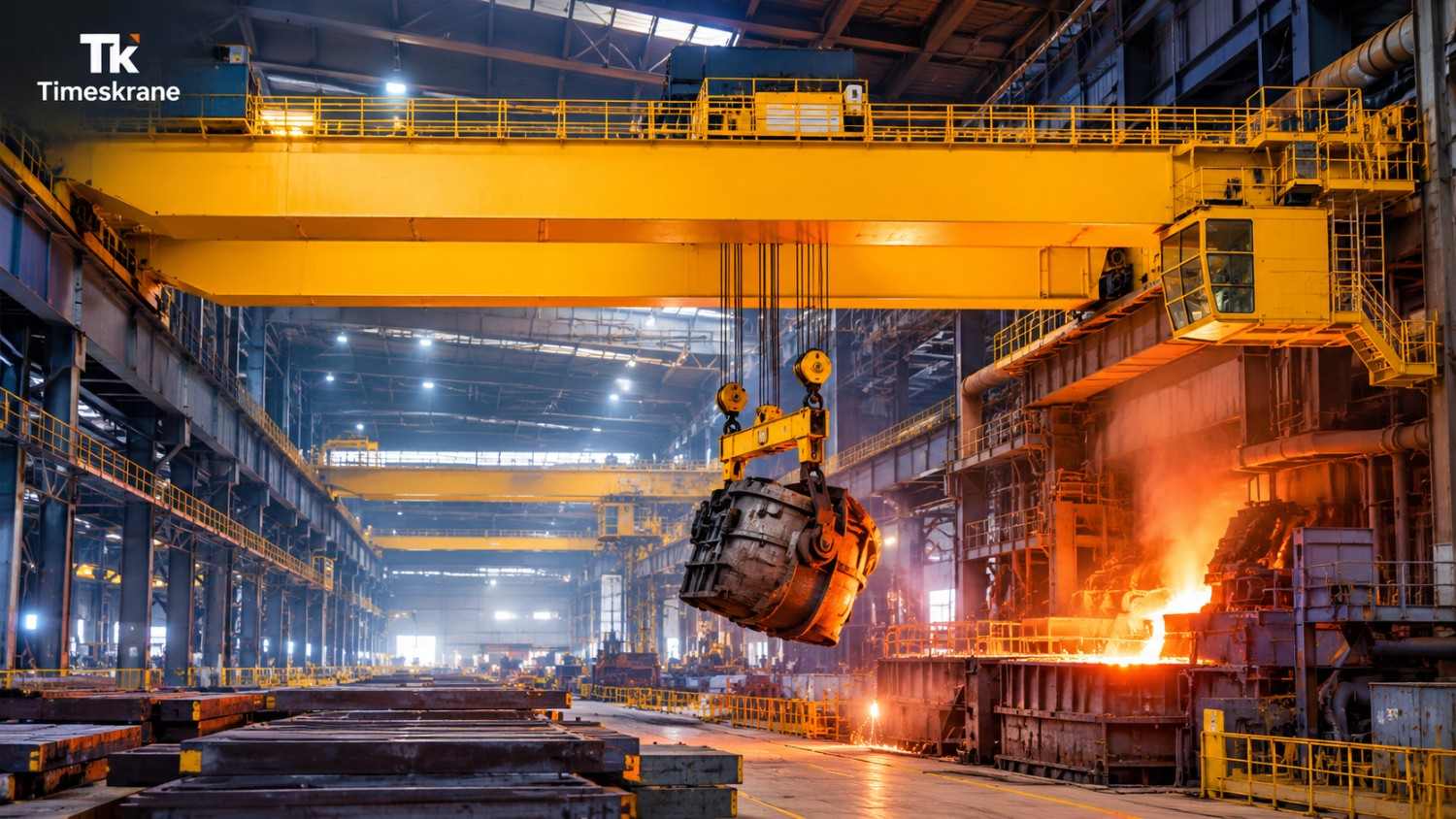
An honest breakdown of what makes a crane genuinely heavy duty for steel plant use, covering duty classification, capacity, and safety features buyers often miss.
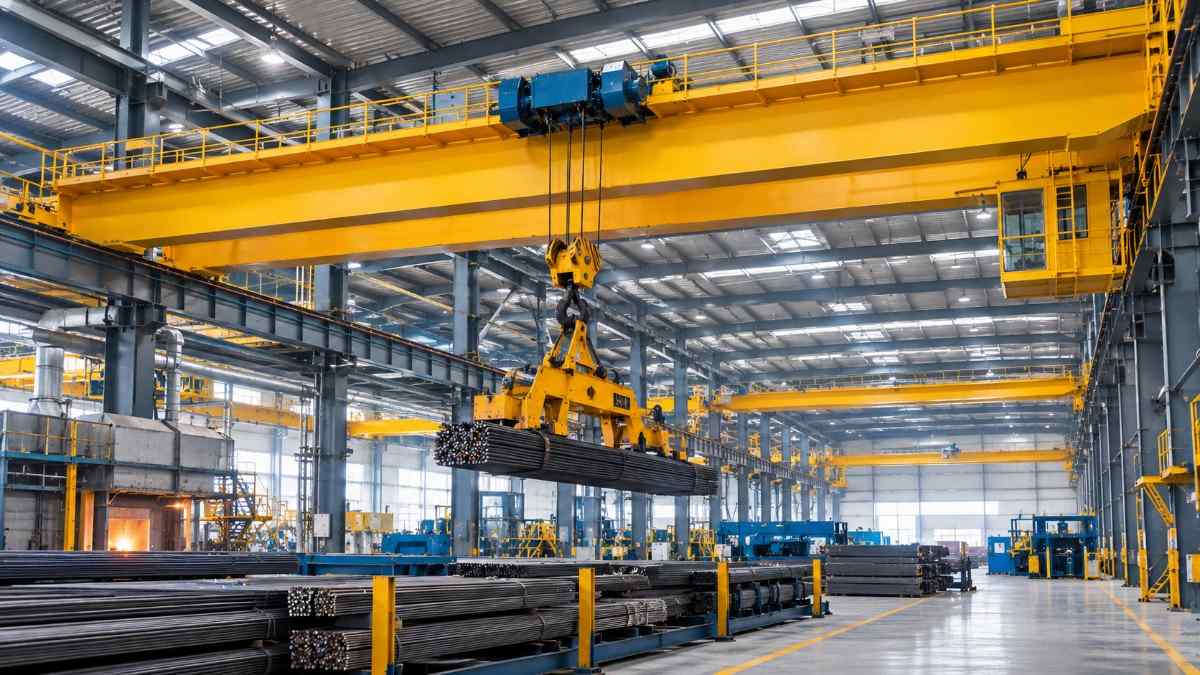
Finding the right steel plant crane manufacturer is perhaps the most important decision a procurement manager or plant owner will make. A poorly designed crane can increase both safety risks and downtime while excessively increasing maintenance costs.
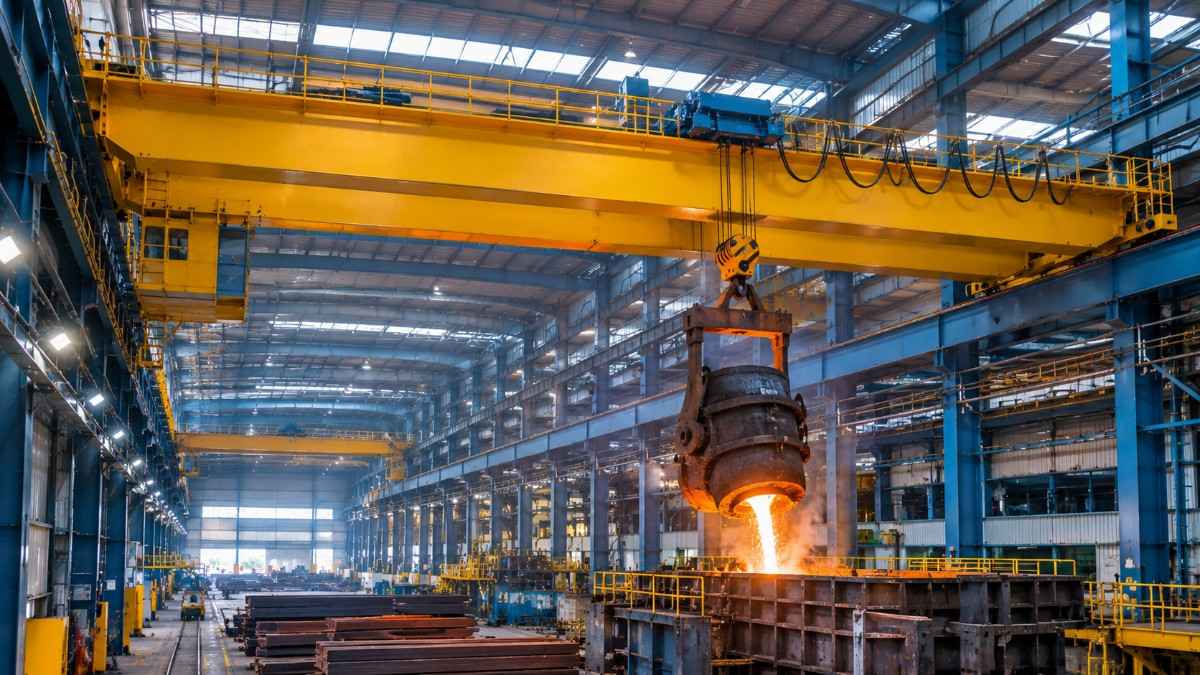
If you run or manage a steel plant, you already know that an overhead crane for steel plant operations is not a luxury. It is the backbone of your material handling process. From moving billets and coils to shifting ladles of molten metal, the right crane decides how smoothly your production line runs.
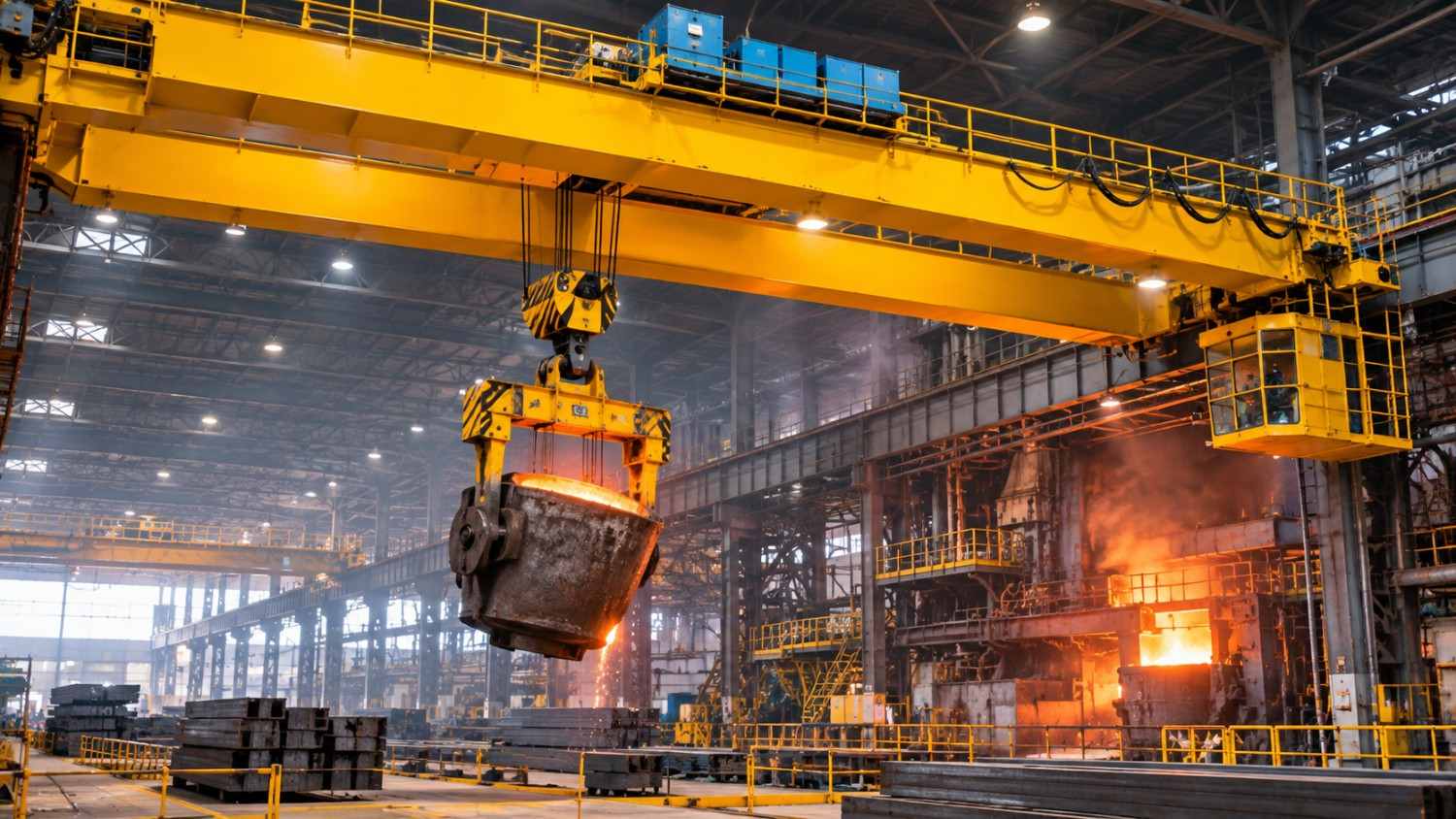
Discover how EOT cranes support steel plant operations, from material handling to molten metal lifting. Learn about crane types, duty classes, safety features, and how to choose the right EOT crane for your steel plant.
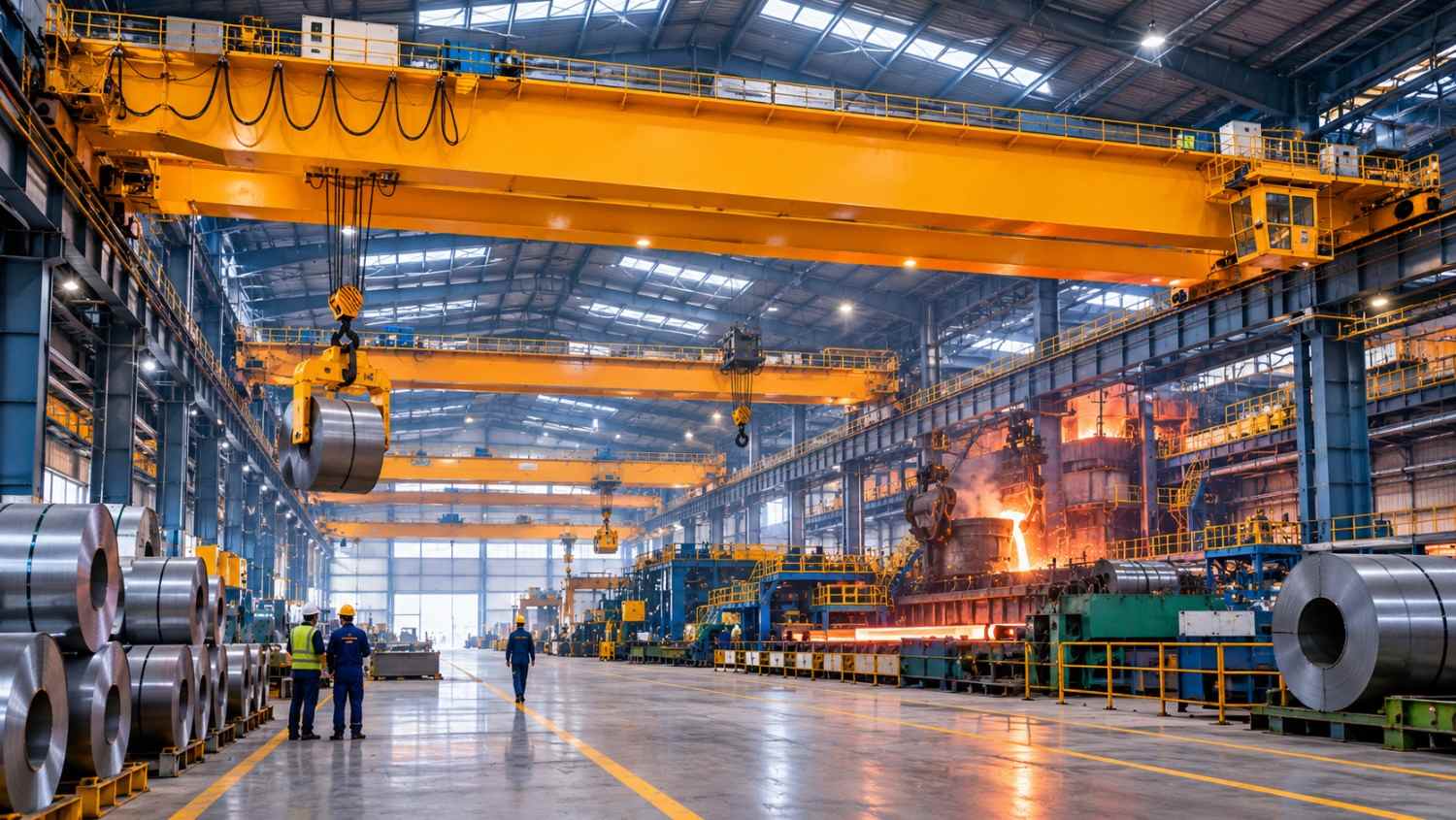
An honest, researched look at the top 5 crane manufacturers for steel plants in India, covering ladle, grab bucket, and coil handling cranes.
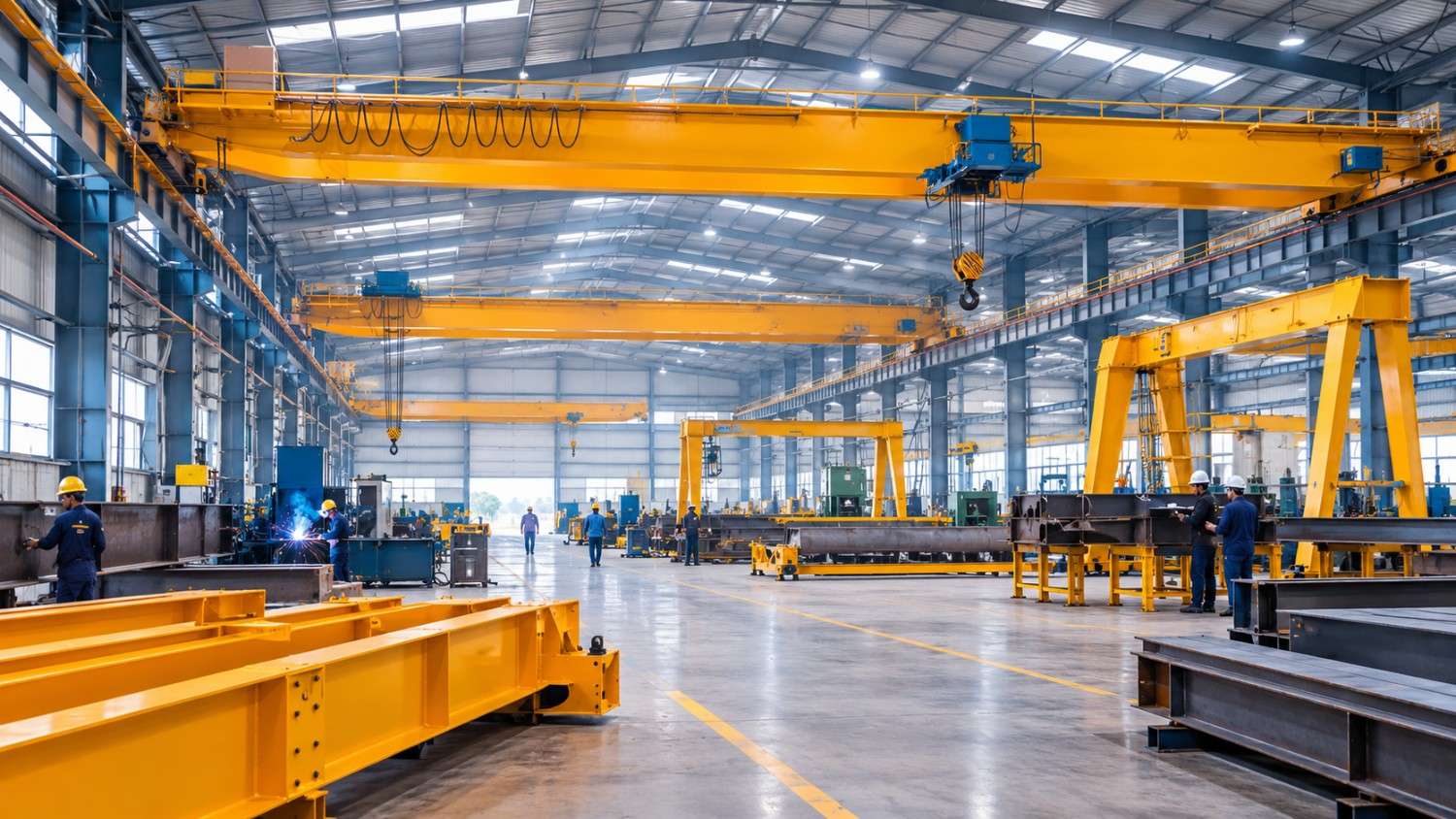
A real, researched look at the top 10 crane manufacturers in North India, covering Delhi NCR, Punjab, Haryana, UP, and Rajasthan, with what actually sets each one apart.
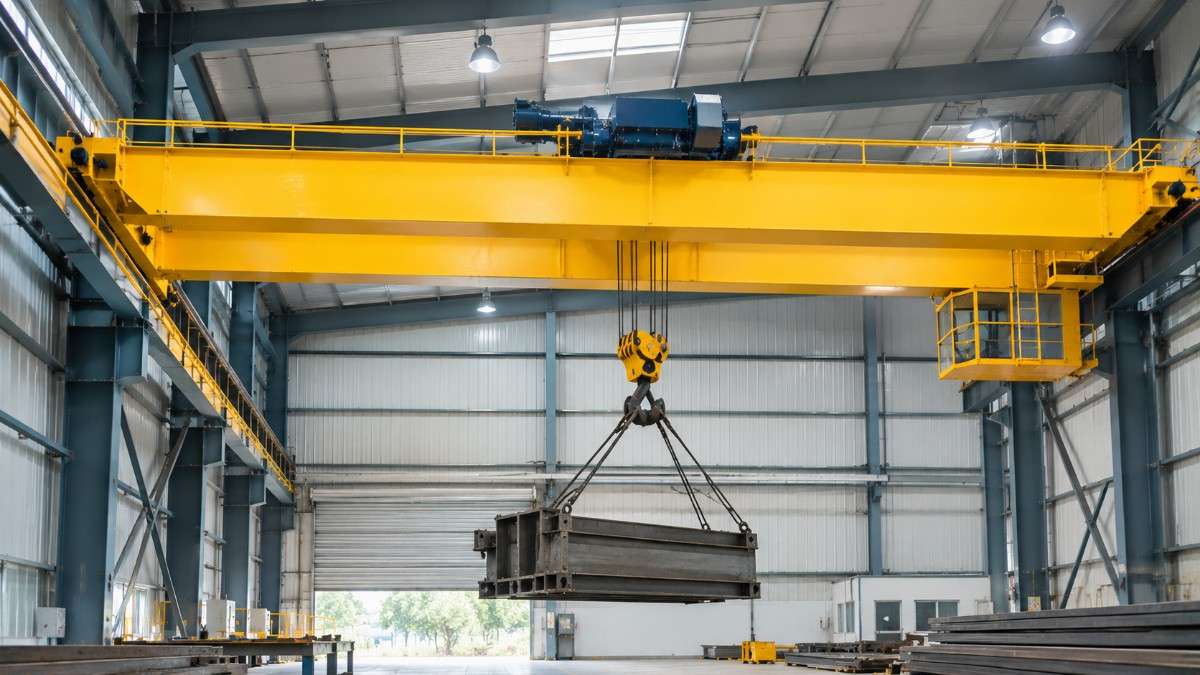
If you are looking for a 10 ton overhead crane for your factory or warehouse, the primary question that arises in your mind is whether this capacity will cater to your daily operations or it will turn out to be a useless and bulky addition to your storage.
Looking for a reliable partner for your next industrial project?