English
Contact
Configure
Catalog
That’s exactly where a double girder EOT crane proves its value. Built for strength, stability, and high-capacity lifting, this crane system has become the backbone of countless industrial facilities across India.
At Times Krane, we’ve worked closely with industries where downtime simply isn’t an option. A reliable overhead crane can keep production moving smoothly, while an unreliable one quickly turns into a bottleneck.
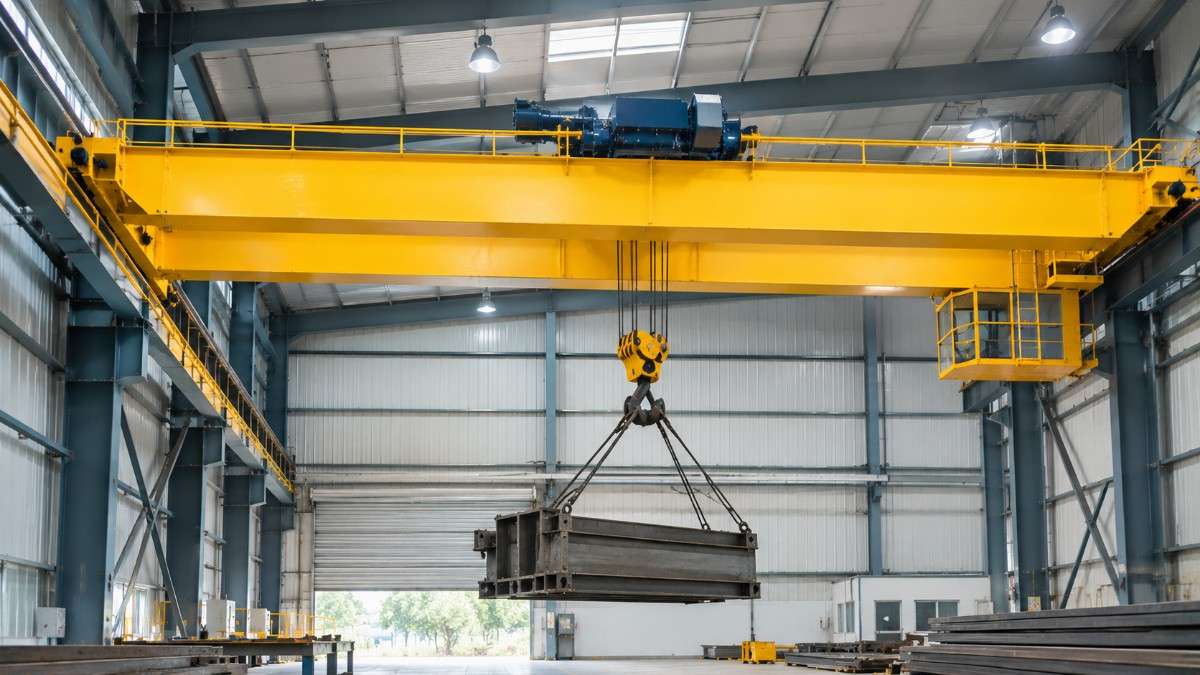
A double girder EOT crane is an Electric Overhead Traveling crane designed with two bridge girders instead of one. These girders support the trolley and hoist mechanism, allowing the crane to handle heavier loads with improved stability.
Think of it like the difference between carrying a heavy object with one hand versus using both hands evenly. The second option gives you better balance, control, and strength.
These cranes are commonly installed in:
Because of their robust design, double girder cranes are ideal for applications where lifting demands are frequent and intensive.
I’ve noticed that industries handling bulky or oversized materials often outgrow smaller crane systems quickly. They initially try to manage operations with lighter equipment, but as production increases, limitations become obvious.
That’s where double girder systems step in.
One of the biggest advantages of a double girder EOT crane is its ability to handle heavier loads safely and efficiently.
The dual girder structure distributes weight more effectively, reducing stress on individual components.
Because the hoist is placed between the girders rather than beneath them, operators gain additional lifting height. This becomes extremely useful in facilities with vertical storage or tall machinery.
Heavy loads require precision. Double girder cranes provide better balance and reduced vibration during lifting and movement.
These cranes are designed for industries that require constant operation throughout the day.
In my experience, properly maintained double girder cranes tend to perform reliably for years, even in demanding industrial environments.
Understanding the structure helps you appreciate why these systems are so effective.
The crane uses two parallel girders for enhanced strength and support.
The hoist performs lifting functions, while the trolley moves horizontally across the girders.
These allow the crane to travel along runway beams installed within the facility.
The electrical panel controls speed, safety functions, and movement operations.
Modern cranes include multiple protective mechanisms to improve workplace safety.
Different industries have different lifting challenges. A steel fabrication unit has completely different operational demands compared to an automotive workshop.
Large steel plates, billets, and coils require strong overhead handling systems.
Massive machine parts and fabricated structures often need precision lifting support.
Maintenance teams use cranes for equipment installation and servicing.
Turbines, generators, and heavy components demand reliable crane systems.
Railway maintenance operations frequently depend on heavy-duty overhead cranes.
At Times Krane, we’ve seen how tailored crane configurations can improve workflow efficiency significantly across these sectors.
Not all cranes are engineered the same way. Some look impressive on paper but struggle during daily industrial use.
When I tried evaluating cranes for a fabrication facility years ago, I learned quickly that build quality matters more than flashy specifications.
Here are a few features worth paying attention to.
These improve movement control and reduce sudden jerks.
An essential safety feature that prevents lifting beyond rated capacity.
Useful in facilities operating multiple cranes simultaneously.
Wireless controls improve operator flexibility and visibility.
Durable hoists directly impact lifting performance and safety.
Time lost during material movement affects overall production targets. That’s something plant managers understand very well.
A well-designed crane system helps streamline operations by:
According to a study by the Material Handling Industry Association, facilities using advanced overhead lifting systems reported measurable improvements in operational efficiency and workplace safety.
This question comes up frequently during industrial planning discussions.
In my experience, the choice usually depends on future operational growth. Businesses planning long-term expansion often prefer investing in more capable systems from the start.
A crane system is only as good as its installation quality.
The building framework must support crane loads safely.
Incorrect alignment can create operational issues and premature wear.
Power supply systems should match crane requirements precisely.
Load testing and operational checks are essential before commissioning.
I’ve noticed that industries with scheduled maintenance programs experience significantly fewer crane breakdowns.
Inspect:
Proper lubrication reduces wear and improves efficiency.
Ignoring small issues often leads to larger operational problems later.
Experienced operators help extend crane lifespan and improve safety.
Heavy-duty cranes demand disciplined safety procedures.
Overloading creates serious risks for both equipment and workers.
This basic rule prevents many workplace accidents.
Operators should know emergency procedures thoroughly.
Preventive servicing helps identify issues before they affect operations.
Industrial crane systems continue evolving rapidly.
Today’s advanced cranes may include:
When I visited a modern engineering plant recently, I noticed operators relying heavily on remote-controlled crane systems because they improved visibility and handling precision significantly.
The future of industrial lifting is becoming smarter, safer, and more connected.
Choosing a crane manufacturer isn’t just about equipment. It’s about long-term reliability, engineering expertise, and dependable support.
At Times Krane, the focus stays on practical industrial solutions that meet real operational challenges.
Businesses value:
For industries handling demanding lifting operations, a dependable double girder EOT crane becomes an essential part of daily productivity.
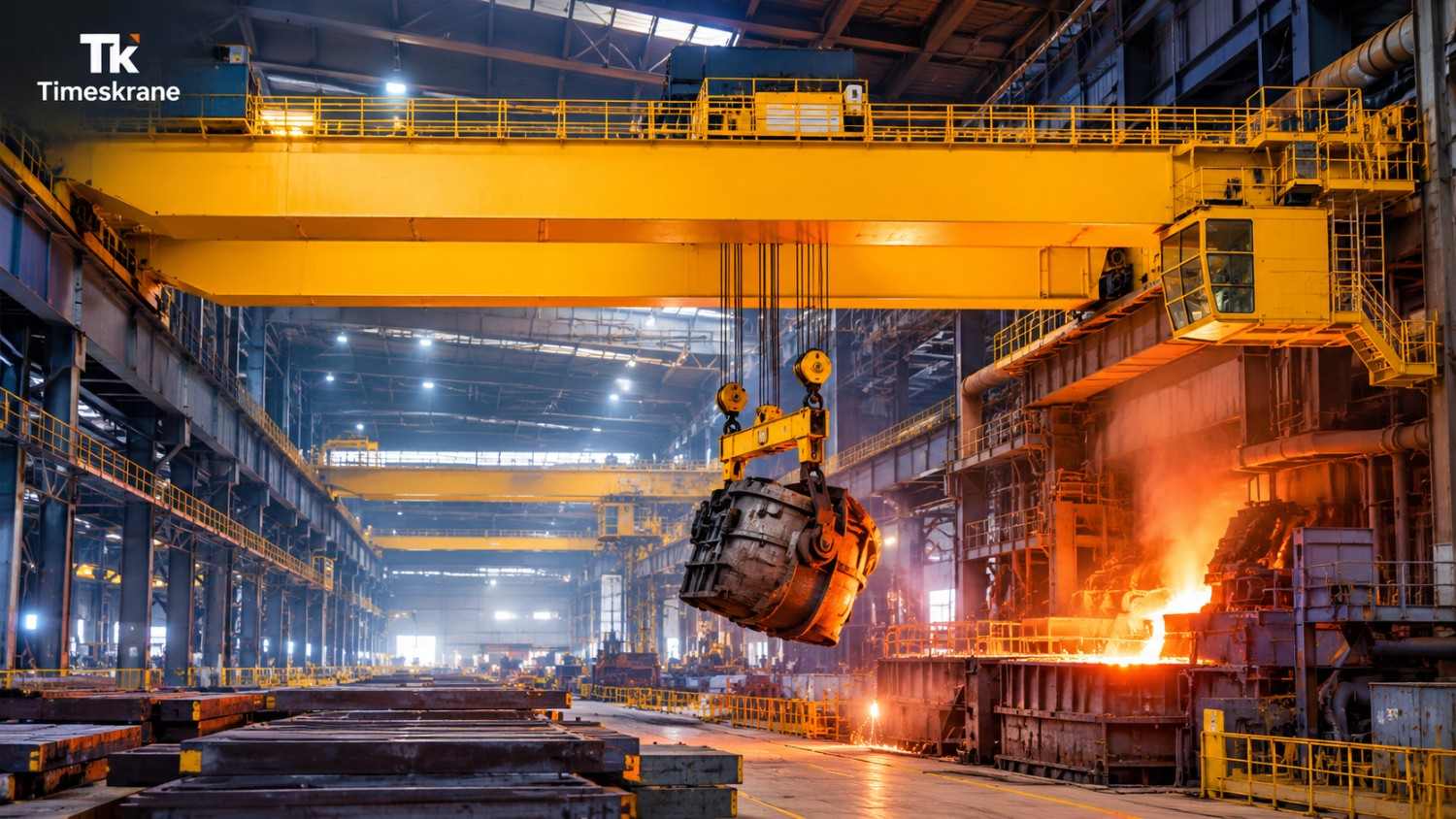
An honest breakdown of what makes a crane genuinely heavy duty for steel plant use, covering duty classification, capacity, and safety features buyers often miss.
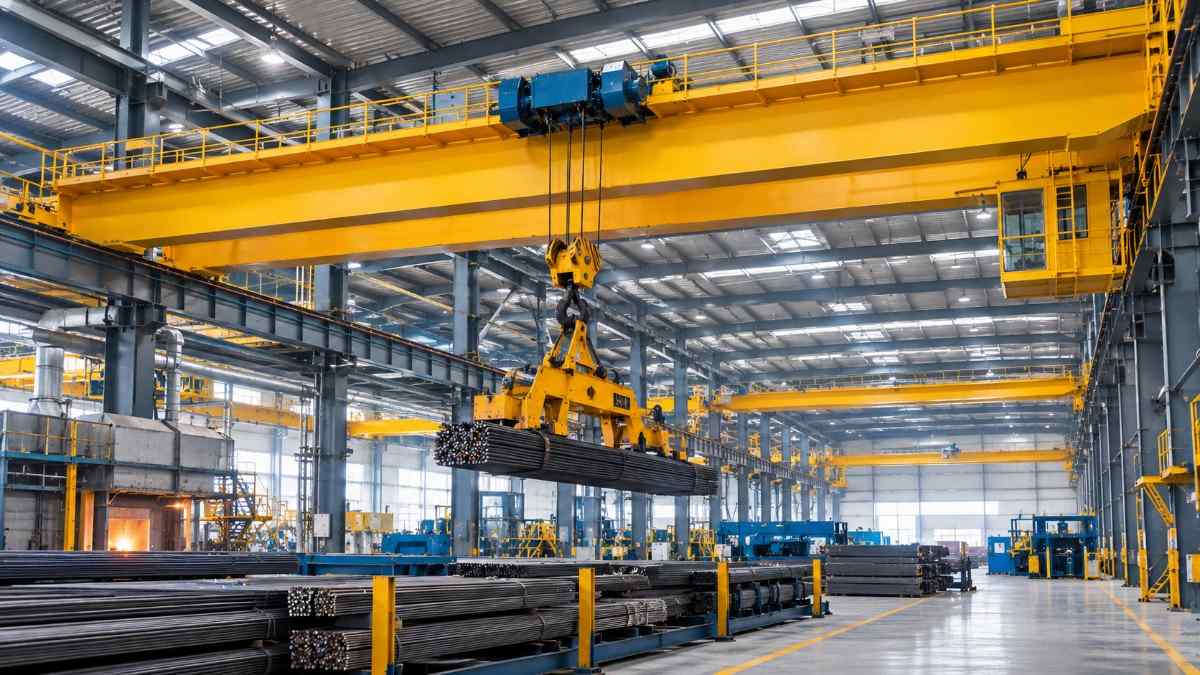
Finding the right steel plant crane manufacturer is perhaps the most important decision a procurement manager or plant owner will make. A poorly designed crane can increase both safety risks and downtime while excessively increasing maintenance costs.
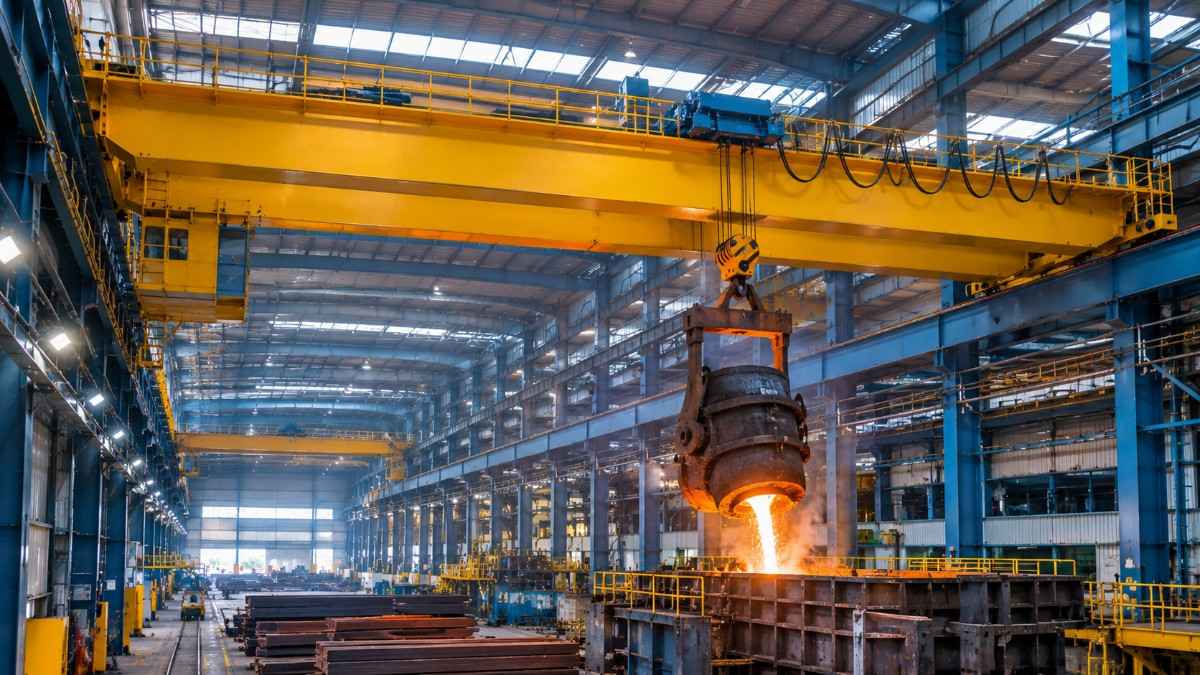
If you run or manage a steel plant, you already know that an overhead crane for steel plant operations is not a luxury. It is the backbone of your material handling process. From moving billets and coils to shifting ladles of molten metal, the right crane decides how smoothly your production line runs.
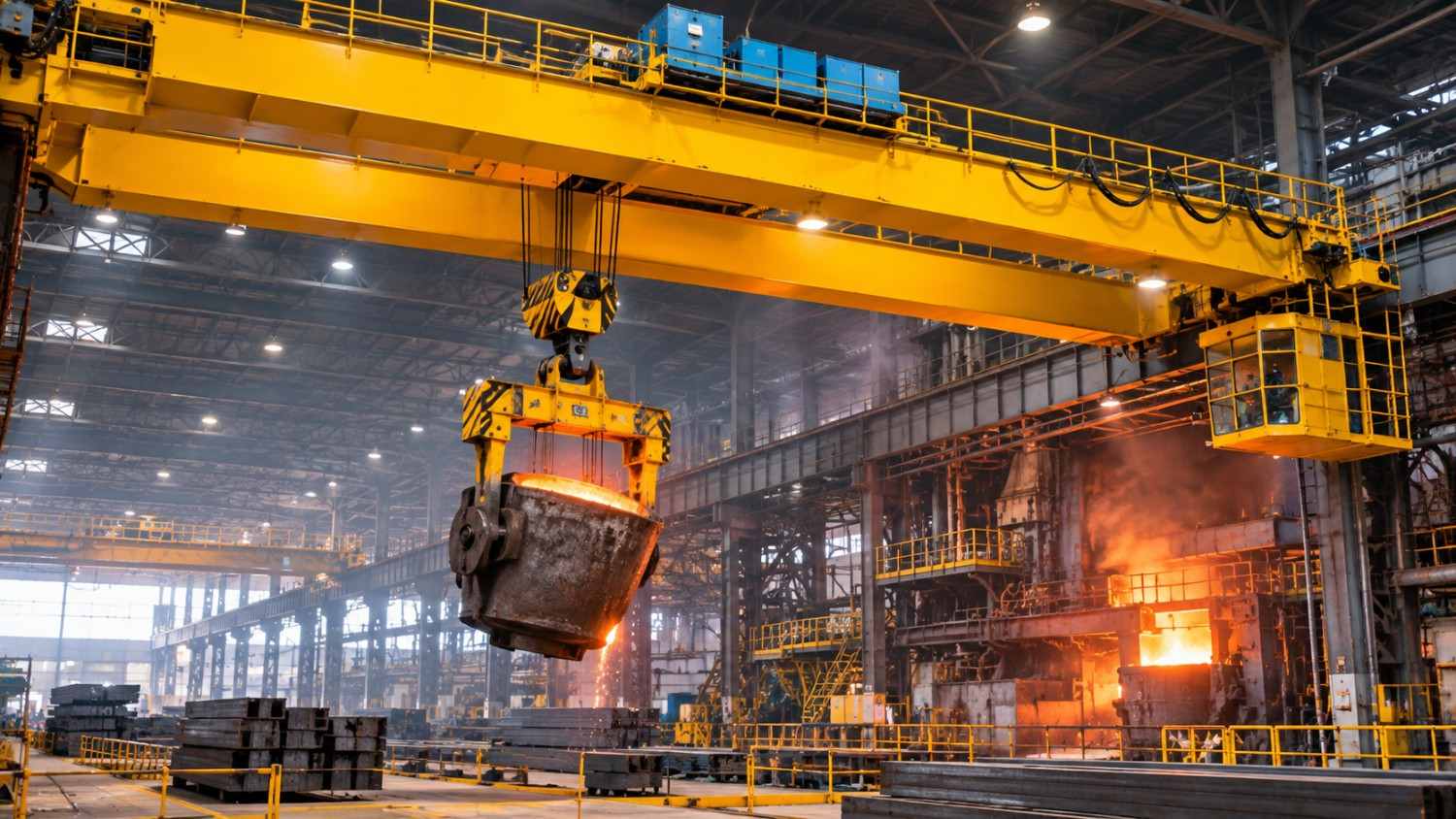
Discover how EOT cranes support steel plant operations, from material handling to molten metal lifting. Learn about crane types, duty classes, safety features, and how to choose the right EOT crane for your steel plant.
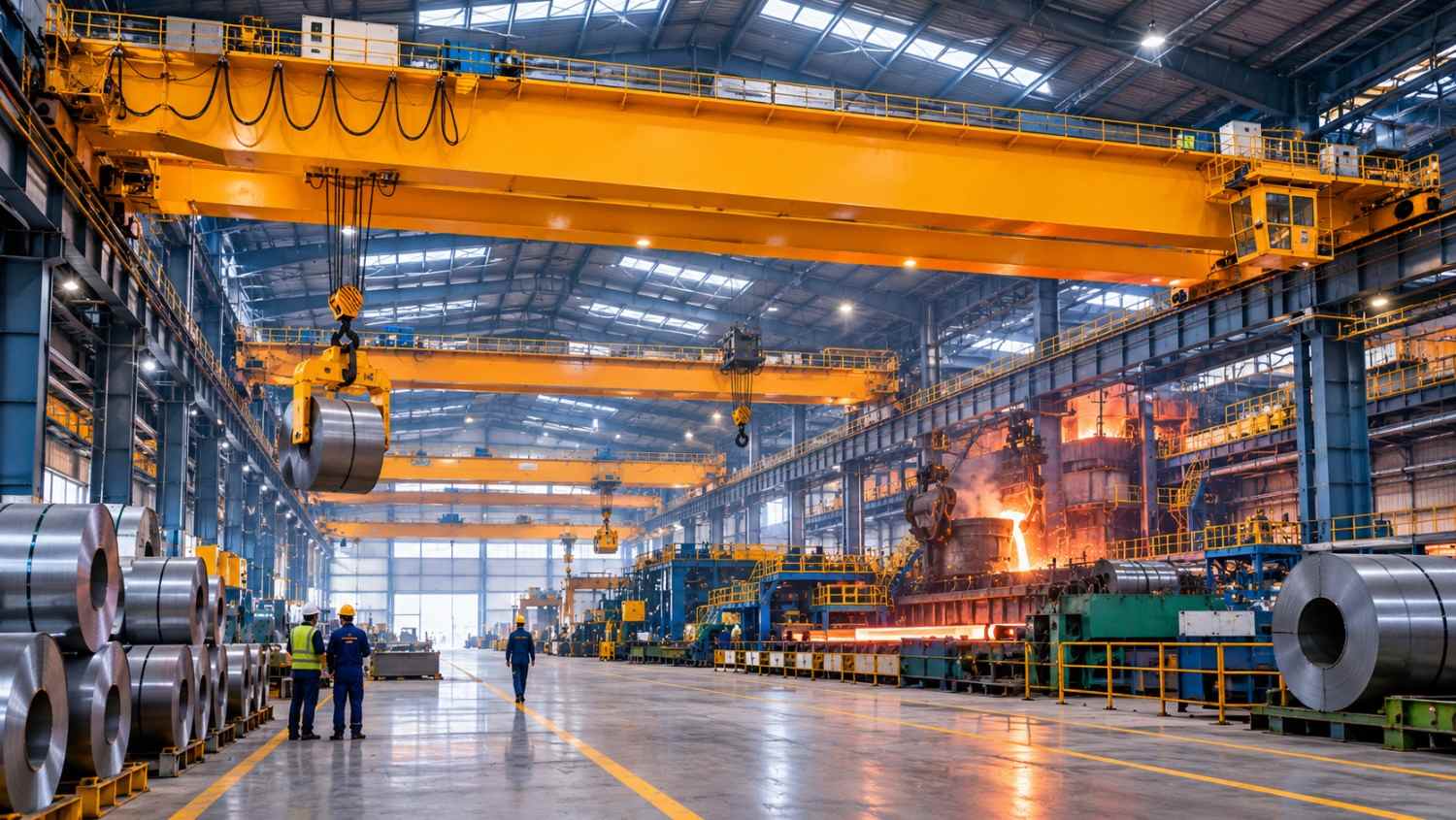
An honest, researched look at the top 5 crane manufacturers for steel plants in India, covering ladle, grab bucket, and coil handling cranes.
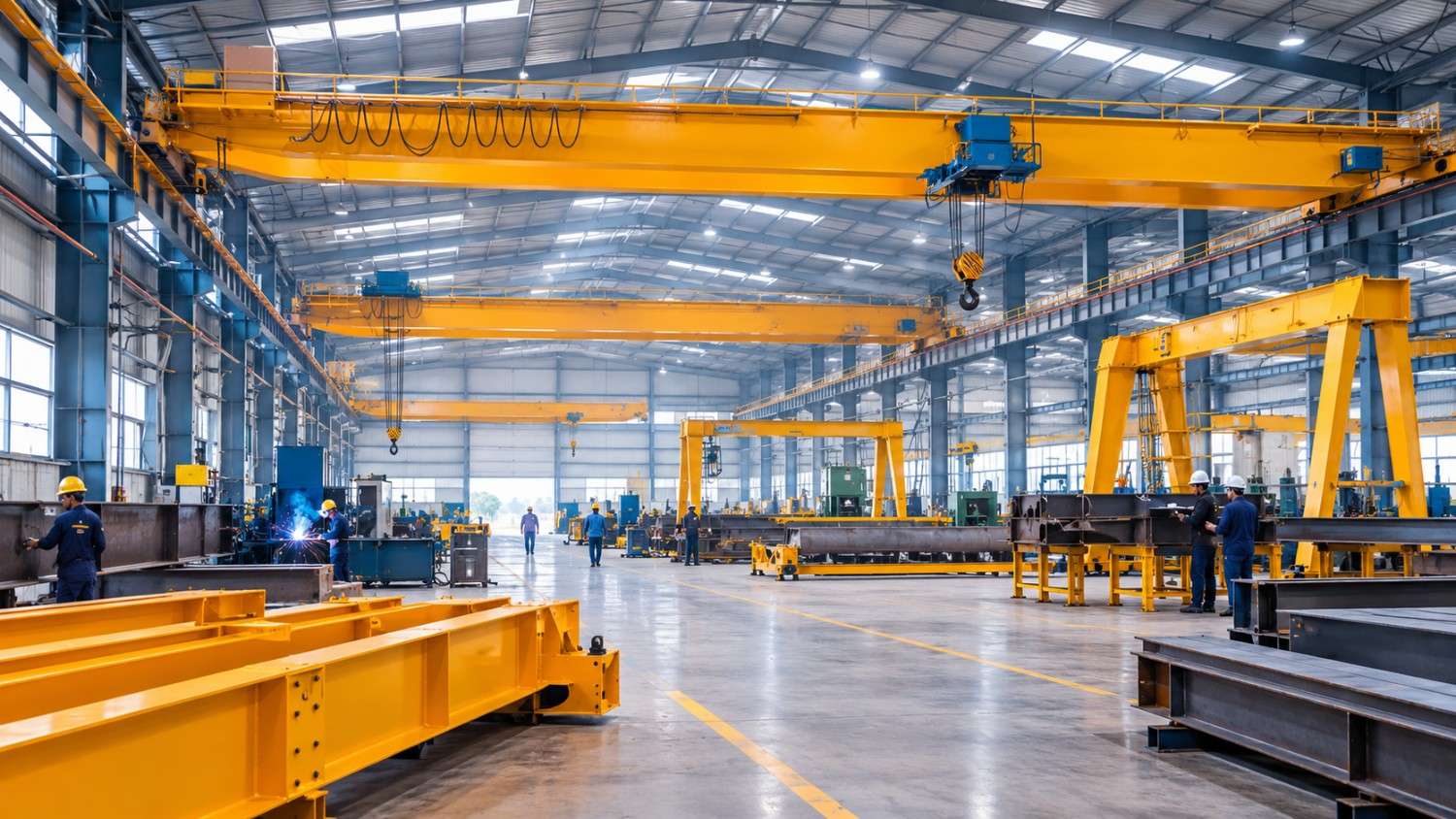
A real, researched look at the top 10 crane manufacturers in North India, covering Delhi NCR, Punjab, Haryana, UP, and Rajasthan, with what actually sets each one apart.
If you are looking for a 10 ton overhead crane for your factory or warehouse, the primary question that arises in your mind is whether this capacity will cater to your daily operations or it will turn out to be a useless and bulky addition to your storage.
Looking for a reliable partner for your next industrial project?