English
Contact
Configure
Catalog
This article aims to highlight every single detail and consideration required prior to the installation of such equipment, as well as the buying criteria list that can assist anyone in the decision-making process.
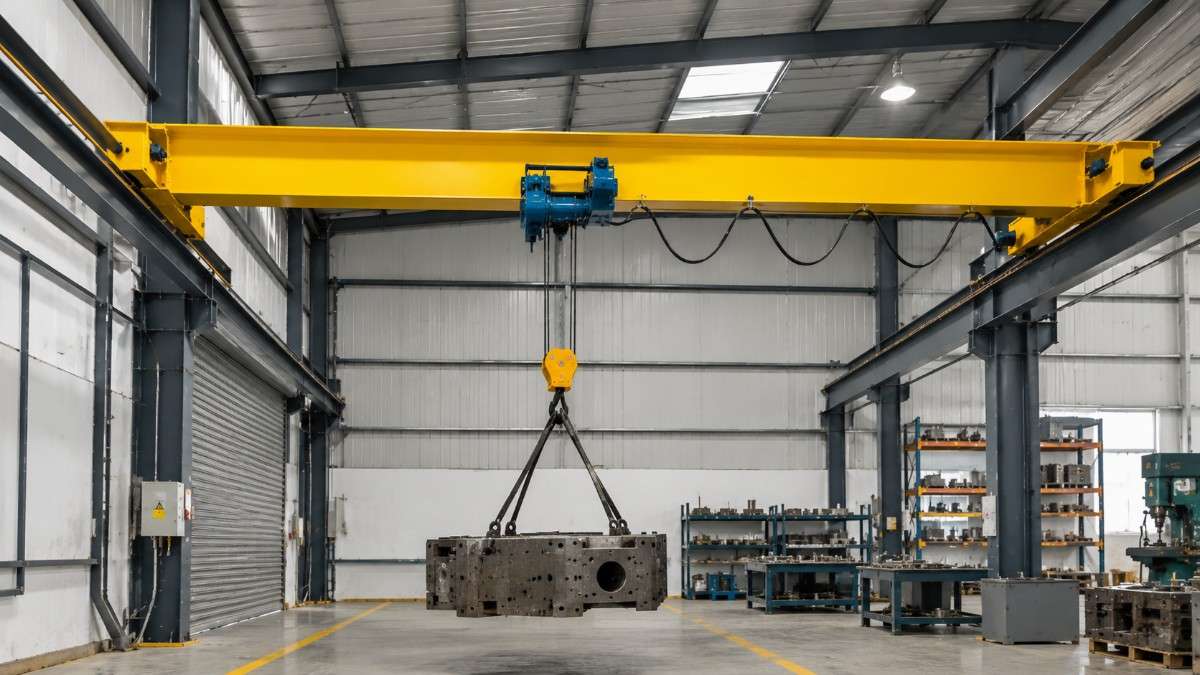
A 2 ton overhead crane is a material handling machine used to lift and move materials from one point to another using a bridge that runs along a fixed horizontal path. The bridge carries a hoist that lifts the load vertically. The crane lifts up to 2000 kilograms of weight and runs on rails attached to the walls or ceiling of a building. This equipment is also called the EOT crane (Electric Overhead Traveling crane) when it uses an electric motor to hoist materials, perform cross-travel, and long-travel functions.
Unlike floor equipment, an overhead crane keeps the floor clear. It is the main reason many procurement managers prefer an overhead crane to a forklift or mobile crane for repetitive lifting operations inside a building.
When maintaining, I have observed that almost all operational problems are caused by two of these overhead crane parts: the worn hoist brake lining and the misaligned end trucks. These can be detected during a walk-around inspection.
This is the first real decision point for a 2 ton capacity, so let's settle it with a direct comparison.
| Feature | Single Girder Overhead Crane | Double Girder Overhead Crane |
|---|---|---|
| Structure | One main bridge girder | Two parallel bridge girders |
| Typical capacity range | Up to 10-15 tons | 5 tons and above, including heavy duty |
| Headroom required | Lower, saves building height | Higher, needs more clearance |
| Cost efficiency | More economical for lighter loads | Higher structural cost |
| Hook approach | Slightly reduced side clearance | Better hook approach to walls |
| Common use case | Workshops, small factories | Heavy industrial plants |
For a 2 ton overhead crane specifically, a single girder overhead crane is practically always the right choice. Double girder models are designed to serve heavier duty and more intense duty cycles, and applying them to a 2 ton workload is typically an unwise expenditure of steel.
One consideration that many buyers fail to take into account is the fact that single girder EOT crane pricing structures tend to fall into a better value range for lighter capacity applications like 2 tons, due to the reduced amount of structural steel and smaller runway system.
If your facility involves standard single shift operations, a single girder overhead crane is able to fulfill all of your lifting needs without sacrificing safety or lifting capabilities.
Prior to purchasing our 2 ton crane, you should know where it fits in the hierarchy of overhead crane types:
Thus, your 2 ton capacity will most probably be secured by a top running single girder EOT crane, but if your building has low-profiled walls, an under-running configuration may be a suitable option.
One of the most common misconceptions I come across is that buyers believe that a 2 ton is a capacity which can only carry 2000 kg. However, 2 ton means that the maximum safe working load is 2 tons. Each crane is designed with a safety factor over this capacity and is tested to 125% of the maximum safe working load at the factory.
This is why they are NOT designed to work at absolute maximum capacity every time they are used. Working beyond the safe working load, even if it is only occasionally, will dramatically shorten the life of the hoist motor and wire rope.
The 2 ton rating is found in a surprisingly wide range of industries, all related to the fact that it covers the weight of many items typically handled in light or medium manufacturing:
By being able to cope with these varied applications, the 2 ton crane has shown that it has earned its place in so many industries by being capable of handling not just the average load, but also the occasional heavier one.
There are several benefits of installing a 2 ton overhead crane including:
Refer below before finalizing your overhead crane manufacturer and specification sheet
I have seen many clients skip step 8 above and then during factory inspection a year later have compliance issues due to lack of adequate documentation.
When I've done duty cycle comparisons for different plant types for clients in the past, I've noticed that facilities that run two shifts require a higher duty class than is spec'ed, even on the same 2 ton capacity.
You don't want to get talked into the base duty class by the vendor because they want the lower cost option. Industrial engineering references (and those that follow ISO crane design standards) suggest you base the purchase on the frequency of lifts rather than the most basic specification.
This will impact the life of the gears in the gearbox, more than almost any other consideration mentioned in the specifications list.
Times Krane has been in the business of building overhead crane manufacturers across Indian industrial belts for years. The company provides single girder and double girder EOT cranes that are manufactured to match the exact duty cycles specified by the customer instead of following generic catalogues. Each unit that is shipped from the Faridabad facility has its structure and load tested before delivery.
With regard to 2 ton overhead crane, it is always a good idea to consult a professional manufacturer that can take care of your requirements at the design stage instead of having to rework the whole project at a later stage.
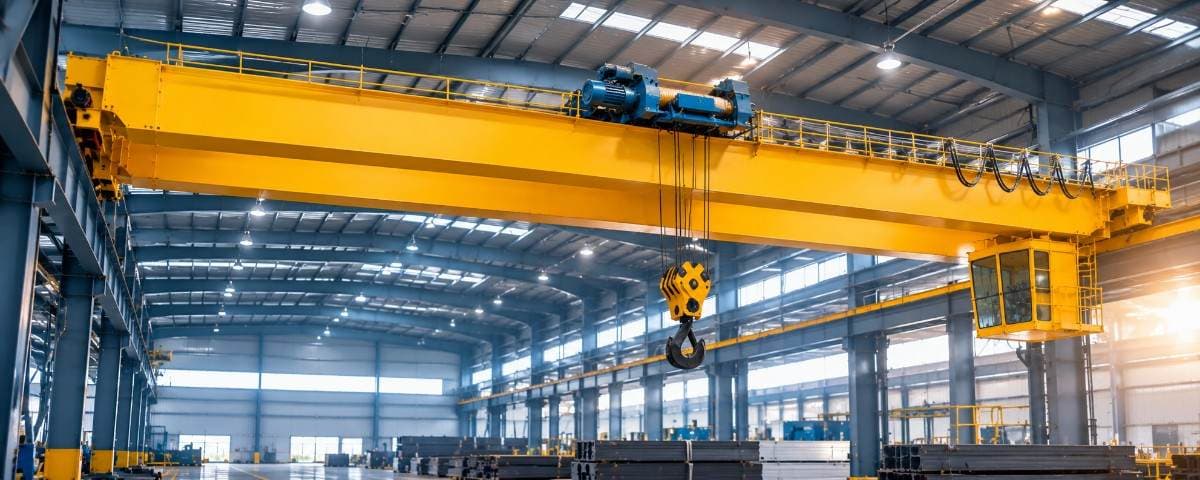
Custom EOT Crane in India: Engineered Around Your Plant, Not a Catalogue
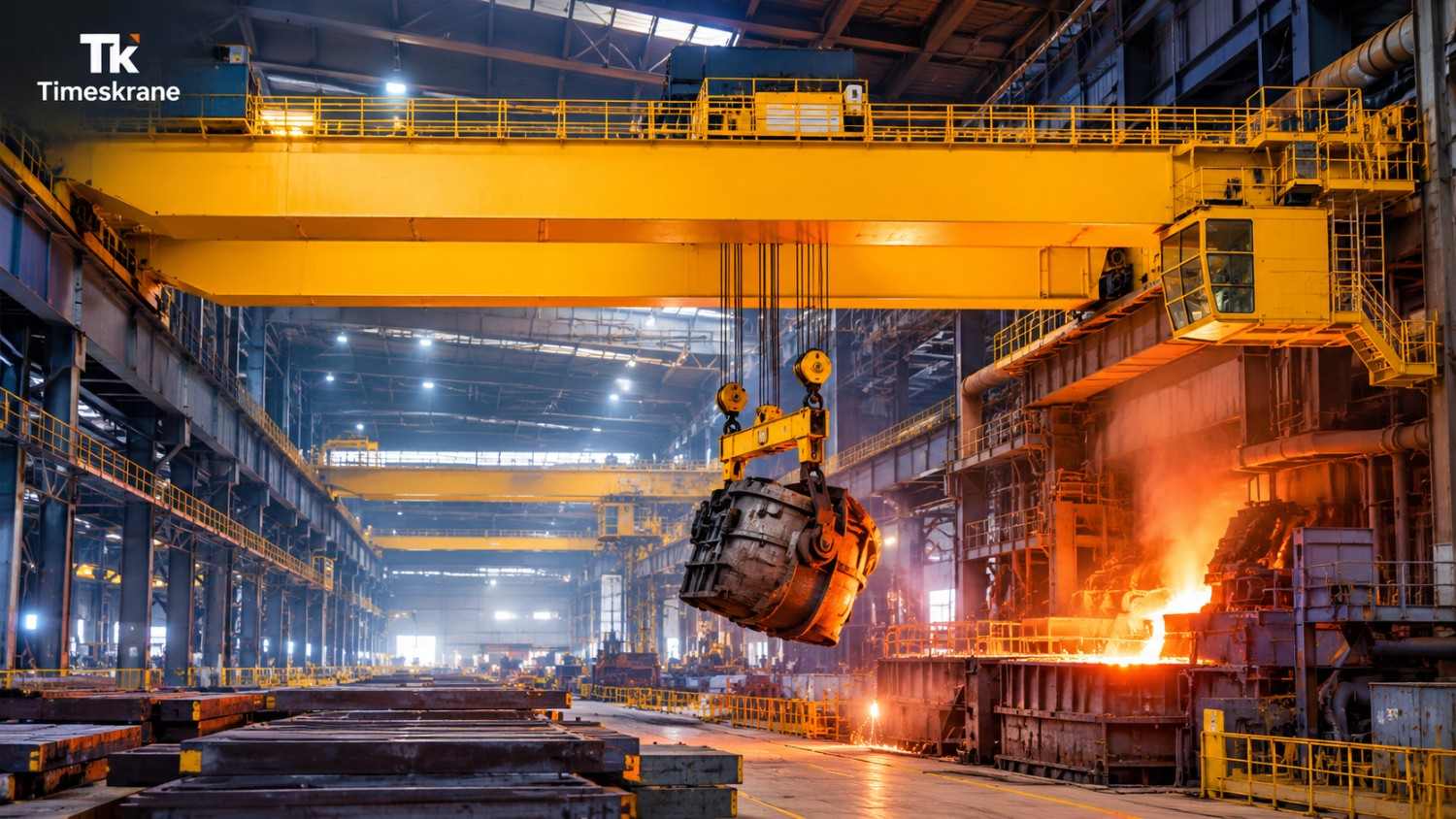
An honest breakdown of what makes a crane genuinely heavy duty for steel plant use, covering duty classification, capacity, and safety features buyers often miss.
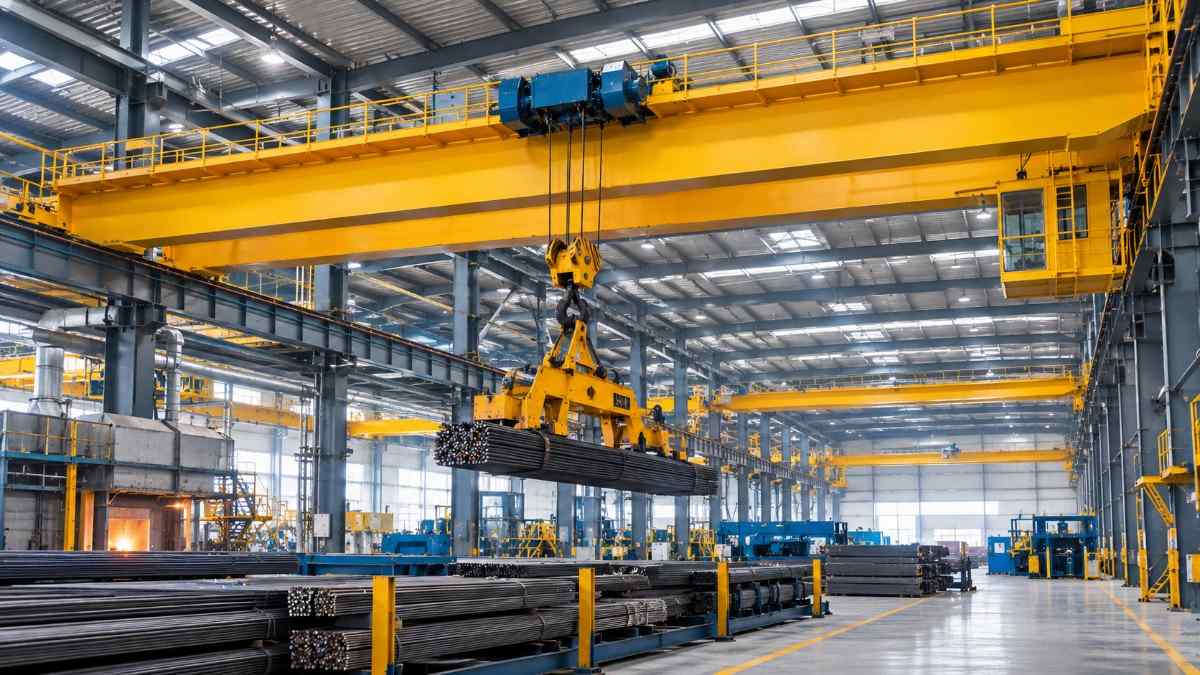
Finding the right steel plant crane manufacturer is perhaps the most important decision a procurement manager or plant owner will make. A poorly designed crane can increase both safety risks and downtime while excessively increasing maintenance costs.
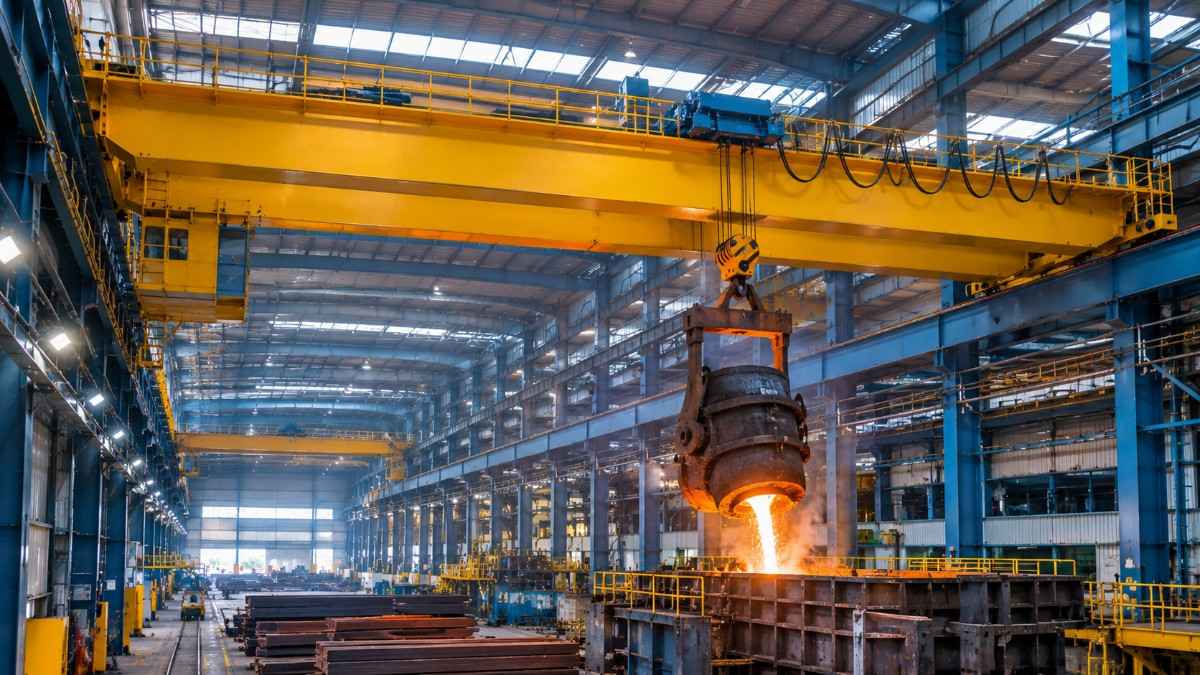
If you run or manage a steel plant, you already know that an overhead crane for steel plant operations is not a luxury. It is the backbone of your material handling process. From moving billets and coils to shifting ladles of molten metal, the right crane decides how smoothly your production line runs.
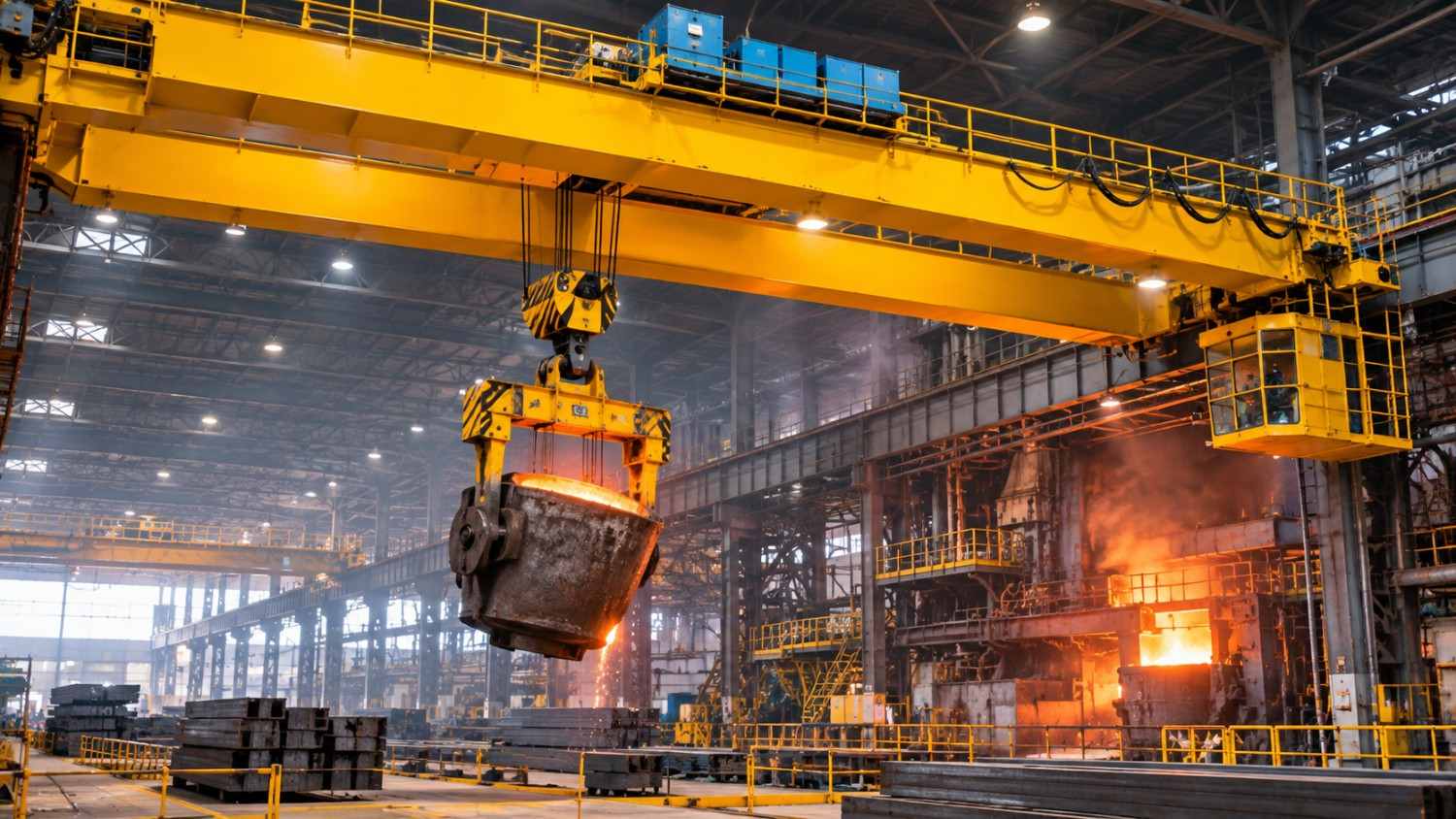
Discover how EOT cranes support steel plant operations, from material handling to molten metal lifting. Learn about crane types, duty classes, safety features, and how to choose the right EOT crane for your steel plant.
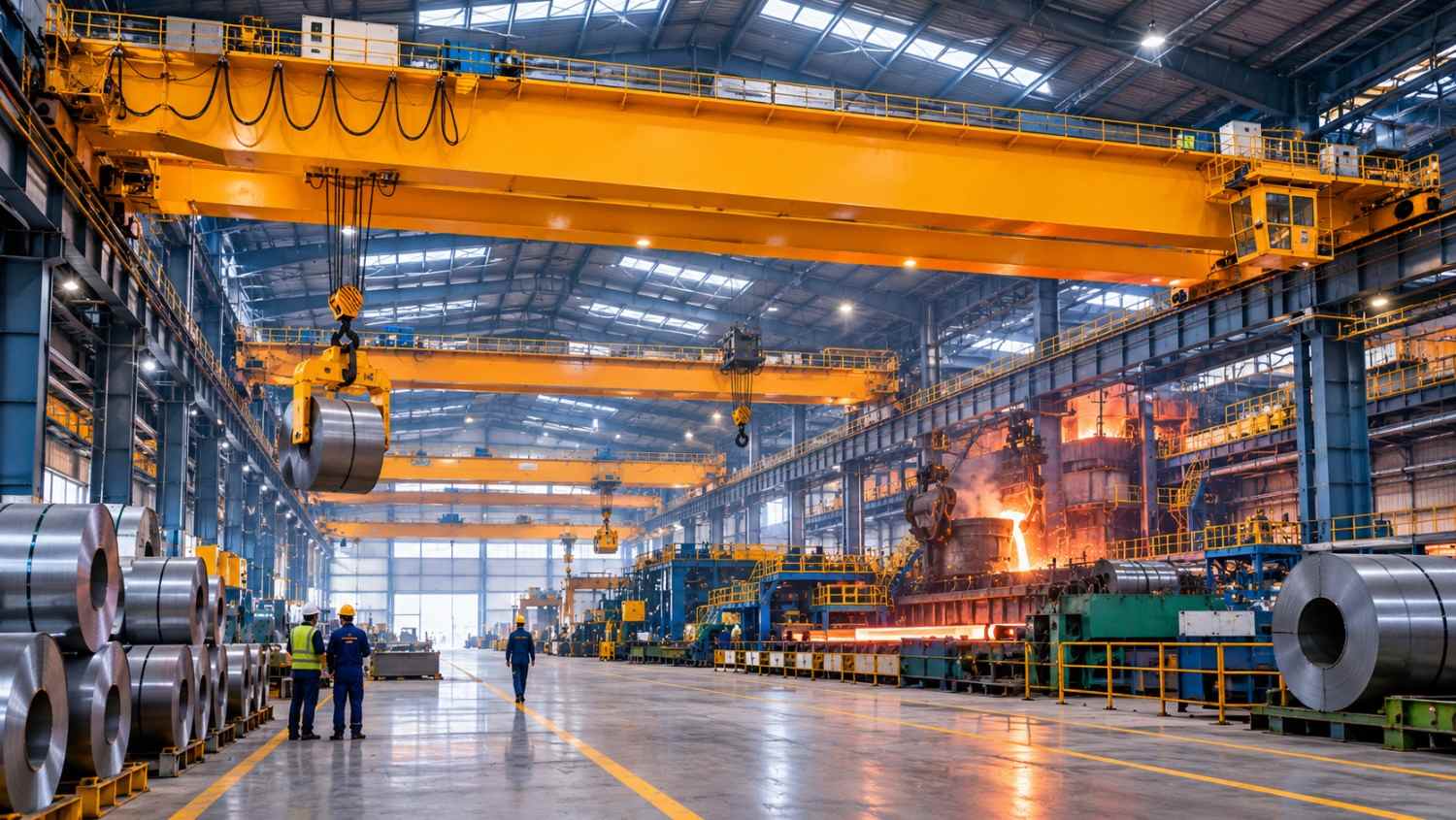
An honest, researched look at the top 5 crane manufacturers for steel plants in India, covering ladle, grab bucket, and coil handling cranes.
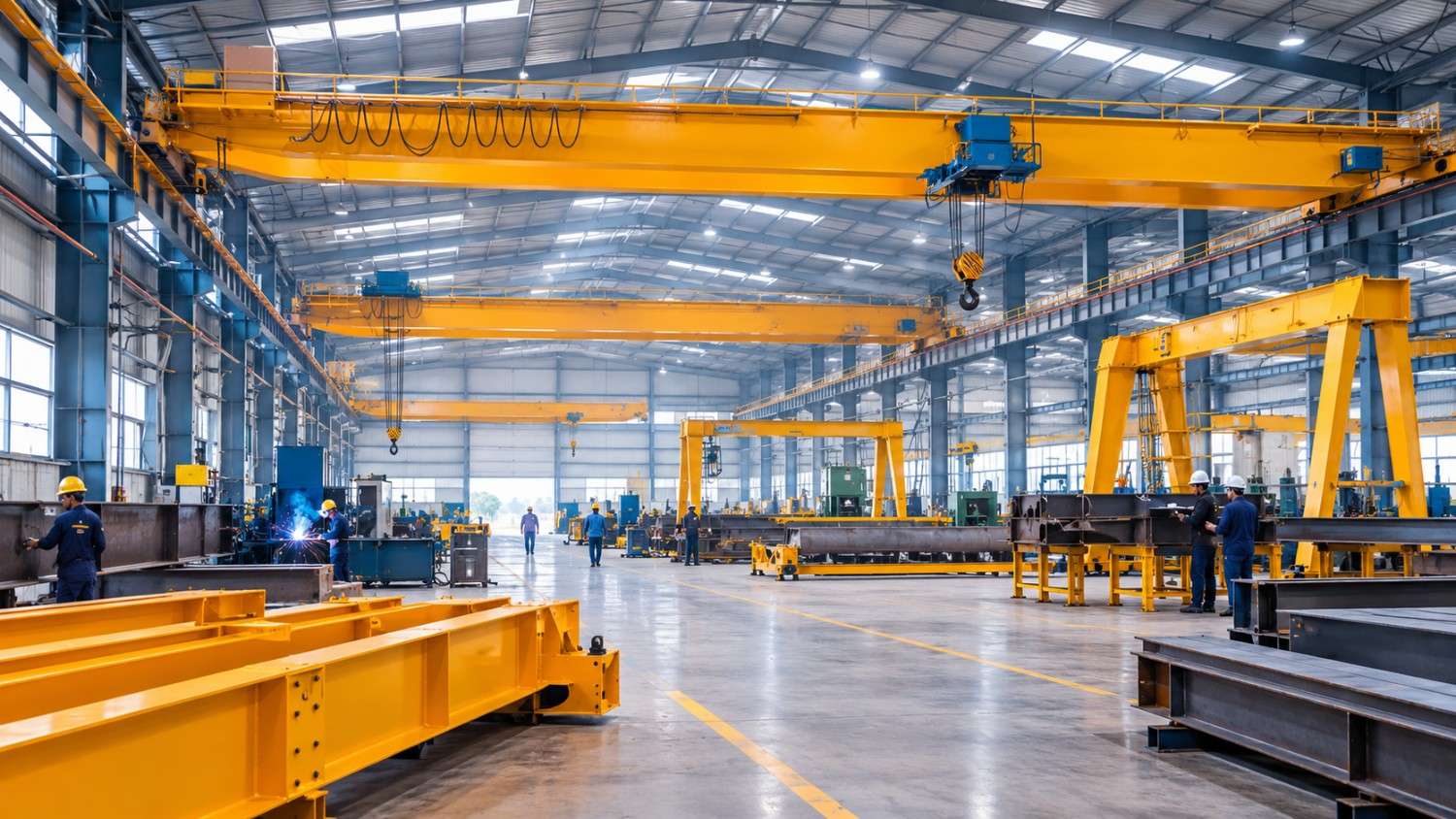
A real, researched look at the top 10 crane manufacturers in North India, covering Delhi NCR, Punjab, Haryana, UP, and Rajasthan, with what actually sets each one apart.
Looking for a reliable partner for your next industrial project?