
Rising Demand for KBK Double-Girder Suspension Cranes in India
Table of Content
Rising Demand for KBK Double-Girder Suspension Cranes in India
Picture this: a mid-sized auto components factory in Gujarat is running out of floor space. Forklifts are creating bottlenecks. Workers are struggling to move heavy parts from one station to another. The production manager needs a lifting solution that doesn't eat up valuable floor space or require massive civil construction.
The answer? KBK Double-Girder Suspension Cranes in India are quickly becoming the go-to solution for exactly this kind of challenge.
And it's not just Gujarat. From manufacturing hubs in Pune to assembly lines in Chennai, industries across India are waking up to the advantages of KBK suspension crane systems. In this guide, you'll learn what these cranes are, why they're in such high demand, how they work, and what to watch out for when choosing one.
What Is a KBK Double-Girder Suspension Crane?
Let's start from the basics.
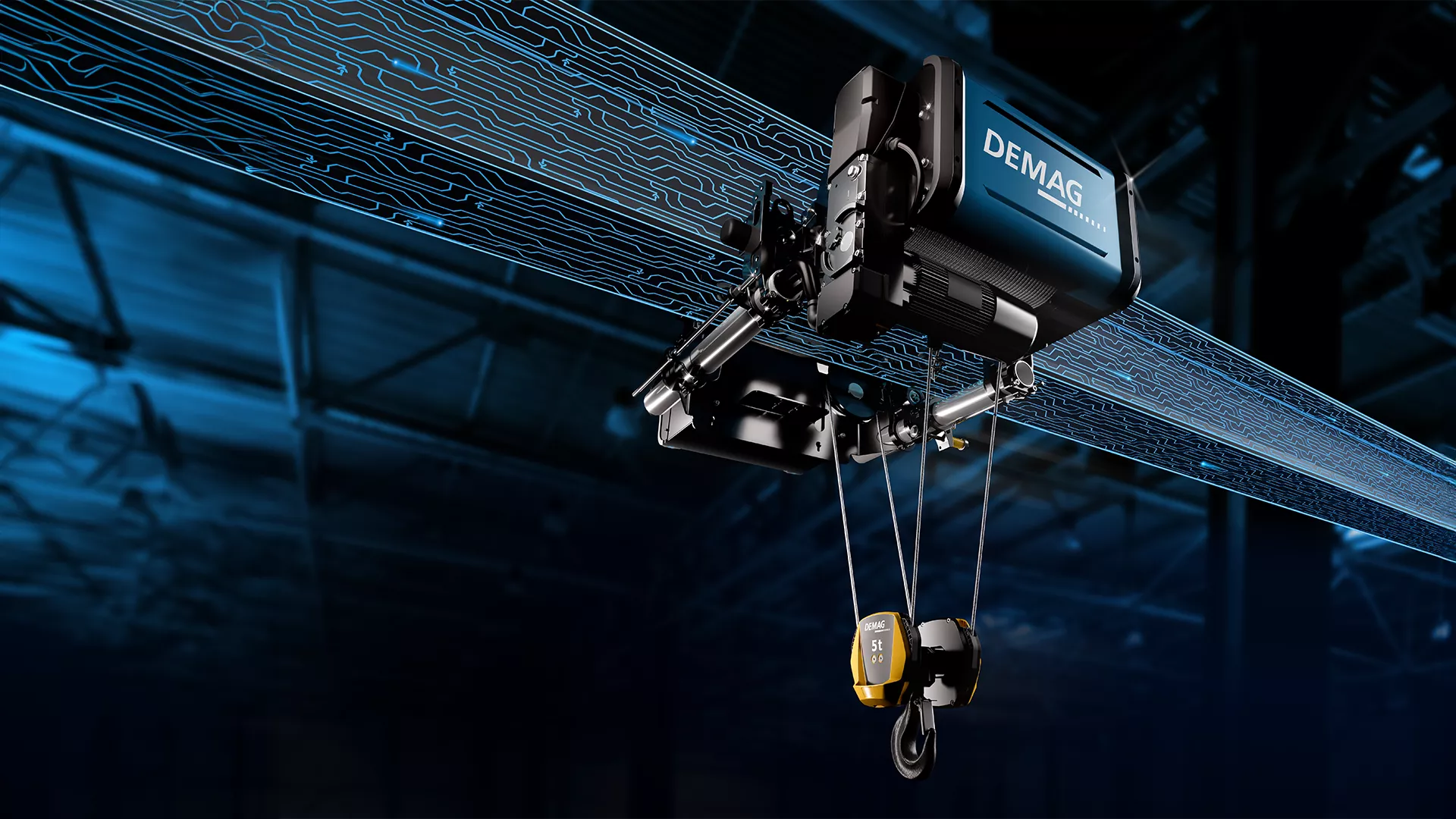
KBK stands for Komponenten-Baukastensystem, a German term meaning "component modular system." It was originally developed by DEMAG, a globally recognized crane and hoist manufacturer. Today, KBK-type systems are manufactured and supplied by several companies, including Times Krane, for Indian industrial applications.
A KBK Double-Girder Suspension Crane is a lightweight, modular overhead crane system that is suspended from the ceiling or roof structure of a building, rather than being supported by floor-mounted columns or heavy runway beams.
The "double-girder" part means it uses two parallel rails or beams, which allows the hoist trolley to travel between them. This gives the crane greater lateral stability, higher load capacity, and better hook approach compared to single-girder systems.
Think of it as a smart, space-saving alternative to traditional EOT cranes, designed for factories where floor space is precious and flexibility is a priority.
Key components of a KBK system include:
- Suspension brackets fixed to the roof or ceiling structure
- Cold-rolled steel profile rails (the KBK track)
- A double-girder bridge spanning the working area
- An electric chain hoist or wire rope hoist
- Push-pull or motorised travel drives
- Pendant control or radio remote control
Why KBK Double-Girder Suspension Cranes in India Are in High Demand
India's manufacturing sector is growing rapidly. With initiatives like Make in India and PLI (Production Linked Incentive) schemes driving factory expansions, industries need smarter, faster, and more space-efficient material handling solutions.
Here's why KBK Double-Girder Suspension Cranes in India are seeing rising adoption:
- Space Efficiency: Since the crane is suspended from the ceiling, the entire floor area remains free. No columns, no runway supports, no obstacles. This is a game-changer for compact facilities.
- Modular and Flexible Design: KBK systems are built from standardised components, which means they can be reconfigured, extended, or relocated as your factory layout changes. You're not locked into a fixed setup.
- Lightweight Construction: The cold-rolled steel profiles used in KBK systems are significantly lighter than conventional crane structures. This reduces the load on your building and lowers civil construction costs.
- Low Maintenance: Fewer moving parts and high-quality components mean these systems require less frequent servicing compared to traditional overhead cranes.
- Smooth and Precise Movement: KBK cranes offer gentle, controlled movement of loads, which is essential for industries handling delicate components like electronics, automotive parts, or machine tools.
- Cost-Effective for Medium Loads: For lifting capacities typically ranging from 125 kg to 2000 kg, KBK double-girder systems offer excellent value without over-engineering.
How KBK Double-Girder Suspension Cranes Work: A Practical Breakdown
Understanding how these cranes function helps you appreciate why they suit certain environments so well.
1. Ceiling Suspension and Structural Assessment
The first step is evaluating your building's roof or ceiling structure. KBK cranes are suspended using brackets or hangers bolted directly to roof trusses, purlins, or concrete beams. A structural engineer or crane specialist assesses the load-bearing capacity before installation.
This is important: the building structure must be capable of handling both the crane's dead weight and the dynamic loads during lifting operations.
2. Track Installation
Once the suspension points are confirmed, the KBK profile rails are installed. In a double-girder system, two parallel tracks are mounted at the correct span distance. These tracks guide the bridge crane assembly.
The modular nature of KBK profiles means tracks can be straight, curved, or even branched, allowing the crane to serve multiple work areas or stations in a single installation.
3. Bridge and Trolley Assembly
The double-girder bridge spans across the two tracks. The electric hoist trolley sits between the girders and travels along the bridge. This arrangement gives better load stability and allows the hook to reach closer to the end stops, maximising your usable working area.
4. Drive System
KBK cranes can be operated manually (push-pull) for lighter applications, or with motorised drives for longer travel distances or heavier loads. Motorised systems come with variable frequency drives (VFDs) for smooth speed control, reducing load swing and improving precision.
5. Controls and Safety
Operators control the crane via a pendant control station (a hanging push-button panel) or a wireless remote. Modern KBK systems also include safety features like overload protection, end-stop buffers, emergency stop, and slack rope detection.
6. Testing and Commissioning
After installation, the crane undergoes load testing as per IS 3177 and manufacturer guidelines. Only after passing all tests is the crane handed over for regular operations.
Common Problems and How to Solve Them
Even well-designed systems can face challenges. Here are real-world issues that buyers encounter with suspension crane systems and how to address them:
Problem 1: Building Structure Not Suitable for Suspension
Challenge: Many older Indian factories were not designed with overhead crane loads in mind. The roof structure may not handle the additional stress.
Solution: Always commission a structural assessment before purchasing. A reputable supplier like Times Krane will conduct this evaluation as part of the project process. In some cases, minor structural reinforcements can make the building suitable.
Problem 2: Wrong Load Capacity Selection
Challenge: Some buyers underestimate their lifting needs or plan for current loads without accounting for future growth. This results in an undersized crane that gets overloaded.
Solution: Always size your crane with a safety buffer. If your current maximum load is 800 kg, consider a 1000 kg or 1250 kg rated crane. Your supplier should perform a proper application study before recommending a capacity.
Problem 3: Poor Track Layout Planning
Challenge: A poorly planned track layout can leave certain areas of the facility unreachable, forcing workers to manually move loads before they can be lifted.
Solution: Work with a supplier who conducts a detailed floor plan review and proposes an optimised track layout. KBK's modular design makes it possible to incorporate curves and switches to cover complex work areas.
Problem 4: Lack of Operator Training
Challenge: Even the best crane system can be misused. Untrained operators may cause accidents, damage loads, or reduce the crane's lifespan.
Solution: Insist on formal operator training as part of your purchase agreement. Good suppliers include commissioning training and provide operation manuals in local languages where possible.
Why Times Krane for KBK Double-Girder Suspension Cranes in India
At Times Krane, we understand that buying a crane isn't just a purchase, it's a long-term operational decision. Here's what we bring to the table, honestly and without exaggeration:
- We supply and install KBK Double-Girder Suspension Cranes in India with a focus on proper site assessment and customised layout planning
- Our team includes experienced engineers who evaluate your building structure, load requirements, and workflow before recommending a solution
- We provide complete installation, commissioning, and load testing services
- After-sales support and spare parts availability are part of our commitment, not an afterthought
- We serve industries including automotive, engineering, pharmaceuticals, textiles, and light manufacturing
- Our clients receive complete documentation including test certificates, operation manuals, and maintenance schedules
We don't claim to be the only option. We do claim to be a team that takes your project seriously and delivers on what we promise.
Frequently Asked Questions (FAQs)
Q1. What is the maximum load capacity of a KBK Double-Girder Suspension Crane? KBK double-girder systems typically handle loads ranging from 125 kg up to 2000 kg, depending on the configuration and track span. For heavier loads, conventional EOT cranes may be more suitable.
Q2. Can a KBK crane be installed in an existing factory building? Yes, in most cases. The key requirement is that the roof or ceiling structure must be able to bear the additional loads. A structural assessment is carried out before installation to confirm suitability.
Q3. How long does it take to install a KBK suspension crane system? Installation time depends on the complexity of the layout and the size of the facility. A straightforward single-bay installation typically takes 3 to 7 working days, including testing and commissioning.
Q4. What maintenance does a KBK Double-Girder Suspension Crane require? Routine maintenance includes lubrication of rails and drive components, inspection of suspension brackets and fasteners, and checking of electrical connections and safety devices. A general service every 6 to 12 months is recommended, depending on usage frequency.
Conclusion
India's industrial landscape is changing fast, and so are the demands on factory infrastructure. KBK Double-Girder Suspension Cranes in India are no longer a niche product. They are becoming a practical, cost-effective choice for factories that want to maximise floor space, improve material flow, and invest in a system that grows with them.
From their modular design and lightweight construction to their smooth operation and low maintenance needs, KBK Double-Girder Suspension Cranes in India offer a compelling case for modern manufacturing facilities of all sizes.
If you're exploring lifting solutions for your facility, Times Krane is ready to help you evaluate your options with no pressure and no guesswork.
Get in touch with Times Krane today for a free consultation and site assessment.
Recent Posts
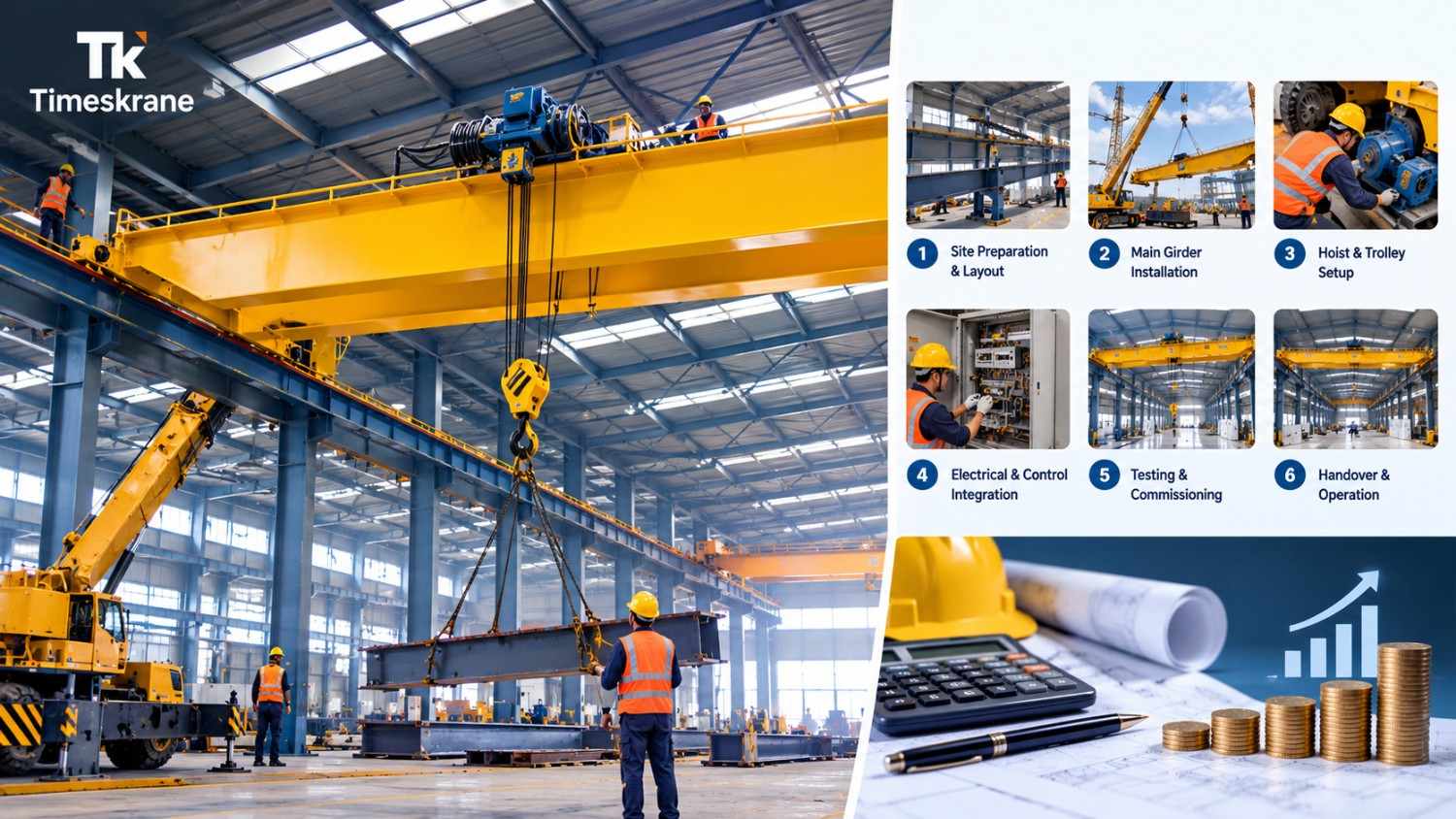
EOT Crane Installation Process and Cost in India
The complete EOT crane installation process in India, covering site survey, runway beams, load testing, and what installation actually costs beyond the crane price.
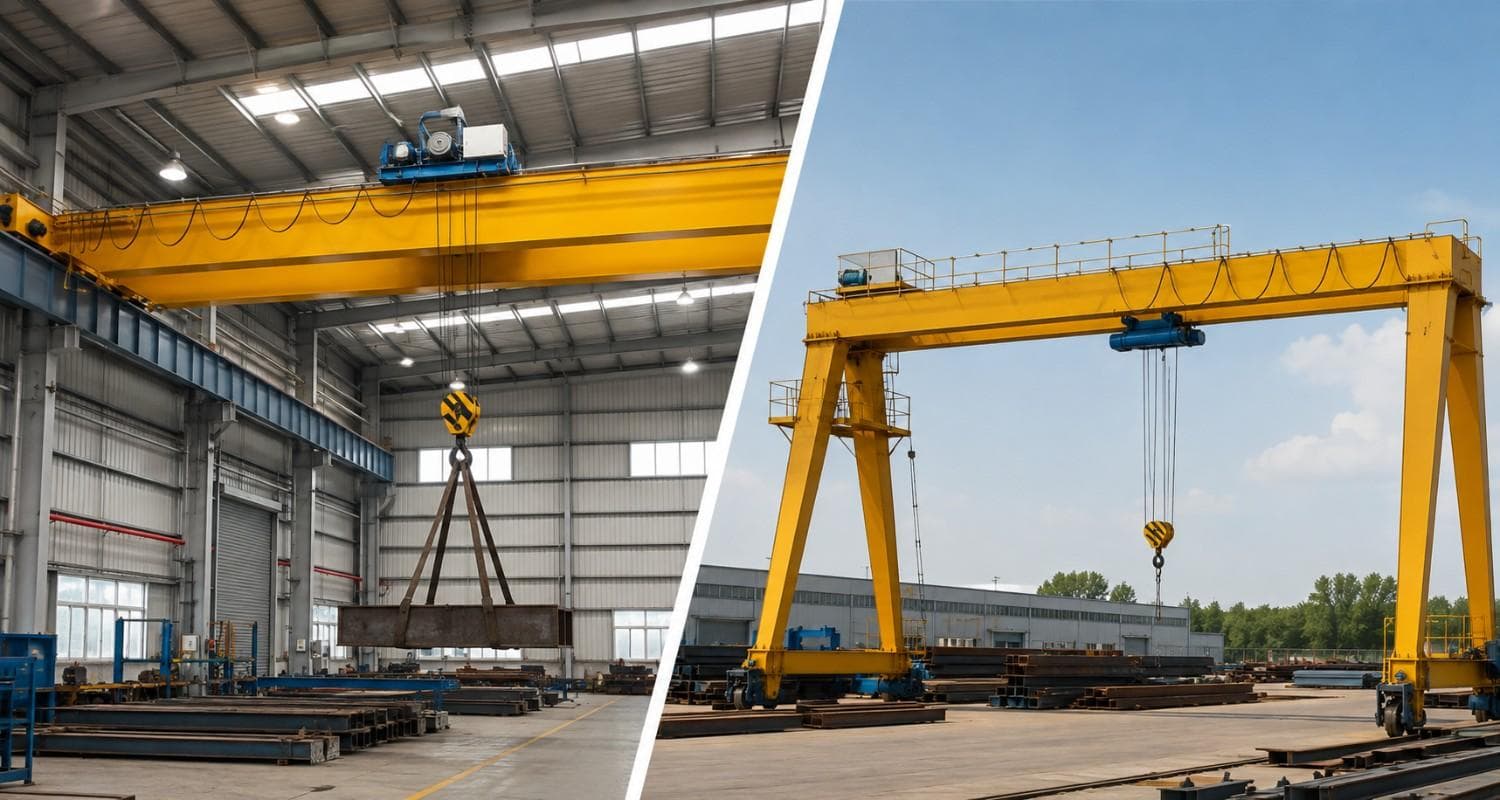
EOT Crane vs Gantry Crane: Which One Does Your Factory Actually Need?
EOT cranes and gantry cranes both lift heavy loads, but they suit very different factories. This guide walks through a simple decision tree covering building structure, floor space, budget, and indoor vs outdoor use, so you can confidently choose the right crane for your facility.

EOT Crane Safety Compliance in India
IS 3177, IS 807, Factories Act rules, and how third-party load testing and certification work for EOT cranes in India.

EOT Crane AMC Cost & Whats Included in 2026
What's actually included in an EOT crane AMC, how comprehensive and non-comprehensive contracts differ, and what drives the cost in India.
Need a Custom Lifting Solution?
Let’s Talk!
Looking for a reliable partner for your next industrial project?
- Expert Consultation
- Pan-India Service