English
Contact
Configure
Catalog
Finding reliable tower crane manufacturers in India is not a simple task. The consequences of choosing the wrong supplier are not just financial. On a construction site, crane failures cost lives. This guide will walk you through everything you need to know before you source a tower crane in India, from the types available to the standards that matter to the questions every buyer should be asking.
A tower crane is unlike any other lifting machine. It does not just lift things. It defines the entire logistics rhythm of a large construction site. Materials arrive at ground level. The tower crane distributes them vertically and horizontally across the structure. Without it, the site effectively stops.
The taller your project, the more critical crane selection becomes. A mismatch between the crane's free-standing height, jib radius, and maximum load moment can turn a well-planned project into a scheduling disaster.
In my experience reviewing construction projects across multiple Indian cities, the most common planning error is treating the tower crane as a procurement afterthought. It gets specified too late, ordered without enough lead time, and sometimes chosen based on availability rather than suitability. Getting it right starts earlier than most project managers expect.
Understanding the different types available from tower crane manufacturers in India is essential before you can make a sensible evaluation.
Flat Top Tower Crane (Top Slewing): The most widely used type in high-rise construction. No head structure above the jib, which means multiple flat top cranes on the same site can operate with overlapping radii without interference. Ideal for urban construction sites where multiple cranes are working in close proximity.
Luffing Jib Tower Crane: The jib can be angled upward rather than remaining horizontal. This dramatically reduces the horizontal footprint of the crane's swing arc, making it the preferred choice for sites with tight spatial constraints, neighbouring structures, or airspace restrictions like those near airports.
Self-Erecting Tower Crane: A compact, fast-setup crane that can be erected and dismantled without an assist crane. Suited for low to mid-rise construction, smaller sites, and projects where speed of mobilisation matters.
Hammerhead Tower Crane (Top Slewing with Fixed Jib): Recognisable by its T-shaped profile. A classic and highly reliable configuration for medium to large construction projects with a fixed load radius requirement.
Internal Climbing Tower Crane: Installed inside the building structure and climbs upward as the building rises. The crane never stands fully exposed externally, making it ideal for very tall structures where external tie-in possibilities are limited.
Each type has a defined role. Choosing the wrong one for your site conditions is an expensive correction to make mid-project.
India's tower crane manufacturing sector has matured significantly over the past two decades. Domestic manufacturers have moved from basic fabrication to producing technically sophisticated machines with electronic load moment indicators, variable frequency drives, anti-collision systems, and remote monitoring capabilities.
According to a report by the Indian Construction Equipment Industry Association, the construction equipment market in India is projected to grow at a compound annual growth rate of over 9 percent through 2027, with tower cranes among the fastest-growing segments driven by rapid urbanisation and infrastructure investment under national programmes like the Smart Cities Mission and PM Gati Shakti.
That growth has attracted both genuine engineering companies and opportunistic suppliers looking to capitalise on demand. As a buyer, understanding the difference is your single most important task.
This is the first and most important filter. A genuine tower crane manufacturer in India should have an in-house design team capable of performing structural analysis, finite element modelling, and load moment calculations for each crane configuration they offer.
Tower crane structures experience complex dynamic loads during operation, including wind loads, slewing inertia, and trolley acceleration forces. These are not forces you can design around by intuition. They require engineering rigour backed by simulation tools and qualified structural engineers.
When I tried requesting engineering documentation from several tower crane suppliers during a project review exercise, fewer than half could produce anything beyond a basic specification sheet. The ones who provided detailed structural calculations and FEM reports were immediately distinguishable as genuine manufacturers rather than rebranding operations.
In India, tower cranes are governed by IS 15419 (Safety Code for Tower Cranes), which covers design, manufacture, erection, testing, inspection, and safe operation requirements. This is the benchmark standard every tower crane deployed on Indian construction sites should comply with.
Beyond IS 15419, many project owners and international contractors also require compliance with EN 14439 (European standard for tower cranes) or ASME B30.3 (American standard for construction tower cranes). A manufacturer with multi-standard capability signals genuine engineering depth.
Every modern tower crane should be equipped with a Load Moment Indicator (LMI), which monitors and limits the load based on the trolley position along the jib. This prevents the crane from being overloaded at extended radii, which is one of the primary causes of tower crane collapses.
Beyond LMI, look for manufacturers who integrate anti-collision systems, anemometers for wind speed monitoring, slewing limit devices, and hoist limit switches as standard features rather than optional add-ons.
A tower crane is only as safe as the foundation it stands on and the tie-ins that anchor it to the structure as it climbs. A competent tower crane manufacturer in India will provide foundation design drawings and anchor frame specifications that your civil contractor can use directly. They will also specify the tie-in requirements at each climbing stage based on the building structure.
I've noticed that suppliers who treat foundation and tie-in design as the customer's problem are consistently the source of the most serious site incidents. This is not a responsibility a credible manufacturer should offload.
Tower crane erection is a specialised activity. It requires a trained crew, an assist crane for initial assembly, precise sequencing, and careful structural verification at each stage. The same applies to climbing operations and final dismantling.
A manufacturer who supplies the crane but has no structured erection and climbing support is leaving the most safety-critical phase of the crane's deployment entirely to chance. This is non-negotiable. Always confirm that the manufacturer provides or directly supervises these activities.
The demand for tower cranes from manufacturers in India is being driven by several high-growth construction segments:
Residential High-Rise Development: Cities like Mumbai, Pune, Bangalore, Hyderabad, and Noida are seeing sustained demand for apartment towers above 25 floors, where tower cranes are the only practical lifting solution.
Commercial Real Estate: Large-scale office campuses, mixed-use developments, and data centre construction projects all require tower cranes during their structural phase.
Metro and Railway Infrastructure: Elevated metro viaducts, station structures, and depot construction across Delhi, Mumbai, Chennai, Bangalore, and Hyderabad have made tower cranes a standard feature of urban infrastructure projects.
Industrial and Warehousing: Large format industrial facilities with structural steel frames or precast concrete elements often use tower cranes during the construction phase for efficient material placement.
Government Infrastructure: Hospitals, educational institutions, defence facilities, and housing projects under national schemes are collectively creating consistent demand across tier-1 and tier-2 cities.
Here is a practical checklist to guide your supplier evaluation:
Running through this list will quickly separate the manufacturers worth spending time on from those who are not genuinely equipped to support your project.
While Times Krane is primarily known as a leading manufacturer of EOT cranes, gantry cranes, jib cranes, and industrial material handling systems, they understand the broader crane ecosystem in India and are a trusted name for buyers navigating the market for lifting solutions.
Their engineering-first approach to crane supply, rigorous IS compliance process, and national service footprint across major industrial cities make them a reference point for buyers evaluating crane manufacturers. For industrial facilities that need a reliable lifting equipment partner across EOT, gantry, jib, and material handling crane categories, Times Krane brings both the technical depth and the service infrastructure that serious industrial buyers expect.
For construction tower crane requirements specifically, Times Krane can assist buyers with guidance on specifications, standards, and the right questions to ask specialised tower crane manufacturers in India, drawing on their extensive experience in the broader lifting and material handling sector.
Tower cranes carry some of the highest safety stakes of any construction equipment. A few principles that every buyer should hold firm on:
Never compromise on the Load Moment Indicator. This is the primary safety device preventing structural overload. A crane without a functioning, calibrated LMI is an accident waiting to happen.
Always insist on third-party inspection. For large projects, engaging an independent inspection agency to verify erection quality, tie-in conditions, and pre-commissioning checks is a sensible precaution that most experienced project managers already follow.
Wind load design is not optional. Indian construction sites experience seasonal monsoon winds that can significantly exceed average wind speed assumptions. Your manufacturer's structural design should account for the wind zone of your specific project location as per IS 875 Part 3.
Operator training and certification matter. A crane is only as safe as the person operating it. Ensure your tower crane operators hold valid certification and have been trained on the specific model deployed on your site.
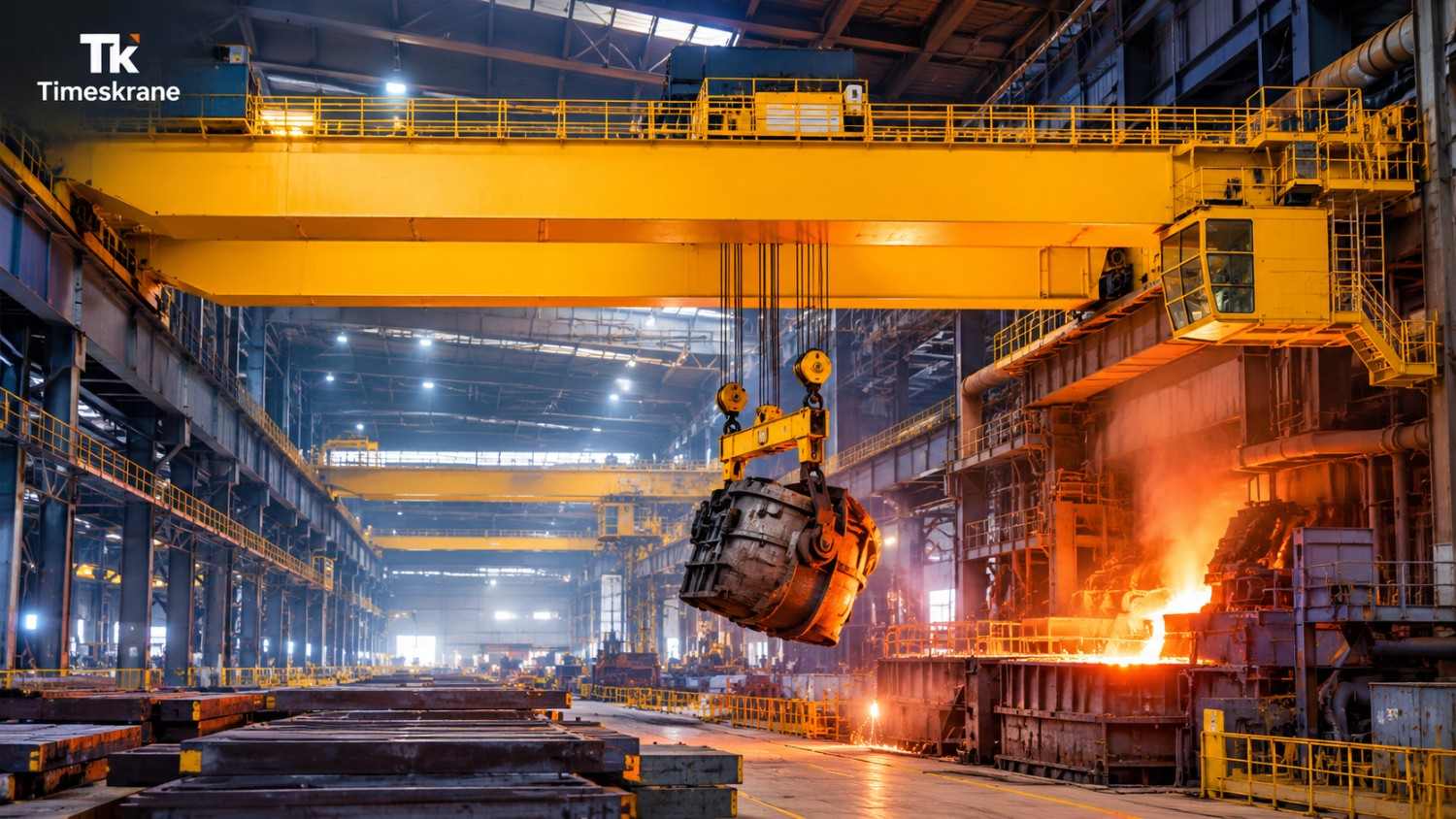
An honest breakdown of what makes a crane genuinely heavy duty for steel plant use, covering duty classification, capacity, and safety features buyers often miss.
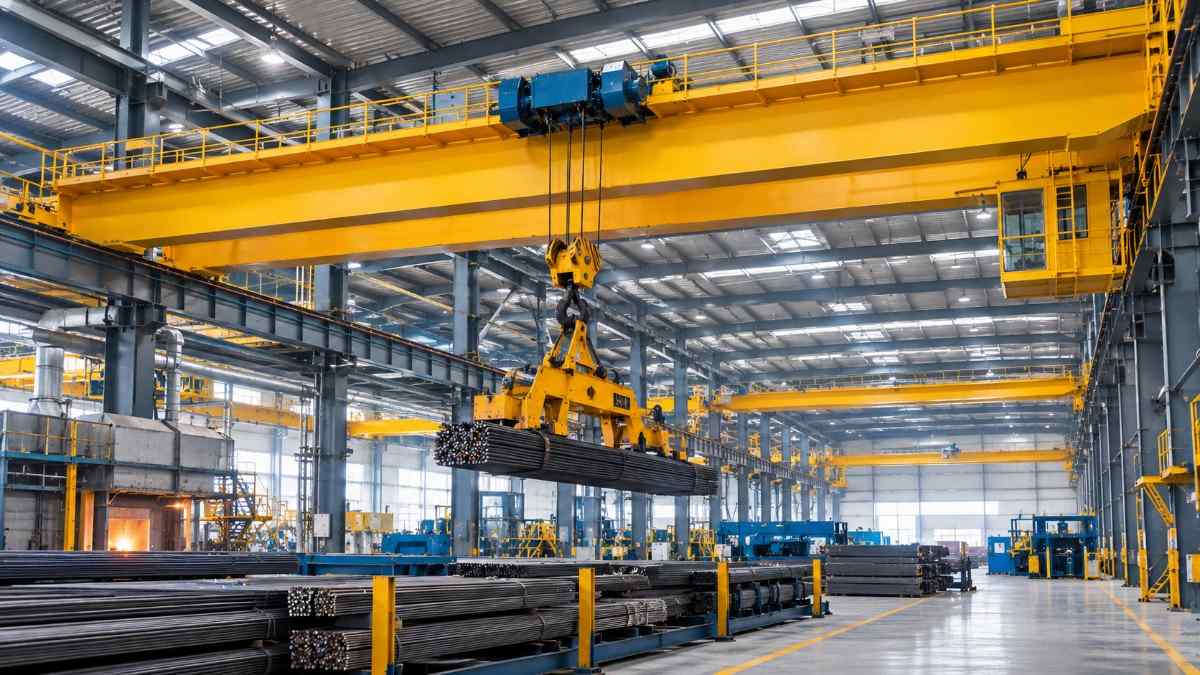
Finding the right steel plant crane manufacturer is perhaps the most important decision a procurement manager or plant owner will make. A poorly designed crane can increase both safety risks and downtime while excessively increasing maintenance costs.
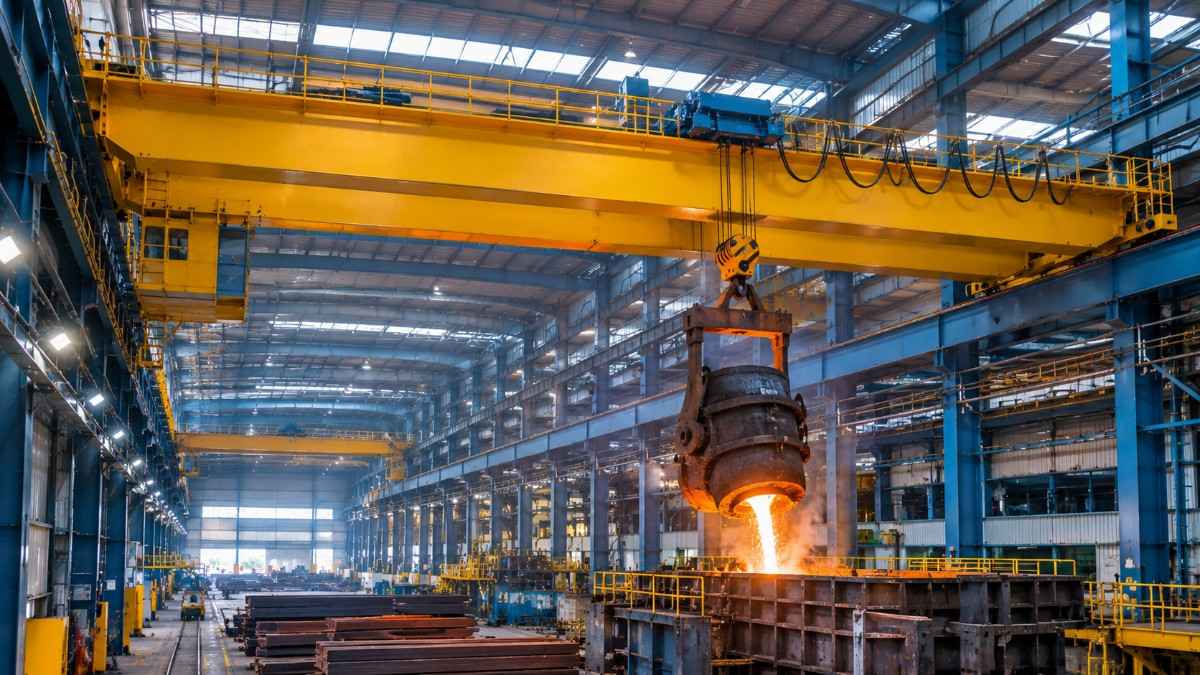
If you run or manage a steel plant, you already know that an overhead crane for steel plant operations is not a luxury. It is the backbone of your material handling process. From moving billets and coils to shifting ladles of molten metal, the right crane decides how smoothly your production line runs.
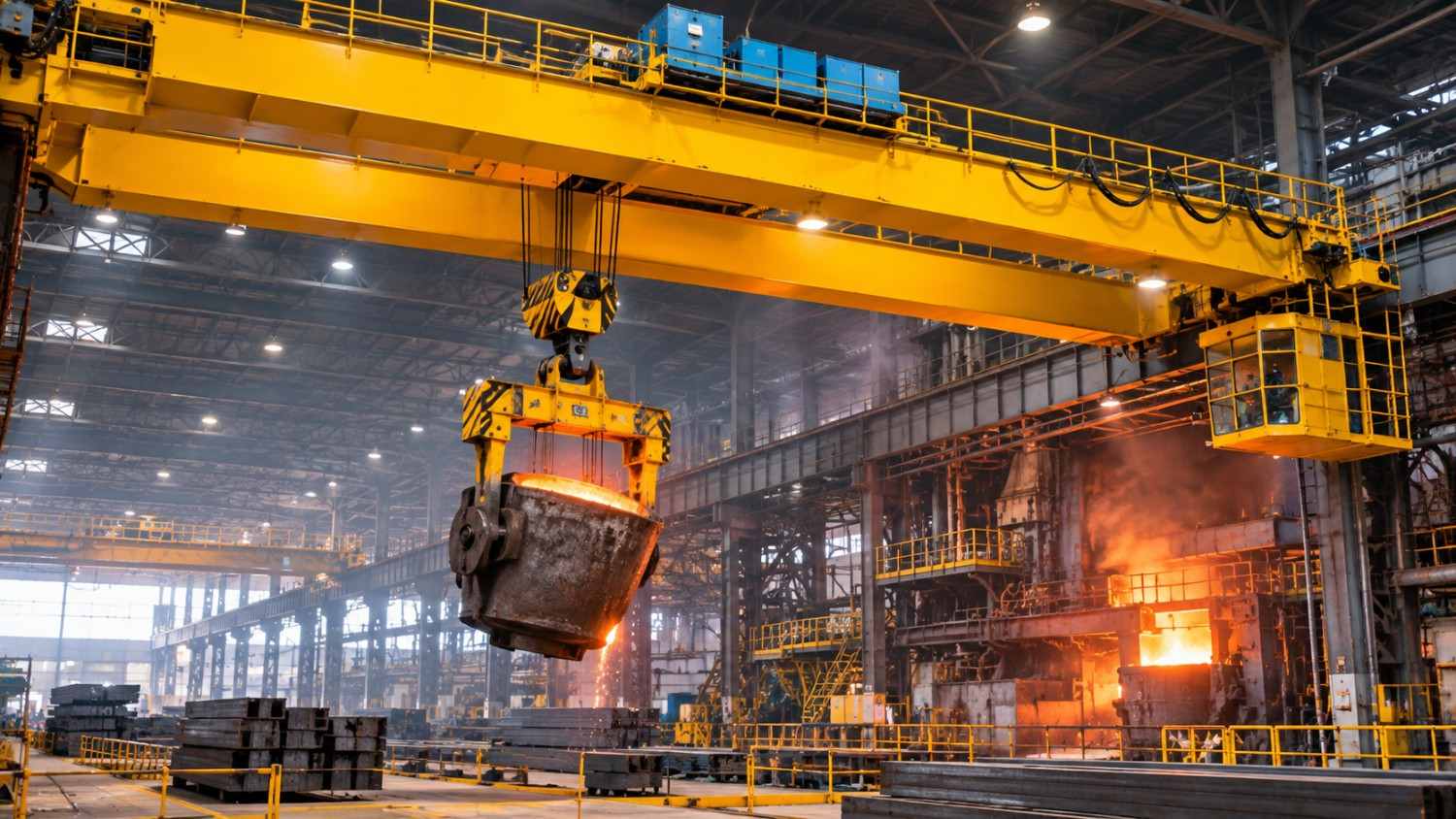
Discover how EOT cranes support steel plant operations, from material handling to molten metal lifting. Learn about crane types, duty classes, safety features, and how to choose the right EOT crane for your steel plant.
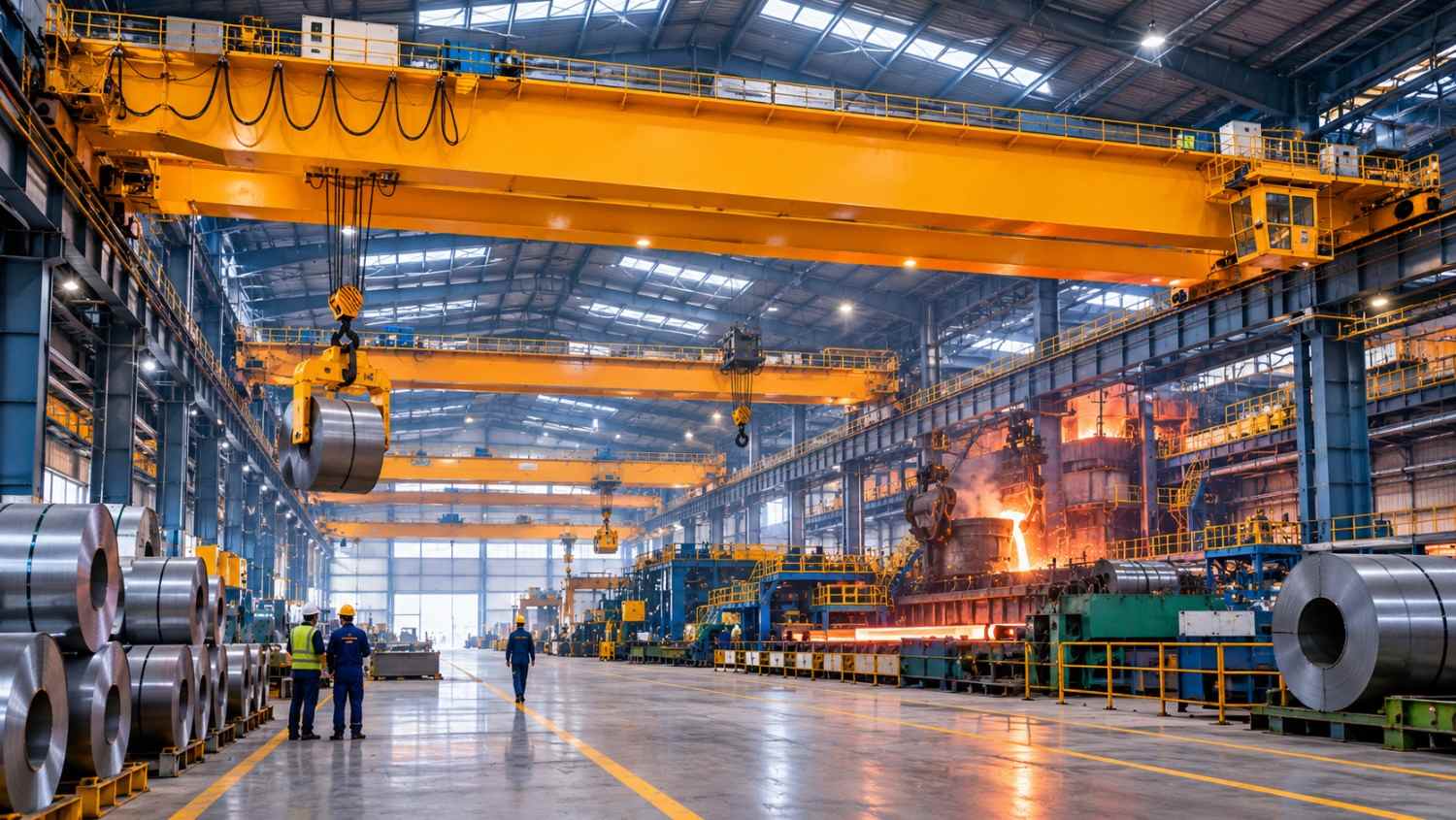
An honest, researched look at the top 5 crane manufacturers for steel plants in India, covering ladle, grab bucket, and coil handling cranes.
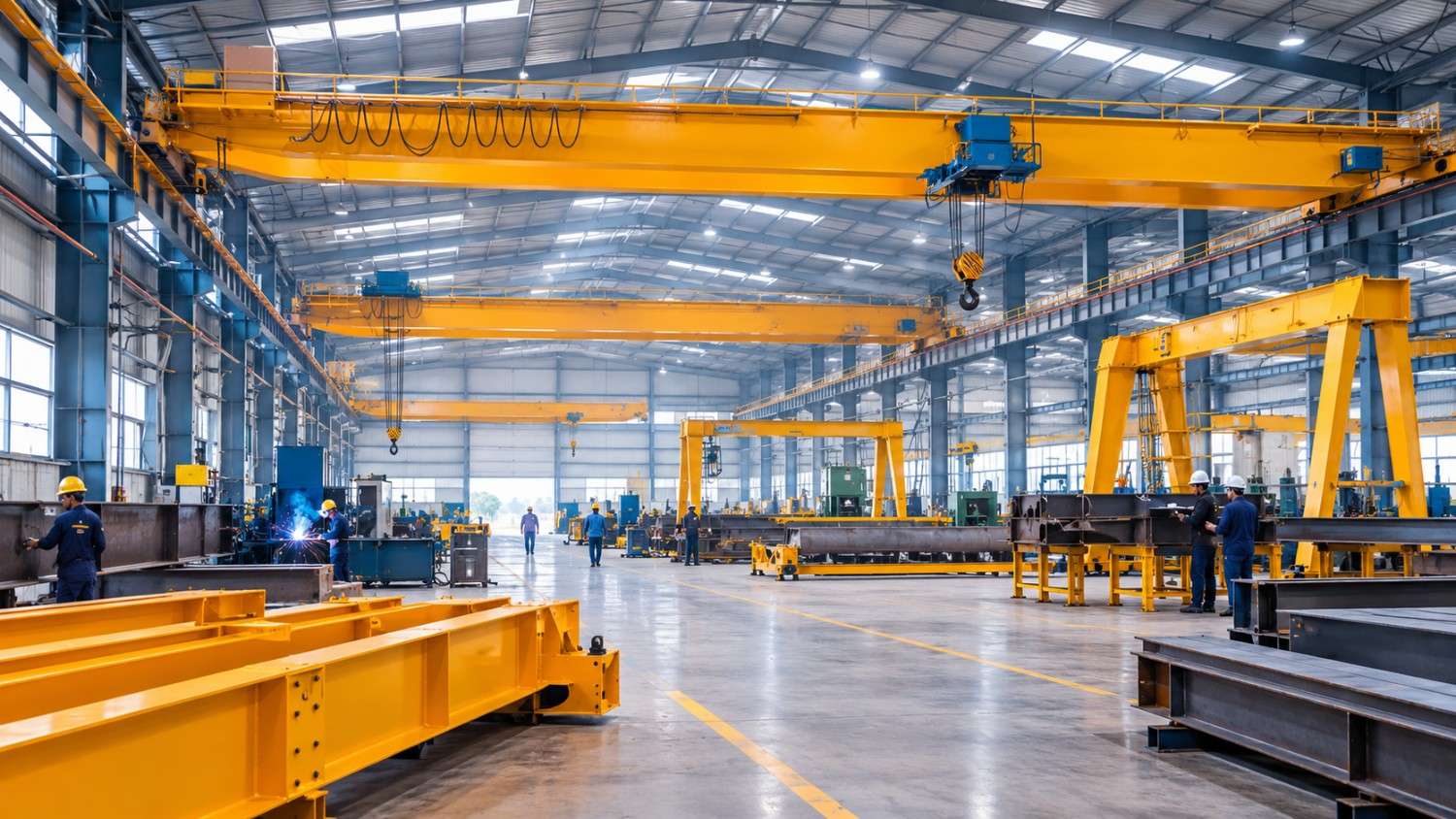
A real, researched look at the top 10 crane manufacturers in North India, covering Delhi NCR, Punjab, Haryana, UP, and Rajasthan, with what actually sets each one apart.
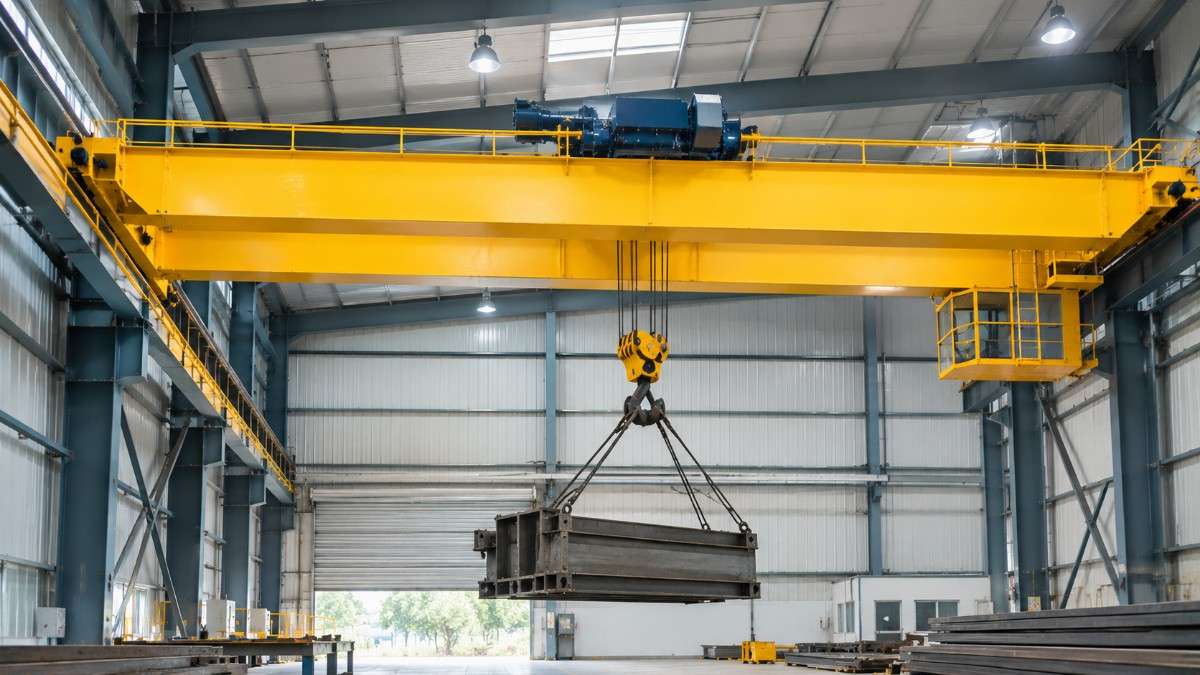
If you are looking for a 10 ton overhead crane for your factory or warehouse, the primary question that arises in your mind is whether this capacity will cater to your daily operations or it will turn out to be a useless and bulky addition to your storage.
Looking for a reliable partner for your next industrial project?