
What to Look for in a Reliable EOT Crane Manufacturer
Table of Content
What to Look for in a Reliable EOT Crane Manufacturer
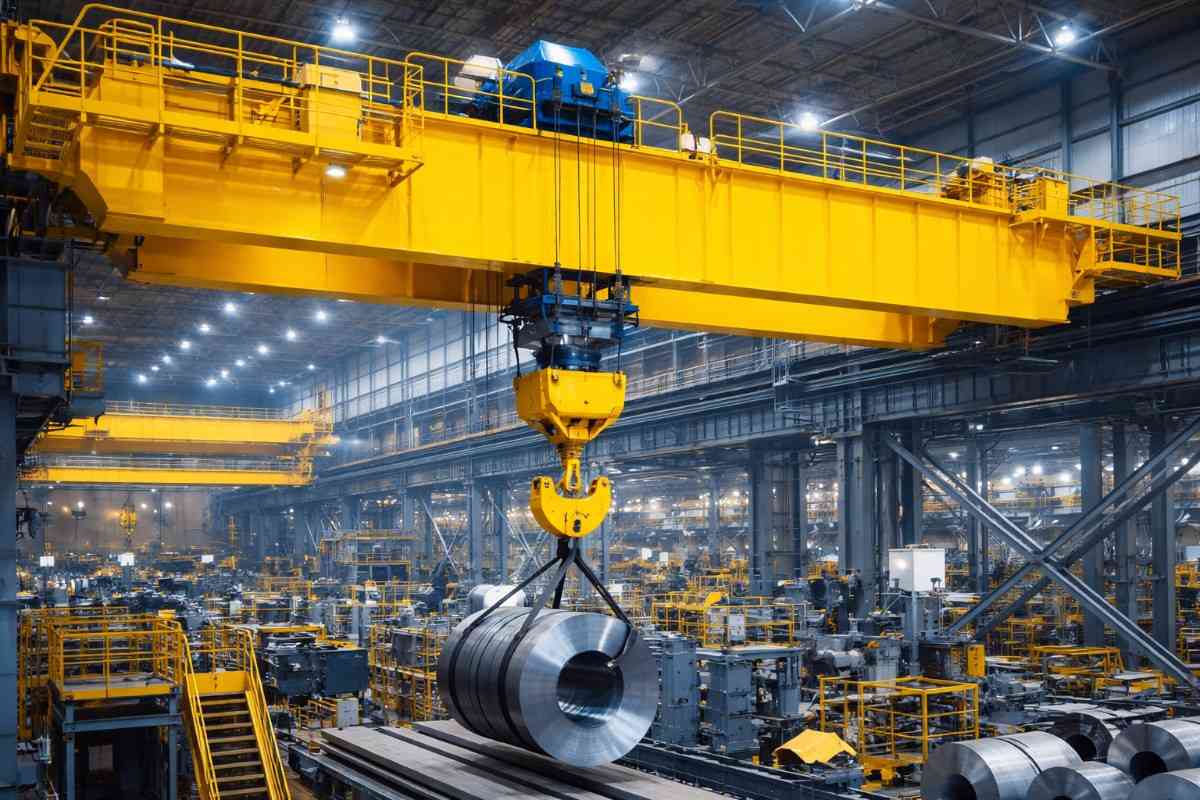
Have you ever seen a massive steel beam glide smoothly across a factory floor, lifted effortlessly by a crane overhead? That's an EOT crane at work. And behind every safe, efficient crane is a manufacturer who got everything right.
But here's the problem: with so many EOT crane manufacturers in India, how do you know which one to trust?
Whether you're setting up a new facility or replacing old equipment, choosing the wrong manufacturer can lead to costly breakdowns, safety risks, and endless headaches. In this guide, we'll walk you through exactly what to look for, in plain, simple terms, so you can make a smart, confident decision.
What Is an EOT Crane?
EOT stands for Electric Overhead Travelling Crane. It's a type of industrial crane that moves along elevated rails fixed to the ceiling or a supporting structure. It can travel in three directions, left-right, forward-backward, and up-down, making it incredibly useful in factories, warehouses, steel plants, and construction sites.
EOT cranes come in different types:
- Single Girder EOT Cranes: lighter loads, cost-effective
- Double Girder EOT Cranes: heavier loads, more precision
- Under-slung Cranes: suspended from the ceiling structure
They're the backbone of material handling in Indian industries. From automotive plants to shipyards, EOT cranes keep operations moving.
Why Choosing the Right EOT Crane Manufacturer Matters
Imagine this: A factory in Pune purchases an EOT crane from an unknown supplier. Six months in, the hoist starts malfunctioning. The manufacturer offers no after-sales support. Production halts. Losses pile up.
This scenario is more common than you'd think, and it's entirely avoidable.
Here's why your choice of EOT crane manufacturer directly impacts your business:
- Safety First: A poorly built crane is a serious hazard to workers and equipment. Certified manufacturers follow IS/ISO standards that protect lives.
- Long-Term Reliability: Quality cranes last 15 to 25 years with proper maintenance. Cheap alternatives often fail within months.
- Operational Efficiency: A well-designed crane reduces cycle time, boosts output, and lowers energy costs.
- Spare Parts Availability: Reputable manufacturers stock spare parts, so you're never left waiting weeks for a basic component.
- Resale and Compliance Value: Certified equipment holds its value and passes factory audits and insurance inspections.
- Lower Total Cost of Ownership: Investing in quality upfront saves far more in repairs and downtime over time.
How to Evaluate an EOT Crane Manufacturer, Step by Step
Step 1: Check Certifications and Compliance
A trustworthy EOT crane manufacturer will always adhere to recognized standards. In India, look for compliance with IS 3177 (code of practice for EOT cranes) and IS 807 (design, erection, and testing). International certifications like ISO 9001 are a strong indicator of quality management systems.
Don't hesitate to ask for documentation. A reliable manufacturer will share it willingly.
Step 2: Review Their Manufacturing Capabilities
Visit their facility if possible, or ask for a virtual tour. A serious manufacturer will have:
- In-house fabrication and testing equipment
- Qualified engineers and design team
- Modern CNC and welding machinery
- Load testing facilities on-site
Outsourced manufacturing or assembly-only setups often lead to inconsistent quality.
Step 3: Assess Their Product Range and Customisation Ability
Every factory is different. Your EOT crane manufacturer should be able to customise:
- Load capacity (from 1 ton to 100+ tons)
- Span length and lift height
- Speed controls and duty class
- Environmental conditions (outdoor, high-temperature, corrosive)
A manufacturer who only offers standard models may not meet your specific operational needs.
Step 4: Ask About After-Sales Service and Spare Parts
This is where many buyers go wrong, they focus only on the purchase price and ignore what happens after installation.
Ask these questions:
- Do you have a dedicated service team?
- What is your average response time for breakdowns?
- Are spare parts readily available in India?
- Do you offer Annual Maintenance Contracts (AMC)?
A good manufacturer stands behind their product long after delivery.
Step 5: Look at Their Track Record and Client Base
Experience matters. Ask how many cranes they've installed and in which industries. A manufacturer with installations across steel, cement, automotive, or port industries brings proven expertise.
Client testimonials, case studies, and reference visits are all fair requests to make before signing a contract.
Step 6: Evaluate Pricing, But Don't Stop There
It's natural to compare quotes. But the lowest price rarely means the best value. When reviewing costs, consider:
- Warranty period and coverage
- Installation and commissioning charges
- Training for your operators
- Long-term service agreement terms
A transparent, itemised quote is a green flag. Hidden costs or vague terms are red flags.
Common Problems Buyers Face, And How to Avoid Them
Problem 1: Crane Breaks Down Frequently
Cause: Substandard components or incorrect duty class selection.
Solution: Always specify your usage cycle clearly. An EOT crane used 20 hours a day needs a higher duty class (M6 or above) than one used occasionally. A reliable manufacturer will guide you correctly.
Problem 2: No Support After Installation
Cause: Small or unorganised manufacturers with no service infrastructure.
Solution: Before purchasing, confirm the manufacturer has a local service network or dedicated technicians in your region. Get service terms in writing.
Problem 3: Crane Doesn't Match Site Requirements
Cause: Poor site survey or lack of customisation.
Solution: A good manufacturer conducts a detailed site assessment before recommending a crane model. Never accept a quote without a proper site visit or survey.
Problem 4: Delays in Delivery and Installation
Cause: Manufacturers who over-promise and under-deliver.
Solution: Ask for a project timeline with milestones. Check their past delivery record with existing clients. A professional manufacturer treats timelines seriously.
Why Times Krane Is a Name Worth Knowing
At Times Krane, we've been working closely with Indian industries to provide dependable EOT crane solutions, with a focus on safety, performance, and honest service.
Here's what sets us apart, not claims, just facts:
- We offer end-to-end solutions, from design and manufacturing to installation and after-sales service
- Our cranes are built to IS and ISO standards, ensuring safety and compliance
- We serve a wide range of industries including steel, automotive, construction, and logistics
- Our team conducts thorough site surveys before recommending any crane model
- We maintain a ready stock of spare parts to minimise your downtime
- Our service engineers are available across India for on-site support
We don't promise perfection. We promise commitment, to quality, to safety, and to you.
Frequently Asked Questions (FAQs)
Q1. What is the typical lifespan of an EOT crane? A well-maintained EOT crane from a reputable manufacturer can last between 15 to 25 years, depending on the duty class, usage frequency, and quality of maintenance.
Q2. How do I know which capacity EOT crane I need? You need to calculate the maximum load you'll be lifting regularly, plus a safety margin. Your crane manufacturer should assist with a proper load analysis based on your operations.
Q3. What certifications should an EOT crane manufacturer have in India? Look for compliance with IS 3177, IS 807, and ISO 9001. If exporting or working with multinational clients, CE certification is also valuable.
Q4. How often should an EOT crane be serviced? Routine inspection should happen monthly, with comprehensive maintenance every 6 to 12 months depending on usage. Always follow the manufacturer's recommended schedule.
Conclusion
Choosing the right EOT crane manufacturer isn't just a procurement decision, it's a long-term investment in your facility's safety and productivity.
To recap: look for certified manufacturers, customisation ability, transparent pricing, and solid after-sales support. Don't let price alone drive your decision. The real cost of a cheap crane shows up in breakdowns, downtime, and safety risks.
When you partner with a reliable EOT crane manufacturer like Times Krane, you get more than just equipment, you get a team that's with you from day one.
Ready to find the right crane for your facility? Contact Times Krane today for a free site assessment and consultation.
Recent Posts
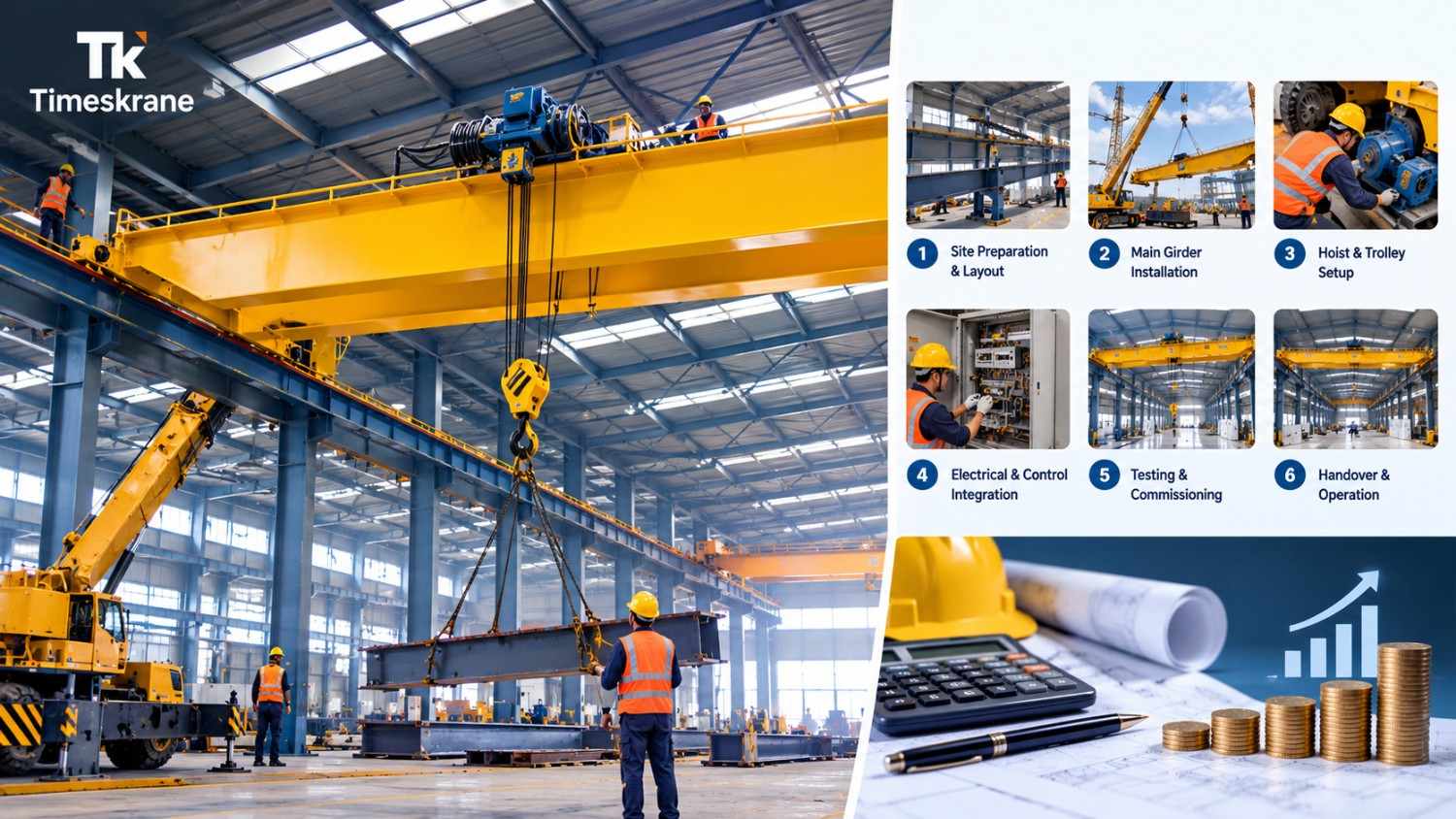
EOT Crane Installation Process and Cost in India
The complete EOT crane installation process in India, covering site survey, runway beams, load testing, and what installation actually costs beyond the crane price.
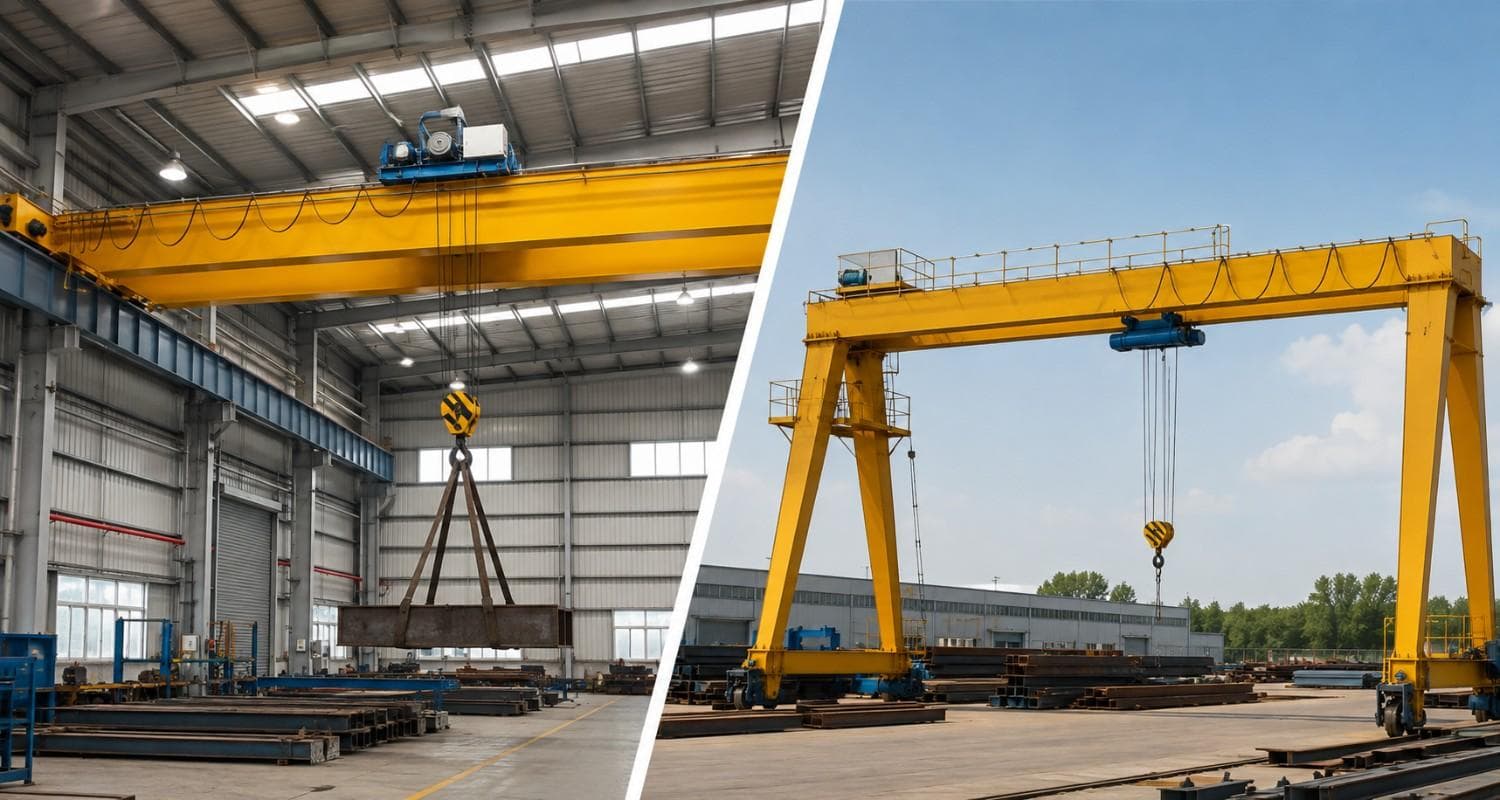
EOT Crane vs Gantry Crane: Which One Does Your Factory Actually Need?
EOT cranes and gantry cranes both lift heavy loads, but they suit very different factories. This guide walks through a simple decision tree covering building structure, floor space, budget, and indoor vs outdoor use, so you can confidently choose the right crane for your facility.

EOT Crane Safety Compliance in India
IS 3177, IS 807, Factories Act rules, and how third-party load testing and certification work for EOT cranes in India.

EOT Crane AMC Cost & Whats Included in 2026
What's actually included in an EOT crane AMC, how comprehensive and non-comprehensive contracts differ, and what drives the cost in India.
Need a Custom Lifting Solution?
Let’s Talk!
Looking for a reliable partner for your next industrial project?
- Expert Consultation
- Pan-India Service