
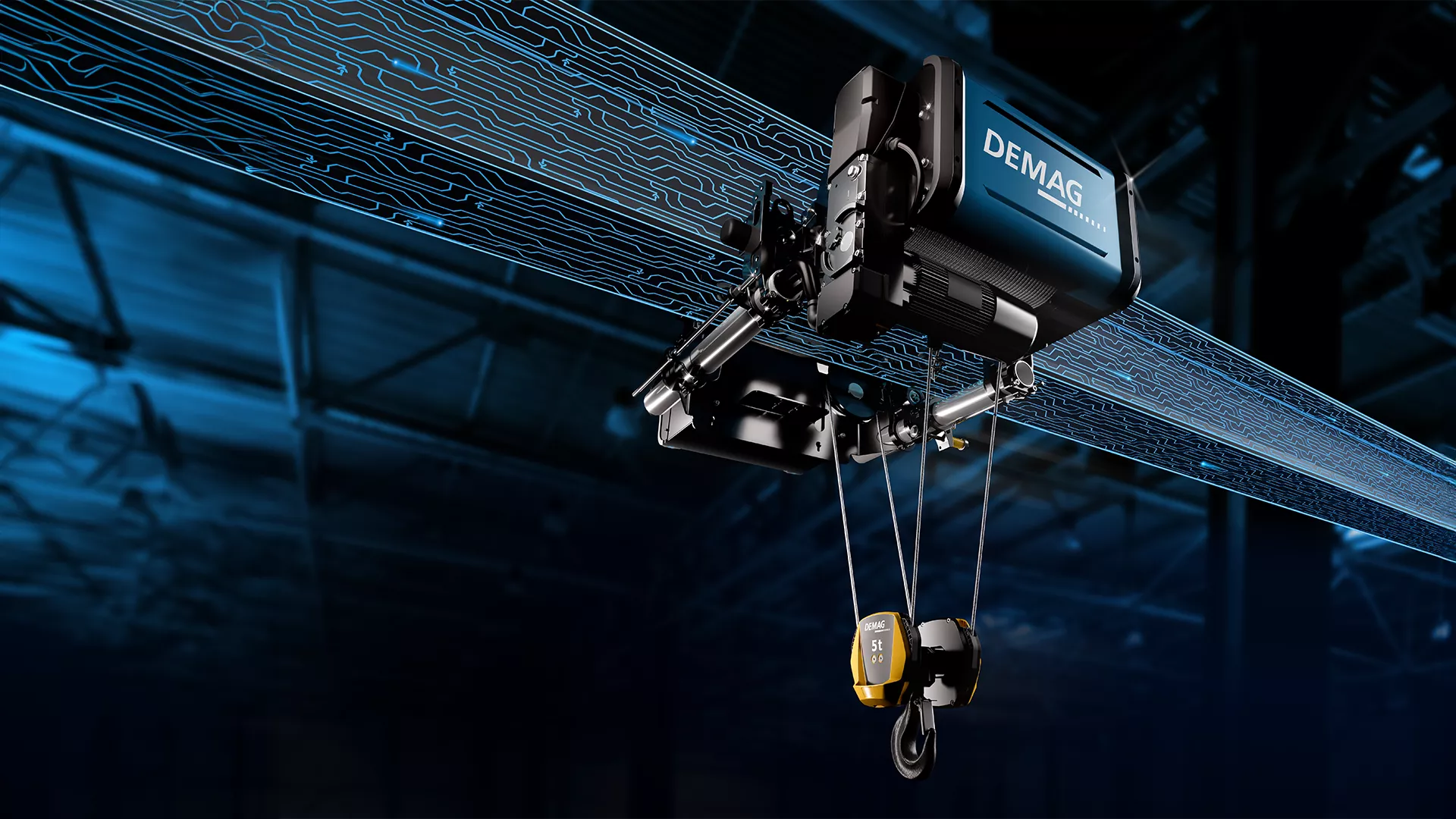
What Does a Complete DEMAG and KONE Cranes Service Include
Table of Content

What Does a Complete DEMAG and KONE Cranes Service Include
Picture this. It is the middle of a production shift. Your overhead crane comes to a sudden halt. The load is suspended. Your team is standing still. Every minute of downtime is draining productivity and pushing your delivery timelines. This is not a hypothetical situation. It is a reality that plant managers and maintenance engineers deal with when crane servicing has been neglected or handled by the wrong service provider.
If you operate DEMAG and KONE cranes in your facility, understanding what a complete service package actually covers is not just a maintenance question. It is a business continuity decision. This blog breaks down every component of a thorough crane service program so you know exactly what to expect and what to demand from your service provider.
Why Crane Servicing Is Not Optional
Industrial cranes are among the most mechanically demanding pieces of equipment in any plant. They operate under high loads, repetitive duty cycles, variable speeds, and often in harsh environmental conditions involving heat, dust, moisture, or corrosive atmospheres.
DEMAG and KONE cranes are engineered to high standards, but no machine is maintenance-free. Without a structured service program, even the most robustly built crane will experience accelerated wear, increased failure risk, reduced load handling accuracy, and eventually, a safety incident or regulatory non-compliance issue.
According to safety guidelines issued under industrial lifting standards including ISO 9927 and IS 15560, cranes must undergo periodic inspection, testing, and maintenance by competent personnel. A complete service program is how you fulfill that obligation systematically rather than reactively.
The Core Components of a Complete DEMAG and KONE Cranes Service
1. Scheduled Preventive Maintenance
This is the backbone of any professional crane service program. Rather than waiting for something to break, preventive maintenance addresses wear before it becomes failure.
A structured preventive maintenance visit for DEMAG and KONE cranes typically includes:
- Visual inspection of the entire crane structure including girders, end carriages, and runway beams
- Inspection and lubrication of all moving parts including gearboxes, open gear drives, wire rope drums, and hook assemblies
- Check and adjustment of brakes on all motions: hoist, long travel, and cross travel
- Inspection of wheel flanges and rail contact for signs of abnormal wear
- Tightening of all structural and mechanical fasteners
- Check of rope or chain reeving, condition, and fleet angle
- Review of hook and load block condition including swivel freedom and latch function
Frequency of preventive maintenance depends on the crane's duty classification and operational hours. Heavy duty cranes in steel or foundry environments may require monthly visits while lighter duty warehouse cranes may operate on quarterly schedules.
2. Electrical System Inspection and Testing
DEMAG and KONE cranes incorporate sophisticated electrical systems including variable frequency drives, programmable logic controllers, pendant controls, radio remote systems, and conductor bar or festoon cable power supply arrangements. These components require careful, systematic inspection.
Electrical service covers:
- Inspection of main panel, control panels, and junction boxes for loose connections, signs of overheating, or moisture ingress
- Testing and calibration of all limit switches including upper and lower hoist limits, travel limits, and buffer stop limits
- Inspection of motor windings, contactors, and overload relays
- Check of earthing and bonding continuity
- Testing of emergency stop functions across all control stations
- Inspection and cleaning of slip rings and collector shoes where applicable
- Review of VFD parameters and fault history logs
Electrical failures are among the leading causes of crane breakdowns. Regular electrical inspection significantly reduces unplanned stoppages.
3. Structural Inspection
The structural integrity of a crane is fundamental to its safe operation. Over time, fatigue cracks can develop in welded joints, corrosion can weaken beam sections, and deformation can occur from overloading or impact events.
A structural inspection as part of DEMAG and KONE cranes service includes:
- Visual and close-range inspection of all main and auxiliary girder welds
- Check of end carriage connections and buffer mounting points
- Inspection of runway beam joints, rail clips, and expansion gaps
- Check for visible deflection, distortion, or misalignment in the main structural members
- Non-destructive testing (NDT) including magnetic particle inspection or dye penetrant testing at critical weld locations where crack propagation risk is identified
Structural inspections are typically conducted annually or following any incident involving abnormal loading.
4. Load Testing and Proof Testing
After major repairs, structural modifications, or at defined periodic intervals, cranes must undergo load testing to verify their rated capacity and operational safety.
Load testing as part of a complete service program includes:
- Static load test at 125% of the safe working load (SWL) to verify structural integrity
- Dynamic load test at 110% SWL to verify brake holding capacity and motion performance under load
- Verification of all safety devices under loaded conditions
- Documentation of test results with a formal test certificate
This is a regulatory requirement in most jurisdictions and is referenced in standards such as IS 3177 for electric overhead travelling cranes.
5. Brake Inspection and Adjustment
Brakes are the most safety-critical component on any crane. Hoist brakes must hold the load in the event of power failure. Travel brakes must bring the crane to a controlled stop within defined distances.
Brake service for DEMAG and KONE cranes covers:
- Measurement of brake disc or drum wear and comparison against minimum thickness specifications
- Check of brake lining condition and replacement if worn beyond limits
- Spring tension verification and adjustment
- Brake gap setting and air gap measurement on electromagnetic disc brakes
- Functional testing of brake response time under no-load and loaded conditions
- Inspection of thruster units on thrustor-operated brakes
6. Wire Rope and Chain Inspection
Wire rope on hoisting mechanisms degrades through a combination of fatigue, corrosion, abrasion, and mechanical damage. KONE and DEMAG crane services follow discard criteria aligned with ISO 4309, which specifies the number of wire breaks per lay length, degree of corrosion, and reduction in rope diameter that require immediate rope replacement.
Rope and chain inspection includes:
- Full visual inspection along the entire rope length for broken wires, kinks, bird-caging, and corrosion
- Measurement of rope diameter at multiple points to detect internal core failure
- Inspection of rope anchoring and dead-end terminations
- For chain hoists: inspection of chain pitch elongation, link distortion, and hook deformation
- Lubrication of rope with penetrating rope dressing compound
7. Spare Parts Supply and Management
A service program is only as effective as the availability of the right spare parts. For DEMAG and KONE cranes, using genuine OEM or OEM-equivalent spare parts is important for maintaining performance specifications and warranty compliance.
A complete service provider should offer:
- Ready availability of consumable parts including brake linings, rope, bearings, and seals
- Access to electrical components including contactors, relays, VFD units, and control boards
- Structural components such as buffers, wheel assemblies, and hook blocks
- A documented spare parts recommendation based on crane age and duty profile
8. Crane Modernization and Upgrades
Older DEMAG and KONE cranes in service often benefit from targeted modernization rather than full replacement. A capable service provider can assess upgrade opportunities including:
- Retrofit of variable frequency drives on hoist and travel motions for smoother operation and energy savings
- Upgrade of pendant controls to modern ergonomic designs or radio remote systems
- Installation of crane monitoring systems for load logging and fault diagnostics
- Replacement of ageing electrical panels with modern PLC-based control systems
- Structural reinforcement or capacity upgrading in consultation with the original design standard
Modernization extends equipment life, improves operator safety, and often delivers measurable improvements in operational efficiency.
9. Annual Comprehensive Inspection and Certification
Regulatory compliance in most industrial sectors requires formal annual inspection of lifting equipment by a competent person or inspection body. This inspection results in a formal certification document that confirms the crane is fit for continued service at its rated capacity.
Annual inspection service includes all elements of the structural, mechanical, and electrical inspection outlined above, a formal written inspection report, identification of any defects with recommended corrective actions, and issuance of a fitness certificate valid for the defined inspection period.
This certificate is often required by factory inspectors, insurance assessors, and occupational health and safety auditors.
Breakdown and Emergency Response Service
Even with the best preventive maintenance program in place, unexpected breakdowns can occur. Your service provider's response capability in these situations directly impacts how quickly you recover operations.
A reliable emergency service offering should include:
- Defined response time commitments for breakdown calls
- Field service engineers with DEMAG and KONE product-specific training
- A stocked service vehicle with commonly needed parts and tools
- Remote diagnostic capability for electronically controlled cranes to allow preliminary fault identification before the engineer arrives on site
- Clear communication from arrival on site through to completion of repair
Industries That Benefit Most from Structured Crane Service Programs
DEMAG and KONE cranes are deployed across demanding industrial environments where service quality directly affects operational output:
- Steel plants and foundries: Ladle cranes, charging cranes, and scrap handling cranes operate under extreme thermal and mechanical stress and require intensive service schedules
- Automotive manufacturing: Precision is paramount. Press shop and assembly line cranes must operate with high positional accuracy and zero unplanned downtime
- Paper and pulp mills: Roll handling cranes with specialized attachments require both mechanical service and periodic attachment inspection
- Ports and logistics: Container handling and warehouse cranes demand high availability with minimal service interruption windows
- Heavy engineering and fabrication: Cranes handling structural steel and heavy fabrications operate at high duty cycles and require frequent inspections
What to Look for in a DEMAG and KONE Cranes Service Provider
Not all service companies are equal. When evaluating a service partner for your DEMAG or KONE cranes, consider the following:
- Trained and certified technicians with documented product-specific competency
- Access to genuine or OEM-equivalent spare parts with short lead times
- A clear and detailed service report after every visit
- Transparent service contract terms with defined scope and response commitments
- Experience servicing similar crane types in your industry
- A safety-first approach to all service activities including lockout-tagout compliance
How Times Krane Supports Your Crane Service Needs
Times Krane delivers structured, professional service programs for industrial overhead cranes including DEMAG and KONE crane systems. The service approach is built around two priorities: keeping your cranes running and keeping your people safe.
From scheduled preventive maintenance visits to emergency breakdown response, Times Krane deploys technically trained field engineers who understand the specific engineering and operational requirements of the cranes in your facility. The team works with your maintenance and production staff to minimize service windows and maximize crane availability.
With access to quality spare parts, structured inspection programs aligned with applicable IS and ISO standards, and a track record across manufacturing, steel, warehousing, and heavy engineering sectors, Times Krane is equipped to be your long-term crane service partner.
Learn more about crane service and maintenance solutions at timeskrane.com
Frequently Asked Questions
Q1: How often should DEMAG and KONE cranes be serviced? Service frequency depends on the crane's duty classification, operating hours, and working environment. As a general guide, heavy-duty cranes in steel or process industries should be serviced monthly while medium-duty cranes in manufacturing or warehousing typically follow quarterly schedules. Your service provider should recommend a schedule based on your specific crane data.
Q2: What is the difference between preventive maintenance and a crane inspection? Preventive maintenance involves hands-on mechanical and electrical work to address wear and prevent failure. A formal crane inspection is a structured assessment by a competent person that results in a written report and fitness certification. Both are necessary components of a complete service program and serve different purposes.
Q3: Can older DEMAG or KONE cranes be serviced or should they be replaced? In most cases, older cranes can be effectively maintained and selectively modernized to extend their operational life. The decision to replace versus service depends on the structural condition of the crane, availability of spare parts, and the cost-benefit analysis of modernization. A qualified service provider can give you an honest assessment.
Q4: What documents should I receive after a crane service visit? After every service visit, you should receive a detailed service report covering all tasks performed, observations on component condition, any defects identified with recommended corrective actions, and parts replaced. For annual inspections, a formal fitness certificate should be issued.
Q5: Is load testing required every year? Full load testing is typically required after major repairs or structural modifications and at intervals specified by applicable standards or regulatory requirements. Periodic statutory inspections may include load testing as part of the compliance check. Your service provider can advise based on the applicable regulations in your region.
Conclusion
A complete DEMAG and KONE cranes service program goes far beyond an occasional lubrication visit. It is a structured, documented, and technically rigorous process that covers every mechanical, electrical, structural, and safety-related aspect of your crane system.
Investing in a proper service program protects your workforce, ensures regulatory compliance, reduces the risk of costly unplanned downtime, and extends the productive life of your equipment. The cost of getting it right is always lower than the cost of getting it wrong.
If you want a service partner who takes crane maintenance as seriously as you take your production targets, Times Krane is ready to support your facility.
Reach out to the Times Krane team at timeskrane.com to discuss a tailored service program for your cranes.
Recent Posts
EOT Crane Installation Process and Cost in India
The complete EOT crane installation process in India, covering site survey, runway beams, load testing, and what installation actually costs beyond the crane price.
EOT Crane vs Gantry Crane: Which One Does Your Factory Actually Need?
EOT cranes and gantry cranes both lift heavy loads, but they suit very different factories. This guide walks through a simple decision tree covering building structure, floor space, budget, and indoor vs outdoor use, so you can confidently choose the right crane for your facility.

EOT Crane Safety Compliance in India
IS 3177, IS 807, Factories Act rules, and how third-party load testing and certification work for EOT cranes in India.

EOT Crane AMC Cost & Whats Included in 2026
What's actually included in an EOT crane AMC, how comprehensive and non-comprehensive contracts differ, and what drives the cost in India.
Need a Custom Lifting Solution?
Let’s Talk!
Looking for a reliable partner for your next industrial project?
- Expert Consultation
- Pan-India Service