
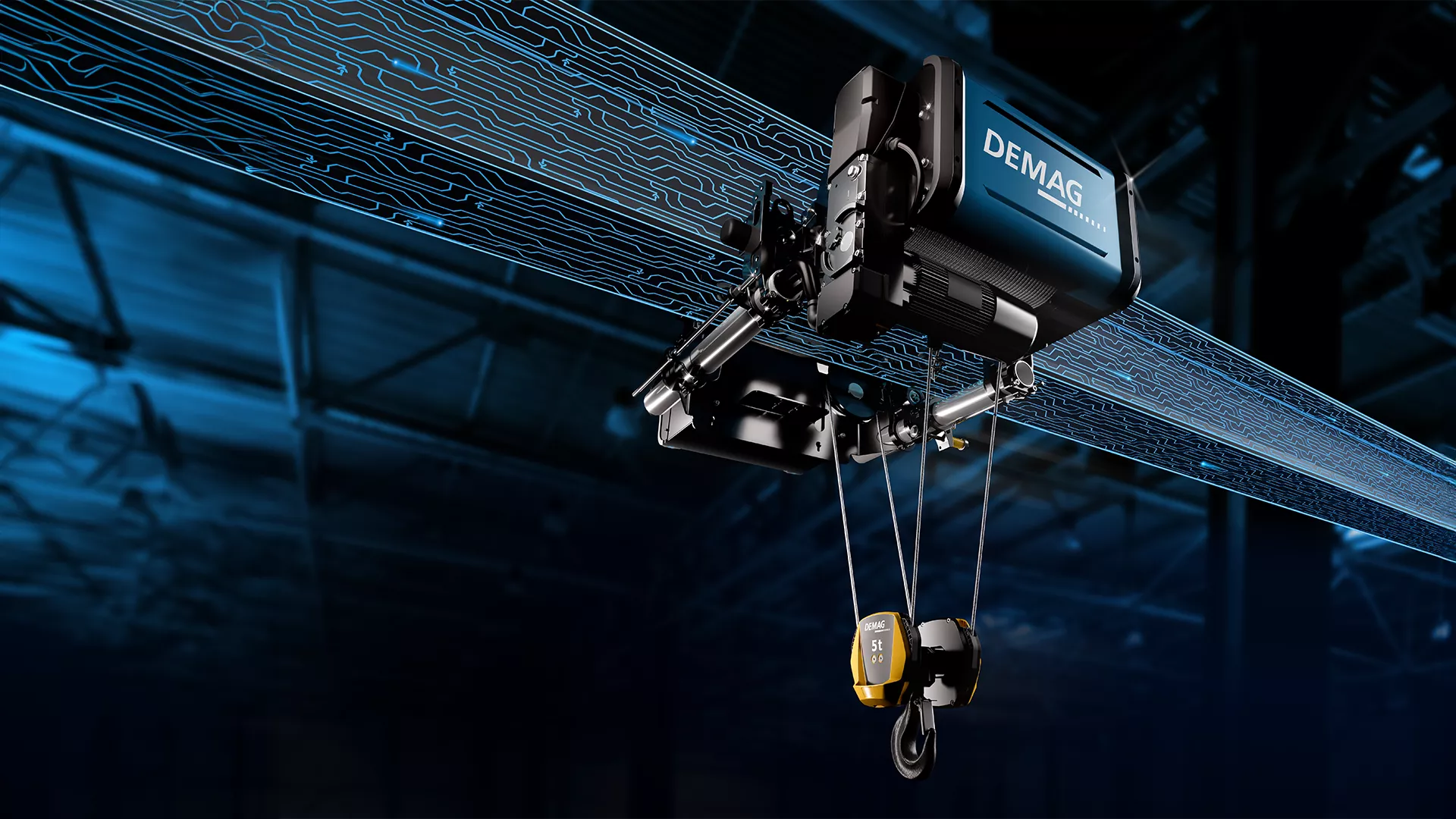
Inside the Workshop of a Leading EOT Crane Manufacturer
Table of Content
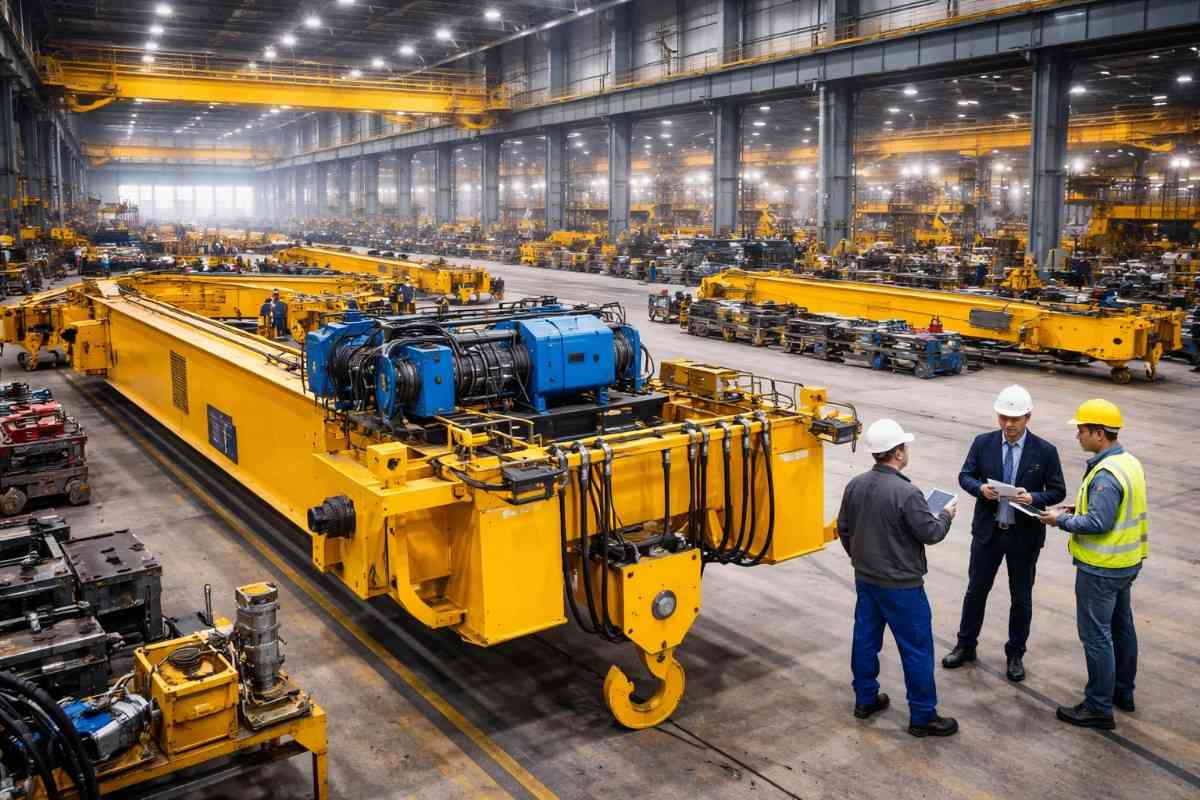
Inside the Workshop of a Leading EOT Crane Manufacturer
Most industrial buyers see the finished crane. They see it arrive on a flatbed truck, get assembled on their shop floor, and start moving loads from day one. What they rarely see is everything that happened before that moment. The weeks of engineering work, the precise fabrication, the rigorous quality checks, and the load testing that determine whether that crane will perform safely and reliably for the next 20 years.
When you are investing in an EOT crane for your facility, understanding how a serious EOT crane manufacturer actually builds that crane is not just interesting. It directly helps you ask better questions, make smarter purchasing decisions, and avoid the mistakes that come from buying on price alone.
This is a behind-the-scenes look at what happens inside the workshop of a leading EOT crane manufacturer, and why the process matters far more than most buyers realise.
Why the Manufacturing Process Defines the Crane's Entire Life
An EOT crane is not a commodity product. It is a piece of engineered equipment that will carry heavy loads, run thousands of operating cycles, and be expected to perform safely in demanding industrial environments for decades.
A crane built with the right steel grades, correct weld specifications, properly sized components, and thorough quality checks will do exactly that. A crane built to a price point, with shortcuts taken at any stage of fabrication, will show those compromises within the first few years of operation, sometimes sooner.
This is why the manufacturing workshop of an EOT crane manufacturer is the most important part of the entire supply chain. It is where every promise made in the sales brochure either gets delivered or quietly abandoned.
Stage One: Engineering and Design
Before a single piece of steel is cut, the engineering team gets to work. This stage is often invisible to the buyer but it is where the entire crane gets defined.
The design process begins with the buyer's specifications. Lifting capacity, span, hook height, duty class, building structure details, and operational environment all go into the design calculation. A responsible EOT crane manufacturer uses these inputs to determine the exact girder profile, end truck dimensions, runway beam specifications, motor sizing, and electrical configuration required.
For standard applications, this process draws on established design templates refined over many years of manufacturing experience. For custom or heavy duty applications, it involves detailed structural calculations verified against IS 807, IS 3177, and relevant FEM standards.
The output of this stage is a complete set of fabrication drawings and a bill of materials that will guide every subsequent step in the workshop. Any error or shortcut here propagates through the entire crane. A well-engineered design, on the other hand, gives every downstream process a clear and accurate target to work toward.
Stage Two: Material Procurement and Incoming Inspection
An EOT crane manufacturer is only as good as the materials going into the crane. This stage is where serious manufacturers separate themselves from those cutting corners.
Steel plates and structural sections are sourced from mills with known and consistent quality credentials. The incoming material inspection checks for dimensional accuracy, surface condition, and material test certificates that confirm the steel grade matches what was specified in the design.
Motors, hoists, wire ropes, electrical panels, end carriages, and control components are sourced from established suppliers whose products meet the performance requirements of the application. A manufacturer who sources electrical and mechanical components based solely on price is making a decision that the crane buyer will eventually pay for, usually in the form of premature component failures and unplanned downtime.
Stage Three: Girder Fabrication
The girder is the heart of an EOT crane. It is the main horizontal beam that carries the hoist and the entire lifted load across the span of the building. Getting the girder right is non-negotiable.
In the fabrication shop, steel plates are cut to the precise dimensions specified in the engineering drawings. The web plates and flange plates are then assembled into the box girder profile using jigs that hold the components in the correct geometry during welding.
Welding is a critical process at this stage. The welds on the girder are structural welds that will carry dynamic loads through thousands of operating cycles. A leading EOT crane manufacturer employs qualified welders working to certified welding procedures and uses non-destructive testing, typically dye penetrant testing or ultrasonic testing, to verify weld quality before the girder moves to the next stage.
After welding, the girder is checked for camber. A correctly fabricated EOT crane girder has a slight upward bow built in during fabrication. This pre-camber compensates for the natural deflection that occurs when the crane carries a load at mid-span. Getting the camber right is a mark of fabrication quality that buyers rarely see but always benefit from.
Stage Four: End Truck and Runway Assembly
The end trucks are the wheeled assemblies that carry the girder along the runway rails. They need to be fabricated with precise wheel geometry to ensure smooth travel, even load distribution across the rails, and minimal wear over the crane's service life.
At this stage, the end trucks are assembled, the drive motors are mounted, and the wheel alignments are checked and adjusted. Any misalignment here will cause uneven rail wear, increased power consumption, and potential structural fatigue over time.
The runway beams, if being supplied as part of the project, are also fabricated and prepared at this stage. Rail fixing details, end stops, and collector rail systems for power supply to the travelling crane are all assembled and checked before dispatch.
Stage Five: Electrical Assembly and Panel Wiring
The electrical system is what turns a fabricated steel structure into a fully functional EOT crane. This stage involves assembling the main control panel, wiring the motors for travel and hoisting, installing the limit switches that protect against over-travel and over-hoisting, and integrating the pendant or radio remote control system.
A serious EOT crane manufacturer builds electrical panels to IP-rated enclosure standards appropriate for the operating environment, uses correctly sized cable trays and conduit runs, and applies proper ferrule and labelling practices that make future maintenance straightforward rather than a guessing game.
Electrical safety devices including emergency stop circuits, overload protection relays, and phase failure protection are standard on any crane built to IS standards. Buyers should always verify that these are included and correctly wired, not just listed in a specification sheet.
Stage Six: Pre-Dispatch Assembly and Load Testing
This is the stage that separates manufacturers who take quality seriously from those who do not. Before the crane leaves the factory, it is assembled completely, all systems are tested under power, and a full load test is conducted.
The load test involves lifting a test load equal to 125 percent of the crane's rated capacity. This is the standard Factory Acceptance Test procedure defined under IS 3177. The crane is operated through its full range of motion under this load and checked for structural deflection, motor performance, brake holding capability, and limit switch operation.
Any issues identified during the load test are corrected before dispatch. This means the crane arriving at the buyer's facility has already been proven to work correctly under conditions more demanding than it will face in normal service.
A manufacturer who skips the load test and ships an untested crane is transferring the risk of undiscovered problems to the buyer. This is not a hypothetical concern. It is a real and relatively common shortcut in the lower end of the market.
What Buyers Should Ask Their EOT Crane Manufacturer
Understanding the manufacturing process gives you the tools to ask the right questions before placing an order.
Ask whether the manufacturer employs qualified welders and uses certified welding procedures for structural welds. Ask whether incoming steel is checked against material test certificates. Ask whether a factory load test to 125 percent of rated capacity is conducted before dispatch. Ask what electrical standards the panel wiring follows. Ask whether the girder camber is specified in the design drawings.
A manufacturer who answers these questions clearly and confidently, and can show documentation to support those answers, is one worth trusting with your project. A manufacturer who deflects, generalises, or simply quotes a lower price without addressing these specifics deserves a great deal more scrutiny.
Times Krane: What Happens in Our Workshop
Times Krane operates a fully equipped manufacturing facility where every EOT crane is built through the complete process described above. Engineering design, steel fabrication, welding by qualified personnel, electrical assembly, and factory load testing are all carried out in-house before any crane leaves for a customer site.
The Times Krane team works to IS 807, IS 3177, and FEM standards across all product lines. Every project begins with a detailed engineering review and ends with a documented factory acceptance test. Customers are welcome to witness the load test at the facility before dispatch, which is an offer that reflects the confidence built into every crane that comes out of the Times Krane workshop.
From standard single girder cranes for light industrial applications to heavy duty double girder cranes for steel plants and process industries, Times Krane has the engineering capability and manufacturing infrastructure to deliver cranes that perform as specified throughout their full service life.
Applications Served by Times Krane EOT Cranes
The cranes manufactured at the Times Krane facility serve a broad range of industries across India.
In steel plants and rolling mills, heavy duty double girder EOT cranes handle coils, billets, and fabricated sections with the precision and reliability that continuous production demands.
In automotive manufacturing facilities, single girder and double girder cranes support assembly line operations, press shop material handling, and tooling movement.
In engineering and fabrication workshops, EOT cranes provide the lifting backbone for machining, welding, and assembly operations across shifts.
In warehouses and logistics facilities, single girder and underslung cranes deliver efficient overhead material movement without consuming floor space.
In power plants and heavy infrastructure projects, Times Krane supplies cranes built to the specific duty class and environmental requirements of these demanding applications.
Frequently Asked Questions
How long does it take an EOT crane manufacturer to build and deliver a crane?
For standard configurations, manufacturing and delivery typically takes between 4 and 8 weeks from order confirmation. Custom or heavy duty cranes with longer spans or special requirements may take longer. Your manufacturer should provide a confirmed delivery schedule at the time of order.
Can I visit the EOT crane manufacturer's facility before placing an order?
Yes, and it is strongly recommended. A facility visit gives you a direct view of the manufacturing infrastructure, quality systems, and workforce capability. Any serious manufacturer will welcome a buyer visit.
What standards should an EOT crane manufacturer follow in India?
Indian EOT crane manufacturers should design and build to IS 807 for design, construction and testing of cranes, and IS 3177 for electric overhead travelling cranes. FEM standards are also commonly referenced, particularly for export projects or applications following European industry norms.
What is included in a factory acceptance test?
A standard factory acceptance test involves assembling the complete crane, testing all electrical and mechanical systems under power, and conducting a load test at 125 percent of rated capacity. The test verifies structural performance, brake holding, limit switch operation, and motor function.
Does Times Krane offer installation and commissioning support after delivery?
Yes. Times Krane provides complete installation and commissioning support at the customer's site, including erection of the runway system if required, crane assembly, electrical connection, load testing on site, and operator training before handover.
Conclusion
The crane you install in your facility is only as good as the manufacturer who built it. Every choice made in the engineering room, the fabrication shop, the welding bay, and the testing area directly determines how that crane will perform on your shop floor, and for how long.
Choosing the right EOT crane manufacturer means looking past the price list and understanding what actually happens inside the workshop. It means asking the right questions, expecting documented answers, and selecting a partner whose manufacturing process gives you confidence before the crane ever arrives at your site.
Times Krane brings that level of manufacturing discipline and engineering commitment to every project. If you are planning an EOT crane installation and want to work with a manufacturer who can demonstrate quality at every stage of the process, reach out to the Times Krane team today. A consultation with our engineering team costs nothing. A wrong crane choice costs far more.
Recent Posts
EOT Crane Installation Process and Cost in India
The complete EOT crane installation process in India, covering site survey, runway beams, load testing, and what installation actually costs beyond the crane price.
EOT Crane vs Gantry Crane: Which One Does Your Factory Actually Need?
EOT cranes and gantry cranes both lift heavy loads, but they suit very different factories. This guide walks through a simple decision tree covering building structure, floor space, budget, and indoor vs outdoor use, so you can confidently choose the right crane for your facility.

EOT Crane Safety Compliance in India
IS 3177, IS 807, Factories Act rules, and how third-party load testing and certification work for EOT cranes in India.

EOT Crane AMC Cost & Whats Included in 2026
What's actually included in an EOT crane AMC, how comprehensive and non-comprehensive contracts differ, and what drives the cost in India.
Need a Custom Lifting Solution?
Let’s Talk!
Looking for a reliable partner for your next industrial project?
- Expert Consultation
- Pan-India Service