
How to Choose the Right Demag Crane Supplier for Your Industry
Table of Content

How to Choose the Right Demag Crane Supplier for Your Industry
Every day, across manufacturing floors, steel plants, warehouses, and construction yards, the wrong crane decision costs businesses far more than money. It costs time, productivity, and in the worst cases, worker safety. If you are currently searching for a reliable Demag crane supplier, you already know the stakes are high. The right supplier does not just sell you a crane. They become a long-term partner in your operational success.
But with so many options in the market, how do you separate a genuinely capable supplier from one that simply has a good brochure? This guide gives you a practical, no-fluff framework to make a confident, informed decision.
What Makes a Demag Crane Supplier Different from a Regular Crane Dealer
Not every company that sells cranes qualifies as a true Demag crane supplier. There is a meaningful difference between a dealer who stocks standard catalogue products and a supplier who understands engineering requirements, application-specific configurations, and post-sale service responsibilities.
A qualified Demag crane supplier typically offers:
- Deep product knowledge across the Demag range, including EOT cranes, KBK cranes, hoists, and runway systems
- Engineering and design support tailored to your facility layout
- Compliance with international safety standards such as ISO 4301 and FEM crane classifications
- Trained installation teams and certified service technicians
- Documented after-sales support with clearly defined response times
When evaluating any supplier, your first filter should be whether they operate as a genuine technical partner or just a point-of-sale vendor.
Key Factors to Evaluate Before Choosing Your Crane Supplier
1. Industry Experience and Application Knowledge
A crane for a steel melting shop operates under very different conditions than one installed in a pharmaceutical warehouse. Your supplier must understand the operational environment of your specific industry.
Ask prospective suppliers about their experience in your sector. Have they supplied cranes to automotive plants, port terminals, paper mills, or process industries? A supplier with documented project experience in your domain will be far better equipped to recommend the right lifting class, duty cycle, and structural configuration.
2. Product Range and Technical Depth
Your material handling needs today may evolve significantly in the next three to five years. Choosing a supplier with a comprehensive product portfolio means you can scale without changing vendors.
Look for suppliers who offer:
- Single girder and double girder overhead cranes
- Electric overhead travelling (EOT) cranes in standard and custom configurations
- KBK modular crane systems for flexible intralogistics
- Industrial hoists with variable frequency drives
- Explosion-proof and process cranes for hazardous environments
A broad product range signals technical depth and manufacturing capability, both of which matter when your requirements become more complex over time.
3. Customization Capabilities
Standard cranes work for standard problems. But most industrial buyers have specific span requirements, headroom constraints, floor load limitations, or process-specific needs that off-the-shelf products cannot address.
Ask directly: can they customize lifting capacity, hook height, crane speed, control systems, or structural steel design? A capable Demag crane supplier will have in-house engineering teams that can adapt product configurations to your exact specifications rather than asking you to adjust your facility to fit their crane.
4. Quality Standards and Certifications
This is non-negotiable. Industrial lifting equipment operates under significant mechanical stress and directly impacts worker safety. Your supplier must demonstrate adherence to recognized quality benchmarks.
Verify the following:
- ISO 9001 certification for quality management systems
- Compliance with IS/ISO 4301 for crane duty classification
- CE marking where applicable for European-standard products
- In-house load testing facilities and quality inspection processes
- Material traceability for structural components and wire ropes
Never accept vague assurances about quality. Ask for documentation.
5. Installation Expertise
Even the best crane performs poorly if installed incorrectly. The structural alignment of runway beams, the precision of end carriage fitment, and the calibration of limit switches and control systems are all critical to safe operation and equipment longevity.
Your supplier should deploy trained and experienced installation engineers, not third-party contractors with no product-specific knowledge. Request details on who physically installs the equipment and what quality checks are performed before commissioning.
6. After-Sales Service and Maintenance Support
This is where many buyers make the most expensive mistake. They prioritize the initial purchase decision and underestimate the importance of ongoing service support.
A crane running in a three-shift operation accumulates wear rapidly. Scheduled preventive maintenance, availability of genuine spare parts, and fast breakdown response are operational necessities.
Evaluate service support on these parameters:
- Dedicated service teams in or near your region
- Availability of original spare parts without long lead times
- Preventive maintenance contracts with documented inspection checklists
- Emergency response commitments with defined turnaround times
- Remote diagnostics capability for smart crane systems
A supplier who disappears after installation will eventually become a liability.
Common Problems Buyers Face and How to Avoid Them
Problem: Crane underperforms in actual operating conditions This usually happens when the duty cycle or operational frequency is misspecified during the ordering stage. Always provide your supplier with accurate usage data: lifts per hour, average and maximum load, operating hours per shift, and environmental conditions.
Problem: Long downtime during breakdowns This is almost always a service and spare parts availability issue. Before finalizing your supplier, ask specifically about parts stocking policy and average response time for breakdown calls.
Problem: Structural integration issues during installation This occurs when the supplier has not accounted for existing building structure, column spacing, or floor load capacity. Insist on a proper site survey and structural assessment as part of the pre-order process.
Problem: Cost overruns from poor specification Buyers who receive the lowest initial quote sometimes find that accessories, installation, commissioning, and basic spares are excluded. Always ask for a complete scope of supply and compare total cost of ownership, not just the equipment price.
Industries That Rely on Demag Crane Suppliers
Demag-specification cranes and material handling systems are in active use across a wide range of industries. Understanding where these systems are deployed helps you gauge whether a supplier genuinely serves your sector.
- Steel and metals: Foundries, rolling mills, and fabrication yards require heavy-duty cranes with high duty cycle ratings and heat-resistant components
- Automotive manufacturing: Precision lifting for body shops, engine assembly lines, and press shops demands accuracy and reliability
- Warehousing and logistics: Light to medium duty EOT cranes and KBK systems support efficient goods movement and storage operations
- Construction and infrastructure: Precast yards, bridge construction, and civil projects rely on robust outdoor cranes with weather protection
- Paper and pulp: Large roll handling cranes with specialized grippers and precise speed control are standard requirements
- Chemical and pharma: Explosion-proof and cleanroom-compatible lifting systems require specialized product knowledge
If your supplier cannot demonstrate experience in your industry, that is a risk worth taking seriously.
Why Times Krane Is a Trusted Name in Industrial Lifting
Times Krane brings together technical expertise, manufacturing quality, and customer-focused service in the industrial crane and material handling space. With a commitment to delivering engineered lifting solutions rather than generic products, Times Krane works closely with plant engineers, procurement teams, and project managers to understand the specific demands of each application.
What sets Times Krane apart is the combination of design flexibility and domain experience. From standard EOT cranes to custom-configured overhead systems for demanding process environments, the focus is always on delivering equipment that performs reliably across its full operational life.
The after-sales support infrastructure ensures that once your crane is commissioned, you have a service partner who remains accessible and responsive. Genuine spare parts availability, trained service technicians, and preventive maintenance programs keep your equipment running at peak performance.
For industrial buyers who value long-term reliability over short-term cost savings, Times Krane represents a partnership built on engineering integrity and operational accountability.
Explore the product range at timeskrane.com to learn more about EOT cranes, KBK systems, and industrial hoists suited to your application.
Frequently Asked Questions
Q1: What is the difference between a Demag-specification crane and a standard EOT crane?
Demag-specification cranes follow the engineering standards, quality benchmarks, and design principles established by Demag, a globally recognized name in industrial lifting. These include precise duty cycle classifications, precision-machined components, and advanced control systems. Not all EOT cranes are built to this level of specification.
Q2: How do I determine the right lifting capacity and duty class for my application?
Your supplier should help you calculate this based on the maximum load to be lifted, frequency of lifts per hour, total operating hours per year, and environmental conditions. Duty classification follows ISO 4301 standards, which categorize cranes from M1 (light use) to M8 (very heavy, continuous use).
Q3: Can a crane supplier customize the system for my existing building structure?
Yes, a capable supplier will conduct a site survey and adapt the crane design to match your building's column spacing, roof height, existing structural capacity, and operational layout. Always request this assessment before finalizing the order.
Q4: What should a preventive maintenance contract cover?
A comprehensive maintenance contract should include periodic mechanical and electrical inspections, lubrication of moving components, checking and replacing worn rope or chain, testing of safety devices and limit switches, and documentation of all inspections with corrective action reports.
Q5: How long does it typically take to install and commission an industrial overhead crane?
Installation time varies based on crane size, site readiness, and complexity. A standard single girder EOT crane may take a few days while a large double girder system in a complex facility could take two to four weeks. Your supplier should provide a detailed project schedule at the time of order confirmation.
Conclusion
Choosing the right Demag crane supplier is not a decision that should be rushed or reduced to a price comparison exercise. The supplier you choose will influence the safety of your workplace, the efficiency of your operations, and the total cost of ownership over many years of service.
Evaluate technical capability, industry experience, customization depth, quality standards, and above all, the seriousness of their service commitment. These are the factors that separate a reliable long-term partner from a transactional vendor.
If you are ready to discuss your lifting requirements with a team that understands the real demands of industrial operations, Times Krane is ready to help.
Contact Times Krane today at timeskrane.com and let our engineering team help you find the right solution for your facility.
Recent Posts
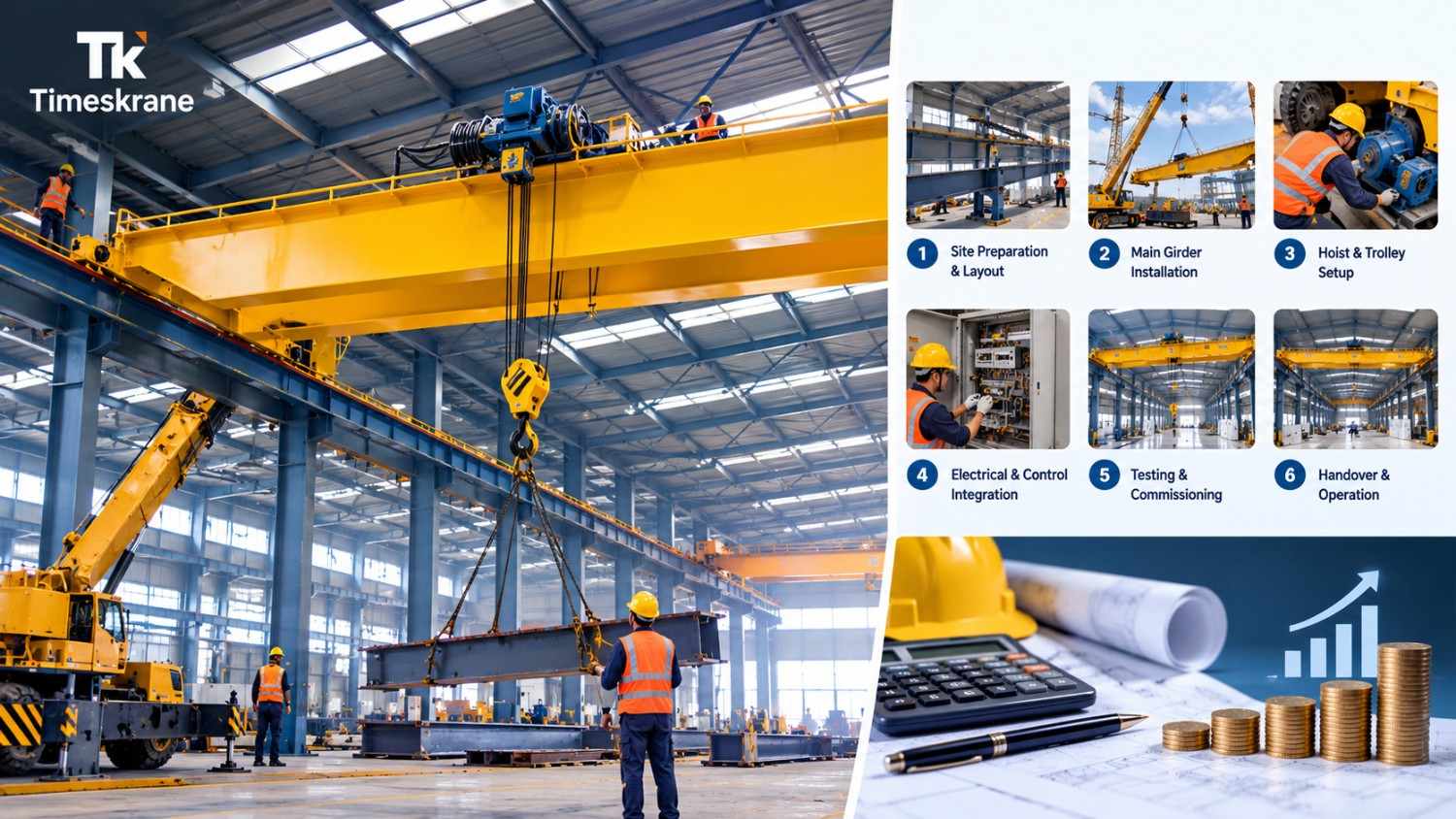
EOT Crane Installation Process and Cost in India
The complete EOT crane installation process in India, covering site survey, runway beams, load testing, and what installation actually costs beyond the crane price.
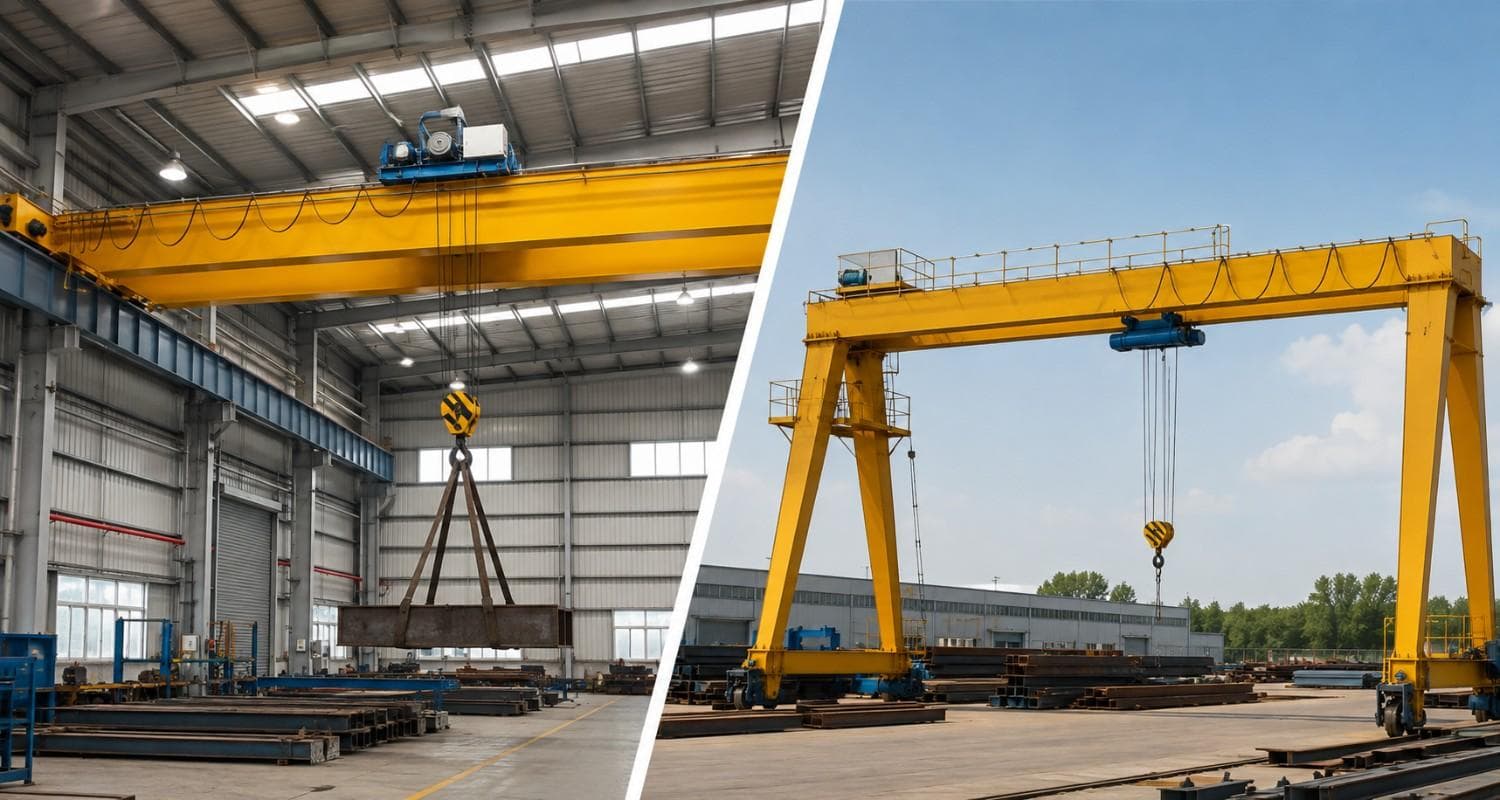
EOT Crane vs Gantry Crane: Which One Does Your Factory Actually Need?
EOT cranes and gantry cranes both lift heavy loads, but they suit very different factories. This guide walks through a simple decision tree covering building structure, floor space, budget, and indoor vs outdoor use, so you can confidently choose the right crane for your facility.

EOT Crane Safety Compliance in India
IS 3177, IS 807, Factories Act rules, and how third-party load testing and certification work for EOT cranes in India.

EOT Crane AMC Cost & Whats Included in 2026
What's actually included in an EOT crane AMC, how comprehensive and non-comprehensive contracts differ, and what drives the cost in India.
Need a Custom Lifting Solution?
Let’s Talk!
Looking for a reliable partner for your next industrial project?
- Expert Consultation
- Pan-India Service