
How KONE Cranes Service Keeps Heavy Industry Running
Table of Content
How KONE Cranes Service Keeps Heavy Industry Running
Picture a steel plant running three shifts. Ladles need to move, coils need to be transferred, and every minute of crane downtime translates directly into lost production. Now imagine that the overhead crane stops mid-operation. Not because of a catastrophic failure, but because a brake lining that should have been replaced three months ago finally gave out, or a limit switch that was showing early signs of wear during the last inspection was never flagged.
This is the reality that plant managers and maintenance engineers across heavy industry deal with regularly. And it is precisely the reality that a structured KONE Cranes Service programme is designed to prevent.
KONE Cranes Service is not simply about fixing things when they break. It is a comprehensive maintenance and support framework built around one objective: keeping your crane running safely, reliably, and at full performance capacity so your operations never have to stop because of equipment failure.
This blog explains what KONE Cranes Service actually covers, why it matters for heavy industry, and how a well-structured service plan changes the way plant operators manage crane-dependent production.
The Real Cost of Crane Downtime in Heavy Industry
Before getting into what KONE Cranes Service delivers, it is worth understanding what is at stake when a crane goes down unexpectedly.
In a steel plant, an unplanned crane stoppage can halt an entire production line within minutes. In an automotive assembly facility, a single crane failure in the press shop or body assembly area can stop vehicle production for hours. In a port or logistics terminal, a crane breakdown during peak unloading operations creates cascading delays that affect multiple shipments and clients.
Industry data consistently shows that unplanned equipment downtime costs significantly more than planned maintenance. The repair cost itself is often the smallest part of the equation. Lost production, idle labour, delayed deliveries, and potential safety incidents are the real financial consequences.
A structured KONE Cranes Service programme shifts the maintenance model from reactive to proactive. Instead of waiting for something to fail and then dealing with the consequences, planned service visits identify and address developing problems before they become operational disruptions.
What KONE Cranes Service Actually Covers
KONE Cranes Service is structured across several levels of support, from routine preventive maintenance visits to full annual maintenance contracts that cover parts, labour, and emergency response.
Preventive Maintenance Visits
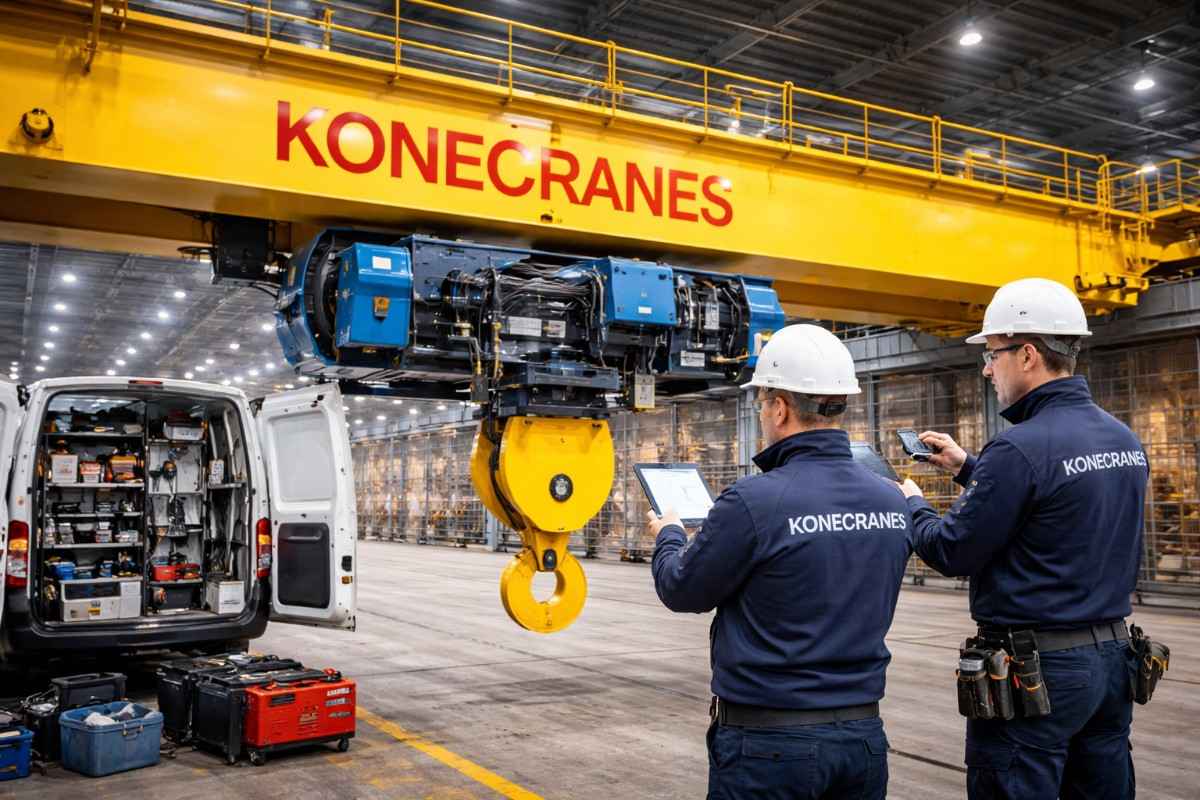
These are scheduled visits at defined intervals, typically monthly, quarterly, or as specified in the service agreement, where trained service technicians carry out a systematic inspection and maintenance of all crane systems. This includes mechanical components such as brakes, wheels, wire ropes, hooks, and end trucks, as well as electrical components including motors, contactors, limit switches, pendant controls, and panel wiring.
Lubrication of all moving parts is carried out during every visit. Worn components are identified and flagged for replacement before they cause a failure. Adjustments are made to brakes, limits, and travel mechanisms to maintain correct operating parameters.
Breakdown and Emergency Response Service
Even with the best preventive maintenance programme in place, unexpected failures can occasionally occur. KONE Cranes Service agreements typically include defined response time commitments for breakdown calls, ensuring that when a crane does go down unexpectedly, a qualified technician reaches the site and gets the crane operational again as quickly as possible.
Load Testing and Statutory Inspections
Overhead cranes in India are subject to periodic statutory inspection and load testing requirements under the Factories Act. KONE Cranes Service includes load testing at 125 percent of rated capacity and provides the documentation required for statutory compliance. This removes a significant administrative and technical burden from the plant's internal maintenance team.
Crane Modernisation and Upgrades
For older crane fleets, KONE Cranes Service also covers modernisation services. This includes upgrading control systems from older contactor-based panels to modern variable frequency drive systems, replacing worn structural components, retrofitting radio remote control systems, and upgrading safety devices to current standards. Modernisation through an established service provider extends the working life of existing cranes at a fraction of the cost of crane replacement.
The Difference Between Reactive and Preventive Crane Maintenance
Many plants in India still operate on a reactive maintenance model for their crane fleets. The crane runs until something fails, then it gets repaired. This approach feels economical until the consequences of an unplanned failure are calculated properly.
Reactive maintenance means uncontrolled downtime at the worst possible time. It means sourcing spare parts urgently, often at premium cost. It means deploying maintenance resources reactively rather than efficiently. And it means that the same component that failed once is likely to fail again, because the root cause rather than just the symptom has not been addressed.
Preventive maintenance through KONE Cranes Service changes this dynamic entirely.
Service visits are scheduled at times that minimise disruption to production. Components are replaced based on condition and service life data rather than after failure. Spare parts are planned and sourced in advance at standard pricing. Maintenance records build up over time to give a clear picture of each crane's condition and history.
The result is a crane fleet that operates with predictable reliability, lower average maintenance cost per year, and far fewer unplanned production interruptions.
Key Components Covered Under KONE Cranes Service
A thorough service programme covers every system that contributes to crane performance and safety. Here is what typically gets attention during a comprehensive KONE Cranes Service visit.
Mechanical systems include brake linings and brake adjustment, wire rope inspection and lubrication, hook and swivel assembly inspection, wheel flange wear assessment, gearbox oil level and condition, and end truck wheel alignment.
Electrical systems include motor condition and insulation resistance testing, contactor and relay inspection and replacement, limit switch calibration and function testing, pendant control and cable inspection, panel internal inspection and tightening of connections, and collector rail and brush assembly check.
Structural inspection covers girder condition including paint, corrosion, and visible weld cracks, end truck frame condition, runway rail wear and alignment, and buffer and end stop condition.
Safety devices covered include overload protection, emergency stop function, phase failure relay operation, anti-collision systems where fitted, and hoist upper and lower limit switch accuracy.
How to Evaluate a KONE Cranes Service Agreement
Not all service agreements deliver the same value. Here is what to look for when reviewing or negotiating a KONE Cranes Service contract.
Defined visit frequency and scope. The contract should clearly state how many visits are included per year and what work is carried out during each visit. A vague scope creates room for underdelivery.
Response time commitments for breakdowns. If your operation is crane-dependent and runs multiple shifts, a 24-hour or 48-hour breakdown response commitment is meaningfully different from an open-ended response promise.
Spare parts coverage. Some service agreements cover the cost of consumable parts such as brake linings, limit switches, and lubricants within the contract value. Others cover labour only. Understanding this distinction helps you budget accurately for crane maintenance.
Documentation and reporting. Every service visit should produce a written inspection report listing the work done, the components checked, any items replaced, and any items flagged for future attention. This documentation is essential for maintenance planning and statutory compliance.
Technician qualifications. Ask whether the technicians carrying out your KONE Cranes Service visits are trained and certified for KONE crane systems specifically. Generic maintenance technicians without product-specific training cannot deliver the same depth of inspection as those with KONE product knowledge.
Industry Scenarios Where KONE Cranes Service Makes the Biggest Difference
Steel Plants and Rolling Mills
In continuous casting and rolling operations, cranes work in extreme heat, dust, and vibration conditions. Components wear faster than in standard industrial environments. Quarterly or even monthly service visits with particular attention to brake systems, wire ropes, and electrical insulation are essential for safe operation.
Automotive Manufacturing
Assembly line cranes in automotive plants run at high duty cycles with demanding precision requirements. Body panel handling cranes, for example, require precise positioning capability and reliable hoist brakes. KONE Cranes Service in this environment focuses heavily on drive system condition, brake performance, and control system accuracy.
Port and Material Handling Terminals
Crane availability at port terminals is directly tied to terminal throughput. An unplanned crane stoppage during peak operations can have disproportionate commercial consequences. KONE Cranes Service agreements for port cranes typically include more frequent preventive visits, faster breakdown response commitments, and dedicated spare parts stocking.
Heavy Engineering and Fabrication
Workshop cranes in heavy fabrication facilities handle irregular loads in demanding manual-intensive environments. Hook, rope, and brake wear are typically higher in these settings. Regular KONE Cranes Service visits help manage wear rates and ensure that safety-critical components remain within acceptable operating parameters.
Why Times Krane Is Your Trusted Partner for Crane Service Support
Times Krane understands that a crane purchase is the beginning of a long-term relationship, not the end of one. The after-sales service infrastructure that Times Krane has built reflects this understanding.
For clients operating KONE crane systems, Times Krane provides comprehensive service support including preventive maintenance contracts, breakdown response, load testing for statutory compliance, spare parts supply, and modernisation services for ageing crane fleets.
The Times Krane service team is trained on KONE crane systems and equipped to carry out the full scope of inspection and maintenance work that these cranes require. Service agreements are structured flexibly to match the operational requirements and budget parameters of each client, whether that means a basic annual inspection and load test or a full comprehensive AMC covering all parts, labour, and emergency response.
What Times Krane brings beyond technical capability is responsiveness and accountability. When a plant manager calls because a crane is down, the Times Krane service team treats that call with the same urgency that the plant manager is feeling. That operational alignment between service provider and client is what makes a service relationship genuinely valuable rather than just contractually adequate.
Frequently Asked Questions
How often should a KONE crane receive a preventive maintenance service visit?
The recommended service frequency depends on the crane's duty class and operating environment. Light duty cranes in clean environments may need quarterly visits. Heavy duty cranes in steel plants or port terminals operating continuously may require monthly visits. Your service provider should recommend a frequency based on an assessment of your specific operating conditions.
What is covered under a KONE Cranes Service annual maintenance contract?
A comprehensive AMC typically covers all scheduled preventive maintenance visits, labour for breakdown repairs, consumable spare parts such as brake linings and lubricants, load testing for statutory compliance, and full documentation. The exact coverage depends on the contract level agreed with the service provider.
Can Times Krane service KONE cranes that were not originally supplied by Times Krane?
Yes. Times Krane provides service support for KONE crane systems regardless of who originally supplied or installed the crane. As long as the crane model and configuration can be confirmed, the Times Krane service team can carry out inspection, maintenance, and repair work.
What happens if a critical component fails between scheduled service visits?
KONE Cranes Service agreements with Times Krane include defined breakdown response provisions. When a critical failure occurs between scheduled visits, the client contacts the Times Krane service team and a technician is dispatched according to the response time commitment in the service agreement.
How does KONE Cranes Service support statutory compliance for overhead cranes in India?
Under the Factories Act and associated state rules, overhead cranes are required to be inspected and load tested periodically by a competent person. KONE Cranes Service includes this inspection and load testing, and provides the inspection certificate and documentation required for compliance with statutory requirements.
Conclusion
A crane that stops working does not just create a maintenance problem. It creates a production problem, a safety problem, and a commercial problem, all at the same time. In heavy industry, where crane-dependent operations run continuously and margins depend on throughput, that is a risk that no plant can afford to manage casually.
KONE Cranes Service, when properly structured and consistently delivered, removes that risk from the equation. It replaces unpredictable, costly reactive maintenance with a planned, documented, and accountable service programme that keeps cranes running at the performance level the operation depends on.
If you are currently operating KONE cranes without a structured service agreement, or if your existing service arrangement is not delivering the response and reliability your plant needs, Times Krane is ready to help. Contact the team today to discuss a KONE Cranes Service plan built around your operational requirements, your crane fleet, and your production priorities.
Recent Posts
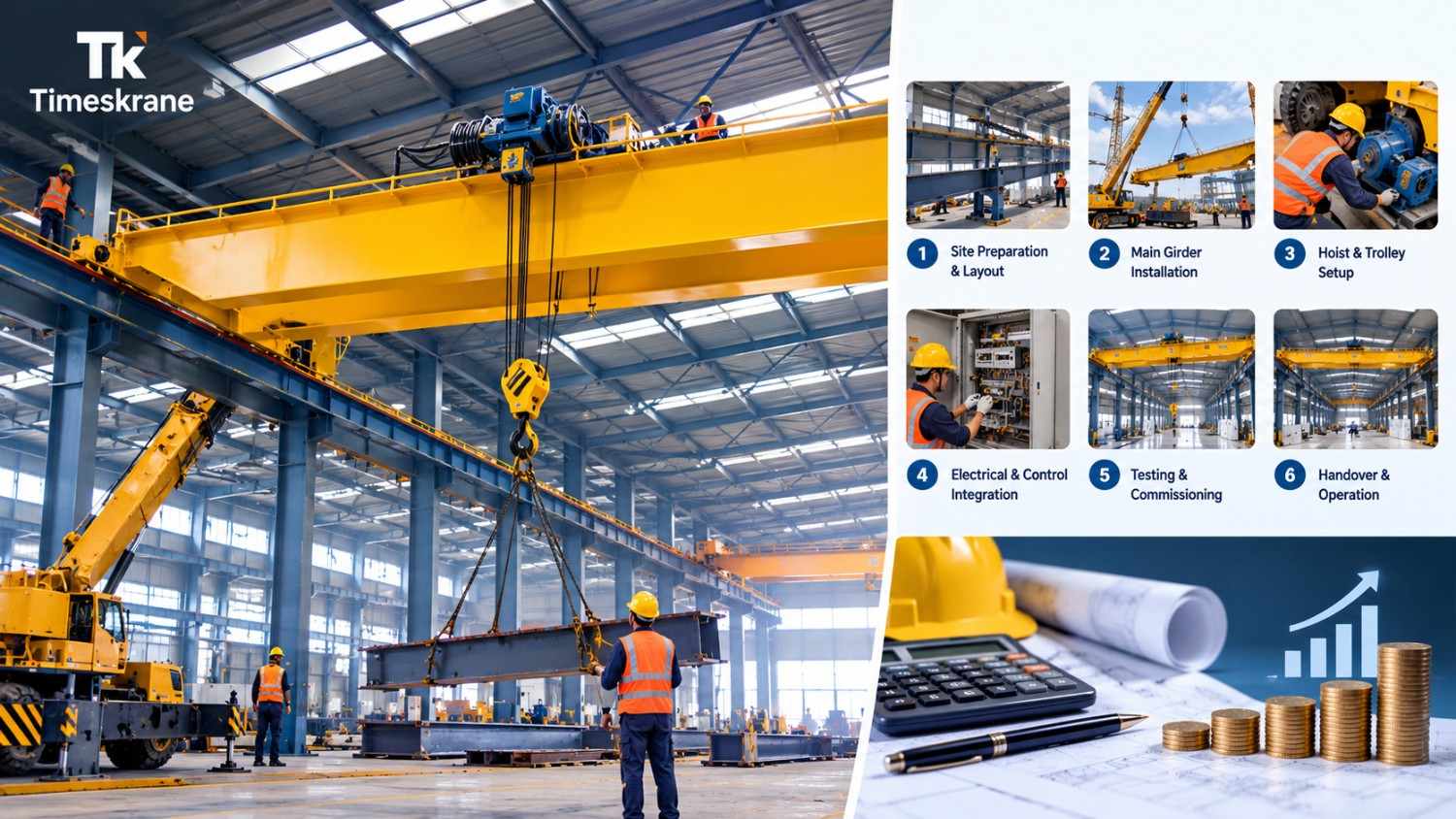
EOT Crane Installation Process and Cost in India
The complete EOT crane installation process in India, covering site survey, runway beams, load testing, and what installation actually costs beyond the crane price.
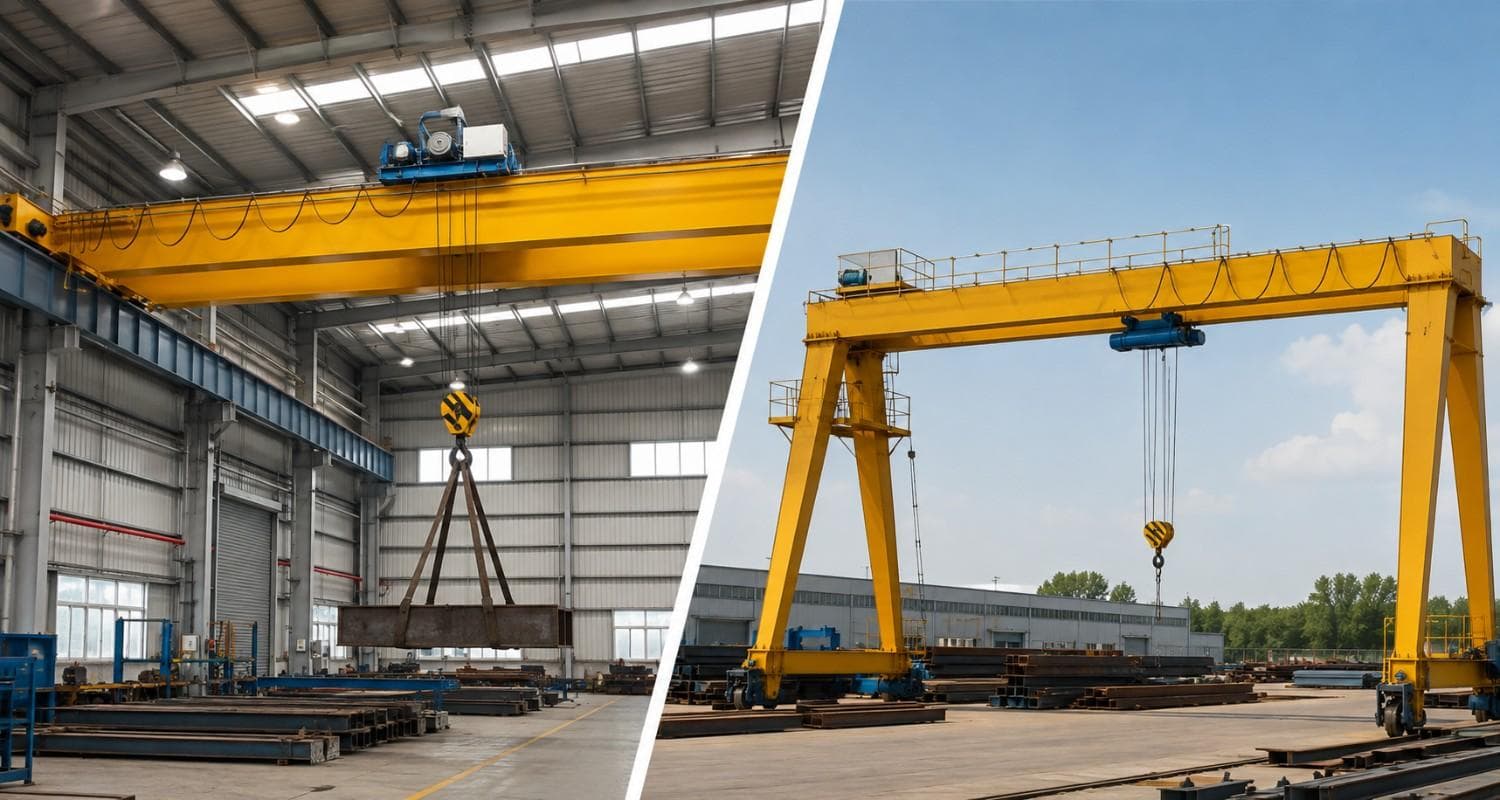
EOT Crane vs Gantry Crane: Which One Does Your Factory Actually Need?
EOT cranes and gantry cranes both lift heavy loads, but they suit very different factories. This guide walks through a simple decision tree covering building structure, floor space, budget, and indoor vs outdoor use, so you can confidently choose the right crane for your facility.

EOT Crane Safety Compliance in India
IS 3177, IS 807, Factories Act rules, and how third-party load testing and certification work for EOT cranes in India.

EOT Crane AMC Cost & Whats Included in 2026
What's actually included in an EOT crane AMC, how comprehensive and non-comprehensive contracts differ, and what drives the cost in India.
Need a Custom Lifting Solution?
Let’s Talk!
Looking for a reliable partner for your next industrial project?
- Expert Consultation
- Pan-India Service