English
Contact
Configure
Catalog
If you are in the process of sourcing an overhead crane for your facility, whether it is a new installation or a replacement, this guide will help you cut through the sales noise and focus on what actually matters when evaluating a supplier.
The term "supplier" is used loosely in this industry. Some companies are pure traders. They import or source cranes from third-party manufacturers, put their name on a brochure, and hand off the product without engineering involvement. Others are genuine manufacturer-suppliers who design, fabricate, test, erect, and service the equipment themselves.
That distinction matters enormously. When something goes wrong with a crane, and at some point, something always needs attention, you want a supplier who has skin in the game. A trader blames the manufacturer. A manufacturer-supplier owns the problem.
A credible overhead crane supplier should provide:
If any of these are missing from a supplier's scope, ask why before you proceed.
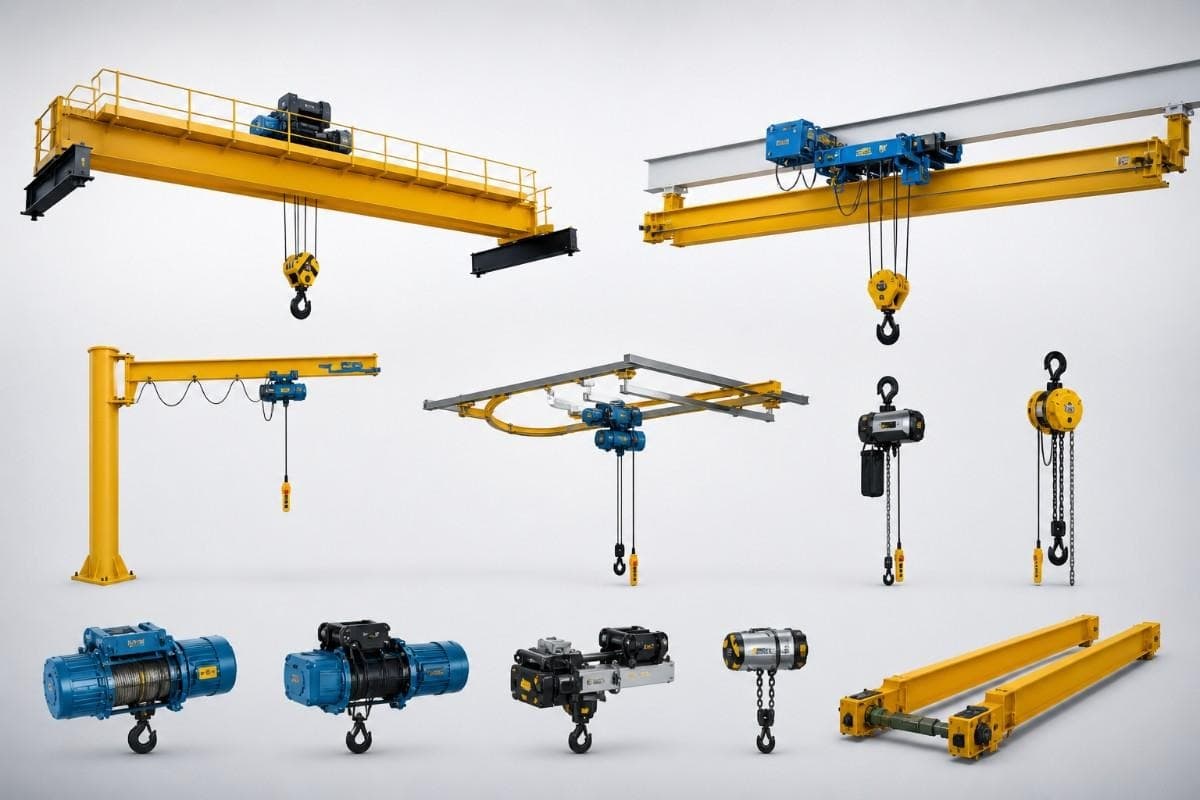
Not every facility needs the same crane. A reliable overhead crane supplier will help you identify the right configuration rather than push the most convenient option. Here is what the main types look like in practice:
Single Girder EOT Crane: One main beam spanning the bay. The hoist runs on the lower flange of the girder. Best suited for lighter capacities, typically up to 10 to 12 tonnes, where headroom is limited and the duty cycle is moderate.
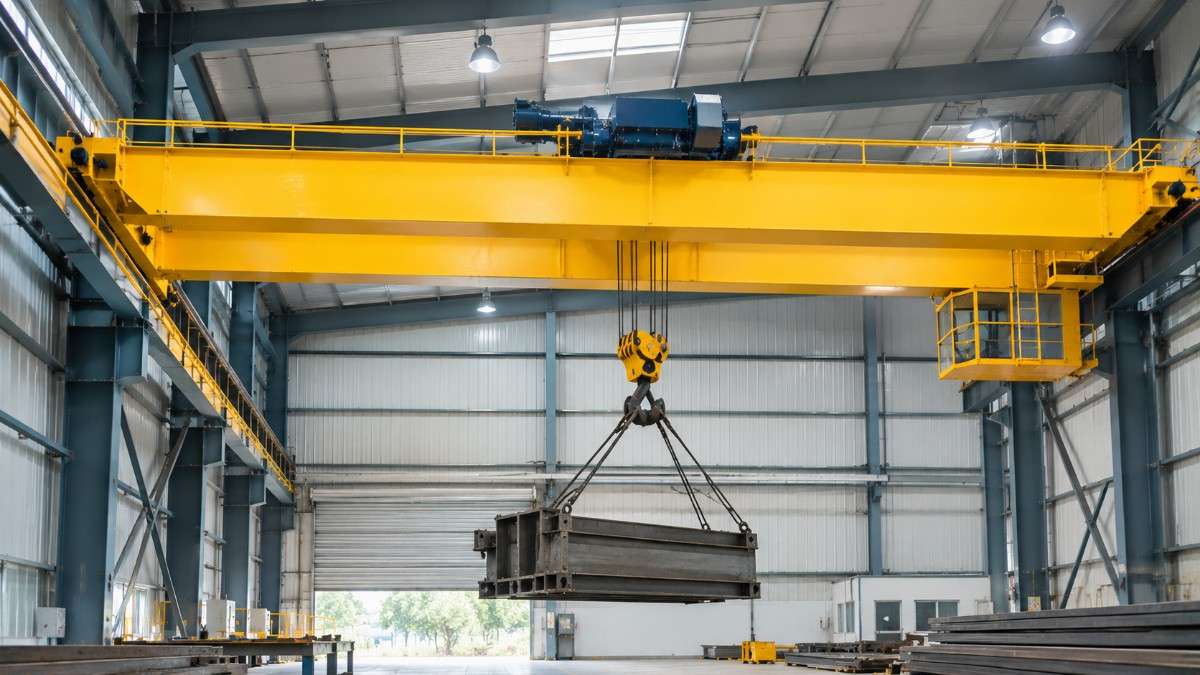
Double Girder EOT Crane: Two main beams with the hoist running between them on a separate crab assembly. Handles heavier loads, offers better hook height, and suits high-duty industrial applications from 10 tonnes to 500 tonnes and above.
Underslung Crane: Suspended from the lower flange of existing structural beams or an independent runway. Ideal when headroom is tight and a traditional top-running crane is not feasible.
Monorail Hoist System: A single-beam system for directional movement along a fixed path. Common in assembly lines, paint shops, and maintenance bays.
Process Cranes: Specialised overhead cranes for foundries, steel mills, and other extreme-environment applications, built for continuous high-duty operation under harsh conditions.
In my experience working through crane procurement for different facility types, the conversation with a good supplier always starts with your process, not their product catalogue. The crane specification should follow from understanding what you actually do in your plant.
This is where most buyers need a structured approach. Here is what I recommend asking and checking at every stage:
Ask the supplier directly: do they have structural and mechanical engineers on staff? Can they produce General Arrangement drawings, structural load calculations, and FEM analysis reports before you confirm the order?
A supplier who cannot provide pre-order engineering documentation is not really a manufacturer. They are a reseller. That is not necessarily disqualifying for every situation, but you need to know which one you are dealing with.
Every primary structural member in a well-built overhead crane should be fabricated from IS 2062 Grade steel, and the supplier should be able to provide mill test certificates on request. If they cannot, you have no way to verify what is actually holding your loads in the air.
The two primary standards governing overhead crane design and manufacture in India are IS 807 (Design, Manufacture, Erection and Testing of Cranes and Hoists) and IS 3177 (Code of Practice for EOT Cranes). A supplier operating without reference to these standards is not just cutting corners on paperwork. They are producing equipment that has not been verified against national safety benchmarks.
Every overhead crane should be proof load tested at 125% of its rated Safe Working Load before it leaves the factory. The test must be documented and a load test certificate issued. This is a non-negotiable requirement under IS 807. Any supplier who cannot confirm this process is raising a serious red flag.
When I tried tracking down support from a supplier who had sold a crane to a fabrication unit I was visiting, the response was three days of missed calls and vague timelines. The crane was sitting partially erected for two weeks because the supplier had no erection team and had outsourced it to a local contractor who had no familiarity with the equipment.
Erection quality directly affects crane performance and safety. Rail alignment, end stop positioning, electrical cable routing, limit switch setting, and load path verification all happen during erection. These are not tasks you want handed to someone who is figuring it out as they go.
A supplier who delivers a crane and disappears is a liability, not a partner. Ask where their service engineers are based. Ask how quickly they can reach your facility in the event of a breakdown. For plants running shift operations, the answer to that question has very direct operational consequences.
This point comes up in almost every crane procurement conversation, and it is worth stating plainly. Crane pricing reflects engineering inputs, material quality, testing rigour, and service capability. A dramatically lower quote almost always means one or more of those inputs has been reduced.
According to data from the Material Handling Industry Association of India, crane-related breakdowns and premature failures in industrial facilities are attributable to specification errors, poor-quality components, or inadequate maintenance in over 60 percent of reported cases. Getting this right upfront is almost always less expensive than fixing it after commissioning.
I've noticed that the plants with the best crane uptime records are invariably the ones that treated their supplier selection as a long-term partnership decision rather than a one-time purchasing transaction. That mindset shift changes everything about how you evaluate quotes.
Overhead cranes are not limited to one type of industry. The breadth of applications across India is enormous:
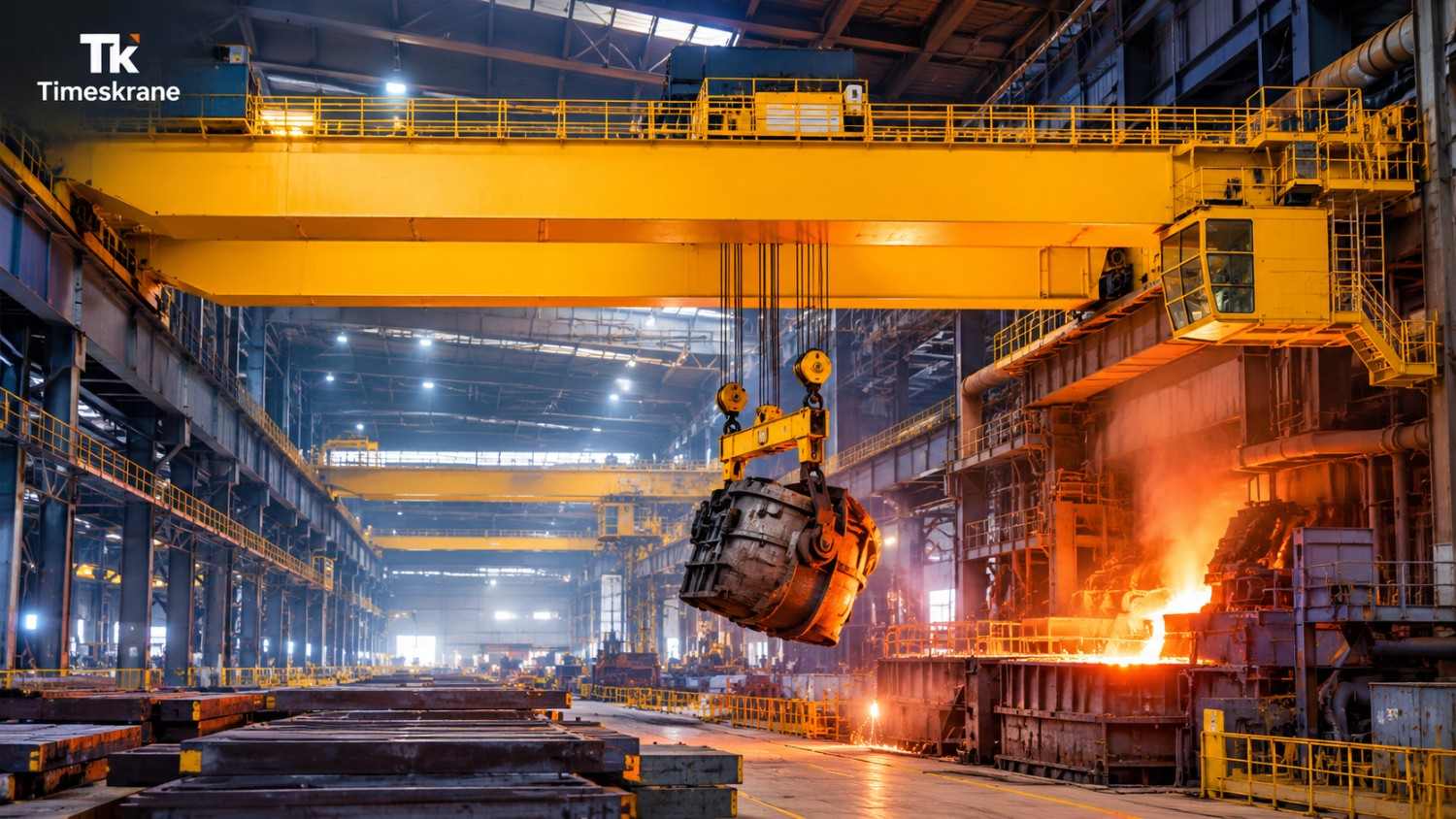
Steel and Metal Processing: Heavy-duty double girder cranes for coil handling, ladle cranes for foundries, and charging cranes for furnace operations.
Automobile Manufacturing: Precision overhead cranes for engine assembly lines, press shops, body-in-white areas, and paint shop loading zones.
Pharmaceutical: Clean-room compatible cranes with enclosed hoisting systems for sterile manufacturing environments.
Defence and Aerospace: High-precision cranes for assembly of large components where positioning accuracy and load stability are paramount.
Logistics and Warehousing: Single girder and underslung crane systems for efficient movement of goods in distribution centres and cold storage facilities.
Construction and Precast: Gantry and overhead cranes for precast element handling, rebar yard operations, and heavy formwork movement.
Each of these requires a supplier who understands the sector-specific requirements, not just the mechanical basics of crane design.
Times Krane is a Faridabad-based crane manufacturer and supplier with a national supply and service footprint covering major industrial cities across India, including Mumbai, Chennai, Hyderabad, Pune, Bangalore, Kolkata, and more.
Their approach to crane supply starts with engineering. Before any fabrication begins, the team works through your facility layout, bay dimensions, load requirements, duty cycle, and environmental conditions to arrive at a crane specification that is genuinely optimised for your application.
What I find most reassuring about how Times Krane operates is their insistence on documenting everything. GA drawings before order confirmation, IS compliance in the purchase order, load test certificates at dispatch, and structured AMC options post-commissioning. That kind of process discipline is what separates a reliable overhead crane supplier from one that causes problems three years down the line.
Their product range covers single and double girder EOT cranes, gantry cranes, jib cranes, underslung systems, monorails, and custom material handling configurations. For buyers who need a supplier they can trust across the full project lifecycle, Times Krane is worth engaging with early in your evaluation process.
To wrap this up practically, here are the six non-negotiables every buyer should confirm before finalising their overhead crane supplier:
These six points do not guarantee a perfect experience, but they eliminate most of the serious risks that buyers run into when they skip the due diligence stage.
An honest breakdown of what makes a crane genuinely heavy duty for steel plant use, covering duty classification, capacity, and safety features buyers often miss.
Finding the right steel plant crane manufacturer is perhaps the most important decision a procurement manager or plant owner will make. A poorly designed crane can increase both safety risks and downtime while excessively increasing maintenance costs.
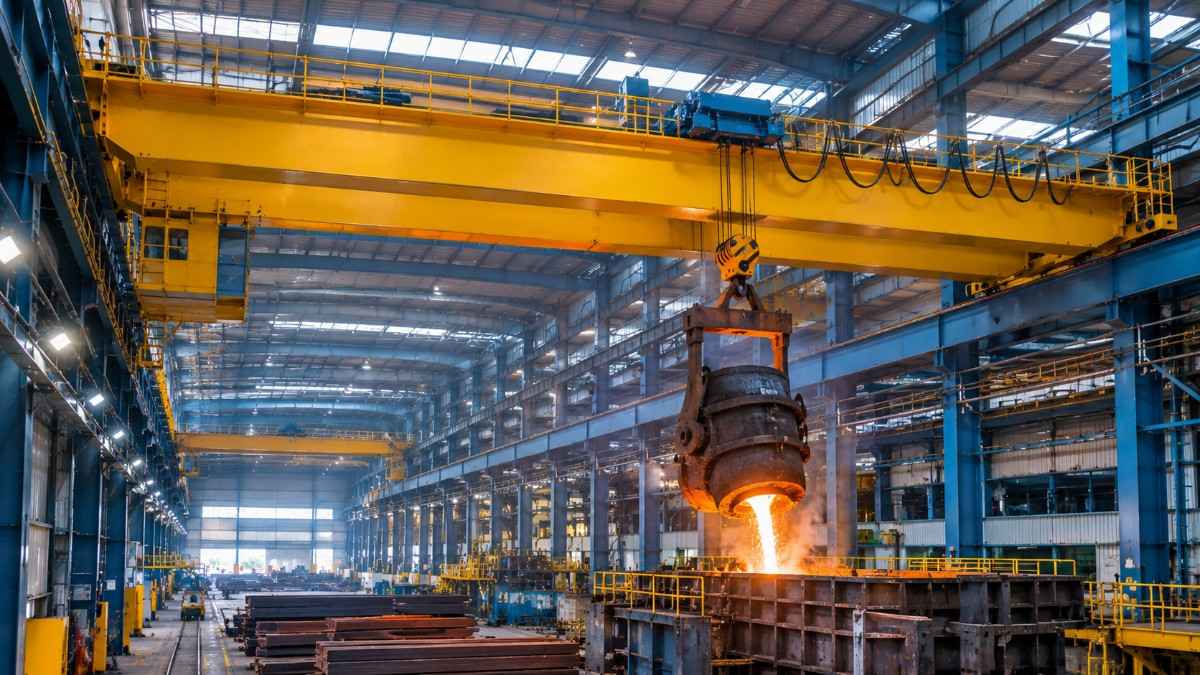
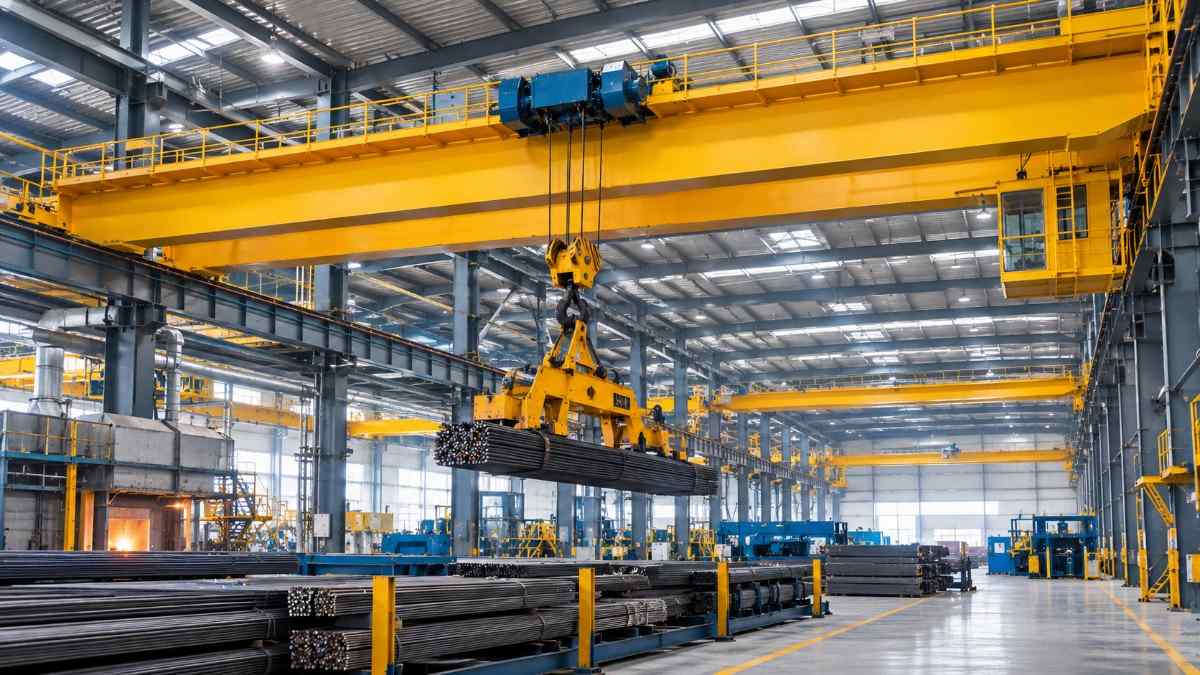
If you run or manage a steel plant, you already know that an overhead crane for steel plant operations is not a luxury. It is the backbone of your material handling process. From moving billets and coils to shifting ladles of molten metal, the right crane decides how smoothly your production line runs.
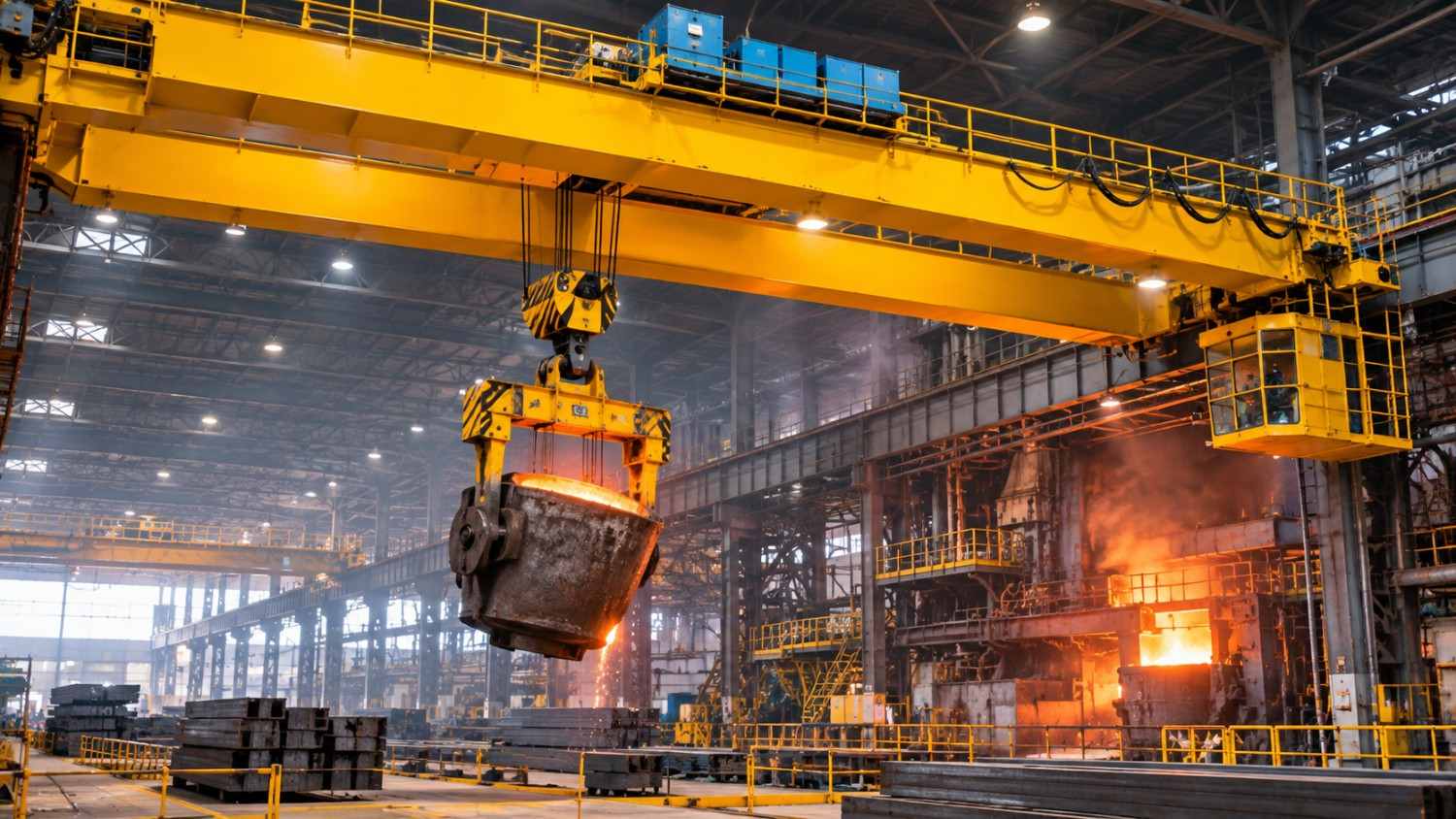
Discover how EOT cranes support steel plant operations, from material handling to molten metal lifting. Learn about crane types, duty classes, safety features, and how to choose the right EOT crane for your steel plant.
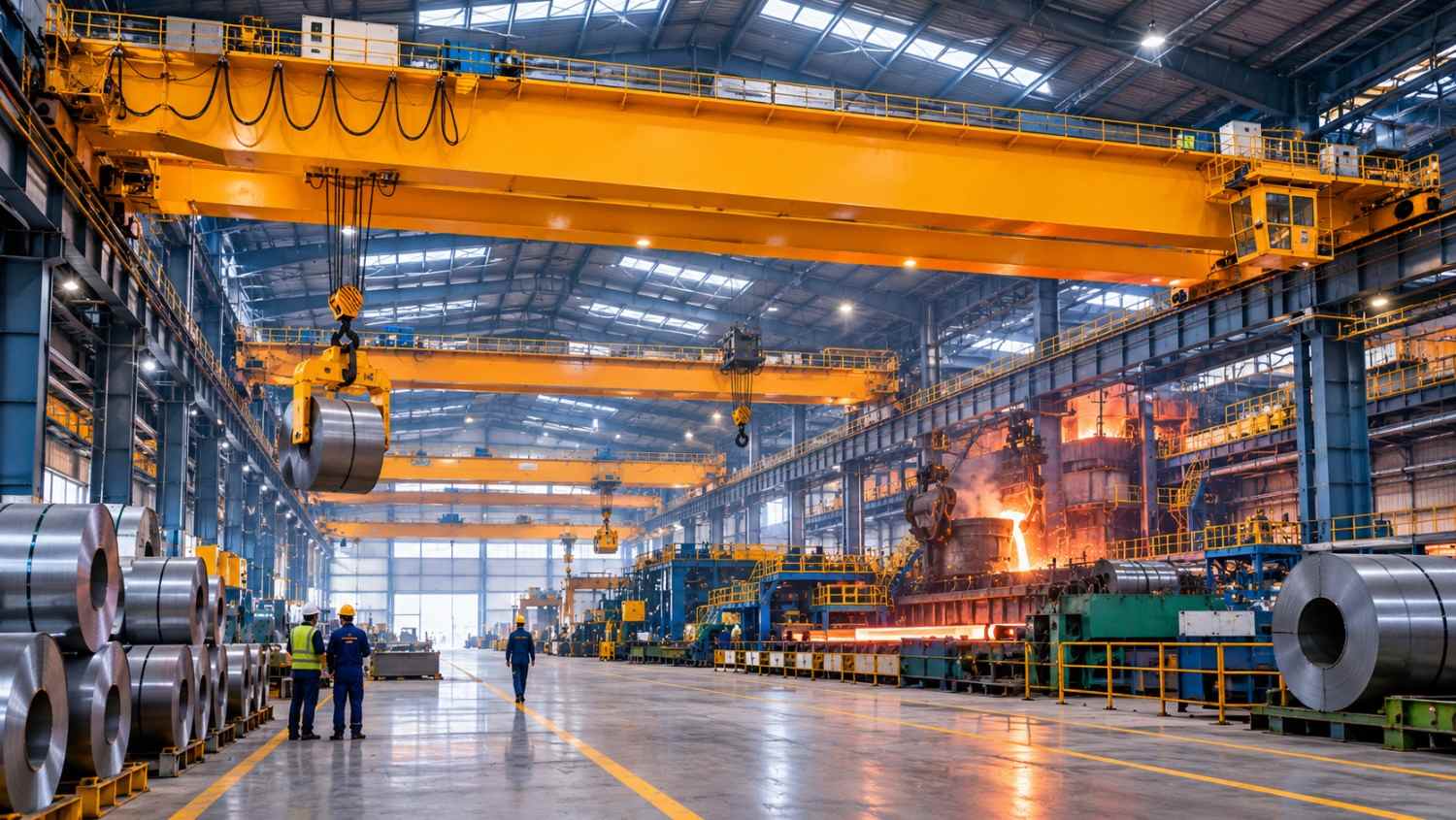
An honest, researched look at the top 5 crane manufacturers for steel plants in India, covering ladle, grab bucket, and coil handling cranes.
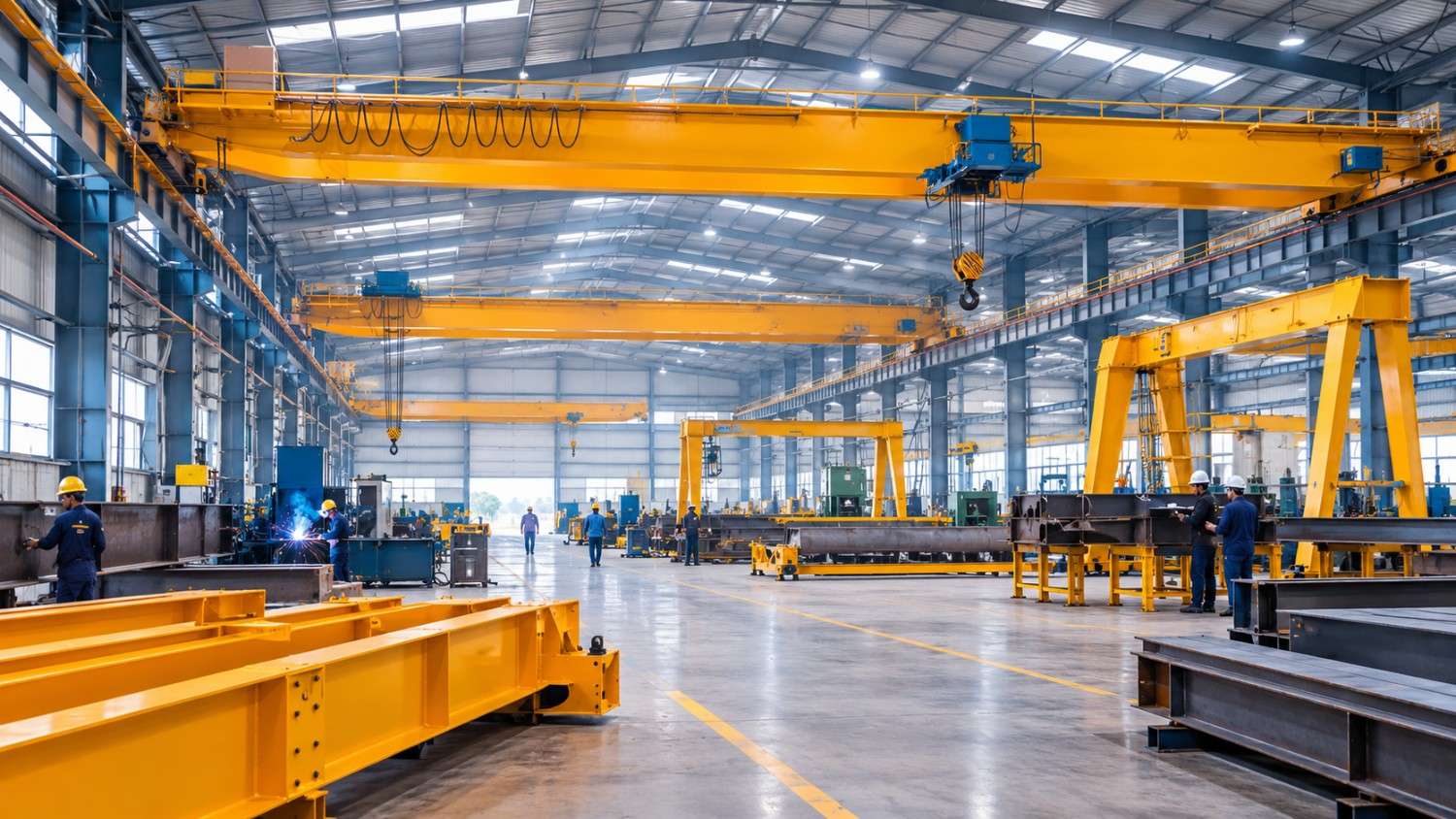
A real, researched look at the top 10 crane manufacturers in North India, covering Delhi NCR, Punjab, Haryana, UP, and Rajasthan, with what actually sets each one apart.
If you are looking for a 10 ton overhead crane for your factory or warehouse, the primary question that arises in your mind is whether this capacity will cater to your daily operations or it will turn out to be a useless and bulky addition to your storage.
Looking for a reliable partner for your next industrial project?