English
Contact
Configure
Catalog
India's industrial expansion over the past two decades has driven significant growth in demand for overhead material handling equipment. Steel plants, automotive factories, pharmaceutical units, port terminals, cement plants, defence facilities, and thousands of MSME fabrication shops all need cranes. That demand has created a large and varied supplier ecosystem, ranging from fully integrated manufacturers with decades of engineering history to small assemblers who put their name on a catalog and call themselves a manufacturer.
This page is a practical guide to understanding what separates strong crane manufacturing companies in India from the rest, what crane types are most in demand across Indian industries, and what you should look for before committing to a supplier.
India has a genuinely capable domestic crane manufacturing industry. The major manufacturing clusters are concentrated in Faridabad and the Delhi NCR region, Ahmedabad and the broader Gujarat belt, Kolkata and the West Bengal industrial corridor, Pune and the Maharashtra manufacturing zone, and Chennai and Tamil Nadu's heavy engineering sector.
Each of these clusters has its own character. Faridabad and the NCR region, for example, has a high concentration of EOT crane manufacturers with strong engineering depth, partly because of the proximity to the steel and automotive sectors of North India and partly because of decades of industrial manufacturing history in the region.
According to the Engineering Export Promotion Council of India, the material handling equipment sector including cranes has consistently been among the top ten categories in India's engineering goods exports, with export values growing year on year as Indian manufacturers demonstrate the ability to meet international quality standards alongside competitive economics.
That export track record matters domestically too. It tells you that the better Indian crane manufacturers are building to standards that satisfy buyers in Europe, Southeast Asia, and the Middle East, not just the domestic market. When you are buying a crane for your Indian plant, that engineering baseline is available to you.
There are several markers that separate manufacturers who deliver value over the long term from those who create problems after the sale.
The first is whether they actually manufacture. This means in-house fabrication of structural steel components, in-house panel building, and in-house load testing. A company that buys finished girders, buys a hoist unit, buys a panel from a third party, and assembles them on a frame is an integrator. There is a place for that model in the market, but it is not the same as a manufacturer, and it should not be priced or represented as one.
The second marker is IS compliance documentation. IS 3177 and IS 807 are the Indian Standards governing overhead crane design and construction. Any crane manufacturing company in India that cannot produce documentation demonstrating compliance with these standards should not be considered for a serious industrial application.
The third is duty class capability. Indian industry runs across a wide range of crane duty requirements. An MSME tool room needs a crane rated M2 or M3. An automotive press shop running three shifts needs M5 or M6. A steel melt shop may need M7 or M8. A manufacturer who cannot discuss duty class intelligently, calculate it based on your application data, and design to it is not equipped for the full range of industrial crane requirements.
In my experience, the fourth and most practically revealing marker is the quality of documentation that comes with the crane. A well-built crane from a serious manufacturer arrives with a load test certificate, electrical schematic, structural drawing set, operation and maintenance manual, and material traceability records for the structural steel. If a supplier is vague about this documentation package before the sale, they will be equally vague after it.
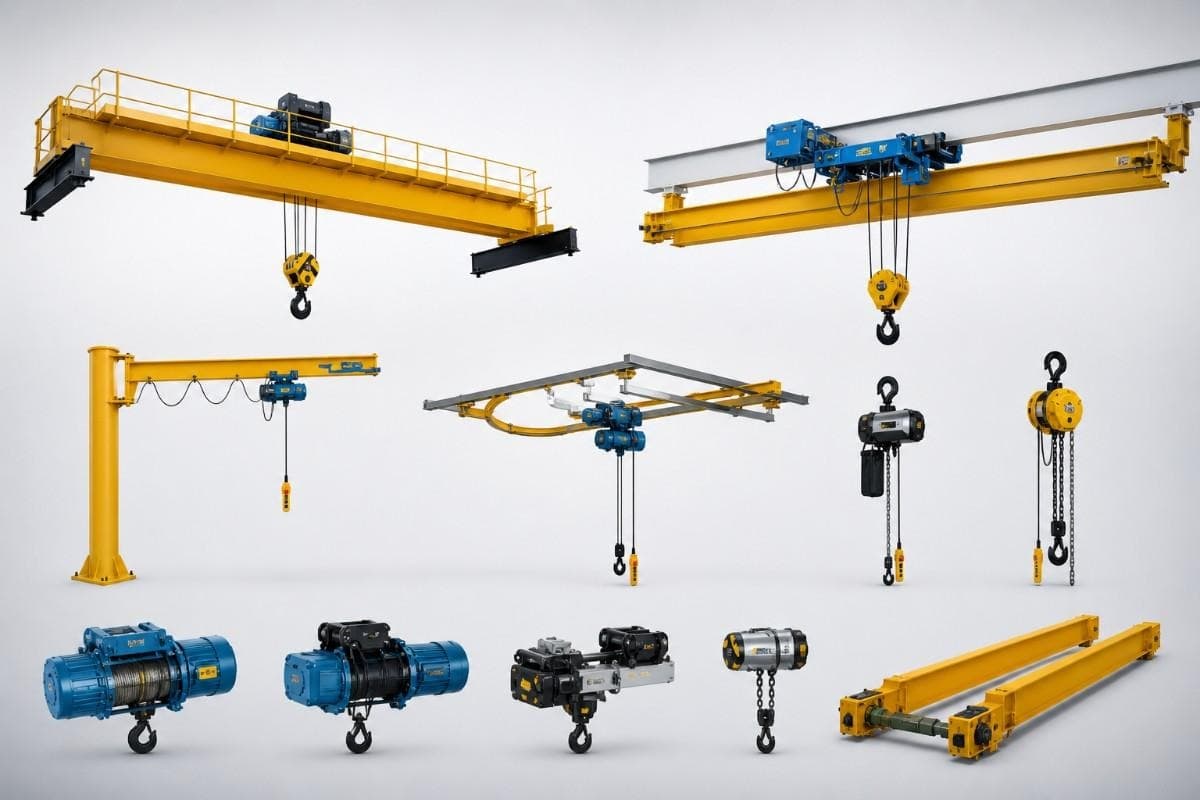
The single girder electric overhead travelling crane is the most widely installed crane type across Indian industry. A single box girder bridges the bay span, with the hoist running on the bottom flange. Capacities range from 1 tonne to around 20 tonnes for standard configurations, with spans suited to most factory bay widths.
This crane type is the backbone of India's MSME manufacturing sector. Engineering workshops, small fabrication units, component assembly facilities, and storage operations across every industrial city in India use single girder EOT cranes as their primary overhead material handling solution.
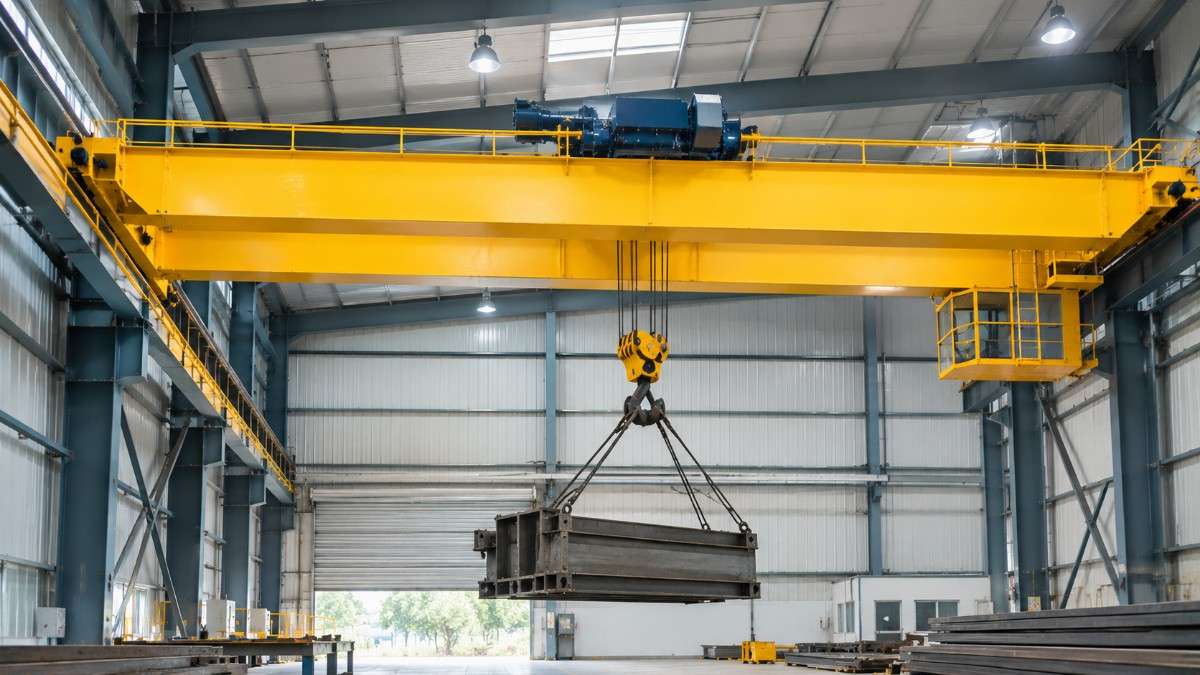
Two parallel girders form the bridge, with the hoist trolley running on top rails between them. This configuration allows greater capacity, longer span, and higher hook approach to the roof structure compared to single girder designs. Capacities from 10 tonnes to well over 100 tonnes are standard territory for double girder cranes.
Heavy manufacturing, steel processing, automotive assembly, port cargo handling, and large-scale fabrication operations rely on double girder EOT cranes. When I tried comparing specifications across a range of Indian crane manufacturers for a heavy fabrication project, the double girder designs from established manufacturers consistently offered better girder camber control and tighter wheel load tolerances than those from smaller assemblers, which directly affects long-term runway rail life.
Self-supporting on ground-level legs, gantry cranes operate in open yards, near port berths, in pre-engineered buildings without adequate roof structure, and in any application where a building-mounted runway system is not feasible. India's port sector, steel stockyards, precast concrete manufacturers, and heavy fabrication yards are the primary users of full gantry and semi gantry configurations.
The underslung crane hangs from the bottom flange of roof structure beams, preserving full usable floor height and eliminating the visual mass of top-mounted runway beams. It is particularly valued in new greenfield facilities where clean internal aesthetics and maximum floor-to-crane hook height are design priorities.
Wall-mounted or pillar-mounted, jib cranes serve individual workstations with arc coverage from 180 to 360 degrees. They complement main overhead crane systems by giving individual operators independent lifting capability at their station without competing for the main crane. Machine shops, maintenance bays, and assembly cells across Indian industry use jib cranes extensively for this purpose.
The KBK modular suspension system uses profiled sections hung from the roof to create a flexible light crane track network. It is reconfigurable as production layouts change, making it the preferred material handling solution for assembly lines, production cells, and facilities where process flexibility is a strategic priority.
India's automotive sector, concentrated in the Pune-Chakan corridor, Chennai-Sriperumbudur belt, Gurgaon-Manesar zone, and Sanand in Gujarat, is among the most demanding crane users in the country. Press shops, body-in-white assembly lines, engine build facilities, and paint shops all have specific crane requirements that go beyond standard specifications.
Variable frequency drives on all crane motions are essentially standard in automotive applications now, allowing smooth acceleration and deceleration that prevents load swing and protects sensitive tooling and assemblies during handling. Crane manufacturing companies in India supplying this sector routinely work to automotive-grade documentation and quality management requirements.
Steel plants, rolling mills, and metal processing facilities use cranes across the full capacity range, from light maintenance cranes at 2 to 5 tonnes to massive ladle cranes above 200 tonnes in melt shops. This sector demands cranes engineered for high-duty cycles, heat-resistant components in proximity to furnaces, and robust structural design capable of sustained heavy use across multiple shifts.
This sector requires cranes where contamination control, explosion risk mitigation, and chemical atmosphere resistance are primary design considerations. Spark-free electrical configurations, explosion-proof enclosures, and chemical-resistant paint systems are not optional in these environments. I have noticed that pharmaceutical buyers in India are among the most technically rigorous crane purchasers, consistently demanding full documentation and compliance evidence before acceptance.
India's port expansion programme under the Sagarmala initiative has generated significant crane demand at major and minor ports across the coastline. Rubber tyred gantry cranes, ship-to-shore cranes, and heavy duty portal gantry cranes are the primary equipment types in this sector, and they require manufacturers with the engineering capability to handle very high capacity and continuous operational demands.
Here is a practical framework worth applying to any crane manufacturer you are seriously evaluating:
Times Krane, headquartered in Faridabad and operating with a pan-India supply footprint, is one of the crane manufacturing companies in India with a documented history of delivering custom-engineered lifting solutions across a wide range of industrial sectors and geographies.
With over 35 years of industrial engineering background, Times Krane's approach to crane manufacturing prioritises application-specific engineering over catalogue selection. The team works through span, capacity, duty class, headroom constraints, floor loading limits, and environmental conditions for each project before finalising any design. Every crane dispatched carries a full documentation package including load test certificate, structural drawings, electrical schematic, and operation manual.
Times Krane supplies across industry segments including automotive, pharmaceutical, chemical, steel fabrication, logistics, and general manufacturing, serving clients in cities ranging from Ludhiana and Delhi in the north to Chennai and Ernakulam in the south, and from Mumbai and Pune in the west to Kolkata and Durgapur in the east.
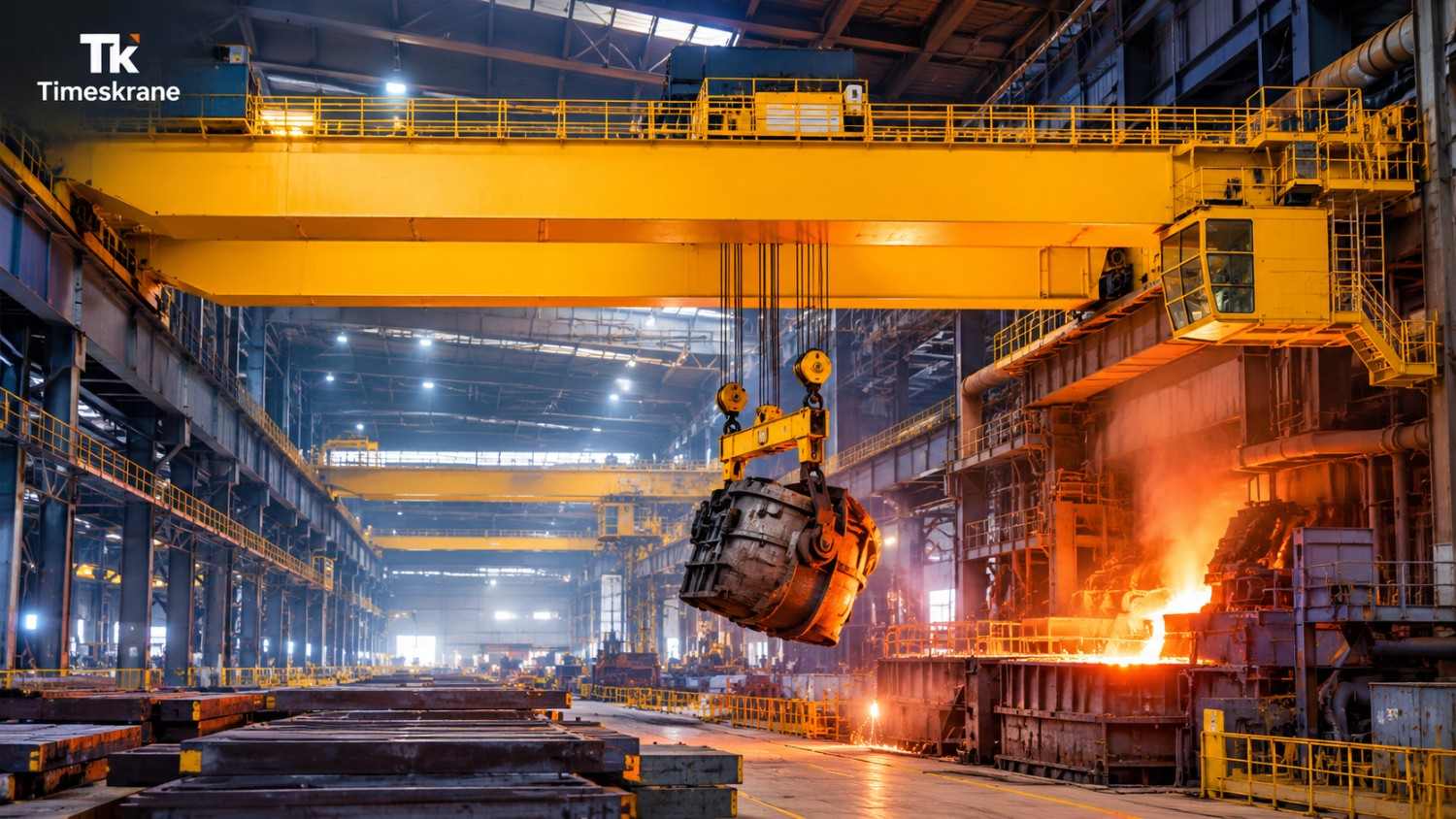
An honest breakdown of what makes a crane genuinely heavy duty for steel plant use, covering duty classification, capacity, and safety features buyers often miss.
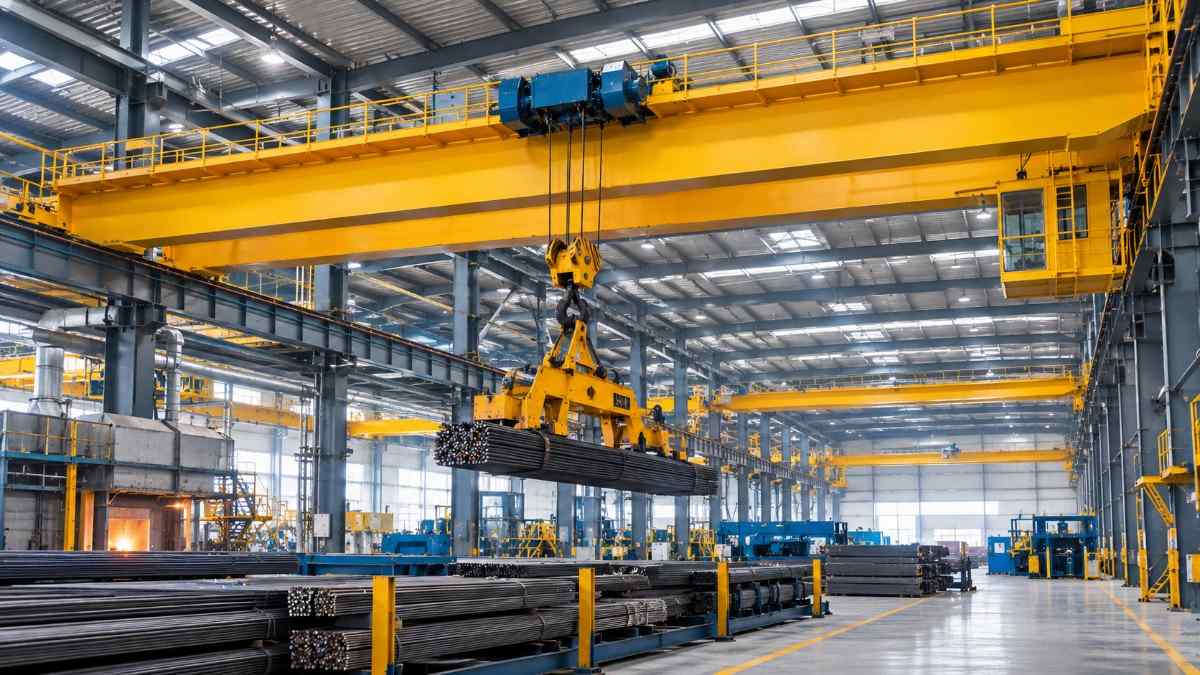
Finding the right steel plant crane manufacturer is perhaps the most important decision a procurement manager or plant owner will make. A poorly designed crane can increase both safety risks and downtime while excessively increasing maintenance costs.
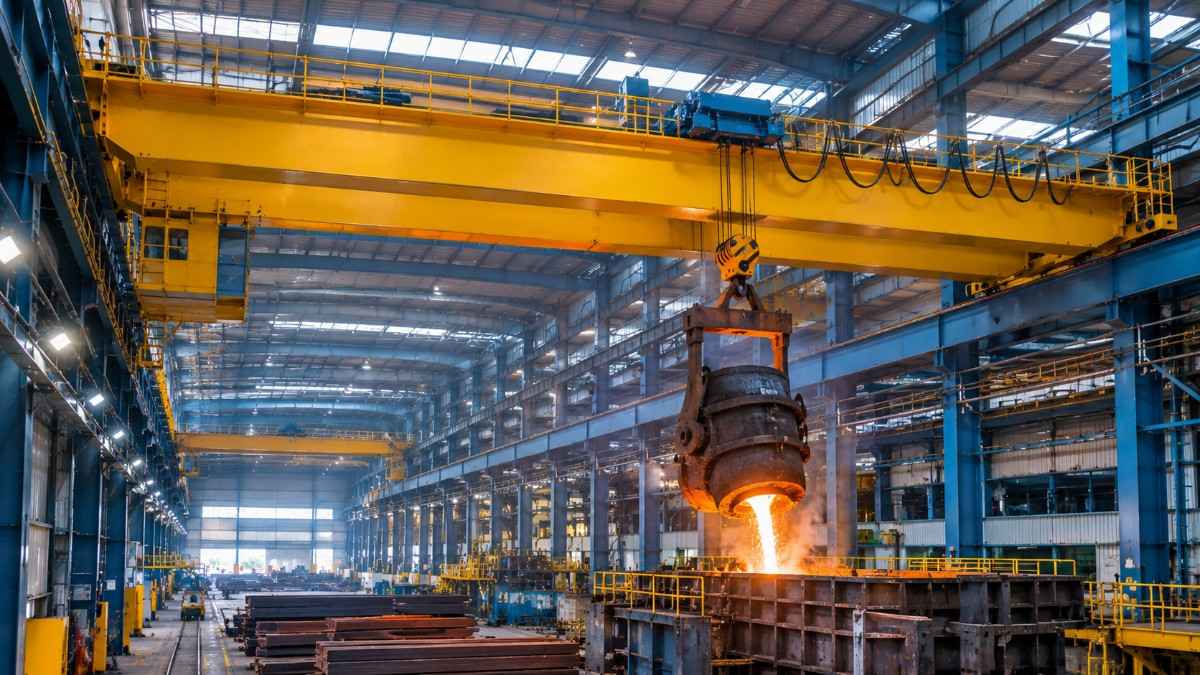
If you run or manage a steel plant, you already know that an overhead crane for steel plant operations is not a luxury. It is the backbone of your material handling process. From moving billets and coils to shifting ladles of molten metal, the right crane decides how smoothly your production line runs.
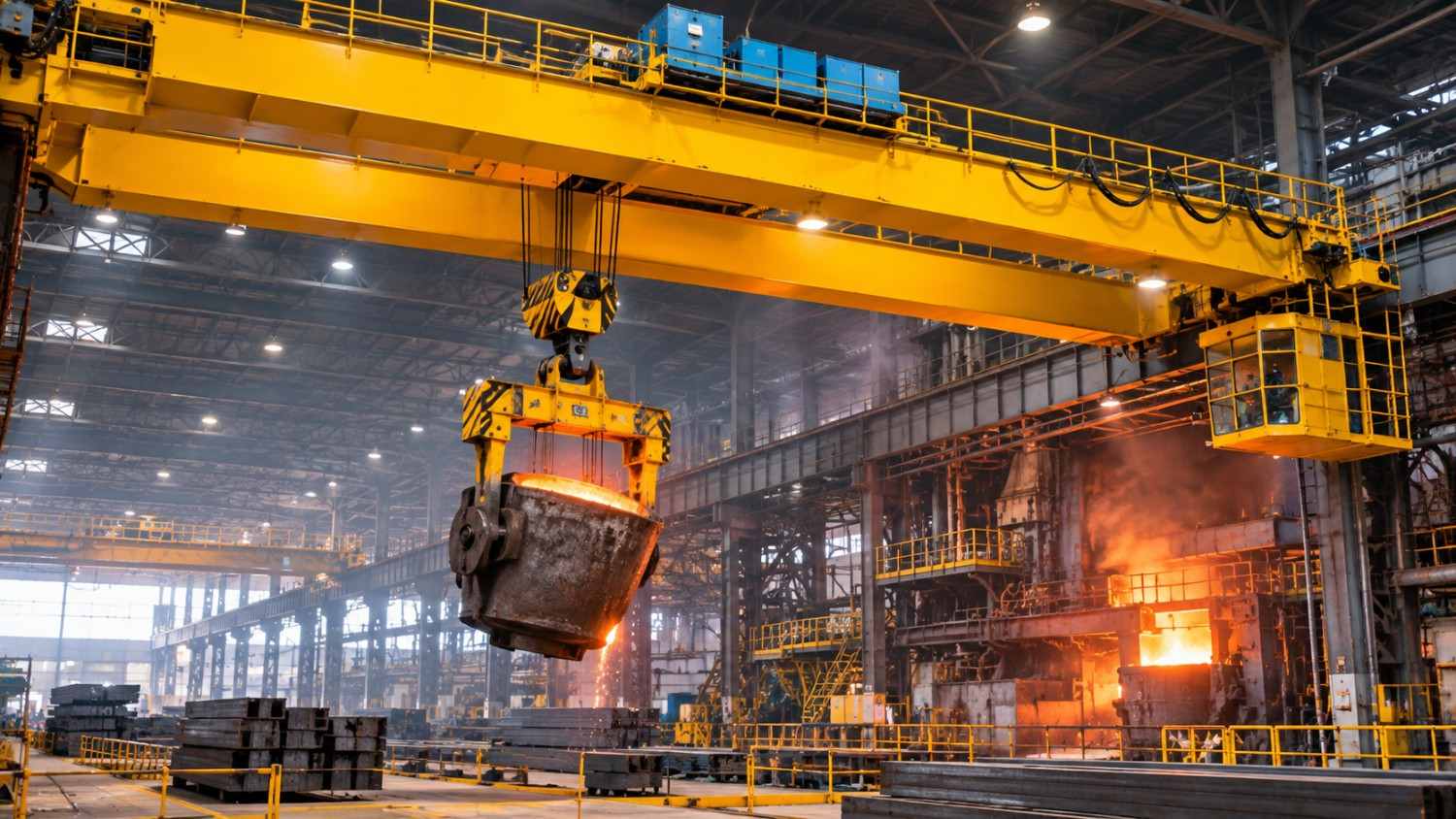
Discover how EOT cranes support steel plant operations, from material handling to molten metal lifting. Learn about crane types, duty classes, safety features, and how to choose the right EOT crane for your steel plant.
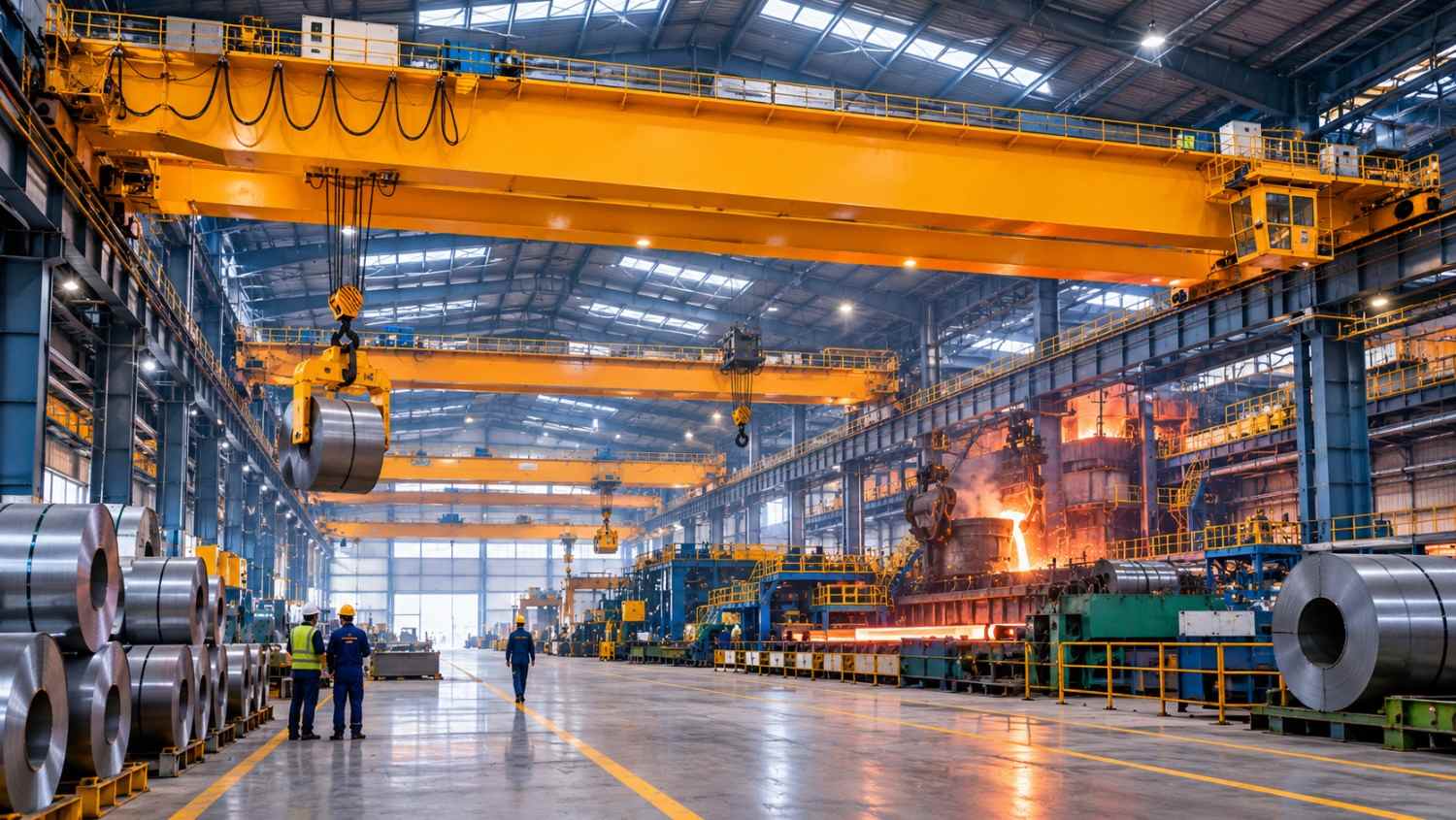
An honest, researched look at the top 5 crane manufacturers for steel plants in India, covering ladle, grab bucket, and coil handling cranes.
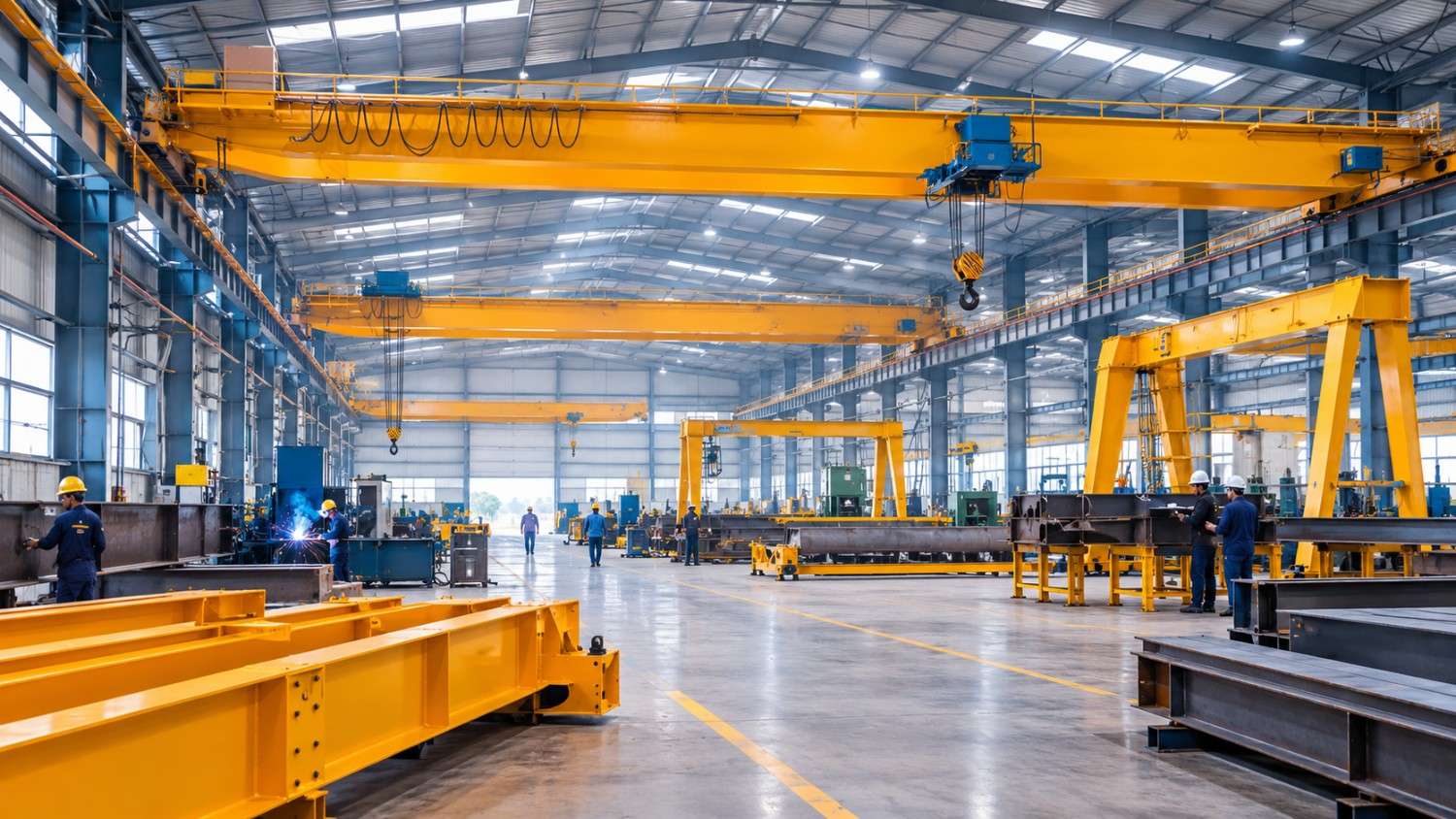
A real, researched look at the top 10 crane manufacturers in North India, covering Delhi NCR, Punjab, Haryana, UP, and Rajasthan, with what actually sets each one apart.
If you are looking for a 10 ton overhead crane for your factory or warehouse, the primary question that arises in your mind is whether this capacity will cater to your daily operations or it will turn out to be a useless and bulky addition to your storage.
Looking for a reliable partner for your next industrial project?