English
Contact
Configure
Catalog
The market is noisy. Suppliers who barely manufacture anything call themselves manufacturers. Prices vary wildly for seemingly similar products. And by the time most buyers realise they made the wrong choice, the crane is already installed and the project is months behind schedule.
This guide is here to help you avoid exactly that situation.
EOT stands for Electric Overhead Travelling crane. It is the most commonly used material handling system in industrial facilities across India, and the NCR region is no exception.
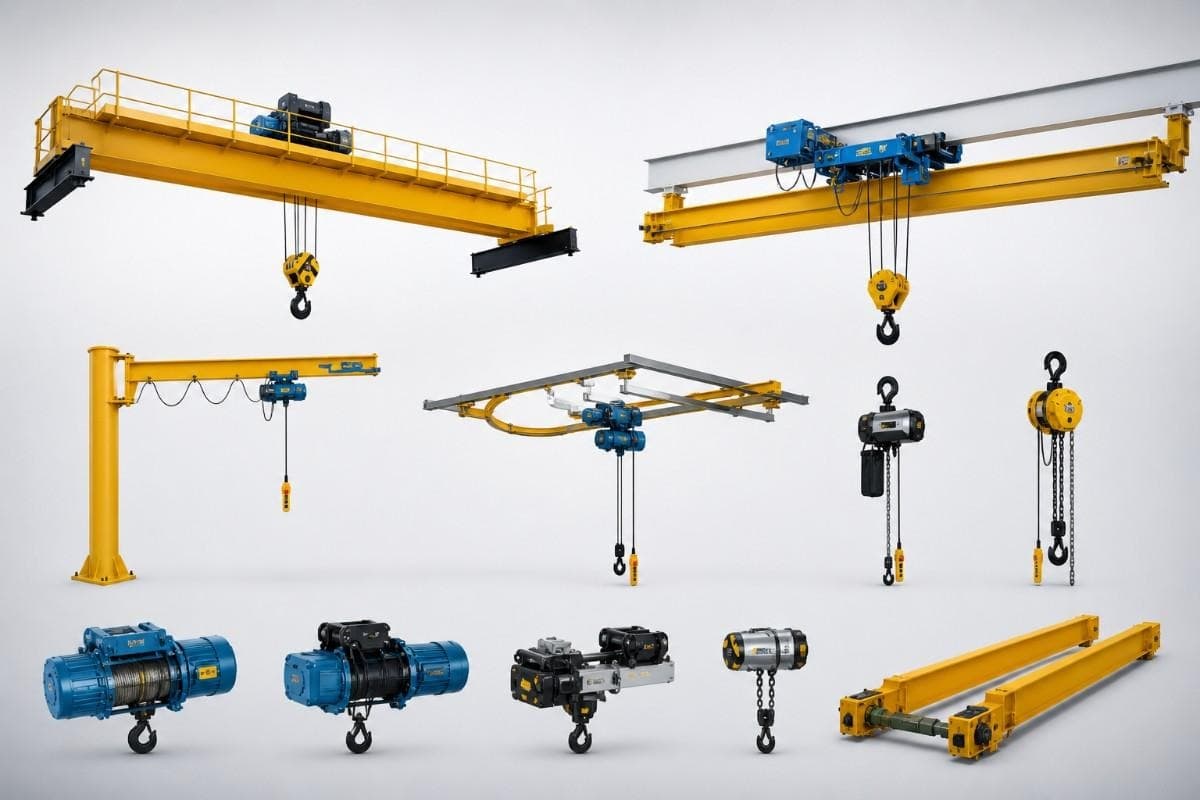
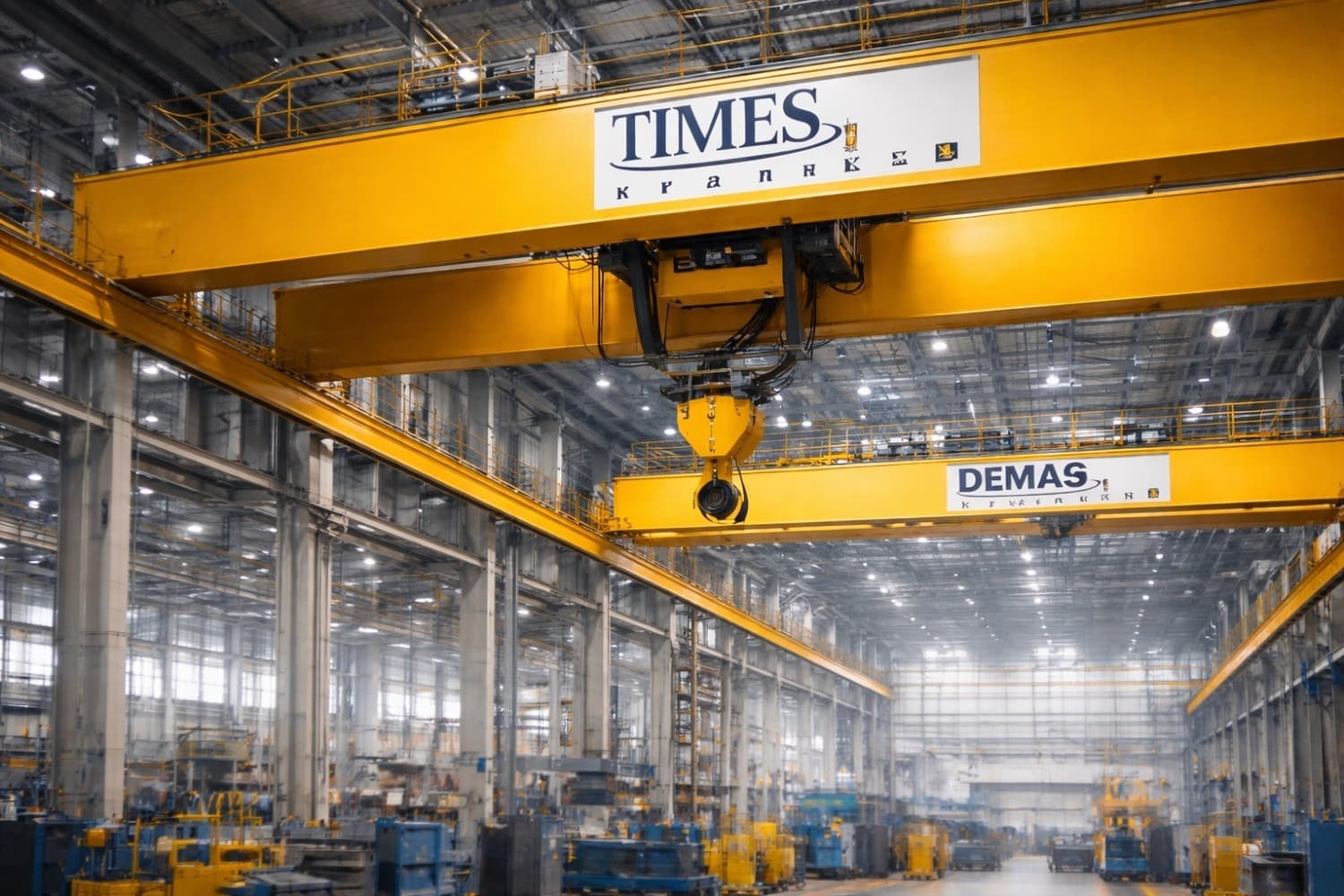
The crane runs along elevated runway rails fixed to the building structure. A motorised crab carrying the hoist travels along the girder, and the entire bridge assembly moves along the length of the bay. The result is complete coverage of your shop floor for lifting and moving loads, without any ground-level obstruction.
Think of it as turning your entire bay ceiling into a working surface. Every square metre of floor stays clear for production. The crane does the heavy lifting, literally, while your workers focus on the job.
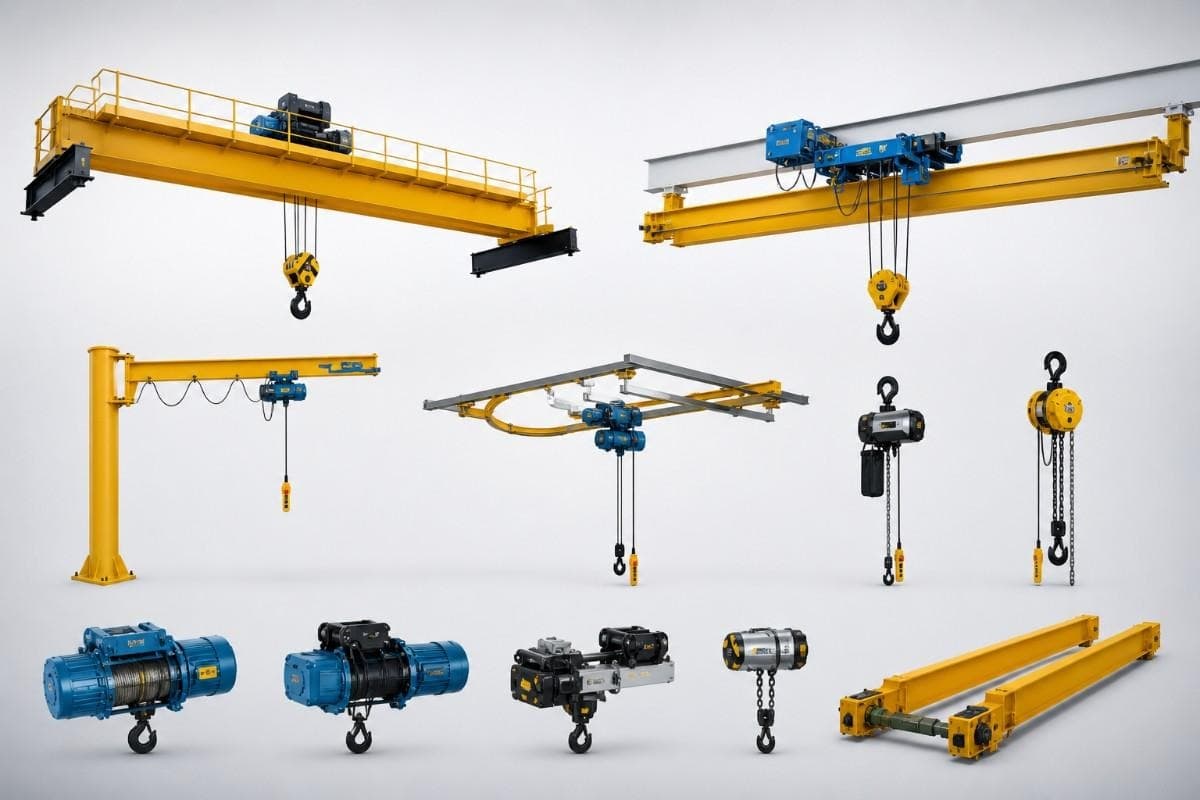
EOT cranes are classified primarily by their girder configuration:
Beyond these two, there are also underslung cranes, semi-gantry configurations, and process cranes for specialised applications. A qualified EOT crane manufacturer in Delhi will help you determine which variant suits your specific facility and operational requirements.
The Delhi NCR region is one of the most densely industrialised zones in North India. Faridabad, Noida, Gurgaon, Ghaziabad, Manesar, and Bahadurgarh together form an industrial corridor that cuts across multiple states and accommodates industries ranging from auto components and electronics to steel fabrication and defence equipment.
According to the Delhi Industrial Infrastructure Development Corporation, the NCR industrial belt houses over 1.2 lakh registered industrial units, with a significant portion in heavy engineering and manufacturing sectors that depend on overhead crane systems for daily operations.
In my experience visiting plants across this corridor, the one thing that consistently comes up in discussions with plant managers is this: crane reliability directly affects production output. A crane that trips a fault, skips maintenance, or fails under load does not just pause one lift. It stops the entire bay.
This distinction is important and often overlooked by first-time buyers. Let me be direct about it.
A genuine EOT crane manufacturer in Delhi designs and fabricates the crane in-house. They have structural engineers, a fabrication shop, welding inspectors, and a testing facility. When you place an order, the crane is built to your specifications from raw material to finished product.
A trader or reseller sources a ready-made crane from a third party, often without any engineering customisation, and delivers it with their name on the label. There is nothing inherently wrong with this model for standard, low-complexity applications. But when your requirements involve specific bay dimensions, high duty cycles, non-standard spans, or special environments like high temperature or corrosive atmospheres, a trader simply cannot deliver what a proper manufacturer can.
The key question to ask any supplier: do you design and fabricate this crane, or do you source it? The answer tells you more than any brochure.
The first filter. A manufacturer should have qualified structural and mechanical engineers who can produce General Arrangement drawings, load calculations, duty class specifications, and structural analysis before you confirm your order.
When I tried getting GA drawings from a supplier during a plant evaluation exercise, one company quoted back within four hours with a "standard" drawing that clearly had not accounted for the buyer's specific bay dimensions or runway configuration. That told me everything I needed to know about their engineering depth.
Every EOT crane deployed in India should be designed and manufactured in accordance with IS 807 (Code of Practice for Design, Manufacture, Erection and Testing of Cranes) and IS 3177 (Code of Practice for EOT Cranes). These are not optional. They define the minimum standards for structural design, material selection, testing, and safe operation.
Ask any prospective EOT crane manufacturer in Delhi to confirm IS compliance in writing as part of the purchase order. If they are hesitant about this, that hesitation is itself informative.
All primary structural members should be fabricated from IS 2062 Grade structural steel, with mill test certificates available on request. The quality of steel directly determines the crane's structural integrity and fatigue life. Do not accept vague assurances about material quality. Ask for documentation.
This is one of the most commonly misunderstood aspects of crane procurement, and it is also one of the most consequential. IS 807 classifies cranes into duty classes M1 through M8 based on the frequency of use, load spectrum, and total design life.
A crane designed for M3 duty will fail well ahead of its expected service life if operated in an M5 or M6 environment. Always specify your duty class clearly, and verify that the manufacturer has designed the crane accordingly in the GA drawing.
Every EOT crane must be proof load tested at 125% of its Safe Working Load before leaving the manufacturing facility. This test verifies that all structural and mechanical components perform correctly under overload conditions. The result should be documented in a formal load test certificate that accompanies the crane on delivery.
Do not accept delivery of a crane without this certificate.
The crane does not become operational the moment it arrives at your facility. It needs to be correctly erected, runway rails need to be aligned to precise tolerances, electrical systems need to be connected and tested, and all limit switches need to be set and verified.
I've noticed that one of the most common sources of post-delivery complaints is poor erection quality, not the crane itself. Rail misalignment, incorrect end stop positioning, and improperly set limit switches all trace back to erection teams who were not properly trained or supervised. Your manufacturer should provide this service with their own engineers, not a subcontracted crew who have never seen the equipment before.
Once the crane is running, it needs structured maintenance to stay safe and productive. A qualified EOT crane manufacturer in Delhi should offer an Annual Maintenance Contract that covers all critical inspection, lubrication, adjustment, and load testing activities on a defined schedule.
For facilities running multiple shifts, the response time commitment in the AMC is critically important. Clarify this before signing.
Here is a practical list of warning signs that should prompt further scrutiny:
Any single item on this list warrants a direct conversation. Multiple items together suggest it is time to keep looking.
The Delhi NCR industrial corridor serves a remarkable range of sectors, each with distinct crane requirements:
Auto and Auto Components: Faridabad, Manesar, and Noida house dozens of OEM suppliers and Tier-1 manufacturers. Press shops, machining centres, and assembly lines all depend on overhead cranes for efficient material flow.
Steel Fabrication and Structural Work: Ghaziabad and the Bahadurgarh belt have a dense concentration of steel fabricators and structural workshops where heavy-duty EOT cranes run through multiple shifts daily.
Defence and Ordnance: Several defence production facilities and ordnance depots in and around Delhi require high-precision, high-reliability crane systems with strict certification requirements.
Logistics and Warehousing: The logistics infrastructure expanding along the NH48 and NH9 corridors is driving demand for lighter overhead crane systems in large-format warehousing and cross-docking facilities.
Electronics and Light Engineering: Noida and Greater Noida have a growing electronics manufacturing base where lighter EOT cranes and monorail hoist systems are widely used in assembly operations.
Times Krane is based in Faridabad, placing them right at the heart of the Delhi NCR industrial belt. That geographic proximity matters more than most buyers initially appreciate. It means site visits happen quickly, erection teams arrive on time, and service engineers can respond to post-commissioning calls without the delays that come with distant suppliers.
Their product range covers the complete spectrum of EOT crane configurations, including single girder, double girder, underslung, and semi-gantry systems, along with jib cranes, gantry cranes, and custom material handling solutions. Every project begins with an engineering review of your facility, not a catalogue selection.
What stands out about Times Krane is the documentation discipline they bring to every project. GA drawings before order confirmation, IS compliance in the purchase agreement, load test certificates at dispatch, and structured AMC options post-commissioning. For buyers in Delhi NCR who have been burned before by suppliers who disappear after delivery, that structured approach is genuinely reassuring.
A no-fluff guide to picking crane manufacturers in Vatva, Ahmedabad, covering FLP cranes for chemical units, real cost factors, and buyer mistakes to avoid.
If you're looking for a dependable EOT crane manufacturer in Delhi NCR, you've probably already realized the region has no shortage of options. The problem is filtering out the ones who actually manufacture from the ones who just package and resell.
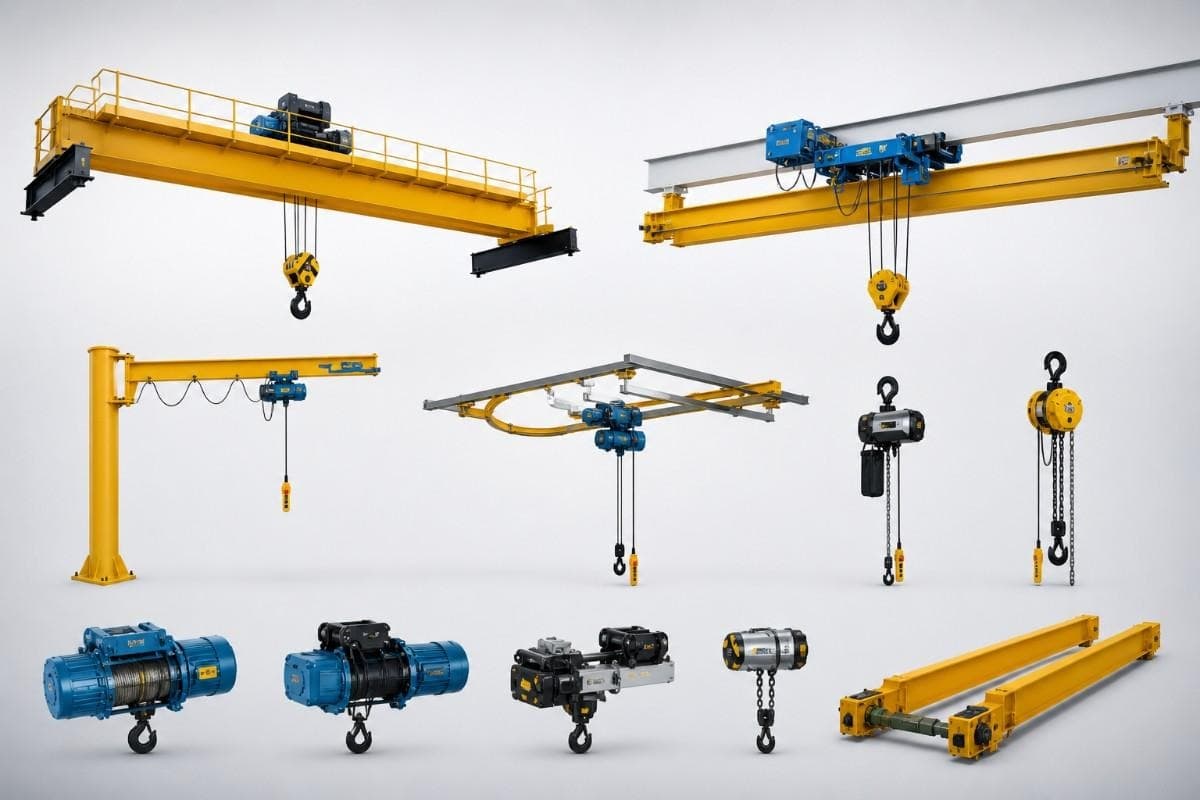
Finding dependable EOT crane manufacturers in Ludhiana can make a huge difference to the efficiency and safety of your industrial operations. Whether you run a manufacturing facility, fabrication unit, warehouse, steel plant, engineering workshop, or logistics center, the right crane system helps move heavy loads faster, safer, and with less effort.
Ahmedabad's industries move fast, and the material handling equipment supporting them needs to keep pace without compromise. If you are searching for a crane manufacturer in Ahmedabad who can deliver engineering depth, documented compliance, and reliable after-sales support rather than just a machine with a price tag, this page is worth your time.
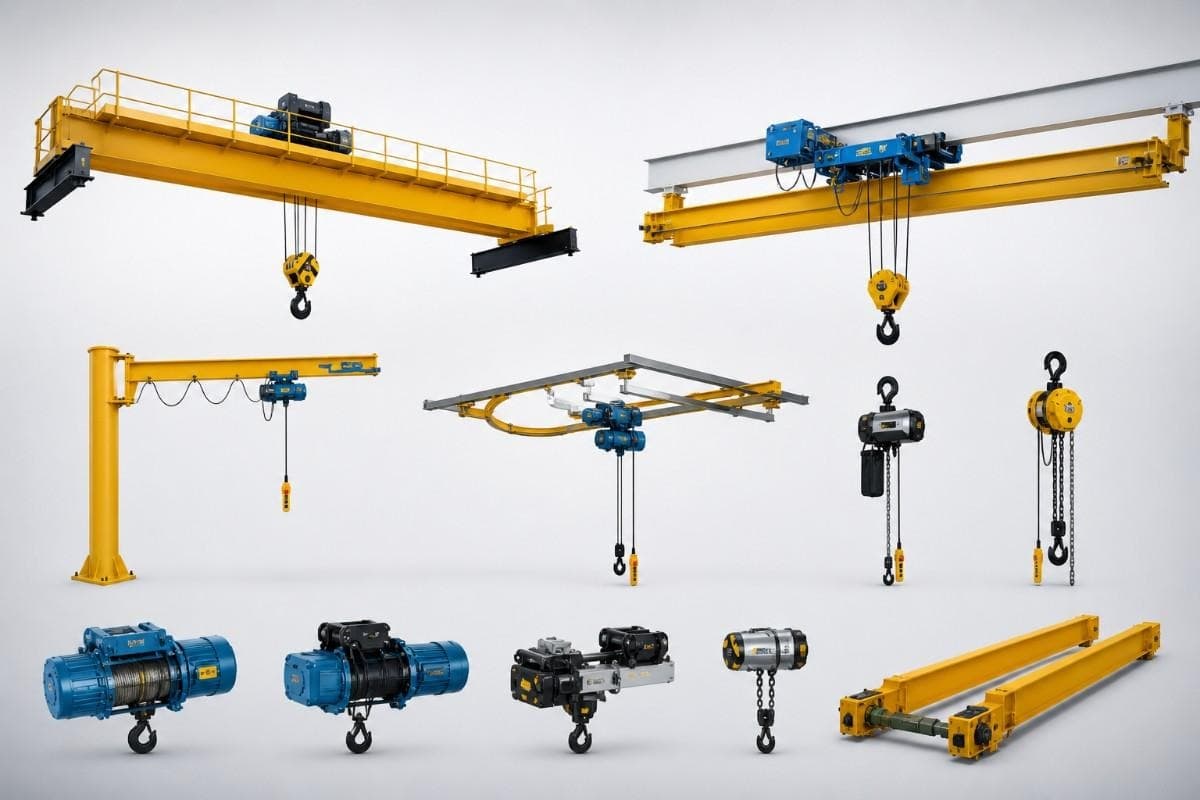
Most plants in Chennai have an overhead crane for the bay and nothing else for individual workstations. That gap costs operators time on every single shift. If you are looking for jib crane manufacturers in Chennai who can actually close that gap with a well-engineered, workstation-level lifting solution, this page will walk you through everything you need to know before making a decision.
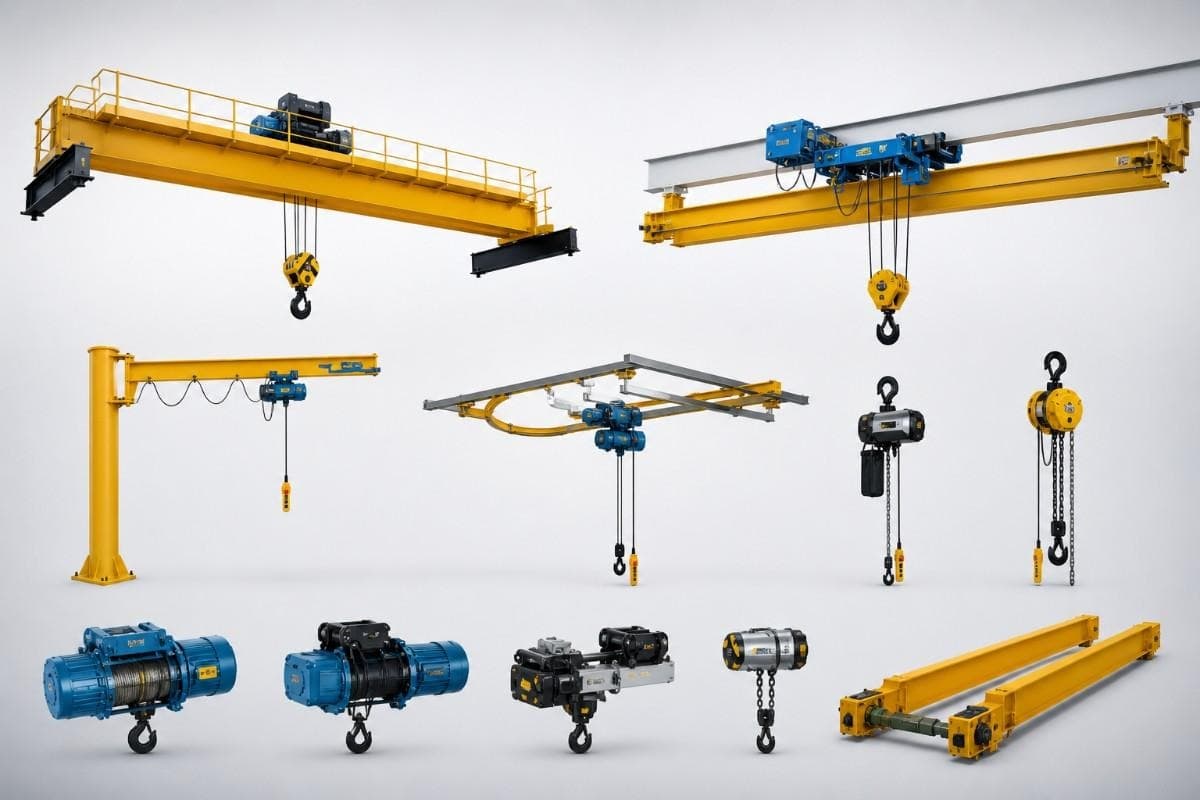
Choosing the wrong EOT crane manufacturer in Hyderabad can set your entire project back by months. The stakes are high, the options are many, and most buyers do not know what to look for until something goes wrong.
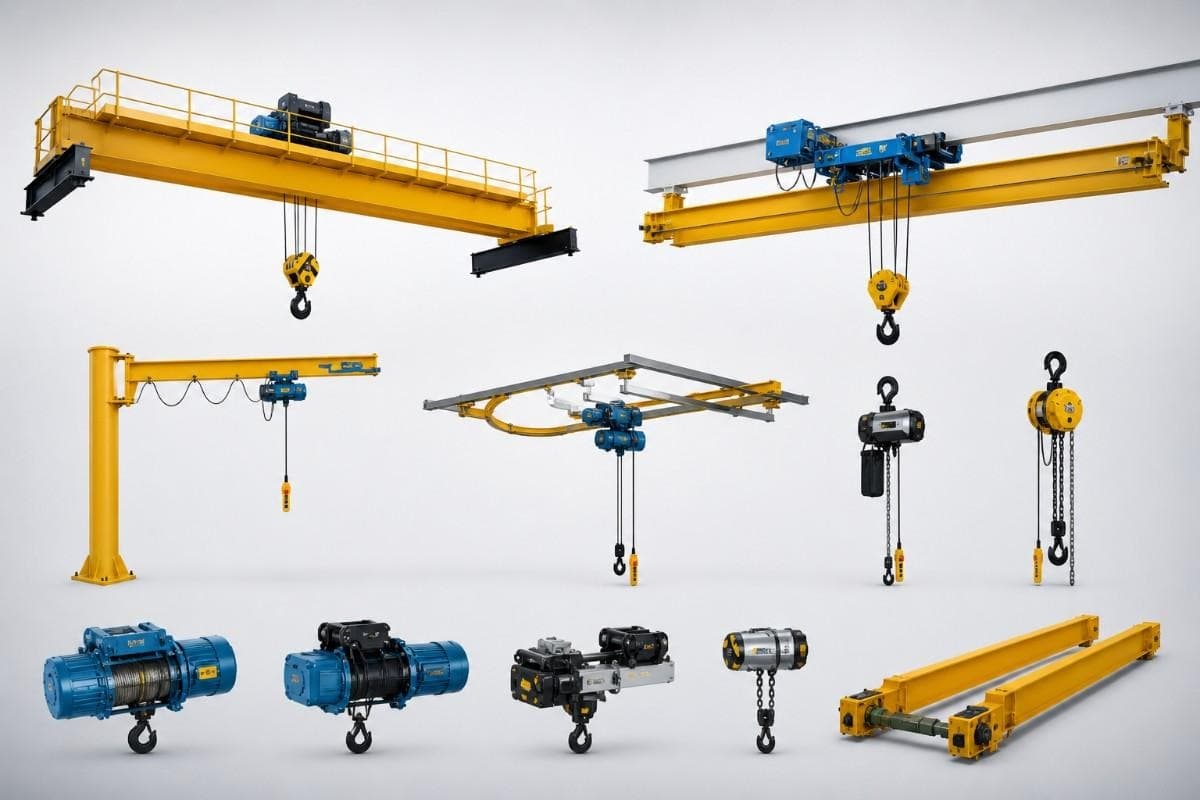
Choosing the wrong crane supplier in Chennai can set your entire plant setup back by months. You end up with a machine that does not match your bay dimensions, cannot handle your actual load cycles, or breaks down within the first year because the duty class was wrong from the start. If you are sourcing lifting equipment for any industrial application in Chennai, this page is worth reading before you sign anything.
Looking for a reliable partner for your next industrial project?