English
Contact
Configure
Catalog
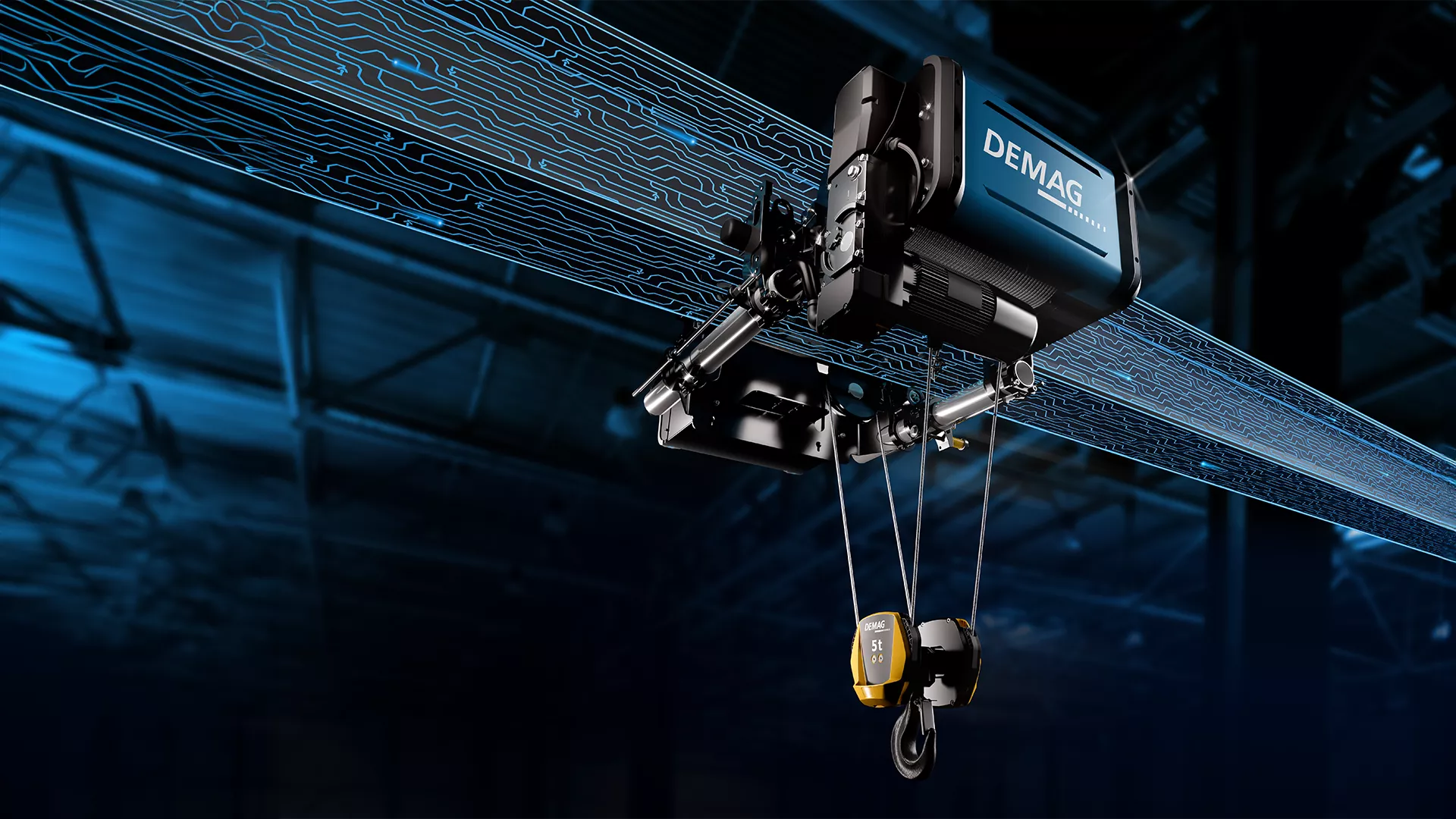
Chennai's industrial footprint is enormous and still expanding. The city and its surrounding districts host auto-component manufacturers, shipyards, chemical plants, port terminals, textile machinery units, and defence production facilities. Each of these sectors has specific crane requirements, and finding crane suppliers in Chennai who can meet those requirements with both engineering depth and reliable after-sales support is not always straightforward.
This distinction matters more than most buyers realise until it is too late.
A genuine crane supplier has engineering capability behind the product. They can review your plant layout, calculate span and capacity requirements, specify the correct duty class for your shift pattern, and design a crane that fits your exact application. They fabricate or source from a verified manufacturer, conduct load testing before dispatch, and provide full technical documentation with the crane.
A catalog dealer, on the other hand, takes your rough requirement, picks the nearest standard product from a supplier list, and quotes it. The crane may arrive. It may even work for a while. But when something goes wrong, or when the crane does not perform as expected, the dealer has very little to offer beyond a phone number to call.
In my experience, the easiest way to tell the difference is to ask one question: can you show me the load test certificate for a crane you have already built for a similar application? A real supplier answers that with documentation. A dealer changes the subject.
Chennai Port handles millions of tonnes of cargo every year. The port's surrounding logistics infrastructure, container freight stations, and inland container depots have a consistent demand for high-capacity cranes. Rubber tyred gantry cranes and full portal gantry cranes are the primary equipment type here. These need to be engineered for continuous heavy-duty cycles, saltwater-adjacent environments, and high operational availability because port operations do not stop.
The Sriperumbudur-Oragadam industrial corridor is now one of the most concentrated automotive manufacturing belts in South India. Plants here run three shifts and expect cranes to keep pace. Double girder EOT cranes with variable frequency drive control are the standard choice for press shops and assembly lines. The crane must position loads with precision, operate quietly enough for operator comfort over long shifts, and maintain alignment on the runway rails over years of high-cycle use.
Facilities around Ennore and Kattupalli handle structural steel assemblies, propeller systems, and engine modules that weigh tens of tonnes. The cranes serving these applications need heavy-duty ratings, generous hook heights, and corrosion-resistant surface treatment given the proximity to seawater. I have noticed that shipyard crane specifications in Chennai consistently include requirements for tandem lift capability and load monitoring systems, which rules out suppliers who only deal in standard catalogue equipment.
Chemical manufacturing units along Manali and the SIPCOT industrial estates in Gummidipoondi need cranes that comply with hazardous area classifications. Spark-free electrical configurations, explosion-proof panels, and specific paint systems compatible with chemical atmospheres are non-negotiable here. Not every crane supplier in Chennai has the technical capability to meet these requirements, which is why shortlisting carefully matters.
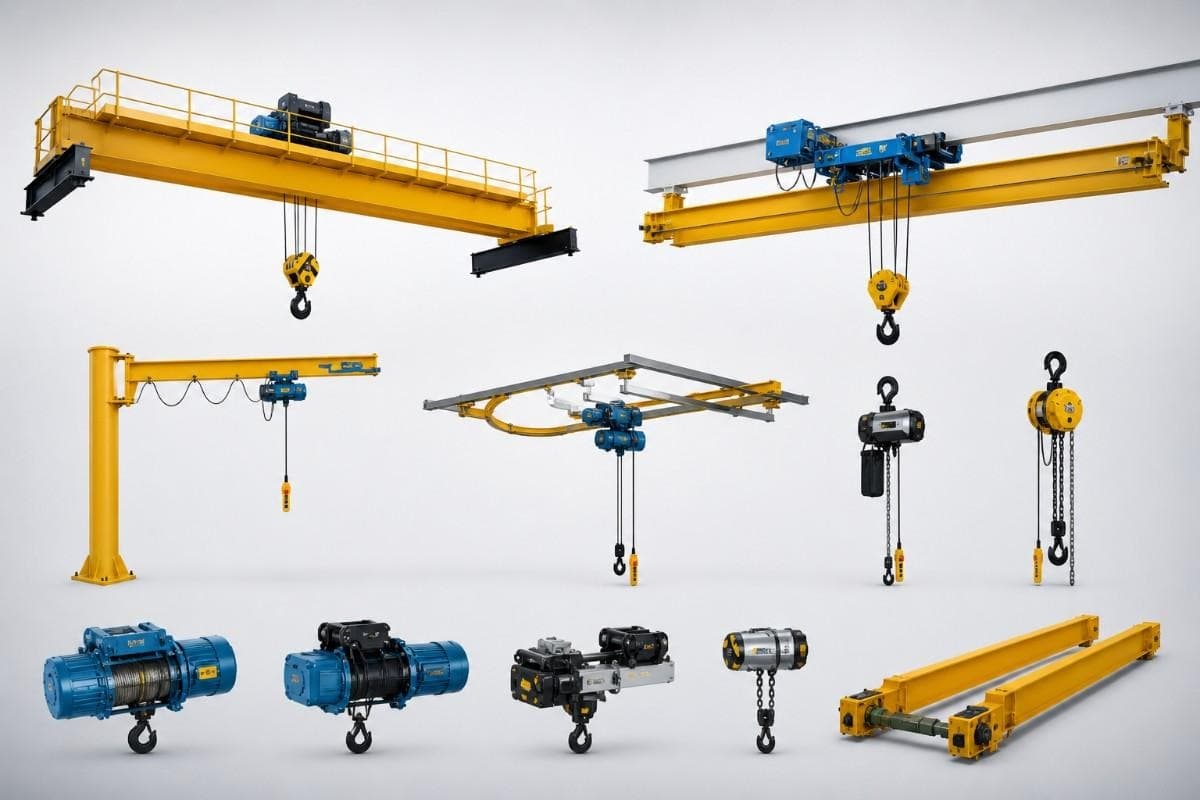
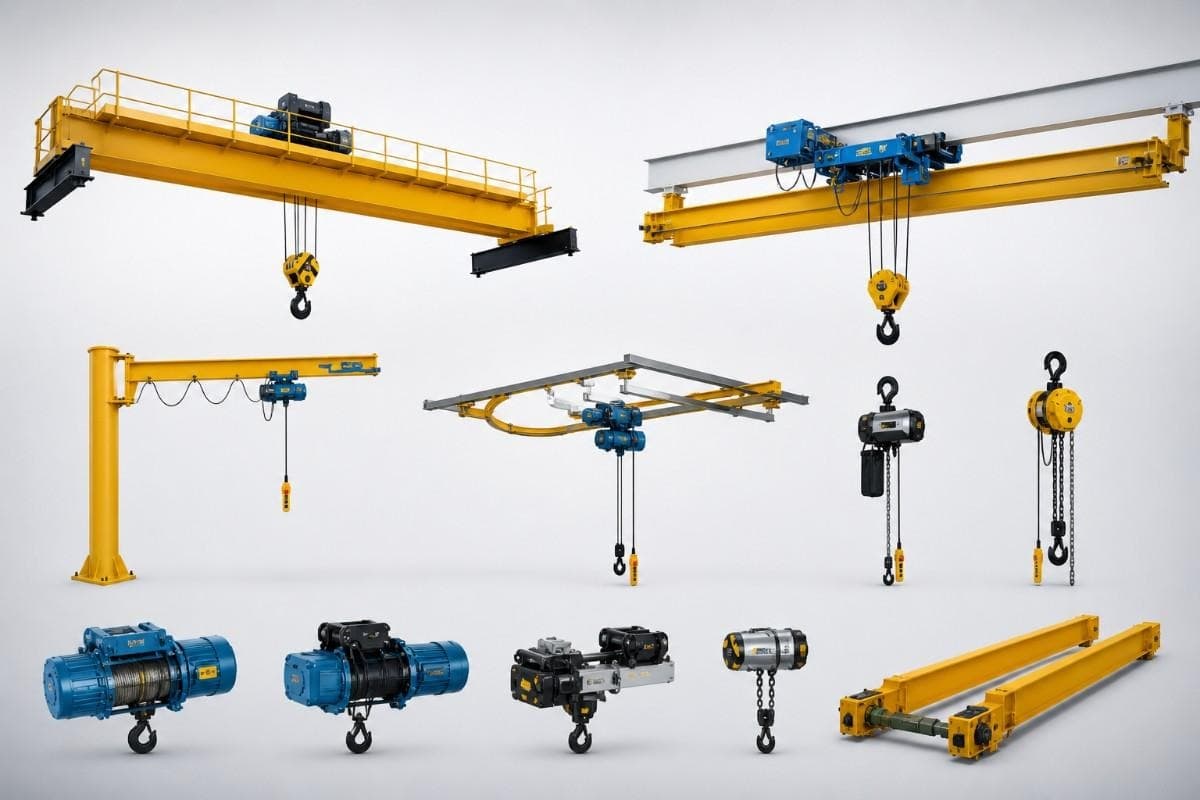
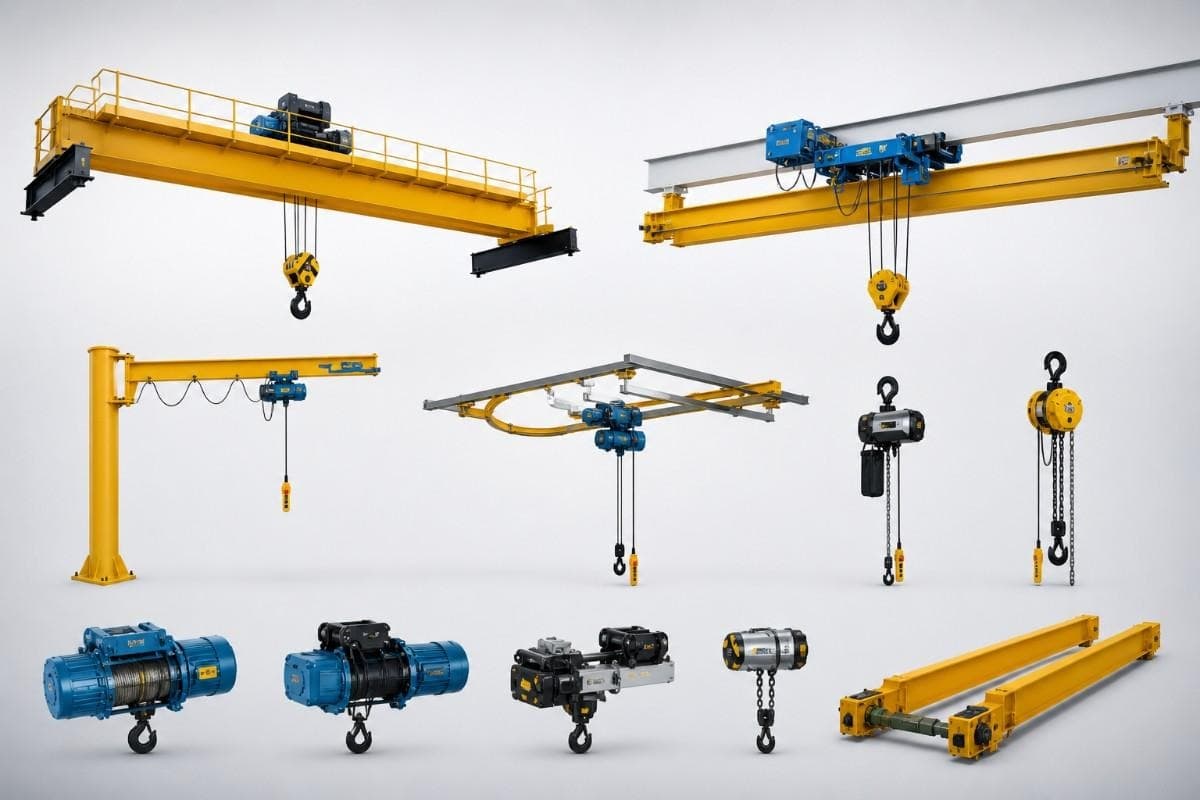
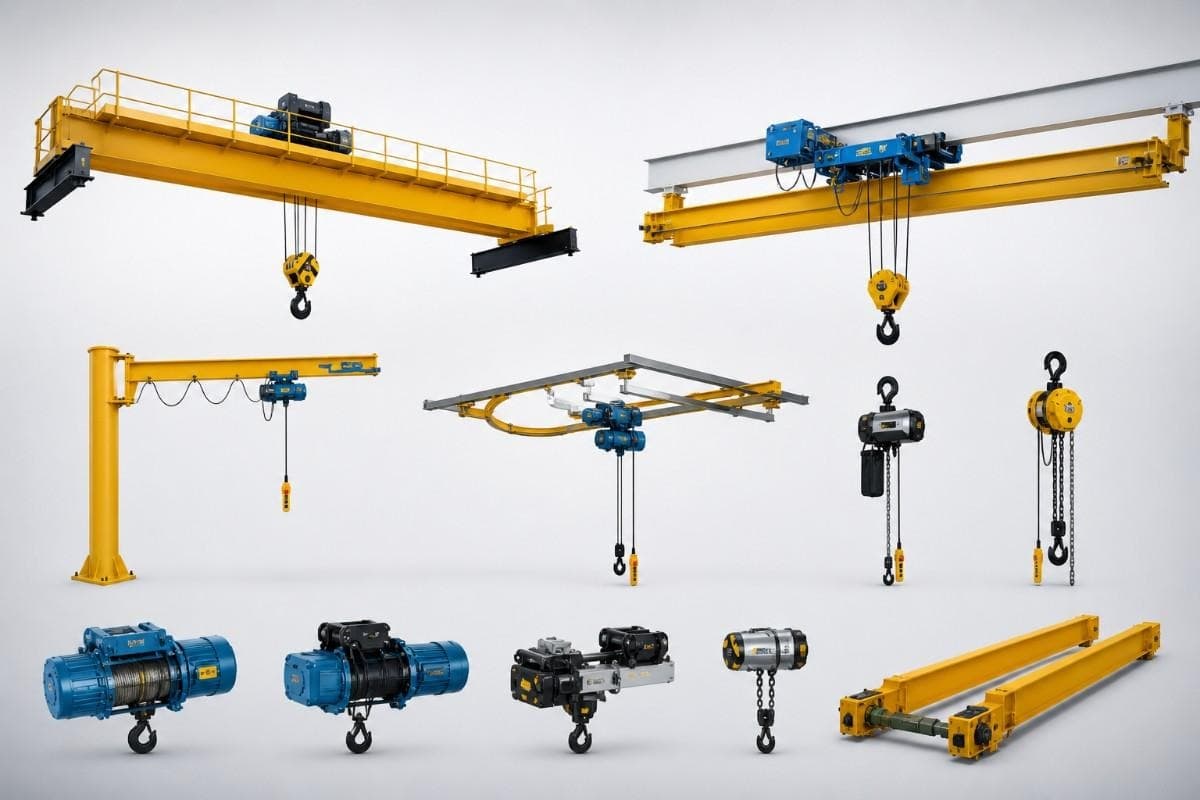
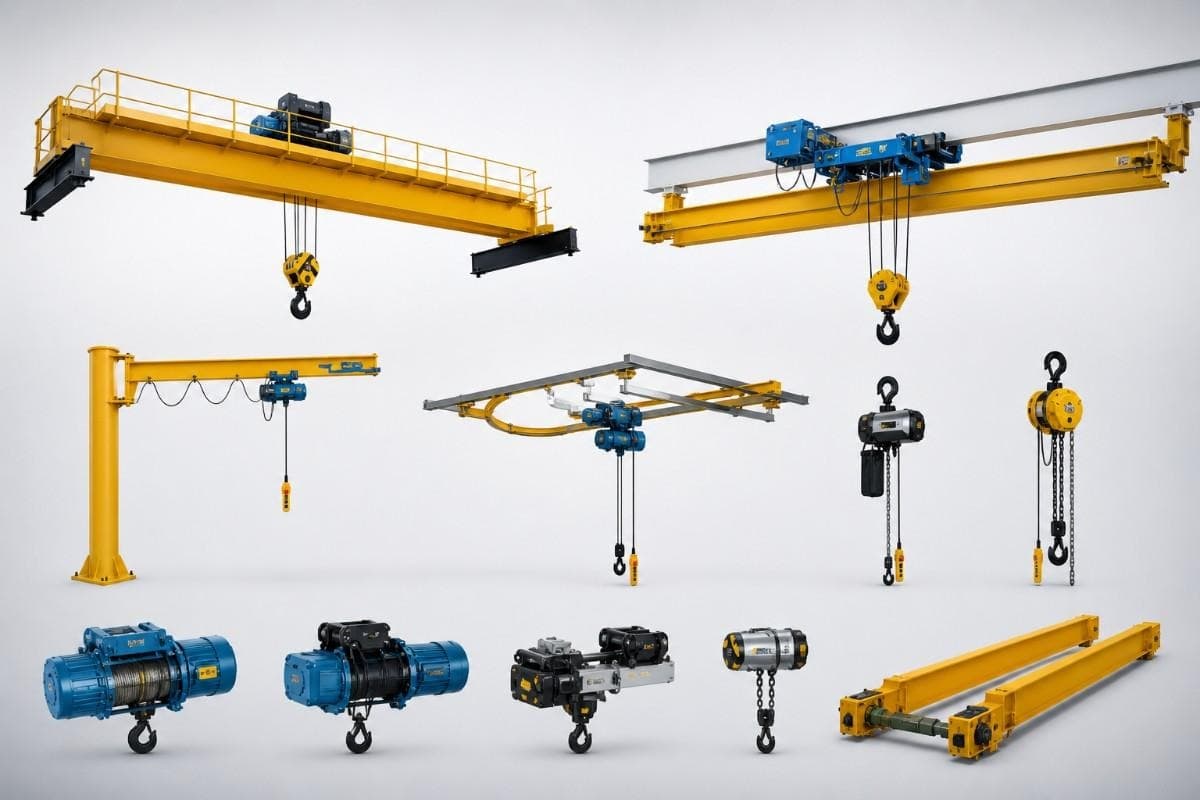
The most widely used crane type across Chennai's MSME and mid-size manufacturing sector. A single box girder carries the hoist on its bottom flange. Spans typically run from 6 metres to 20 metres, with capacities from 1 tonne to 20 tonnes. Installation is straightforward, and maintenance is simple. For workshops, small fabrication yards, and component assembly units, this is usually the right starting point.
When your lifts are heavier, your spans longer, or your headroom tighter, the double girder configuration delivers. Two parallel girders form the bridge, and the top-running hoist trolley sits between them. This configuration allows the hook to approach closer to the roof structure, maximising usable lift height in the same building. Foundries, large fabrication shops, and automotive press plants around Chennai's industrial estates rely on double girder cranes as their primary overhead material handling system.
Self-supporting on ground-level legs rather than building structure, gantry cranes are the natural choice for open yards, railway sidings, and facilities where the roof cannot carry a suspended runway. Port precincts and steel yards across North Chennai use these extensively. Semi gantry cranes, where one leg runs on a ground rail and the other end connects to a wall-mounted runway beam, are common in older Chennai factories where the building structure is adequate on one side only.
The underslung crane hangs from the roof structure rather than sitting on top of it. It preserves full floor-to-ceiling height beneath the crane and allows for maximum use of floor space below. Chennai's newer greenfield plants, especially in the electronics and light engineering sectors, increasingly specify underslung systems for this reason.
A wall-mounted or pillar-mounted jib crane serves individual workstations with a rotating arm that covers a defined arc. Machine shops, maintenance bays, and assembly cells across Chennai's industrial estates pair jib cranes with their main overhead systems to give individual operators independent lifting capability at their station without competing for the main crane.
When I tried shortlisting crane suppliers for a multi-crane installation project in a manufacturing context, the evaluation process I used came down to six clear criteria. These are worth applying to any supplier you are considering.
A supplier who can satisfy all six criteria confidently is worth progressing with. One who deflects or cannot answer is telling you something important about what happens after the sale.
According to a survey conducted by the Confederation of Indian Industry's manufacturing excellence division, over 60 percent of plant engineering heads in South India reported that after-sales support quality and technical documentation completeness were more important purchasing factors than local proximity when selecting crane suppliers.
This reflects a broader shift in how industrial buyers in Chennai and across Tamil Nadu approach crane procurement. The assumption that a local supplier is automatically better suited to serve you is being replaced by a more practical assessment: which supplier can deliver the right crane, on time, with proper documentation, and support it reliably over the asset's full operating life?
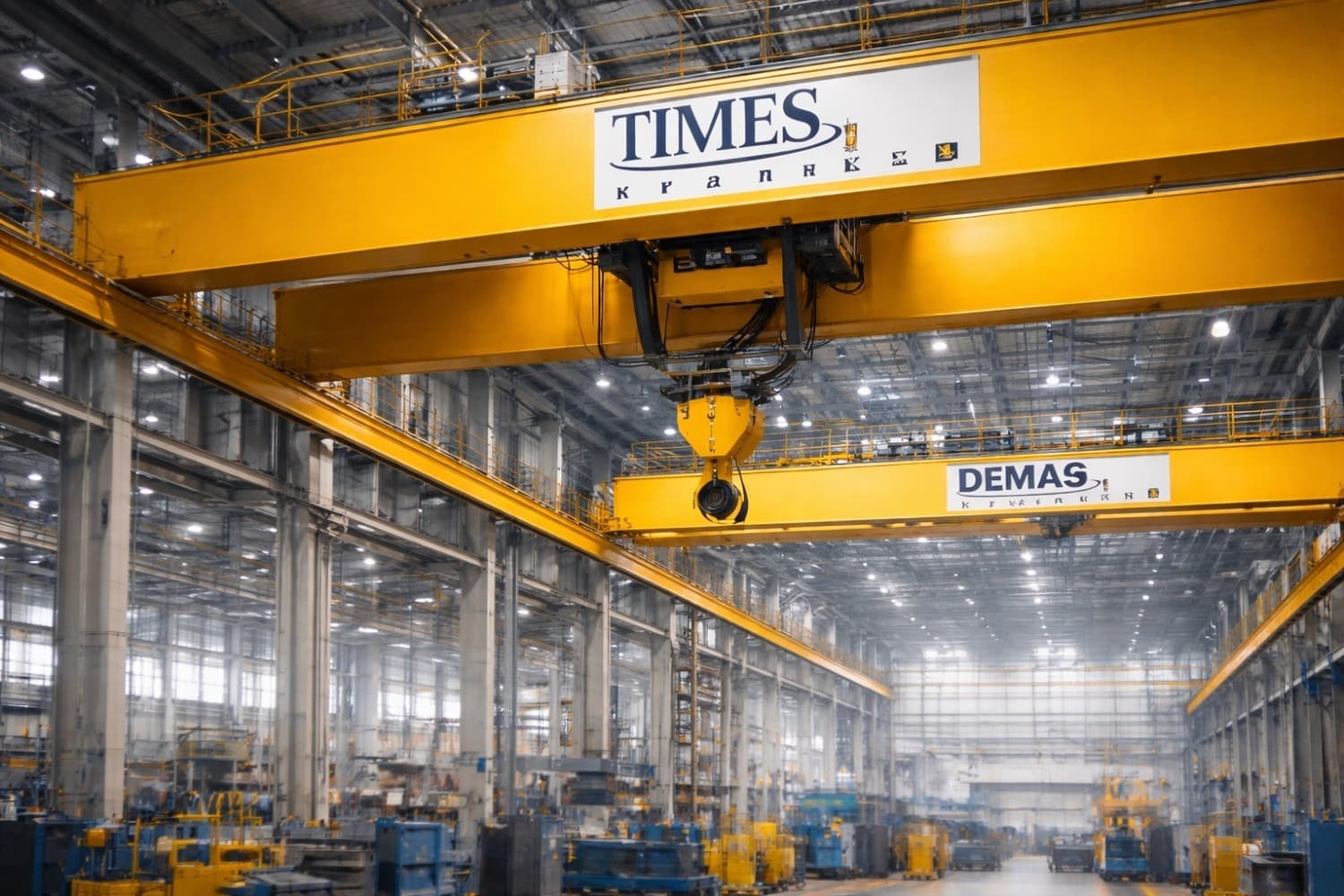
Times Krane, based in Faridabad with a nationwide supply and service footprint, has built cranes for industries across Tamil Nadu and the broader South India market precisely because the company brings documented engineering depth and post-delivery support that many local assemblers cannot match. Every crane that leaves the Times Krane facility goes with a full documentation package including load test certificate, electrical schematic, operation and maintenance manual, and structural drawings.
This is a point that does not get enough attention in crane procurement conversations in Chennai, and it should.
Chennai's coastal geography means the air carries significant salt particulate, particularly in industrial zones close to the port and Ennore Creek. Salt accelerates steel corrosion dramatically. A crane built with standard mild steel and a basic primer and enamel finish will show visible rust damage within two to three years in these conditions without proper maintenance.
Hot-dip galvanising of structural components, epoxy-based primer systems, and polyurethane topcoats are the appropriate surface treatment choices for cranes operating in Chennai's coastal industrial belt. For electrical panels and control boxes, IP-rated enclosures with gasket sealing protect against humidity ingress and salt contamination.
Ask your crane supplier specifically what surface treatment system they are proposing and why. If their answer is "standard primer and enamel," that is a risk you need to factor into your total cost of ownership calculation.
A no-fluff guide to picking crane manufacturers in Vatva, Ahmedabad, covering FLP cranes for chemical units, real cost factors, and buyer mistakes to avoid.
If you're looking for a dependable EOT crane manufacturer in Delhi NCR, you've probably already realized the region has no shortage of options. The problem is filtering out the ones who actually manufacture from the ones who just package and resell.
Finding dependable EOT crane manufacturers in Ludhiana can make a huge difference to the efficiency and safety of your industrial operations. Whether you run a manufacturing facility, fabrication unit, warehouse, steel plant, engineering workshop, or logistics center, the right crane system helps move heavy loads faster, safer, and with less effort.
Delhi and the surrounding NCR belt are home to thousands of manufacturing units, fabrication shops, and industrial facilities. And almost every one of them, at some point, needs a crane. The problem is that finding a trustworthy EOT crane manufacturer in Delhi is harder than it should be.
Ahmedabad's industries move fast, and the material handling equipment supporting them needs to keep pace without compromise. If you are searching for a crane manufacturer in Ahmedabad who can deliver engineering depth, documented compliance, and reliable after-sales support rather than just a machine with a price tag, this page is worth your time.
Most plants in Chennai have an overhead crane for the bay and nothing else for individual workstations. That gap costs operators time on every single shift. If you are looking for jib crane manufacturers in Chennai who can actually close that gap with a well-engineered, workstation-level lifting solution, this page will walk you through everything you need to know before making a decision.
Choosing the wrong EOT crane manufacturer in Hyderabad can set your entire project back by months. The stakes are high, the options are many, and most buyers do not know what to look for until something goes wrong.
Looking for a reliable partner for your next industrial project?