English
Contact
Configure
Catalog
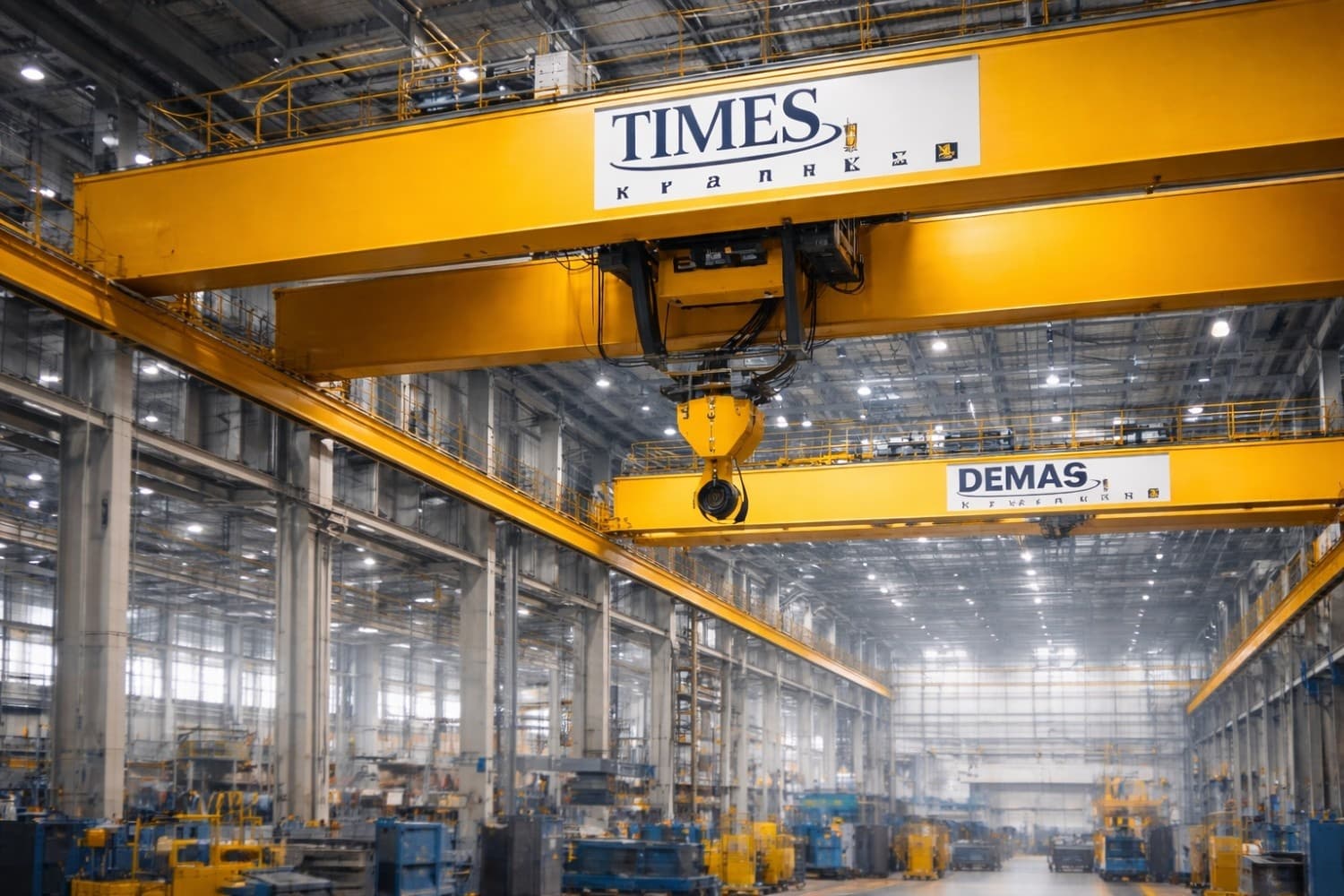
Delhi and its surrounding NCR industrial belt, Faridabad, Gurgaon, Noida, Ghaziabad, cover an enormous range of industries. Precision engineering, automotive components, electronics assembly, pharmaceutical packaging, defence manufacturing. Each of these environments has specific material handling needs, and jib cranes serve a surprisingly central role across almost all of them. Small footprint, targeted lifting radius, fast load positioning. When you need to serve one workstation or one machine, a jib crane is often the cleanest solution available.
A jib crane consists of a horizontal boom or arm mounted either to a vertical pillar, a wall, or a building column. The hoist runs along the length of this boom, giving you a defined arc of lifting coverage. Unlike an EOT crane that covers an entire bay, a jib crane is designed to serve a specific zone, a single press, a lathe, a welding station, a loading dock.
That focused coverage is its biggest strength. You're not moving loads across the whole facility. You're lifting, positioning, and releasing within a defined work area, repeatedly, efficiently, and safely.
In my experience, jib cranes are often an afterthought during facility planning. They get added later when operators start improvising with equipment that was never designed for repetitive heavy lifting. By that point, you've usually already dealt with a few minor injuries and a lot of unnecessary fatigue. Installing jib cranes at the right workstations from the beginning is significantly cheaper than managing the aftermath of not doing so.
Understanding the configurations available helps you choose the right fit for your specific application.
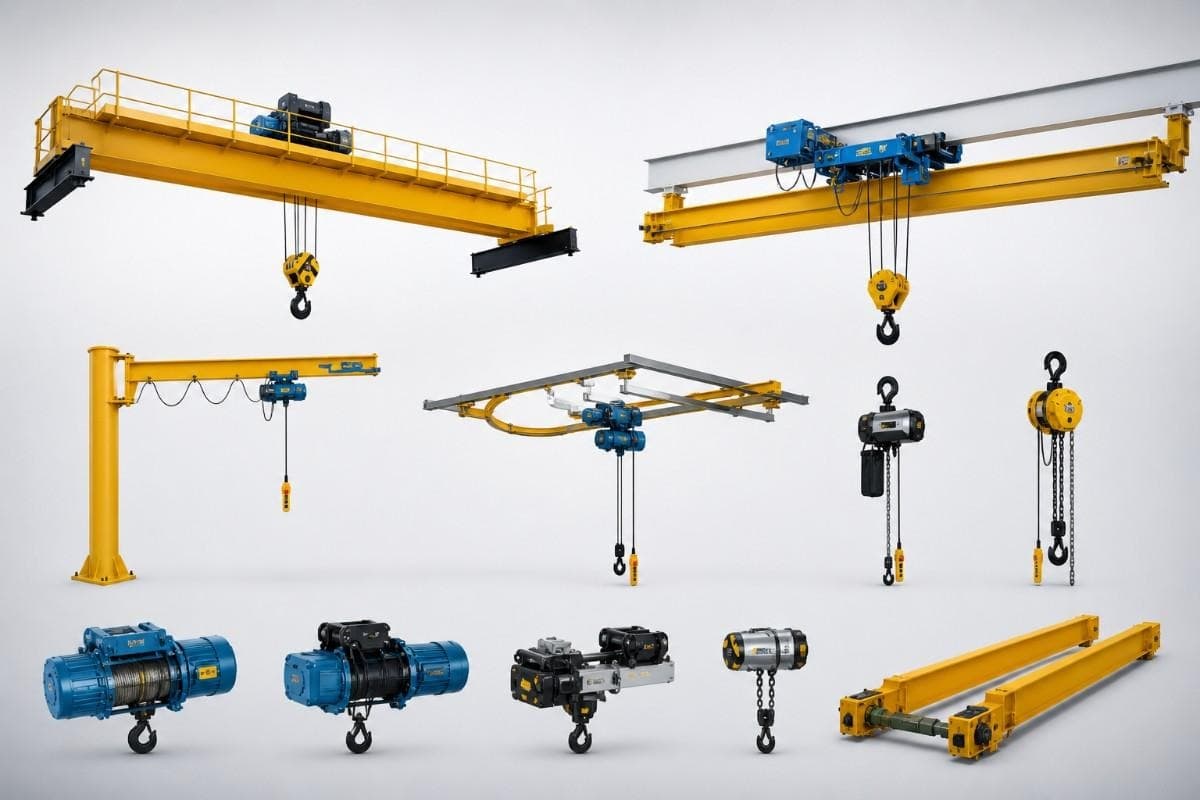
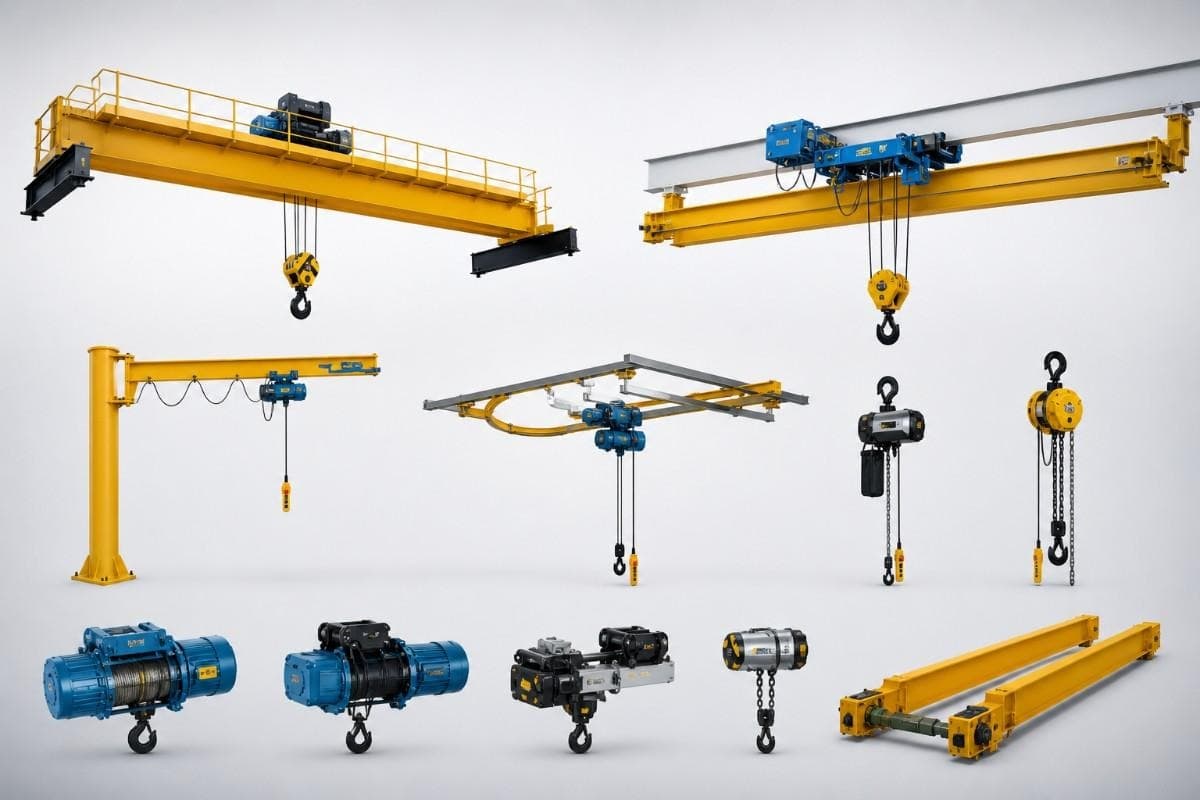
A freestanding jib crane where the boom is mounted on a vertical pillar anchored to the floor. The pillar carries all the load, so no wall or column attachment is needed. This gives you full 360-degree or limited arc rotation depending on the design, and it can be positioned anywhere on the shop floor where a foundation anchor can be made.
Best suited for: central workstations, open floor areas without nearby walls, machine tending positions, assembly areas.
The boom is attached directly to a wall or structural column. No floor space is used for a pillar base. This configuration works well when you want to keep the floor completely clear under the crane's working radius and when the wall or column structure can carry the load.
Best suited for: loading bays, machine positions adjacent to walls, facilities where floor space is at a premium.
Similar to a wall-mounted crane but attached to an existing structural building column rather than a wall surface. The column must be capable of carrying the jib crane's loads without compromising its own structural function.
Best suited for: facilities with robust structural columns positioned near work areas, production lines with column-adjacent machine placements.
A two-boom design where a secondary arm is hinged to the primary boom, allowing the hoist to reach around obstacles or into tighter positions that a single straight boom cannot access.
Best suited for: intricate assembly work, facilities with obstructions in the working area, applications requiring extended horizontal reach with obstacle avoidance.
A lightweight, wheeled jib crane that can be repositioned manually around the facility. No permanent floor anchoring required. Suited for lighter loads and situations where flexibility of positioning matters more than fixed coverage.
Best suited for: maintenance teams, tool rooms, facilities with changing production layouts, light component handling.
Delhi NCR is one of India's most densely industrialised regions. The manufacturing belt stretching from Faridabad in the south to Ghaziabad in the east and Manesar in the west hosts thousands of production units across virtually every industrial sector.
I've noticed a consistent pattern across these facilities: smaller manufacturers and tier-2 suppliers in zones like Okhla, Udyog Vihar, and Kundli often rely on manual handling at individual workstations long after their operations have scaled to a point where that's no longer safe or efficient. The production volumes don't justify a full overhead crane system, but they absolutely justify workstation-level jib cranes.
That gap between what's needed and what's actually in place is where jib cranes deliver their most direct value. Targeted, economical, and fast to install.
The market for jib cranes in Delhi NCR has its share of genuine manufacturers and a larger share of traders who source product without real engineering input. Here's how to tell them apart.
A genuine jib crane manufacturer in Delhi will be able to:
When I tried shortlisting vendors for a precision engineering unit in Faridabad that needed six workstation jib cranes, applying this exact checklist reduced a list of twelve apparent suppliers down to three who could actually deliver what was required. That filtering process saved considerable time and potential problems later.
Before you contact any manufacturer, get clear on these parameters. They directly determine the crane's design and specification:
Having these figures ready when you first speak to a manufacturer leads to much faster and more accurate technical proposals.
According to the Bureau of Indian Standards, jib cranes used in industrial environments must be designed to accommodate both static loads from the rated capacity and dynamic loads generated by hoist acceleration and deceleration. Foundation anchors for pillar-mounted cranes must be designed to resist both vertical loads from the lifted weight and the significant horizontal moment forces that develop at the base of the pillar during lifting.
This engineering detail matters because it's one of the most frequently underestimated aspects of jib crane installation. A pillar crane that looks solid can fail catastrophically if its foundation anchor was designed without proper moment calculations. Any manufacturer who doesn't raise this topic during your initial conversation is one to approach with caution.
Times Krane, the crane manufacturing division of Times Industrial Engineers Pvt. Ltd., is based in Faridabad, Haryana, which places it directly within the Delhi NCR industrial corridor. That proximity to Delhi's manufacturing belt is practically meaningful. Site surveys, installation teams, and service engineers are available without the delays and logistics complications that come with suppliers based far from your region.
Their experience spans over three decades of industrial operations, with the TK Crane brand having served manufacturing, engineering, and construction clients across India since 2012. For jib crane applications specifically, their in-house engineering team works from your actual load, radius, and structural parameters to produce a crane designed for your workstation rather than a catalogue standard that may or may not fit.
Times Krane covers the full range of jib crane types including pillar-mounted, wall-mounted, column-mounted, and articulating configurations with both manual and electric hoist options.
A few things that regularly cause problems for buyers, particularly in their first jib crane purchase:
The range of applications across Delhi's industrial zones is broad:
If you have a workstation or machine where an operator is regularly lifting loads above 100 kg, a jib crane is almost certainly worth evaluating.
A jib crane is not the most complex piece of equipment in your facility, but it's one that directly touches operator safety every single day. The difference between a properly engineered jib crane from a real manufacturer and a poorly specified one from a reseller often isn't visible until something goes wrong.
Take the time to verify your supplier's engineering capability, check their compliance documentation, and insist on a proper load test at commissioning. These are non-negotiable standards, not optional extras.
If you're searching for reliable jib crane manufacturers in Delhi, Times Krane is a name that deserves a spot on your shortlist. Their location within the NCR industrial belt, in-house manufacturing capability, and track record across diverse industrial applications make them a practical and accountable choice for Delhi-region buyers.
A no-fluff guide to picking crane manufacturers in Vatva, Ahmedabad, covering FLP cranes for chemical units, real cost factors, and buyer mistakes to avoid.
If you're looking for a dependable EOT crane manufacturer in Delhi NCR, you've probably already realized the region has no shortage of options. The problem is filtering out the ones who actually manufacture from the ones who just package and resell.
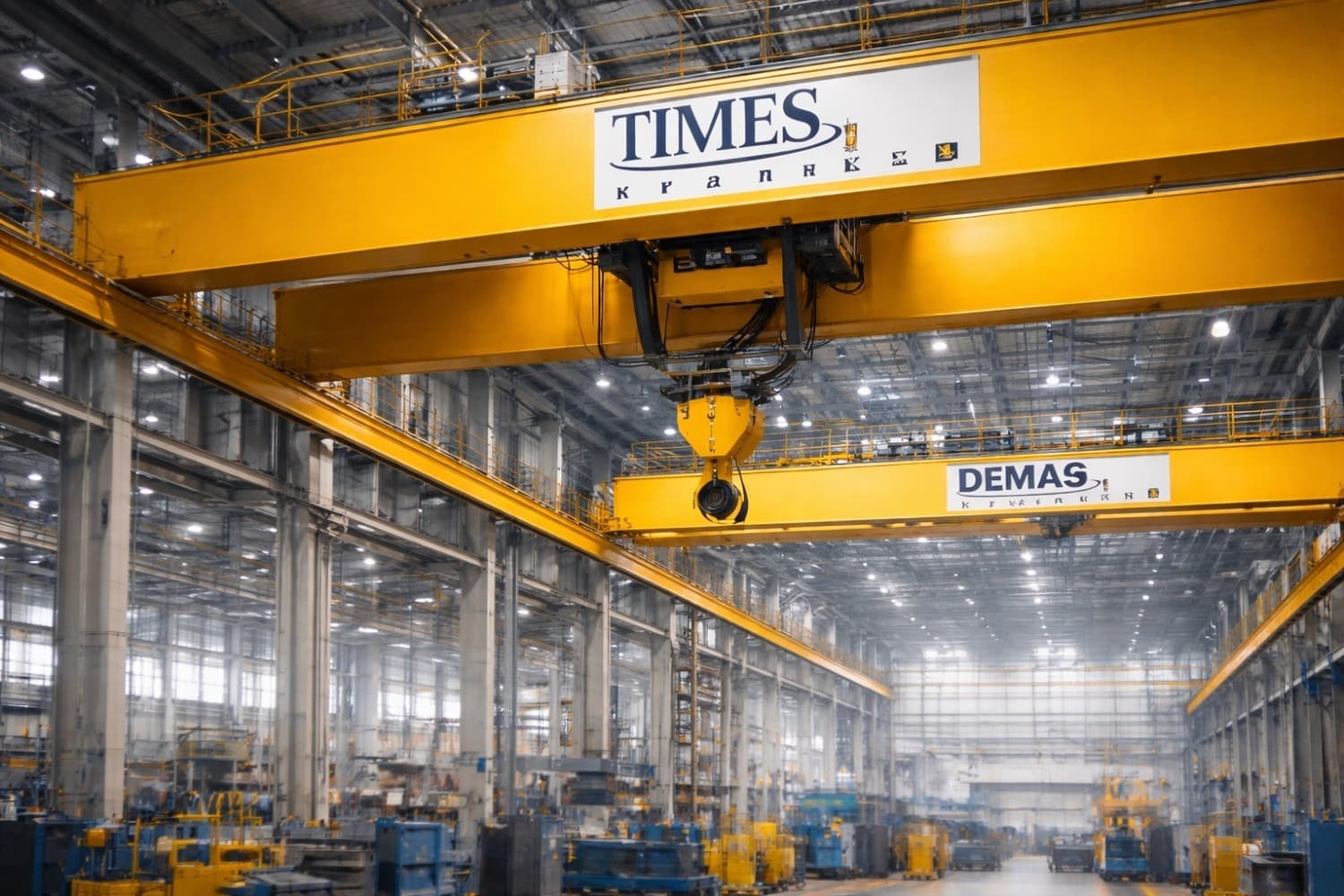
Finding dependable EOT crane manufacturers in Ludhiana can make a huge difference to the efficiency and safety of your industrial operations. Whether you run a manufacturing facility, fabrication unit, warehouse, steel plant, engineering workshop, or logistics center, the right crane system helps move heavy loads faster, safer, and with less effort.
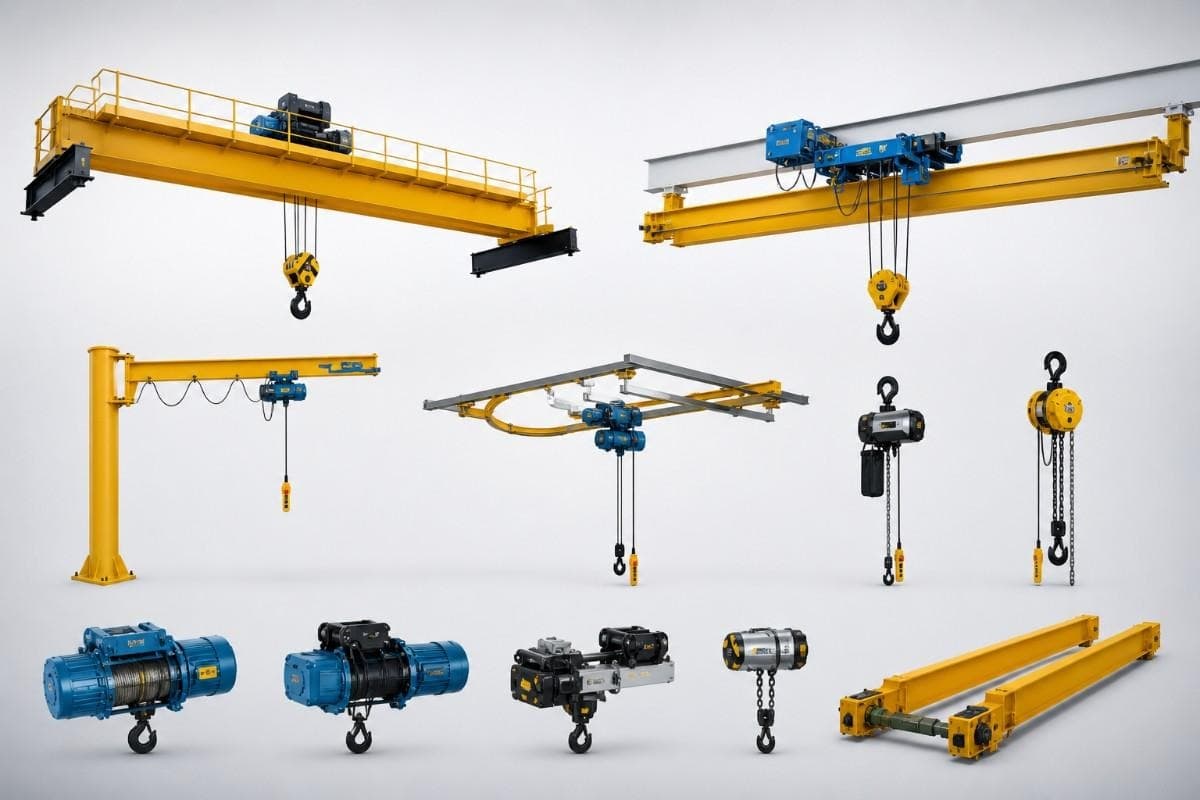
Delhi and the surrounding NCR belt are home to thousands of manufacturing units, fabrication shops, and industrial facilities. And almost every one of them, at some point, needs a crane. The problem is that finding a trustworthy EOT crane manufacturer in Delhi is harder than it should be.
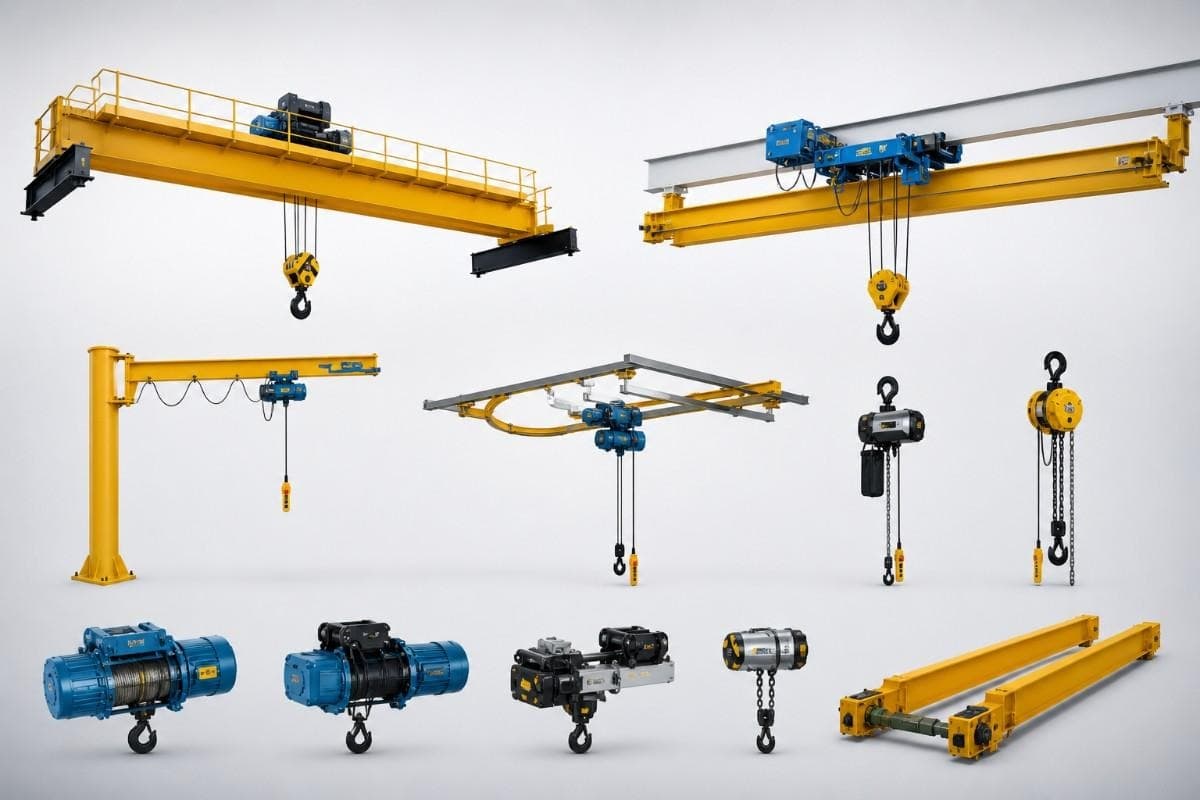
Ahmedabad's industries move fast, and the material handling equipment supporting them needs to keep pace without compromise. If you are searching for a crane manufacturer in Ahmedabad who can deliver engineering depth, documented compliance, and reliable after-sales support rather than just a machine with a price tag, this page is worth your time.
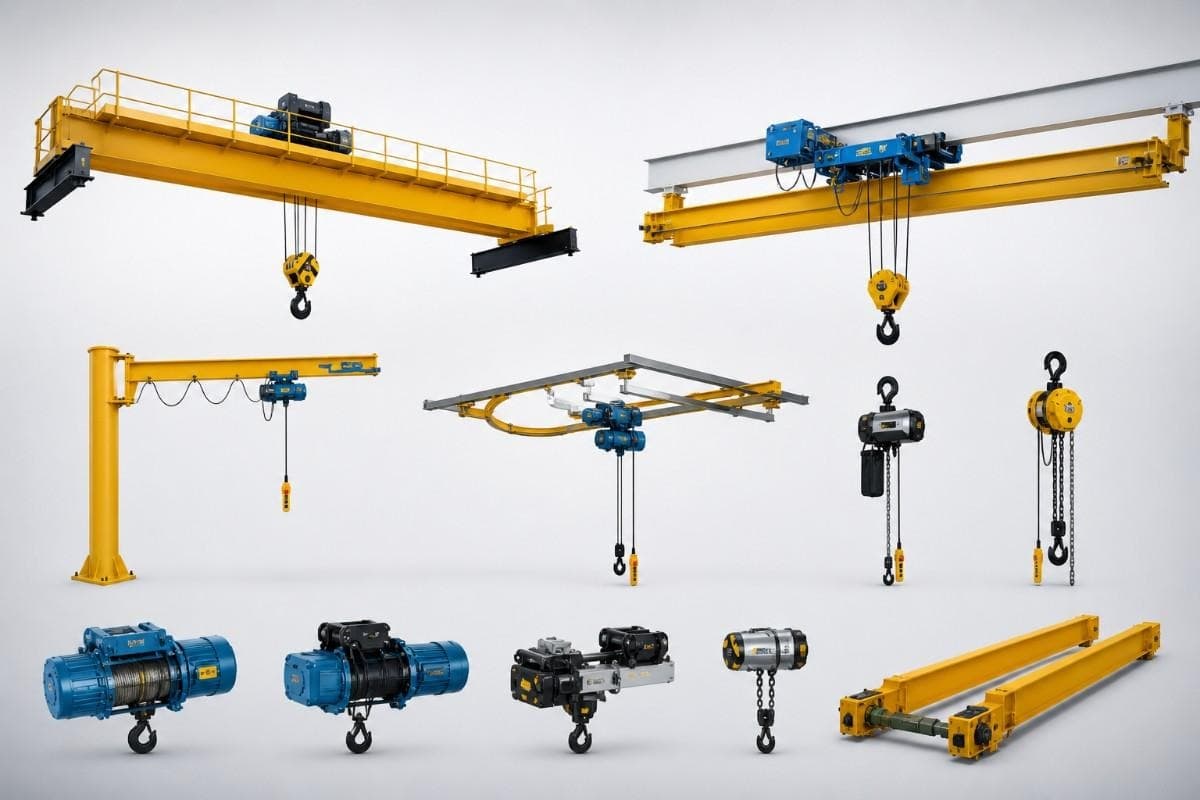
Most plants in Chennai have an overhead crane for the bay and nothing else for individual workstations. That gap costs operators time on every single shift. If you are looking for jib crane manufacturers in Chennai who can actually close that gap with a well-engineered, workstation-level lifting solution, this page will walk you through everything you need to know before making a decision.
Choosing the wrong EOT crane manufacturer in Hyderabad can set your entire project back by months. The stakes are high, the options are many, and most buyers do not know what to look for until something goes wrong.
Looking for a reliable partner for your next industrial project?