English
Contact
Configure
Catalog
Pune sits at the heart of Maharashtra's manufacturing corridor. From Pimpri-Chinchwad's automotive giants to Chakan's aerospace suppliers, from Ranjangaon's chemical plants to Hadapsar's engineering units, the demand for well-engineered overhead material handling systems is constant and growing. Getting the crane selection right matters enormously here because production schedules in Pune do not forgive downtime.
This page breaks down what you need to know before choosing a crane manufacturer, what crane types suit Pune's dominant industries, and what separates a genuine manufacturer from an assembler with a catalog.
Pune is not a single-industry city. That is both its strength and its challenge when you are sourcing cranes. The automotive sector, defence manufacturing, pharmaceutical production, food processing, steel fabrication, and IT hardware assembly all operate in the same geography but require very different crane specifications.
An automotive press shop in Pimpri-Chinchwad needs a crane rated for heavy-duty service class, frequent pick-and-place cycles, and precise positioning over expensive tooling. A pharmaceutical warehouse in Hinjawadi needs something far lighter, with clean-room compatible components and spark-free electrical configurations. A steel yard in Ranjangaon needs high-capacity double girder construction with robust end carriages.
In my experience, the biggest mistake procurement teams make is treating crane procurement like buying a commodity. You do not pick a crane the way you pick a fastener. Every application has its own span, headroom, capacity, duty class, floor loading, and operational rhythm. A crane manufacturer worth working with will ask about all of these before offering any design.
Let me be direct about what you should expect from any serious crane manufacturer supplying to Pune's market.
The first thing to look for is an actual manufacturing facility. This sounds obvious, but a surprising number of companies positioning themselves as crane manufacturers in Pune are in fact traders or assemblers. They source pre-built structural components, hoist units, and electrical panels from third parties and bolt them together. That is not manufacturing. It is integration, and it carries real quality risks because no one is responsible for the full design.
A genuine crane manufacturing company controls the fabrication of its structural steel, follows weld procedure specifications, maintains dimensional tolerances on girder camber and wheel alignment, and conducts load testing on its own floor before dispatch.
The second thing to check is material traceability. Every structural steel plate used in the bridge girder and end carriage should come with a mill test certificate. Ask for it. If the manufacturer hesitates, that is a signal.
Third, check the duty class rating. Indian Standard IS 3177 classifies overhead cranes from M1 to M8 based on load spectrum and number of working cycles. Pune's automotive and heavy engineering plants routinely need M5, M6, or even M7 rated cranes. If the manufacturer cannot discuss duty class intelligently, walk away.
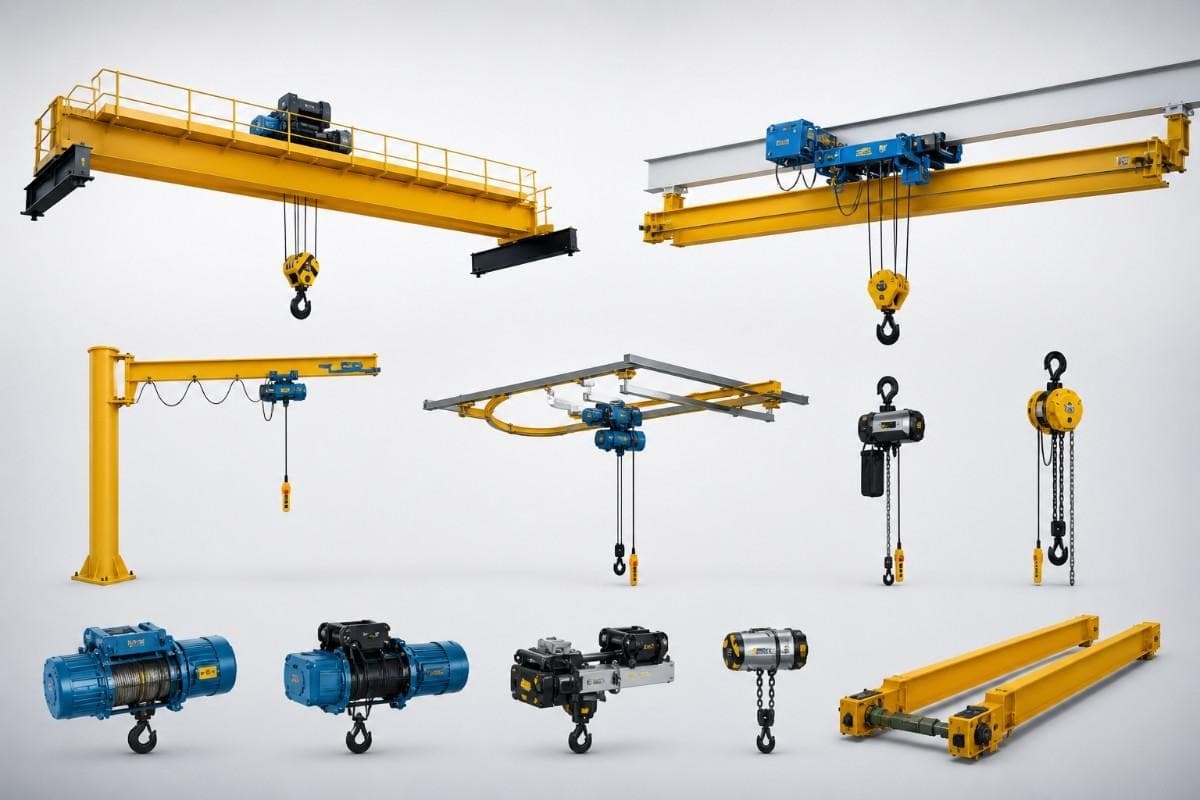
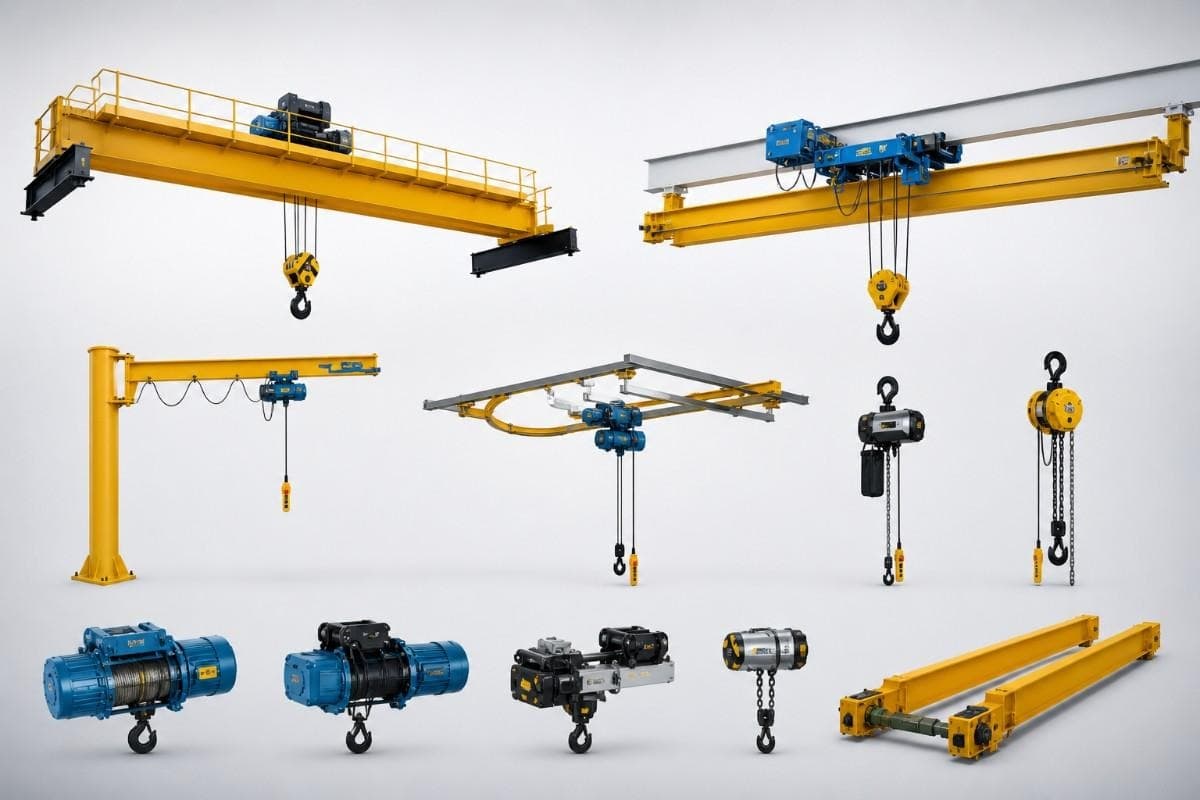
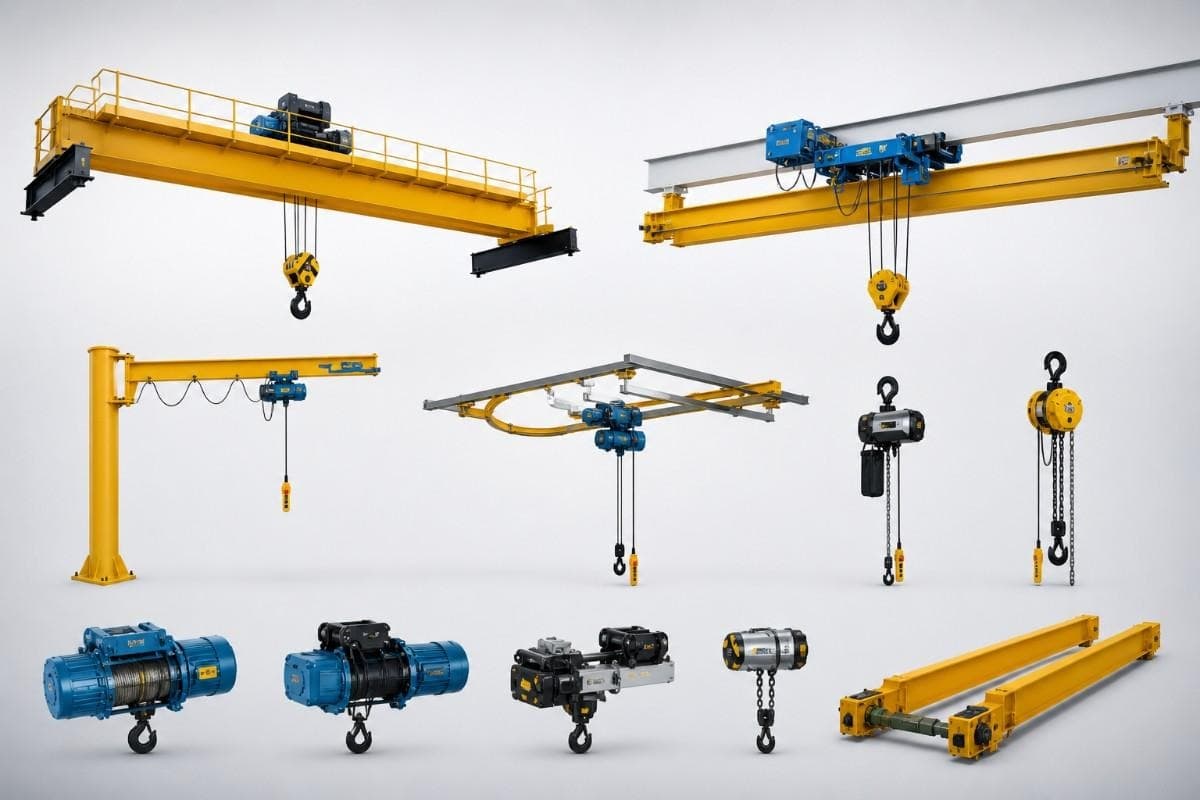
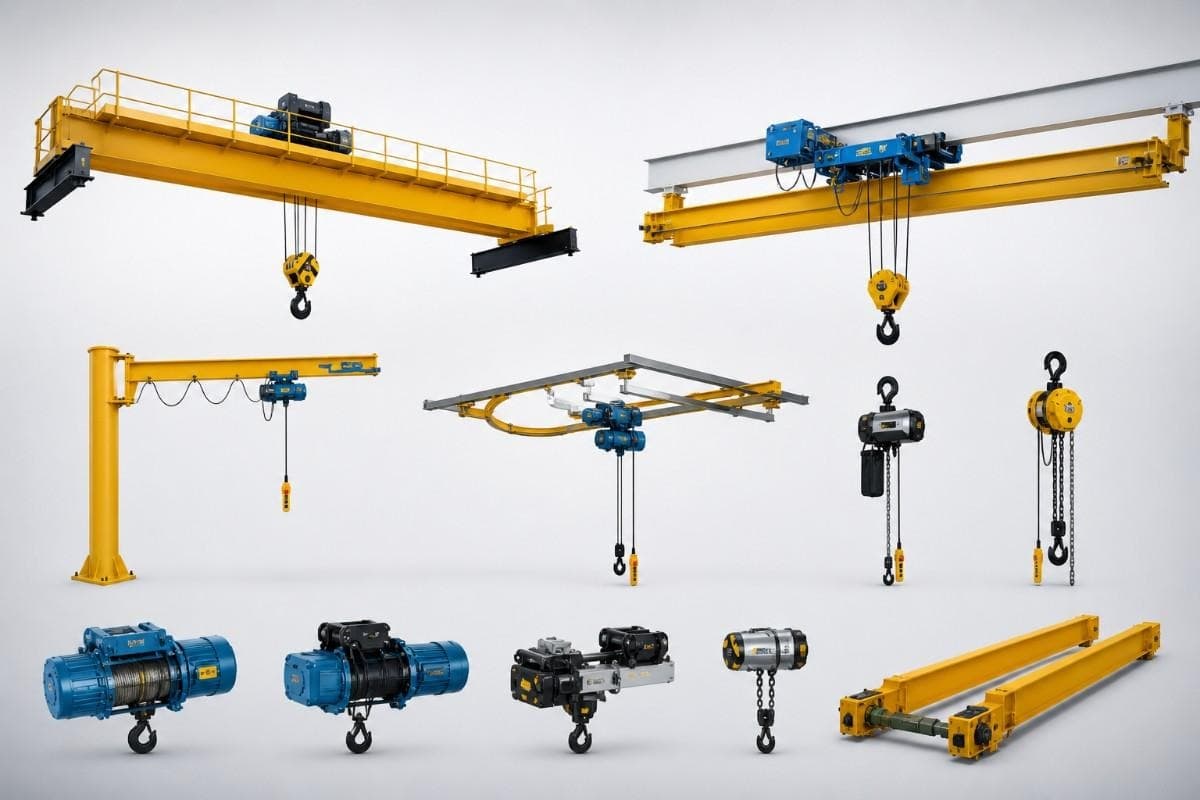
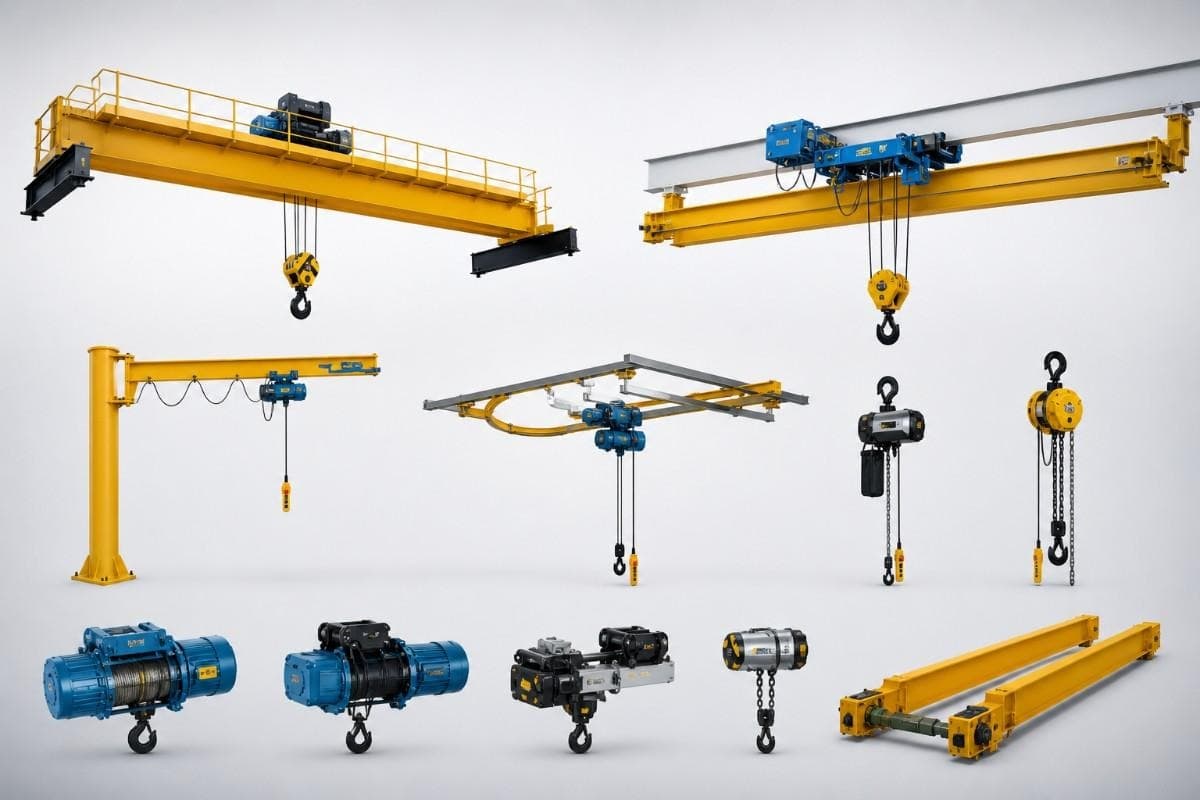
This is the workhorse of light to medium manufacturing. A single bridge girder carries the hoist trolley on its bottom flange. Capacities typically run from 1 tonne to 20 tonnes, with spans suited to most standard factory bays. Pune's MSME fabrication units, tool rooms, and smaller engineering workshops use single girder EOT cranes extensively.
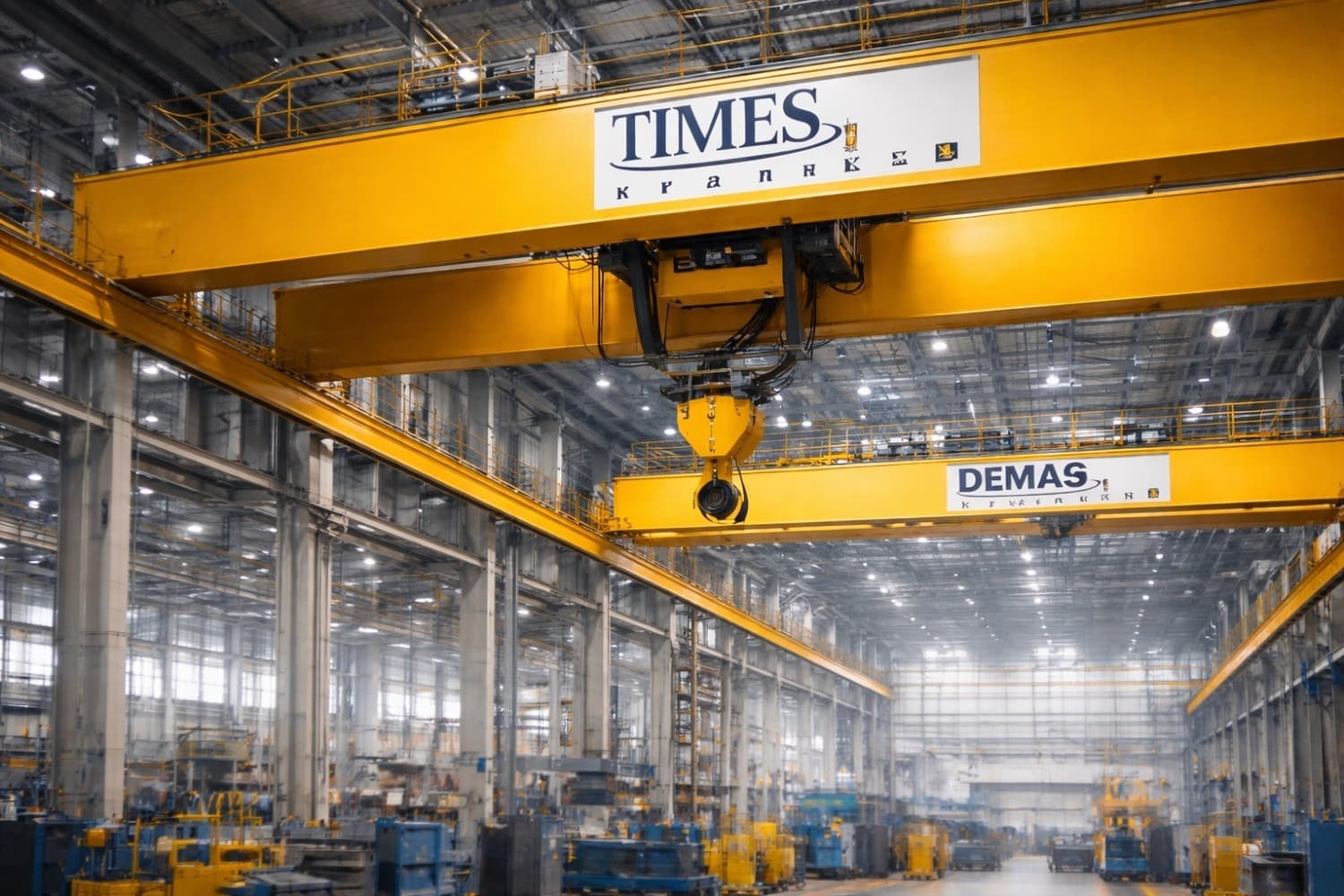
When you move into heavier lifts, longer spans, or higher precision requirements, the double girder configuration is necessary. Two parallel girders form the bridge, and the hoist trolley runs on top rail. This arrangement lowers the centre of gravity of the load, allows greater hook height, and handles higher capacity lifts with better stability. Automotive assembly plants, foundries, and heavy fabrication shops across Chakan and Ranjangaon use double girder cranes as their primary material handling backbone.
Also called a suspension crane, the underslung type hangs from the roof structure rather than running on top of it. It is particularly useful in plants where floor space is critical and column-free working area is a priority. I have noticed that Pune's newer greenfield automotive supplier plants increasingly prefer underslung systems because they allow fork truck lanes and pedestrian walkways to run freely beneath the crane without any structural intrusion at floor level.
The KBK system is a modular light crane solution using profiled steel sections suspended from the ceiling. It suits assembly lines, engine build stations, and workstations where operators need to move components within a defined cell rather than across an entire bay. The flexibility to reconfigure the track layout as production lines change is a genuine advantage in Pune's fast-evolving manufacturing environment.
Wall-mounted or pillar-mounted, jib cranes serve individual workstations. A single operator can swing the jib arm within a 180 or 270 degree arc and position loads precisely at their station. Foundries, machine shops, and maintenance bays across Pune's industrial estates use jib cranes to complement their main overhead crane systems.
When I tried evaluating multiple crane suppliers for a project involving a multi-bay manufacturing plant, the questions that separated strong candidates from weak ones were not about brand names or catalog pages. They were operational and technical.
Here is what I would ask any crane manufacturing company in Pune or supplying to Pune:
These questions reveal whether you are talking to a real manufacturer or a reseller very quickly.
According to industry feedback compiled by the Material Handling Equipment Manufacturers Association of India, procurement teams in major industrial cities increasingly shortlist manufacturers from outside their immediate geography when local options cannot demonstrate adequate engineering depth or after-sales infrastructure.
Pune buyers are no exception. Many of the most demanding crane installations in Pune's automotive and defence sectors have been supplied by manufacturers based in Faridabad, Ahmedabad, and Kolkata because these manufacturers bring documented engineering capability and pan-India service networks that purely local assemblers cannot match.
Times Krane, headquartered in Faridabad with a supply footprint across India, has built cranes for industries in Pune and across Maharashtra. The company's engineering team works directly with the buyer's facility layout, production data, and structural drawings to arrive at a crane design that is specific to the application rather than adapted from a generic catalog model. That level of customisation matters when you are fitting a crane into an existing plant with fixed column centres, specific headroom constraints, and defined wheel load limits on the floor slab.
Times Krane brings over 35 years of industrial engineering background to crane manufacturing. The fabrication process covers structural steel cutting, girder fabrication, end carriage assembly, electrical panel building, and full load testing under one roof. Every crane dispatched carries a load test certificate, material traceability documentation, and a commissioning report.
For Pune's industries specifically, Times Krane offers:
In my experience, manufacturers who are willing to put their service commitment in writing before the sale rather than only after it are the ones who stand behind their product long term.
Pune's crane users span a wide industrial cross-section. The sectors with the highest crane density include:
A no-fluff guide to picking crane manufacturers in Vatva, Ahmedabad, covering FLP cranes for chemical units, real cost factors, and buyer mistakes to avoid.
If you're looking for a dependable EOT crane manufacturer in Delhi NCR, you've probably already realized the region has no shortage of options. The problem is filtering out the ones who actually manufacture from the ones who just package and resell.
Finding dependable EOT crane manufacturers in Ludhiana can make a huge difference to the efficiency and safety of your industrial operations. Whether you run a manufacturing facility, fabrication unit, warehouse, steel plant, engineering workshop, or logistics center, the right crane system helps move heavy loads faster, safer, and with less effort.
Delhi and the surrounding NCR belt are home to thousands of manufacturing units, fabrication shops, and industrial facilities. And almost every one of them, at some point, needs a crane. The problem is that finding a trustworthy EOT crane manufacturer in Delhi is harder than it should be.
Ahmedabad's industries move fast, and the material handling equipment supporting them needs to keep pace without compromise. If you are searching for a crane manufacturer in Ahmedabad who can deliver engineering depth, documented compliance, and reliable after-sales support rather than just a machine with a price tag, this page is worth your time.
Most plants in Chennai have an overhead crane for the bay and nothing else for individual workstations. That gap costs operators time on every single shift. If you are looking for jib crane manufacturers in Chennai who can actually close that gap with a well-engineered, workstation-level lifting solution, this page will walk you through everything you need to know before making a decision.
Choosing the wrong EOT crane manufacturer in Hyderabad can set your entire project back by months. The stakes are high, the options are many, and most buyers do not know what to look for until something goes wrong.
Looking for a reliable partner for your next industrial project?